
Mountain soils are mainly found in hill slopes and are formed by deposition of organic matter from woodlands and forests. Mountain soils are generally located in the dry and cold districts like Ladakh, Lahaul and Spiti District, Kinnaur District etc. Mountains soils are mostly found in the Himalayan regions, Sikkim, Assam, Arunachal Pradesh and Kashmir and also in the Peninsula, Eastern Ghats and the summits of Sahyadris. There is a huge variety of soils in the Himalaya Mountain ranges and mountain soils are one among such diverse varieties. Further, in the river valleys as well as on the river terraces, alluvial soils are found but across the slopes, one generally comes across soils of different textures. Fine textured soils are mainly found in the river valleys or in the outwash plains. In other parts of these hilly districts, soils are in general stony and shallow but are poor in organic matter.
Mountain Soil in India
Mountain soil in India is found in the Himalayan and other mountainous regions. Formed by the deposition of organic matter and rock debris, it is rich in humus but often lacks fertility due to erosion. Despite this, it supports crops like tea, spices, and fruits, especially in well-managed terraced farming areas.
Introduction
Features of Mountain Soils
The basic character of the mountain soils depends on the
climate and are mainly found in the warm temperate belt or the cool temperate
belt of the Himalayan Mountains. Brown forest soil is mainly found in the warm
temperate belt lying at heights ranging from 900 to 1800 metres, which has deciduous
forests. This belt comprises enough warmth for decomposition of
vegetation. The typical brown forest soil of this zone is rich in humus and is
deep. Further, mountain soils are rich in humus, slightly acidic and are
fertile. Mountain soils are also deprived in lime and
potash content. They are largely used for raising different varieties of crops.
Types of Mountain Soil
Mountain soils are commonly found across India’s valleys and hill slopes. They are typically classified according to the vegetation they support and are characterized by a wide carbon–nitrogen ratio. These soils range from silty loam to loam in texture and usually appear dark brown in colour.
Mountain soils vary in texture and characteristics depending on the specific mountain environment in which they occur, especially in relation to rainfall, slope, and altitude.
Mountain Soil in Forest regions:
In forested
areas with adequate rainfall, the texture of mountain soils is shaped
by the surrounding environment. These soils tend to be coarse-grained on the
upper slopes, while the valley sides feature loamy and silty soils.
Mountain Soils in Snowbound Areas:
In the snow-covered regions of the Himalayas, mountain soils
experience continuous denudation. As a result, they are generally acidic and
low in humus. However, the soils found in the lower valleys of these regions
are comparatively fertile. These soils are also referred to as forest soils.
Mountain Soils on Slopes:
In areas with steep slopes, heavy rainfall, and high
humidity, mountain soils support dense vegetation. Peaty soils in these regions
are rich in humus and organic matter. Typically, heavy and black in colour,
these soils can also be alkaline in several locations. They are commonly found
in southern Uttarakhand,
northern Bihar, and
parts of West Bengal.
Podozolised Soils of the Mountains
Podzol is the characteristic soil of cool wet temperate zone with coniferous
forests. Almost above an altitude of 1800 metres, brown forests soil grades
into Podozolised soils. At this belt with Podzol soil, vegetation is
comparatively low because of low temperature and thick forests. This mountain
soil is a bit highly leached soil and acidic in reaction. It is poorly fertile
too.
Alpine Meadow Soil
Alpine meadow soil is a dark-coloured thin soil
mainly found in the Alpine zone of the Himalayan Mountain range. It is
basically sandy and contains un-decomposed plants. Mountain soils are deficient in nitrogen content. This
mineral is very significant to a healthy soil. Quality and quantity of mountain
soil is already compromised as a result of the instable pattern of monsoon
rainfall. However, soil formation is quite slow in mountain areas because of
the low temperatures. Thus, mountain soils are comparatively thin and are badly
anchored.
Distribution of Mountain Soil in India
Mountain soil covers less than 6 percent of the total soil
area of India. These soils are typically found at elevations above 900 metres,
occurring across the Himalayas,
the Himalayan foothills, and the mountain slopes of the Western Ghats, as well
as in the Nilgiri, Annamalai, and Cardamom hills.
Mountain Soil of the Himalayas
Himalayan soils are highly varied, often coarse-grained on
the upper slopes and loamy in the valleys. While they tend to be rich in humus,
they are generally deficient in potash, phosphorus, and lime. These soils are
usually acidic, thin, and shallow, with poorly developed horizons, and their
properties shift noticeably with changes in altitude and local climate. Despite
these limitations, they support diverse crops, ranging from tea and coffee in
the southern regions to wheat, maize, and temperate fruits across the Himalayan
belt.
Mountain Soil of the Western Ghats
The mountain soils of the Western Ghats
are predominantly laterite soils, formed under conditions of high temperature
and heavy rainfall. These soils contain abundant iron and aluminum oxides but
are low in nitrogen and organic matter. Although leaching reduces their natural
fertility, they can be made productive for plantation crops such as tea,
coffee, and spices
with adequate manuring and irrigation.
Mountain Soil of the Eastern Ghats
The mountain soils of the Eastern Ghats
are largely laterite, especially across the summits, though red, black, and alluvial soils
also appear in different parts of the range. Laterite soils develop under
conditions of high rainfall and temperature, making them rich in iron and
aluminum but often infertile due to leaching. With proper manuring, however,
they can support plantation crops such as tea and coffee.
Mountain Soil of the Nilgiris
The Nilgiri
hills are dominated by lateritic soil and
red loam, alongside red sandy, black, alluvial, and colluvial soils in various
areas. These soils are distinguished by a thick, organic-rich topsoil found in
the highlands, which is classified internationally as Andisols.
Mountain Soil of the Annamalai Ranges
The mountain soils of the Annamalai Ranges are mainly mottled red and brown and are generally classified as a form of laterite. Their texture ranges from sandy to clayey loam. Owing to the dense forest cover, these soils are typically rich in humus but may lack nutrients such as nitrogen and phosphorus, particularly in the heavily leached upland areas.
Because of the sloping terrain and the soil’s composition,
drainage is rapid, making the region prone to soil erosion. The parent material
originates from the weathering of metamorphic gneiss interspersed with feldspar
and quartz, and soil formation is strongly influenced by the hot, humid climate
and heavy monsoon rainfall. The well-drained, humus-rich soils of the Annamalai
uplands are well suited for tropical plantation
crops, and the region is widely known for its cultivation of tea, coffee,
rubber, and cardamom.
Mountain Soil of the Vindhya Range
The Vindhya Range is a complex, discontinuous system of mountain ridges, hills, highlands, and plateau escarpments in west-central India. Its mountain soils are primarily classified as Forest and Mountain soils, commonly found along the forested slopes. These soils are rich in organic matter and minerals and support diverse plant growth.
The range is composed of sedimentary rocks such as
sandstone, limestone,
and shale, which is the reason the soil quality varies across the region. In
suitable pockets, the soil can support high-value crops like saffron, almonds,
and apples, although crop suitability depends heavily on local conditions. The
dense forests covering the slopes help maintain soil fertility by continuously
enriching the ground with decomposing organic material.
Mountain Soil of the Satpura Range
The mountain soils of the Satpura Range are notably diverse, shaped by the underlying rock formations and local topography. The region features laterite soils that are rich in iron and common on the hills, as well as soils formed from trap and other rocks that support varied forest types. Gentler slopes and riverbanks tend to have deeper, well-drained soils, while the steeper sections are marked by shallow soils with frequent rock exposure. Flat hilltops may also contain sufficiently deep soil deposits. Together, these soil types create favourable conditions for cultivating crops such as tapioca, cashew nuts, coffee, and rubber.
Mountain Soil of the Aravalli Range
The soils of the Aravalli Range
are generally infertile, consisting mainly of rudimentary, red, and lateritic
types that are poorly suited for intensive agriculture. Formed from ancient
granite and gneiss, the region’s terrain is rocky and mineral-rich, but years
of mining and erosion have further degraded the soil, contributing to
environmental challenges and reduced crop productivity. Restoration efforts,
such as the Aravalli Green Wall initiative, are underway to improve soil health
through large-scale afforestation and measures to combat land degradation.
Mountain Soil of the Cardamom Hills
The mountain soils of the Cardamom Hills
are predominantly forest loam, typically acidic with a pH between 5.5 and 6.5.
Derived from granitic bedrock, they range from sandy clayey loam to loam in
texture and are rich in humus, with medium to high potassium levels and low to
medium phosphorus content. These soils also contain high organic carbon,
particularly in natural forest areas where organic matter is more abundant than
in cultivated cardamom plantations. Their humus-rich composition, balanced
nutrients, and favourable texture make them especially well-suited for
cultivating cardamom.
Agriculture in Mountain Soil
The different location of mountain soil, especially on
slopes provides excellent air and water drainage, making it particularly
suitable for crops that require such conditions. As a result, these soils are
commonly used for rubber and bamboo plantations, along with tea, coffee, and
various fruit crops.
In many areas, shifting agriculture is also practised, though soil fertility tends to decline after two to three years. Due to the limited scope for extensive agriculture, silvi-pastoral farming, which is combining forest resources with grasses, can be sustainably maintained.
The parched, sandy soils of the mountains sometimes include wind-borne loess. With irrigational facilities these soils are found to render beneficial harvests. The mountain soils are a mix of peat, meadow, forest and soils. The forest soils on the mountains can be described as soils in the making. Various types of crops are cultivated on this type of soil like coffee, tea, wheat, maize, barley, tropical fruits and various types of spices.
Conservation of Soil
Owing to the extensive variety of fertile soil, India is able to turn out a variety of crops. It is important because this potential can make India not only self-reliant in agricultural produce, but also a leading exporter of countless agricultural products. This would, however depend on scientific management of the soil, their right conservation, evasion of their erosion and upkeep of their fertility through bio-manures, rather than depending wholly on chemical fertilisers.
This is obvious from the fact that almost nine million hectares of alluvial soil and seven million hectares of black soil are presently suffering from salinity and alkalinity. Much of it is owes to water logging and unreasonable irrigation. Perceiving the importance of mountain soil as a priceless supply, measures have been taken to resist soil erosion, caused by running water and winds. Conservation of soil is compulsory to guarantee sustained productivity of land.
Recently updated articles in Geography of India
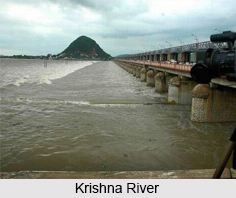
Krishnaveni River
The Krishnaveni River, presently known as the Krishna River, is one of India’s major rivers. Originating in the Western Ghats of Maharashtra, it flows...

Wakal River
The Wakal River is an important tributary of the Sabarmati River, originating in Rajasthan’s Aravalli Range and flowing through Rajasthan and Gujarat....
Pahuj River
Pahuj River is an important tributary of the Sindh River that flows through the Indian states of Madhya Pradesh and Uttar Pradesh. Originating in the...

Arunavati River
Arunavati River is a seasonal right-bank tributary of the Tapi River, flowing through parts of Madhya Pradesh and Maharashtra. Originating in the Satp...
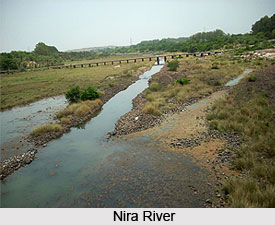
Nira River
Nira River is an important tributary of the Bhima River flowing through Maharashtra. Originating in the Western Ghats, it traverses Pune, Satara, and...
Related articles in Geography of India
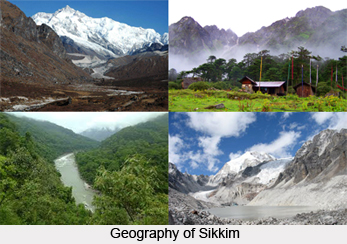
Geography of Sikkim
Geography of Sikkim is characterised by a vast array of magnificent hillock that extends from one corner of the state to the other.
Geography of Meghalaya
The suitable climate, highland plateaus, rivers and the flora and fauna together forms the geography of Meghalaya.
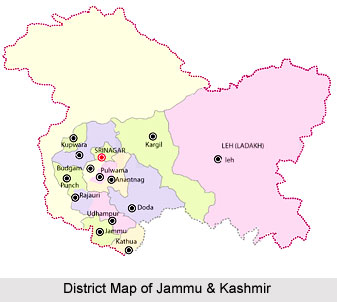
Geography of Jammu & Kashmir
Jammu and Kashmir is encompassed by valleys. Some of the dominant valleys of the state are Kashmir Valley, Tawi Valley, Chenab Valley, Poonch Valley,...
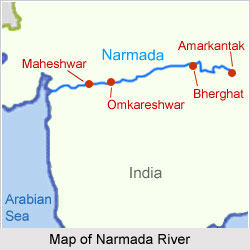
Narmada River
Narmada River is regarded as the 5th longest river of India and the life line of Madhya Pradesh. Narmada River basin spreads over an area of about 98,...
Bhima River
The Bhima River is the largest tributary of the Krishna River and is significant in the western and southern Indian states.