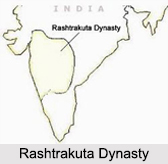
 Rashtrakuta Dynasty rose to power between 6th and 10th centuries among the dynasties of South India. Their capital was Malkhed near Sholapur. The geographical position of Rashtrakuta Dynasty led to their being involved in alliances as well as wars with both their northern and southern neighbouring kingdoms. It has been recorded that the earlier rulers of Rashtrakuta Dynasty were Hindus but later rulers were Jains. The Rashtrakuta reign from Manpur in the Malwa region of modern Madhya Pradesh has been revealed in the inscriptions of the 7th century copperplate grant. The kings of Achalapur, the rulers of Kannauj and Elichpur in Maharashtra were the additional ruling Rashtrakuta clans cited in the inscriptions.
History of Rashtrakuta Dynasty
The origin of Rashtrakuta dynasty has been a topic of debate among the historians. The connection of medieval Rashtrakutas who ruled in the 6th century to the Rashtrakutas of Manyakheta who ruled between the 8th and 10th centuries has also been a subject of controversy. Several theories have been put forward to prove their origin. They do claim their descent from the Yadava family of the Epic age. Some scholars say that they belong to a Kshatriya race who gave their name to Maharashtra. An accepted view is that they were a clan of ancestry officials who had to control the provinces of the Rashtrakutas. It thereby became a family name. However it can be determined that they established their empire over the ruins of Chalukyas.
Administration of Rashtrakuta Dynasty
In the Rashtrakuta system of government, the King was the supreme ruler. The inscriptions do prove that the succeeding ruler is chosen on hereditary basis. However abilities were also taken onto consideration while the new emperor take the throne. The kingdom was divided into provinces which were ruled by a "Rashtrapati". Under the provinces a district was supervised by a "Vishayapati". The ministers who were trustworthy ruled more than one province. Nadu was below the district looked after by the "Nadugowda" and the lowest division was a village overseen by a "Gramapati".
 Economy of Rashtrakuta Dynasty
The wealth to run the Rashtrakuta Empire came from military conquests and agricultural production. In southern Gujarat, Khandesh and Berar, Minnagar, Ujjain, Pathankot and Tagara, cotton was the major crop grown. Warangal and Pathankot manufactured muslin cloth. Cotton yarn and cloth was exported from Bharuch. Burhanpur and Berar produced white calicos and they were exported to Turkey, Arabia, Persia, Poland and Cairo. The Konkan region produced betel leaves, coconut and rice. While the Mysore forests produced sandalwood, timber wood, teakwood and ebony wood and ivory as it also possessed vast elephant herds. Thana and Saimur exported incense and perfumes.
The copper mines of Cudappah, Bellary, Bijapur and other regions were an important source of income. Diamonds were also mined in these places. Manyakheta and Devagiri were important diamond and jewellery trading centers. The leather and tanning industries also boomed in some regions of Maharashtra and Gujarat. The Rashtrakutas controlled the western sea board as it aided its sea trade.
Religion under Rashtrakuta Dynasty
The kings of Rashtrakuta Dynasty showed immense religious tolerance by supporting all common beliefs. It is difficult to ascertain the religion they followed. Some claim that they were inclined towards Jainism. They built well known Jain temples and monuments at Lokapura in Bagalkot district, Shravanabelagola and Kambadahalli respectively. However, some Rashtrakuta kings were Hindus who were followers of Lord Shiva and Lord Vishnu. This can be proved as all their inscriptions begin with an invocation to Lord Shiva or Vishnu. The famous Kailashnatha temple at Ellora and other rock-cut caves show their inclination to Hinduism.
Society under Rashtrakuta Dynasty
As many as seven or more castes existed during the rule of the Rashtrakutas. Brahmins enjoyed a superior rank in Rashtrakuta society. Even the Jains enjoyed a special position. Children of Kshatriya caste were admitted to Vedic schools along with Brahmins but the children of the Vaishya and Shudra castes were not allowed. Inter-caste marriages took place between Kshatriya girls and Brahmin boys. As per inscriptions joint families was customary. Women and daughters had property rights. Sati was also practiced. Widow re-marriage was rare among upper castes and accepted among the lower castes.
Literature under Rashtrakuta Dynasty
During the rule of Rashtrakuta Dynasty, Kannada literature became popular. This period marked the end of the Prakrit and Sanskrit age. Court poets created literary works in Kannada and Sanskrit language. "Kavirajamarga" written by King Amoghavarsha I was the earliest available book in Kannada.
Architecture of Rashtrakuta Dynasty
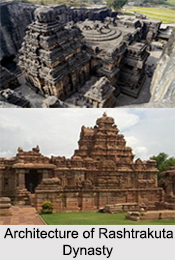
The rock-cut cave temples at Ellora and Elephanta, located in present day Maharashtra reflect the contributions to art and architecture of the Rashtrakuta Dynasty. They also renovated Buddhist caves and re-dedicated the rock-cut shrines. Amoghavarsha I dedicated five Jain cave temples at Ellora. The most spectacular work of the Rashtrakutas at Ellora is the monolithic Kailashnath Temple. This project was financed by King Krishna I after the Rashtrakuta rule had spread to the Deccan. The architectural style was Dravidian.
Other eminent sculptures at Elephanta include Ardhanaarishwar and Maheshamurti. Few other well-known rock-cut temples in the Maharashtra are the Dhumer Lena and Dashvatara cave temples in Ellora and the Jogeshvari temple near Mumbai. In Karnataka the Rashtrakutas have built the Kashivishvanatha temple and the Jain Narayana temple at Pattadakal.
Rashtrakuta Dynasty
Rashtrakuta Dynasty is a Hindu dynasty that ruled the Deccan region and neighbouring areas of India from about 755 to 975 CE.