Indianetzone.com - Web Portal on Indian Culture & LifestyleArt & Culture  •  Health  •  Movies & Entertainment  •   Society  •  Reference  •   Sports  •  Travel  

  Home >> Art & Culture >> Indian Dances >> Devadasi Dance in South India
Forum
Forum on Indian Dances
Discuss Now
Free E-magazine
Subscribe to Free E-Magazine on Indian Culture & Lifestyle.
Learn More
Interesting Readings
  - Indian Classical Dancers
  - Indian Dances
  - Bhangra Dance
  - Indian Folk Dances
  - Odissi Dance
  - Manipuri Dance
  - Kuchipudi Dance
  - Kathakali Dance
  - Kathak Dance
  - Bharatnatyam Dance
Jimtrade.com : India Business to Business Directory
Business Directory of Indian Suppliers Manufacturers and Products from India.
India`s leading Yellow pages directory.
Devadasi Dance in South India

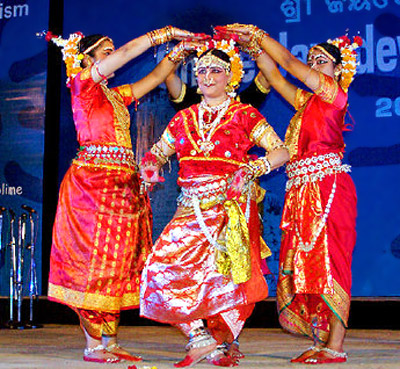
A true renaissance of the Devadasi dance tradition, the mother of present day classical dance system across the country, which disappeared with its practioners, is happening at one end of the classical dance spectrum. The devadasi dance tradition, which developed through the temple danseuses, is an important type among the dance patterns of India. Bharatanatyam in Tamil Nadu, Kuchipudi in Andhra Pradesh, Odissi in Orissa and Mohini-yattam in Kerala took shape in the tradition of devadasi dance. These dance forms grew and developed a classical category.

Devadasi Dance in South India According to the Puranas, the custom of dedicating maidens to the deity in temples was prevalent in India from very early times. They later came to be known as devadasis. In India the dancing and singing of devadasis was an integral part of temple worship. They were attached to temples in various parts of India, like Kerala, Tamil Nadu, Andhra Pradesh, Mysore, Maharashtra, Rajasthan, Gujarat, Bengal, Orissa and Kashmir. It was a common custom in all places that a maiden underwent a symbolic marriage with the deity before she became a devadasi. In Kerala, it was called enkettu.

For the Saiva section the devadasi custom was fancied. The Siva Purana lays down that when Siva temples are built and endowments made for the conduct of the daily rituals, the gift of damsels well versed in dance and song should be made to the temple. History records the fact when in the 9th century A.D. Rajaraja Chola built the Brihadishvara temple in Tanjavur he gifted four hundred devadasis to the temple.

Devadasis in Kerala are to be found in the manipravala compositions of the 1st half of the 13th century and later literacy works. Famous dancers like Unniyachi, Unniyati, Unniccirutevi and others are described therein as expert exponents of the devadasi art, attached to Siva temples and residing in their precincts. Most of the stone inscriptions containing references to devadasis in Kerala have been discovered from Siva temples. Saiva form of religion has an antiquity of about 4000 years.

At the beginning, the devadasi institution was confined to Siva worship, as times passed other forms of religion also adopted it. By about the 1st century B.C., the system had found a place in Jain, Buddhist and Hindu temples. Various references in ancient literature give us an idea of the devadasi tradition and their dance performances. In Kautilya`s Arthasastra (considered to be written in the 3rd century B.C) there are references to devadasis and their training in dance. In Mricchakhatikam a Sanskrit drama supposed to have been written by Sudraka in the 2nd century, the heroine Vasantasena is introduced as a good danseuse.

The earliest and the greatest Tamil epic poems, Silappadikaram and Manimekalai are the main sources of information about the life of the danseuses of Tamil Nadu and Kerala of that age and their special styles of dancing. In the course of time, separate subsects of devadasis came into being. The duties of devadasis included dancing as well as cleaning the temples, providing flowers and other items needed for the conduct of the daily propitiations in the temple, cleaning the rice and the articles of offerings to the deity to help the work of the priests. In addition, they were called upon to perform dances in the king`s court and serve the palace in general.

The devadasis known as basavisin Karnataka are of four types. Those who danced in temples were considered the most prestigious and they belonged to the highest class. The maledavaru indicated the section which took part in dance recitals in marriages and other festivals, while the maleyavaru prepared garlands of flowers etc. for the temple and the subyavaru were plain prostitutes. In a village in Karnataka called Basaruru, devadasis can still be found. The common word to denote Siva devotees is basavas.

In Tamil Nadu, those who danced in Siva temples were called devadasis; those who performed dance recitals in the king`s court were called rajadasis, and those who gave dance performances in festivals elsewhere came to be known as svadasis.

In Andhra, there were two types of devadasis. The genuine devadasis who performed in temples; those who danced in the court of kings came to be known as raja-narttaki. In Kerala, the devadasis had a highly respected place in society. This is made clear from the ancient poetic compositions of Kerala. Devadasis like Chandotravam and Sukha-sanderam were highly respected. It was not uncommon for maidens from royal or even Brahmin families to become devadasis. Kerala history has many examples of beautiful and attractive ladies of the devadasi sect being accepted as consorts by kings. It is said that devadasis, Kandiyiu Tevitichi Unni, Cherukarakkuttatti and others had been queens.

Due to political and social upheavals in the later medieval period, the highly skilled devadasis found themselves without patronage. This led to the deterioration of devadasi system. Preserving and passing on the rich cultural tradition of classical dance and music can be truly attributed to the devadasis. The system was banned in independent India.

Recently updated articles in Indian Dances
Home | Sitemap | Contact Us