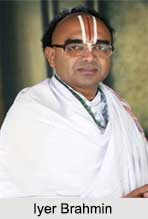
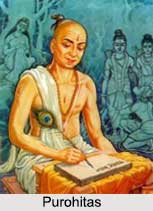
 Purohitas are officiant priests for the Yajna service. They are trained for the ritual and proficient in its practice. The blessings from the priest are also considered to be sacred in many Hindu communities. The purohitas appear to date back to very ancient times. The highest honours were paid to these Brahmins as they and the Gurus share the duty of preserving intact the ancient Indian customs. All the purohitas are married, this is mandatory as because they may minister in Brahmins` houses. A widower would not be admitted, as his very presence would be considered sufficient to bring misfortune.
Duties and Responsibilities of Purohitas
To settle which are lucky or unlucky days on which to begin or put off an undertaking or expedition, to avert, by mantras and suitable prayers, the curses, spells, or other evil influences of the planets and elements; to purify persons who have become unclean are the duties done by the Brahmin purohitas. They also give names to newly-born children and draw their horoscopes. They bless new houses, wells and tanks. They also did the purification of homes and temples which have become polluted, and also consecrate the latter. The purohitas animate idols and install in them their particular deities by the power of their mantras. All of these are but a few of the duties, which come within the province of the Brahmin purohitas. Their services are indispensable on such occasions. However, the most important of their duties, is the celebration of weddings and funerals. In large temples, a purohita is specially retained to read to the idols every morning the predictions for that day contained in the almanac. The purohitas when does pujas in the temples rings the temple bells and chants mantras to worship Gods.
Purohitas are still deeply influenced by the traditional four stages of life; the first student stage is followed by the householder stage, where marriage, raising a family and being a productive member of society is the primary obligation of an individual. Once children are married there is time for spiritual concerns in the third stage of reclusiveness, which is followed by Sanyasa life.