
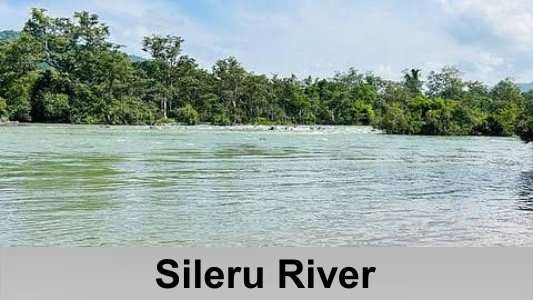
 Sileru River is a left-bank tributary of the Sabari River
in southern India.
It originates in the state of Andhra Pradesh and
flows through Odisha before
joining the Sabari River. In its upper reaches, the river is known as the Machkund
River. The confluence of the Sileru and Sabari rivers occurs at the
tri-junction boundary of Andhra Pradesh, Chhattisgarh, and
Odisha. After this confluence, the Sabari River continues its course, crossing
into Andhra Pradesh before ultimately merging with the Godavari River.
Sileru River is a left-bank tributary of the Sabari River
in southern India.
It originates in the state of Andhra Pradesh and
flows through Odisha before
joining the Sabari River. In its upper reaches, the river is known as the Machkund
River. The confluence of the Sileru and Sabari rivers occurs at the
tri-junction boundary of Andhra Pradesh, Chhattisgarh, and
Odisha. After this confluence, the Sabari River continues its course, crossing
into Andhra Pradesh before ultimately merging with the Godavari River.
Sileru River
Sileru River is a major left-bank tributary of the Sabari River in southern India. Originating as the Machkund River in the Eastern Ghats, it flows through Andhra Pradesh and Odisha before joining the Sabari. Renowned for its hydroelectric potential, the river also supports rich biodiversity and provides valuable water resources for irrigation.
Introduction
Course of Sileru River
Sileru River originates as the Machkund River in the Eastern Ghats of northeastern Andhra Pradesh. It initially flows northward before entering the Jalaput Reservoir, located along the border between Andhra Pradesh and Odisha. Downstream of the reservoir, the river assumes the name Sileru and changes its course sharply toward the southwest. It then flows through southwestern Odisha for a considerable distance before forming the interstate boundary, first between Odisha and Andhra Pradesh and subsequently between Odisha and the eastern part of Telangana.
Throughout its predominantly southwestward course, the
Sileru River flows parallel to the mountain ranges of the Eastern Ghats to its
southeast. Its channel lies at an elevation of approximately 600–900 metres
above mean sea level. The river eventually joins the Sabari River opposite
Konta in the southernmost part of Chhattisgarh, a short distance
north-northeast of the Sabari River's confluence with the Godavari River in
Telangana. Hydroelectric dams constructed on the Machkund River at the Jalaput
Reservoir, as well as on the upper and lower reaches of the Sileru River,
constitute a major source of hydroelectric power for the surrounding region.
Historical Account of Sileru River
Since ancient times, the Sileru River has sustained the
subsistence activities of indigenous tribal communities,
particularly the Koya,
whose presence in the region is believed to date back to prehistoric times.
These communities depended on the river for fishing,
foraging, and small-scale water diversion to support cultivation. Systematic
exploration of the river's developmental potential began during the 1920s in
the princely state of Jeypore.
At that time, Maharaja Vikram Dev Varma proposed harnessing the steep gradients
and substantial flow of the Machkund River near Duduma Falls for
hydroelectric power generation. His initiative reflected an early recognition
of the site's hydroelectric potential.
Hydro Power Projects on Sileru River
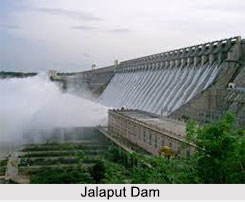 Sileru River possesses significant potential for
hydroelectric power generation, much of which has been harnessed through the
development of several major hydroelectric projects
along its course. These include the Machkund
Hydroelectric Project, associated with the Jalaput Dam, with an
installed capacity of 120 MW; the b (510 MW); the Upper Sileru Hydroelectric
Project (240 MW); the Donkarayi Hydroelectric Project (25 MW); and the Lower
Sileru Hydroelectric Project (460 MW). In addition, the Chitrakonda
Hydroelectric Project, with a planned capacity of 60 MW, is proposed at the toe
of the Balimela earth dam to utilize the hydraulic head available across the
dam.
Sileru River possesses significant potential for
hydroelectric power generation, much of which has been harnessed through the
development of several major hydroelectric projects
along its course. These include the Machkund
Hydroelectric Project, associated with the Jalaput Dam, with an
installed capacity of 120 MW; the b (510 MW); the Upper Sileru Hydroelectric
Project (240 MW); the Donkarayi Hydroelectric Project (25 MW); and the Lower
Sileru Hydroelectric Project (460 MW). In addition, the Chitrakonda
Hydroelectric Project, with a planned capacity of 60 MW, is proposed at the toe
of the Balimela earth dam to utilize the hydraulic head available across the
dam.
Irrigation Projects on Sileru River
The water released from the Balimela Hydroelectric Power
Station is utilized for irrigation in the
Potteru tributary basin of the Sabari River in Odisha. In contrast, the water
discharged from the other hydroelectric power stations along the Sileru River
is generally not used for irrigation purposes, except during periods of low
flow in the main Godavari River, when it contributes to meeting the irrigation
requirements of the Godavari
Delta. The perennial water stored within the reservoirs of the Sileru
River basin also offers considerable potential for the development of
irrigation infrastructure in the Uttarandhra region, thereby supporting
expanded agricultural activities.
Biodiversity of Sileru River
Sileru River supports a rich diversity of aquatic and terrestrial ecosystems, making it an ecologically significant river system within the Eastern Ghats. Its aquatic biodiversity is characterized by the presence of several cyprinid fish species, including the endangered golden mahseer (Tor putitora), which inhabits the cool, well-oxygenated upper reaches of the river where water temperatures generally remain below 25 degree C. Another endangered species, the Deccan mahseer (Tor khudree), is also found in the hill stream sections of the basin, highlighting the river's importance in sustaining the remaining populations of this genus in peninsular India despite increasing habitat fragmentation.
The reservoirs constructed along the river, particularly the Balimela Reservoir on the upper Machkund reach, support a diverse fish community. Ichthyological surveys have documented between 29 and 57 fish species belonging to 12–13 families, with cyprinids such as Labeo and Tor predominating, along with catfishes and mastacembelids that have adapted to the lentic conditions created by reservoir impoundment.
The river also contributes significantly to the terrestrial biodiversity of the region through its gallery forests and floodplains, which provide habitat for a variety of wildlife characteristic of the Eastern Ghats. These habitats support mammals such as the Indian crested porcupine (Hystrix indica), civets, and numerous bird species associated with riverine ecosystems. The Sileru basin is further enriched by the diverse flora of the Eastern Ghats, which comprises more than 2,000 vascular plant species, including several endemic taxa restricted to inselberg and plateau landscapes. Faunal endemism is also evident among selected invertebrates and reptile species, reflecting the ecological value of the basin's relatively undisturbed forest patches and heterogeneous landscape.
Recently updated articles in Geography of India
Krishnaveni River
The Krishnaveni River, presently known as the Krishna River, is one of India’s major rivers. Originating in the Western Ghats of Maharashtra, it flows...

Wakal River
The Wakal River is an important tributary of the Sabarmati River, originating in Rajasthan’s Aravalli Range and flowing through Rajasthan and Gujarat....
Pahuj River
Pahuj River is an important tributary of the Sindh River that flows through the Indian states of Madhya Pradesh and Uttar Pradesh. Originating in the...
Arunavati River
Arunavati River is a seasonal right-bank tributary of the Tapi River, flowing through parts of Madhya Pradesh and Maharashtra. Originating in the Satp...
Nira River
Nira River is an important tributary of the Bhima River flowing through Maharashtra. Originating in the Western Ghats, it traverses Pune, Satara, and...
Related articles in Geography of India

Geography of Sikkim
Geography of Sikkim is characterised by a vast array of magnificent hillock that extends from one corner of the state to the other.
Geography of Meghalaya
The suitable climate, highland plateaus, rivers and the flora and fauna together forms the geography of Meghalaya.
Geography of Jammu & Kashmir
Jammu and Kashmir is encompassed by valleys. Some of the dominant valleys of the state are Kashmir Valley, Tawi Valley, Chenab Valley, Poonch Valley,...
Narmada River
Narmada River is regarded as the 5th longest river of India and the life line of Madhya Pradesh. Narmada River basin spreads over an area of about 98,...
Bhima River
The Bhima River is the largest tributary of the Krishna River and is significant in the western and southern Indian states.