
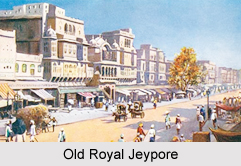
 Jeypore is located in the Koraput district of the coastal state of Odisha. Jeypore is the busiest town in the district and the commercial nucleus of Koraput.
Jeypore
Jeypore is a town situated in the Koraput district of Odisha. It is known as the commercial centre and as ideal tourist destinations for the presence of palaces and temples.
Introduction
Jeypore is located in the Koraput district of the coastal state of Odisha. Jeypore is the busiest town in the district and the commercial nucleus of Koraput.Location of Jeypore
Koraput, the district headquarters is located 25 km. northwest of Jeypore in Odisha. Jeypore is known for its business activities, the town is well connected. It is located between 18.85 degree North latitude and 82.58 degree East longitude at a height of 659 metres (2165 feet) above mean sea level.
History of Jeypore
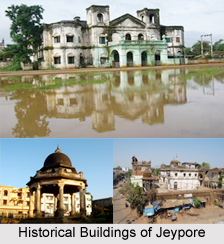 History of Jeypore clarifies itself as an ancient town with a niche in the history of Odisha. Jeypore is surrounded by forests with mostly Sal and teak trees. The town was the capital of the local king in the olden times and is known for its ancient forts, palaces and temples. The major languages spoken in this region are Odiya and a few indigenous languages. There is a diverse cultural mix of adivasi people and mainstream people of Odia ethnicity.
Early History of Jeypore
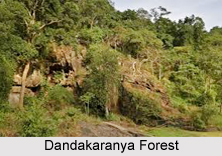 Early History of Jeypore defines not only the forest parts of Dandakaranya Forest, but also it portrays the rule of Kalinga Empire in Odisha and later the attack of Kalinga by Maurya Emperor Ashoka, Kalinga was devastated and he preached Buddhism throughout the world, and Odisha was the epicentre of Buddhism during 5th Century BC.
Rule of Kalinga Empire
The history of Jeypore is inextricably linked with that of the ruling Deo or Dev dynasty. Jeypore was the capital of the kingdom of Koraput, which was ruled by the Atavikas, a feudatory of the powerful Kalinga Empire, who are known for having valiantly fought the Kalinga War in the 3rd century BCE.
Mahameghabahan Dynasty
Kalinga Empire regained its former glory during the Mahameghabahan Dynasty in the first century BC. The third king of Mahameghabahan Dynasty, Kharavela made the Kalinga Empire and the Atavika land was very strong under his rule.
Later Rule in Jeypore
The successive dynasties like the Satavahana Dynasty (2nd century CE), Ikshvakas Dynasty (3rd century CE) had headquarters at Pushkari, near the modern town of Umerkote. The Kesaribeda excavations bear testimony to the rule of King Bhabadatta Varma and King Arathapati. The inscriptions of Podagarh refer to King Skanda Varma. The overlord Nala kings are traced to the kings who ruled from Gwalior in Madhya Pradesh. Their rapid growth landed them in the Odia regions of Bastar District now in Chattisgarh and Koraput District of Odisha. It was around the 10th century CE a Nala king Bhimesen was ruling over a region now located in Koraput District and Ganjam District.
Jeypore in 5th Century AD to 11th century AD
The Koraput and the Jeypore area was a small principality of Tri Kalinga under the Ganga era (Eastern Ganga Dynasty) of the 5th century CE. The patches of Utkala, Kalinga and Kosala were brought under the control of the Ganga kings of Odisha. This dynasty became prominent during the 11th century CE with the rise of Somanakshi. The suzerainty of Ganga Dynasty extended from the modern Sambalpur District, Princely State of Sonepur to the Bastar and Koraput regions and they enjoyed control until the beginning of the 14th century CE.
Matsya family Rule in Jeypore
In the later half of the early era, the Matsya family who were claimed as the family from Lord Vishhnu ruled the entire part of Jeypore. They were ruling over the Oddadi region of modern Jeypore who dominated the next generation. The best known kings included Bhanudeva and Narasingha Dev, as is known from the Oriya inscription of Simhachalam in Visakhapatnam district of Andhra Pradesh, which is located very near to Jeypore.
Medieval History of Jeypore
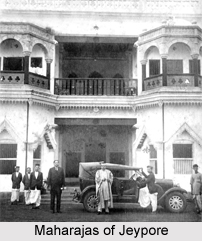 Medieval History of Jeypore defines the dynasty rule of Sailavansis, who ruled over Vindhya during the 14th century CE.
Early Medieval Rule in Jeypore
In the early phase of medieval era in Jeypore, this place was ruled by Eastern Ganges Dynasty of Odisha. From their hands, Odisha has gifted many architectural wonders in the modern Odisha. The earliest king, Ganga Raju, ruled over Nandapur, a former capital of the Maharaja of Jeypore, who at the very first time, was the patrons of Islamic rule in Delhi and later to British East India Company with the decline of Mughals in India after the death of Aurangazeb in 1707 AD. Nandapur is famous for the throne of 32 steps or Singhasan Batisi that was erected in the line of king Vikramaditya of Ujjain. This was declined till the medieval era. Jainism and Shaktism grew side by side in the kingdom of Nandapur, along with Muslim rule. But the Mughal rule did not give any impact in the administrative and social life of Jeypore.
Decline of Sailavansa
Sailavansa was declined with the decline of Mughals after Aurangzeb in Delhi. The last king of Sailavansa, Pratap Ganga Raju was succeeded by Vinayak Dev of Surya Vansa which lasted until the time of the British East India Company, which later formed, the Princely State of Jeypore, Princely State of Sonepur and the Princely State of Mayurbhanj. Vinayak Dev was said to be married to the daughter of the last ruler of Silavansi Paratap Ganga Raju. He and his six succeeding generation of kings had only one son each and on advice from astrologers the headquarters of the kingdom was switched from Nandapur to Jeypore.
Jeypore and Anglo- French Conflict along with Marathas
During the Anglo-French conflict, Vikram Dev I was successful in driving out the French East India Company from Malkangiri area and the Marathas from the Umerkote belt. He was succeeded by the brave Oriya king Ramachandra Dev II while his other two sons Jagannath and Narasingh Dev were placed in charge of Nabarangpur and Gudari regions. Jagannath Dev"s son Arjun Dev and Narasingha Dev"s son Chaitanya Dev were issueless. Hence, Nabarangpur and Gudari remerged to Jeypore kingdom.
Modern History of Jeypore
 Modern History of Jeypore began with the art and architectural delight in this area which enlighten the whole Odisha and later the Hindoosthan. During the 20th century Ramachandra Dev IV (1920–31) was an honourable lieutenant in World War I. He was issueless and was succeeded by a benevolent, aged, scholar king Vikram Dev IV, the son of Krishna Chandra Dev. During this period the Boundary Commission headed by Sir O"Donnel was entrusted with the task of writing the different Oriya speaking tracts. The Commission went round Jeypore, Paralakhemundi, Ganjam District and Visakhapatnam before finalizing its decision. The state of Odisha was formed on 1st April 1936 with Koraput as one of the six districts.
Role of Vikram Deo
The generosity of Vikaram Deo towards promotion of education and arts saw the establishment and growth of several educational institutions both in Jeypore (Odisha) and Visakhapatnam. He was more interested in the promotion of arts than his kingdom. He was Maharaja Vikram Deo IV of the Sankara Dynasty of Jeypore, who had succeeded Krishnachandra Deo during June 1931. Within a few years after ascending the throne, he carved a niche for himself as an able administrator who was loved by his people.
Fine Art in Modern Jeypore
Vikram Deo was a connoisseur of all fine arts including folk and tribal arts. He spotted the talent of a youth, who used to draw on the walls, during one of his evening strolls. He sent the youth to Bhubaneswar for honing his skills. He established the School of Fine Arts in Jeypore and on the return of the youth, made him principal of the school. Though he was not a man of letters, Vikram Deo mastered Telugu language, Oriya language, Bengali language, Sanskrit language and English language. A `Shat Dharma Sabha` used to be convened under his auspices at the Hawa Mahal on the Beach Road. A total of 100 scholars used to be invited and competitions held amongst them as part of the sabha. He renovated the tribal museum at Araku, which was built by his forefathers.
Contribution of Vikram Deo for Jeypore
 Contribution of Vikram Deo for Jeypore created a deep impact in the modern history of Jeypore. Vikram Deo promoted the education and arts of Odisha into the global level during the rule of British Empire in India.
It was for him, Jeypore saw the establishment and growth of several educational institutions both in Jeypore (Odisha) and Visakhapatnam in modern Andhra Pradesh. He was more interested in the promotion of arts than his kingdom.
Vikram Deo As a King of Jeypore
Maharaja Vikram Deo IV was the king of the Sankara Dynasty of Jeypore, who had succeeded Krishnachandra Deo during June 1931. Within a few years after ascending the throne, he carved a niche for himself as an able administrator who was loved by his people.
Life of Vikram Deo
Vikram Deo was born in Sri Mukhalingam in 1869. Vikram Deo was the only Maharaja to become the Pro-Chancellor of both Andhra Pradesh University and Utkal University. Vikram Deo generously donated annually Rs.1 lakh towards recurring expenses of the AU College of Science and Technology. In recognition of his contribution, the AU renamed the college as Jeypore Vikrama Deo College of Science and Technology. His bronze statue which was installed in the precincts of the college was sculpted by Devi Prasad Roy Choudhury from West Bengal. During World War II, when the university buildings had to be vacated to accommodate the Army, he offered to the university to shift the equipment and infrastructure in the colleges to Jeypore and Gunupur at his own expense.
Concept of Astrology by Vikram Deo
The concept of astrology of Vikram Deo was that it was a part of astronomic science. Vikram Deo exerted pressure on the Madras Governor to appoint Sarvepalli Radhakrishnan as Vice-Chancellor of Andhra University. He was appointed Pro-Chancellor of Andhra University in 1937 in which post he continued till his death in 1951.
Contribution of Vikram Deo
Vikram Deo IV was an expert of all fine arts including folk and tribal arts. He spotted the talent of a youth, who used to draw on the walls, during one of his evening strolls. He sent the youth to Bhubaneswar in Odisha for honing his skills. Vikram Deo IV established the School of Fine Arts in Jeypore and on the return of the youth, made him principal of the school. Vikram Deo mastered in many Indian languages like Telugu language, Oriya language, Bengali language, Sanskrit language and English language in India. A Shat Dharma Sabha used to be convened under his auspices at the Hawa Mahal on the Beach Road. A total of 100 scholars used to be invited and competitions held amongst them as part of the sabha. He renovated the tribal museum at Araku Valley, now in Andhra Pradesh which was built by his forefathers.
Colleges named after Vikram Deo
Three colleges were established on his name in Jeypore. They are Vikram Deo College of Law, Vikram Deo College of Commerce and Vikram Deo College of Arts.
Modern Jeypore
Jeypore is a city of high strategic and historical importance. Dev or Deo dynasty is probably related to the Kakatiya dynasty. Some of the rulers established their own rule when the Kakatiyas were ruling around the jungles of Bastar District of Chhattisgarh. Since the area was inaccessible and hostile, these kingdoms - including that of Jeypore (previously in Nandapur), Jagdalpur, Parlakhemundi, etc. got established under the supreme rule of Gajapati monarchs of Odisha. And, from then a unique culture, food, tradition and pride could be seen in common at these areas.
Economy of Jeypore
 Economy of Jeypore, though has the agricultural view point, the industries of secondary sectors are playing a vast role in monitoring the economic pillar of the state of Odisha and the city as well. Jeypore is well equipped with rail, road and airways communication and so that the business here is flourishing along with agriculture. The tertiary sector business is also flourishing with the establishment of various shopping malls, multiplex and the media services.
Jeypore as the Business Abode
Jeypore is the business hub for southern Odisha as well as the bordering towns of Andhra Pradesh. There is high potential growth of this town due to high minerals, opportunities, resources around the district adding to all the facilities like rail, air in this town.
Industries in Jeypore
There are many renowned industries in and around Jeypore. Business units including Sewa Paper Mills are now a part of BILT, and numerous rice and cashew processing units. PSU Company Power Grid Corporation of India has its 400 KV substation with FSC system at Kaliagaon. NALCO, Hindustan Aeronautics Limited (HAL) and Coffee Board are some prominent government based units situated nearby. Huge granite deposits on hills, rich forests and forest-based produce are important contributors to Jeypore"s economy. Apparels, shoes and animal products are also significant contributors.
Upper Kolab Hydro Electric Project
Upper Kolab Hydro Electric Project was taken up for excavation in the year 1976 by the Irrigation and Power Department, Govt. of Odisha. This multipurpose project utilises the water potential of river Kolab a tributary of Godavari River, for hydro-electric power generation, providing irrigation facilities by lift canal irrigation, and supplying drinking water to Damonjodi, Koraput, Sunabeda and Jeypore town.
Small Scale Industries in Jeypore
There are many small scale industries office situated in Jeypore to promote the growth of industries in this region. There are certain allocated lands marked as Industrial areas which proposed for all future growth.
Banking System in Jeypore
There are many major public and private sector banks that have their branch offices like SBI, HDFC, Axis, ICICI, Punjab National, Indian Bank, IOB etc. All public sector insurance companies like LIC, Oriental etc. also have their offices in Jeypore.
Demography of Jeypore
Jeypore in Odisha had a population of 76,560. Males and females account for 51% and 49% of the population. In Jeypore, 12% of the population is less than six years of age.
Education in Jeypore
 Education in Jeypore deals with the several schools, colleges and universities. Some of the schools and colleges were built by Maharaja Vikram Deo, who was one of the generous kings in Jeypore during rule of British Empire in India.
Schools in Jeypore
There are several Oriya medium schools in the town such as Government Boys High School, Girls High School, Municipal High School No I, II and III (girls), Upper Kolab Project High School, Saraswati Sishu vidya mandir and many more. The English medium schools are Modern English school, Jeypore Public school, Deepti Convent School, DAV Model Senior Secondary School, Redwoods English School and Siddhartha English Medium School.
Colleges of Jeypore
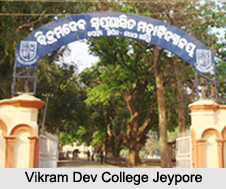
Some of the colleges of Jeypore include Vikram Dev College Jeypore, which is one of the oldest and prominent colleges of Odisha established in 1947. The college started at the present P. G. Block was known as `Jeypore College` from July 1, 1947. As a tribute to the philanthropist king, Rajarshi Vikram Deb Verma, the college was renamed to "Vikram Deb College" in 1961. Honours subjects teaching were imparted from during 1968-73 and Post Graduate courses were started from 1979. The other colleges being Govt. Women`s College and Law College. Of late many private colleges have started in the town making the environment highly competitive. Among them prominent are Narayani Junior College and vidwan institute of basic sciences.
Professional Colleges in Jeypore
Jeypore also has colleges offering professional courses such as Gopal Krushna College of Engineering & Technology, which was established in the year 1989. Jeypore College of Pharmacy is another renowned pharmacy institute. Along with it various Engineering Diploma colleges are present namely Institute of engineering & Management (I.E.M), Hi-Tech Institute of Information and Technology (HIIT) and Jeypore School of Engineering and Technologies.
Research Education in Jeypore
Jeypore has the vast scope of research after post graduation. M. S. Swaminathan Research Foundation (MSSRF) has been working in the Jeypore region of Odisha since many years. The Food and Agriculture Organization (FAO) of the United Nations has declared Jeypore region as a Globally Important Agricultural Heritage System (GIAHS) and the MSSRF as its nodal point.
Culture of Jeypore
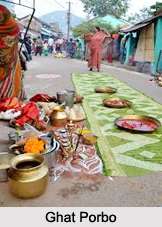 Culture of Jeypore has the mixture of Bangalees and Odiya people. They celebrate Ratha Yatra, Durga Puja, Ghata Porbo and many more. The cultural amalgamation in Jeypore is not only begun from the era of British time, it came from the early era of Ganga Dynasty.
Ratha Yatra
Rath Yatra is celebrated every year during the month of July. It is one of the popular festivals in Odisha.
Ghata Porbo
Ghata Porbo is one of the popular festivals celebrated in the town. It is also known as "Thakurani Yatra" (procession of the goddess) held usually during summer. During the festival, every community has the chance to take its goddesses out of the temples and visit all other localities. The processions last for days and weeks, with dramas and other entertainment held during the nights. Local musical instruments like `Dombo baido` and `Singha baido` accompany such processions.
Durga Puja and other Festivals in Jeypore
Jeypore is famous for its grand Dussehra and Ratha Yatra celebrations as well. People also celebrate Ganesh Puja, Goddess Saraswati Puja and Viswakarma Puja. Jeypore Dussehera is often compared with Mysore Dussehera. In ancient times, "lathi processions" were taken out by barefoot tribals carrying small idols of Goddess Durga on palanquin and played local musical instruments from far-flung areas to Jeypore. The tribal headmen would come to Jeypore with these lathis and keep them in the local temple till Dussehra which was a 16-day affair. The tribals mostly belonged to Bhumiya Tribe, Gadba Tribe, Parja Tribe, Soura Tribe, Bhatra Tribe, Gond Tribe, Didai Tribe, Durua Tribe, Amantya Tribe, Kondhy Tribe, Bonda Tribe and Koya Tribe. Jeypore King used to celebrate this festival in great way. In between 19th to 20th century the glamour of this festival faded but starting from year 2003 again this festival has been revived and year by year this festival is celebrated in a big way like it used to be during kings time and gathering of around 1 lakh people can be seen during Dussehara. In the nineties, an annual event called "Parab" was instituted by the government to promote tribal art, culture and handicrafts in the Koraput district.
Tourism in Jeypore
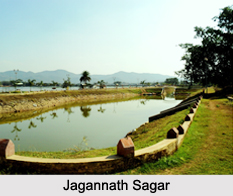 Tourism in Jeypore describes the beauty of the city in Odisha and Andhra Pradesh border along with the development of the city in eco tourism area. Some of the tourist attractions in Jeypore are the sunrise and sunset near Kolab River, Jagannath Sagar, Jeypore Eco Tourism Park, Sabara Shrikhetra, Gupteshwaar, Deomali and Raja Mahal and Surya Mahal and many more.
Kolab
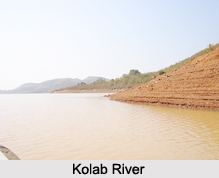
Kolab is located at an altitude of about 3000 ft. above sea level on river Kolab. It stands near the majestic Kolab Reservoir generating Hydro Electric Power. The place is highly admired for its scenic beauty, attracting people for weekend picnic and boating. Jeypore and its surrounding areas are nature lover`s delight. Owing to its geographical position among the hills it is endowed with scenic beauty. The green hills, fresh water lakes and springs make it a treat of nature. There is an enormous untapped tourism industry that the place has to offer. Some of the prominent tourist attractions are:
Jagganath Sagar and Jeypore Park
Jagganath Sagar and Jeypore Park is a beautiful lake situated in heart of the town surrounded by beautiful park and play area has always been the favourite hangout zone for Jeypore public. Jagganath Sagar is all packed in the evening when people of all ages come here to relax themselves. A boating club, delicious food inns adds a charm to the park.
Sabara Shrikhetra
Sabara Shrikhetra is situated 22 km away from Jeypore and 2,900 ft. above sea level. The modern Jagannath Temple has come up on a hilltop. The Tribal Museum behind the temple caters to and educates the tourists about the culture and heritage of the tribal.
Deomali
Deomali is located at about 50 km from Jeypore. This is the highest mountain peak in Odisha. The path to the top is as breathtaking as the view at the peak. It is not only a marvel for the tourists but also to the adventurous sports lovers for hang gliding, mountaineering and trekking.
Gupteshwaar
Gupteswar Cave is located about 60 km. from Jeypore. The place is famous for the cave shrine of Lord Shiva or Mahadeva located at the top of a limestone hill which is about 151 meters higher than the surrounding beautiful countryside, the place is ideal for natural scenery. One can reach the cave by ascending a flight of steps. It is popularly known as Gupta Kedar in the vicinity, this sacred place is associated with Lord Rama of the epic Ramayana. The nearby hill has been named "Ramagiri". Devotees from all over the country visit this cave shrine of Lord Shiva the year around. Its scenic beauty makes it a double delight for visitors. It is famous for the stalactite that is worshipped as the lingam.
Kolab Dam
Kolab Botanical Garden stands beside the Majestic Kolab reservoir and is ideal as weekend picnic destination. This place is highly admired for its scenic beauty, attracting tourists for weekend picnic and boating. The well maintained botanical garden has over 200 varieties of flowering plants.
Raja Mahal
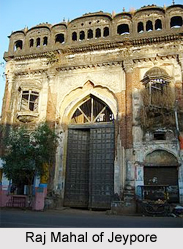
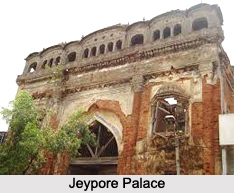
The centuries-old palace on main road Jeypore (Sardar Patel Road) is an architectural marvel. Of late due to negligence from the concerned authorities it has been in a state of urgent attention.
Shakti Water Fall
Shakti Water Fall commonly said as "S" water fall for the path of the falls resembles the alphabet “S†is a must see place. This place is a fun and adventurous camping ground among the youth of Jeypore.
Machhakund
Machhakund is a place of pilgrimage as well as a centre of Hydro Electric Project for the waterfall here (157 meters). A beautiful township amidst deep greenery of nature has developed around the project. It is also a place of pilgrimage and is associated with the name of Lord Chaitanya who is believed to have visited this place in the early part of 16th century.
Bagara
Bagara is famous for waterfalls. The place is reached on road for 3 miles from Khondaguda which is 10 miles from Koraput and 6 miles from Jeypore. There are three small waterfalls from a height of about 30 ft. on the river Kolab. The place is surrounded by beautiful natural scenarios. It has a rest house at the site of the falls for use of the visitors.
Visiting Information
The nearest airport is at Vishakhapatnam at a distance of 220 km. and the nearest railway station is the Jeypore Railway Station on the Koraput-Jagdalpur line. It is located on the NH43 and the frequent bus services connect the town with Bhubaneshwar, Berhampur and other cities in the state.
Recently updated articles in Cities of India
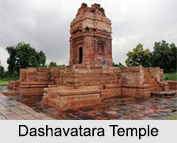
Places of Interest in Deogarh Uttar Pradesh
A place of historical and archaeological significance, Deogarh is a site with few popular places of interest.
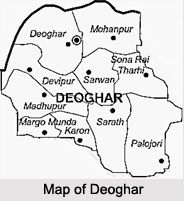
Deoghar in Jharkhand
Deoghar is the divisional headquarters of Santhal Parganas located in Jharkhand and is popular for the famous Baidyanath temple and Shiva Temples.
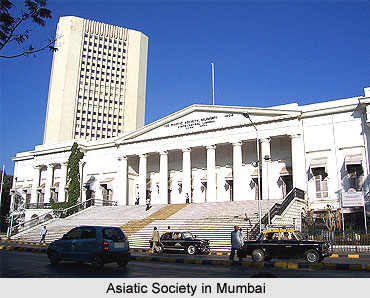
The Asiatic Society of Mumbai
Asiatic Society in Mumbai is the temple of Asian Studies from the time of British rule in India.
Vasco da Gama / Vasco City
Vasco da Gama / Vasco is the biggest city of Goa and is one of the most visited for its perfect amalgamation of business as well as leisure options.
Agriculture of Ladakh
Agriculture in Ladakh is primarily practiced in the short summer season due to its cold desert climate. Farmers grow hardy crops like barley, wheat, p...
Related articles in Cities of India
Holy Cities of North India
Holy Cities of North India are having the rich history of Hinduism and the entire civilization was grown up with the hands of beliefs, rituals and the...
Holy Cities of South India
Holy Cities of South India gives the detailed cultural formation of Dravidians from the early era, which later developed to the world by the Pallavas...
Holy Cities of West India
Holy Cities in West India were established by the rulers of Rajputs and the Satvahana Dynasty and the medieval rulers of Junagadh.
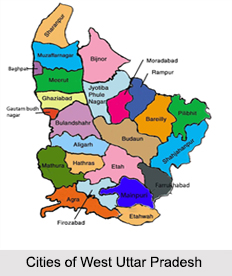
Cities of West Uttar Pradesh
Cities of West Uttar Pradesh include Meerut, Bulandshahr, Ghaziabad, Saharanpur, Muzaffarnagar, Bijnor, Bareilly, Rampur, Agra, Aligarh, Mathura and m...
Port Cities of South India
Port Cities of South India are developed from the early phase of colonial era when the Portuguese and the French traders came to India