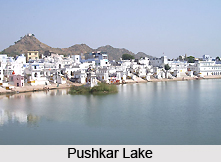
 Pushkar Lake also called Pushkar Sarovar is located in the town of Pushkar in Ajmer district of the Rajasthan state of India. Created from the divine lotus of Lord Brahma, Pushkar is revered as one of the most sacred pilgrim sites for Hindus. It is often called `Tirtha-Raj` which means the king of pilgrimage sites related to water-bodies.
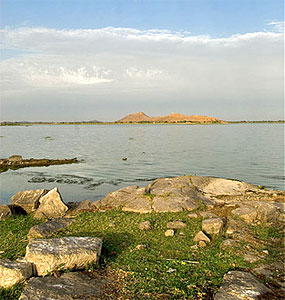
The lake is semi circular in shape and is surrounded by hills on three sides and desert on the other side. The lake is enriched with flora and fauna but only when it is full. At this time, it is home to desert plants, including cactus and thorny bushes, as well as desert animals like camels and cattle.
The lake is also surrounded by 52 bathing ghats and over 500 Hindu temples. During the Kartika Poornima in November thousands of devotees come to take a bathe in the waters of the lake.
History of Pushkar Lake
It is a man made lake created in the twelfth century when a dam was built in the headwaters of Luni River. It is a sacred spot for the Hindus and legends say that this lake was created when a lotus fell from the hand of Lord Brahma. It is also believed that the great sage Vishwamitra mediated here for thousands of years.
Another story narrates about a ninth-century Rajput king, Nahar Rao Parihar of Mandore. After chasing a white boar to the lake shore on a hunting expedition the king was thirsty. In order to quench his thirst, he dipped his hand into the lake. He was startled to see that the Leukoderma marks on his hand had disappeared. The king was so impressed by the lake that he got the lake restored to its glory. Since then, devotees from various parts of the country visit the lake to take a holy dip and cure themselves of skin problems.
Religious Significance of Pushkar Lake
 Ramayana and Mahabharata and various poets have mentioned about this lake`s significance. The epics refer this as Adi Tirtha, or the "original sacred water-body". The Ramayana mentions that Vishwamitra performed penance at Pushkar Lake for a thousand years. The mention of the lake can also be found in Abhijnanasakuntalam, a poem written by the famous Sanskrit poet and play-writer Kalidasa.
Temples and Ghats of Pushkar Lake
Pushkar is home to over 500 temples of which 80 are large and the rest are small. Many of these temples were destroyed during Aurangzeb`s rule however, later, they were re-built. The most significant amongst all is the temple of Brahma. Its present structure dates to the 14th century. However, according to many historians, the original temple is 2000 years old. Other notable temples around the lake include Varaha temple, Savitri temple and Gayatri temple.
There are about 52 ghats around the lake used for sacred bathing and rites. Out of 52, there are 10 important ghats namely the Varaha Ghat, the Dadhich Ghat, Saptarishi Ghat, Gwalior Ghat, Kota Ghat, Gau Ghat, Yag Ghat, Jaipur Ghat, Karni Ghat and Gangaur Ghat on the periphery of the lake that have also been declared as `Monuments of National Importance`.
Currently, under the patronage of the Government of Rajasthan and several departments of the Government of India, all these ghats are undergoing renovation.
Pushkar Fair
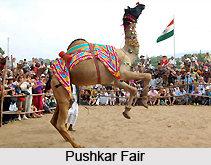
Pushkar fair is an integral part of the lake. It commences on Prabodhini Ekadashi and ends on Kartik Poornima. This fair is organised in the honour of god Brahma. The fair draws devotees from various parts of the country as a ritual bath on Kartik Poornima is considered to lead one to salvation.
Camel fair is also an important part of the Pushkar fair. It is considered as Asia`s largest camel fair. The fair is organized by the Rajasthan Tourism Development Corporation, Pushkar Municipal Board and the Animal Husbandry Department of Rajasthan.