
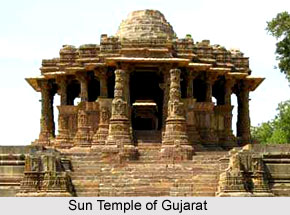
 History of Gujarat dates back to the period of Indus Valley Civilization. It comprises an important part of Indian historical texts. The State bears its name from the Gujara which was the land of the Gujjars, who ruled the area during the period of 700`s and 800`s. The state Gujarat has seen different rulers in different times. Many coastal cities of Gujarat served as a port and trading center for Nanda, Maurya, Satavahana and Gupta empires. After the decline of Gupta Empire in 6th century, Gujarat became an independent Hindu and Buddhist site. During 10th century Chalukya dynasty and during 18th century Maratha Empire took control over the state. After British Raj, in 1960 Gujarat was formed by splitting Bombay (now Mumbai).
History of Gujarat
History of Gujarat can be dated back to the 14th century that later witnessed the supremacy of many powerful dynasties.
Introduction
History of Gujarat dates back to the period of Indus Valley Civilization. It comprises an important part of Indian historical texts. The State bears its name from the Gujara which was the land of the Gujjars, who ruled the area during the period of 700`s and 800`s. The state Gujarat has seen different rulers in different times. Many coastal cities of Gujarat served as a port and trading center for Nanda, Maurya, Satavahana and Gupta empires. After the decline of Gupta Empire in 6th century, Gujarat became an independent Hindu and Buddhist site. During 10th century Chalukya dynasty and during 18th century Maratha Empire took control over the state. After British Raj, in 1960 Gujarat was formed by splitting Bombay (now Mumbai).Ancient History of Gujarat
 Early History of Gujarat deals with the glorious rule of Chandragupta Maurya and the Mauryan Dynasty. Chandragupta Maurya at first conquered a number of earlier states of Gujarat. Pushyagupta, a Vaishya, was appointed Governor of Saurashtra by the Mauryan regime. He ruled present Junagadh and built a dam on the Sudarshan lake. Emperor Ashoka, the grandson of Chandragupta Maurya, not only ordered engraving of his famous edicts on the rock at Junagadh, but asked his Governor Tusherpha to take out canals from the lake where an earlier Mauryan Governor had built a dam. Between the decline of the Mauryan power and Saurashtra coming under the sway of Samprati Mauryas of Ujjain, there was a Greek incursion into Gujarat led by Demetrius. In the first half of the first century A.D. there is the story of a merchant of King Gondaphares landing in Gujarat with Apostle Thomas.
Saka Dynasty in Gujarat
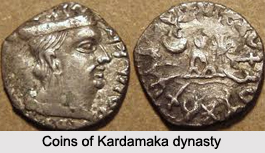
From the start of the 1st century AD, Saka rulers played prominent part in Gujarat`s history. Weather beaten rock at Junagadh gives a glimpse of the Ruler Rudradaman I (100 AD) of the Saka satraps known as Western Satraps, or Kshatraps. Mahakshatrap Rudradaman I founded the Kardamaka dynasty which ruled from Anupa on the banks of the Narmada up to Aparanta region which bordered Punjab. In Gujarat several battles were fought between the south Indian Satavahana dynasty and the Western Satraps. The greatest ruler of the Satavahana Dynasty was Gautamiputra Satakarni who defeated the Western Satraps and conquered some parts of Gujarat in the 2nd century BC.
Kshatrapa dynasty in Gujarat
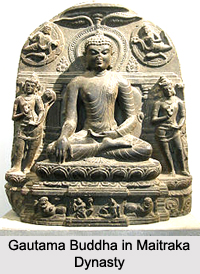 Kshatrapa dynasty was replaced by the Gupta reign with the conquest of Gujarat by Chandragupta Vikramaditya. Vikramaditya`s successor Skandagupta has left an inscription (450 AD) on a rock at Junagadh which gives details of the repairs of the embankment, damaged by floods, of Sudarshan Lake by his Governor.
Chalukya Dynasty in Gujarat
In the early 8th century some parts of Gujarat was ruled by the Chalukya dynasty. In the early 8th century the Arabs of the Umayyad Caliphate established an Empire which stretched from Spain in the west to Afghanistan and Pakistan in the east.
Arab Invasion in Gujarat
The Arab rulers tried to expand their Empire in the 8th century and invaded Gujarat but the Arab invaders were defeated by the south Indian general Pulakesi who was sent by the south Indian Emperor Vikramaditya II of the Chalukya Dynasty. After this victory the Arab invaders were driven out of Gujarat. Pulakesi received the title Avanijanashraya by Vikramaditya II for the protection of Gujarat. In the late 8th century the Kannauj Triangle period started.
Gurjara-Pratihara Dynasty and Rashtrakutas in Gujarat
The 3 major Indian dynasties are Gurjara-Pratihara Dynasty, south Indian Rashtrakuta Dynasty and the east Indian Pala Empire dominated Gujarat from the 8th to 10th century. During this period the northern part of Gujarat was ruled by Gurjara-Pratihara Dynasty and the southern part of Gujarat was ruled by the south Indian Rashtrakuta Dynasty. The southern Gujarat was ruled by the south Indian Rashtrakuta dynasty until it was captured by the south Indian ruler Tailapa II of the Western Chalukya Empire.
Solanki Dynasty in Gujarat
Solanki dynasty ruled Gujarat from 960 AD to 1243 AD. Gujarat was a major center of Indian Ocean trade, and their capital at Anhilwara (Patan) was one of the largest cities in India, with population estimated at 100,000 in the year 1000.
Medieval History of Gujarat
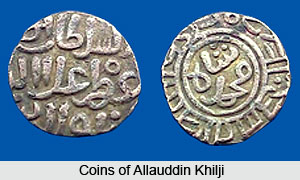 Medieval History of Gujarat witnessed the arrival of the Muslim conquerors into India. Mohammad of Ghazni was the first of the Muslim conquerors. Before the Muslims conquered India in 1298 Gujarat had a smattering of Muslims. They mostly dotted along the Gujarat coastline. They had two small Muslim settlements in Cambay or Khambhat and Bharuch. Medieval Gujarat also saw Abdulla-a missionary from Egypt establish the formation of the Bohra community among the native Muslims.
After Ala-ud-din Khilji defeated Karandev Vaghela with his military force of, medieval Gujarat went under the Muslim rule for a period of 400 years. The Muslim rule finally came to an end in 1758 when the Mughal Viceroy Momin Khan was defeated by the Marathas. The Marathas established their supremacy by annexing Ahmedabad from the Mughals in the same year.
Zafar Shah, a viceroy of Delhi for Gujarat set up the first Muslim sultanate in Gujarat. He fully exploited the existing feeble rulers of Delhi and thus declared his independence. He became the first Sultan. Zafar Shah later assumed the title of Muzaffar Shah. His successor Ahmed Shah found the city of Ahmedabad on the banks of the Sabarmati River and named it after his own name. Ahmedabad became the capital of successive regimes in Gujarat till the state of Gujarat was reformed in 1960. The capital was then shifted to the new city of Gandhinagar.
Mahmud Shah succeeded Ahmed Shah. He proved to be an able administrator and even successfully repulsed a Portuguese naval attack and set up his naval base at Diu off the Sautrashtra coast. Mahmud was an efficient administrator and a great builder. He also played a key role in subduing the Rajput chieftains. Gujarat flourished extensively and became affluent under the patronage of Mahmud Shah. Islamic disciplines began to be preached in Patan which was the ancient seat of Hindu learning.
The available infrastructure at Patan was exploited by Mahmud Shah. Later the assassination of Sikandar Shah led to the decline of the Sultanate. Gujarat fell prey to the Mughal armies and became the seat of the great Mughal Emperor Akbar. Bahadur Shah II was the last Sultan who was defeated. This marked the beginning of the Mughal rule which lasted some 185 years.
The Muslim rule in medieval Gujarat was ended by Chhatrapati Shivaji, the great Maratha ruler who conquered Gujarat with his military skill. Later the Maratha Empire was concluded by the European colonial powers. The Portuguese were the first European power to arrive in medieval Gujarat.
Modern History of Gujarat
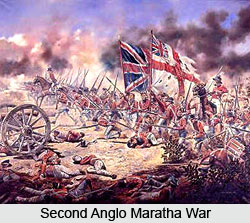 Modern History of Gujarat began with the advent of the Europeans in 1614 AD. The Portuguese built several enclaves along the coastline of Gujarat which marked the era of modern Gujarat. They also constructed many naval ports in present day Daman and Diu, Dadra and Nagar Haveli. In 1614 the British East India Company established their first base in India at Surat. Gradually the company mounted to a dominant presence in India. The British Company took much control from the hands of the Maratha Empire during the Second Anglo-Maratha War. Thus to retain their local independent rule, Many of the Marathas rulers specially the Maratha Gaekwads of Baroda willingly accepted the British sovereignty. The rule of the British officials paved one of the first of many paths to modern Gujarat.
Bombay Presidency took over Gujarat under its political authority excepting Vadodara state which maintained a direct relationship with the Governor-General of India. Gujarat including neighboring places like Kathiawar, Kutch as well as northern and eastern Gujarat were divided into dozens of princely states in 1818 to 1947. However other districts like those in central and southern Gujarat, namely Ahmedabad, Broach (Bharuch), Kaira, Panchmahals district and Surat, were ruled directly by British officials.
During the administration of the British Raj the Indian independence movement remained very active in Gujarat. Mahatma Gandhi proved to be very instrumental in the freedom movement and stood as the greatest of all Gujarati Indian freedom fighters. Gandhiji was supported in his missions and by many other notable Gujarati Indian freedom fighters like Sardar Vallabhbhai Patel, Mahadev Desai, Morarji Desai, KM Munshi, Mohanlal Pandya, Narhari Parikh and Ravi Shankar Vyas.
Mahatma Gandhi led his famous salt satyagraha from Gujarat. Modern Gujarat still shows the grit of such single minded dedication which has helped contemporary Gujarat to grow into an industrial powerhouse.
After Indian independence and the Partition of India in 1947, the new Indian government assembled the states of Gujarat into three larger units; Saurashtra, Kutch, and Mumbai state. In 1956, Mumbai state was enlarged to include Kutch, Saurashtra, and parts of Hyderabad state and Madhya Pradesh in central India. It had a Gujarati speaking north and a Marathi speaking south. Mumbai state was finally demarcated into Gujarat and Maharashtra states. Modern Gujarat was thus formed with Ahmedabad as its capital. In 1970 the capital was moved to Gandhinagar. Thus Gandhinagar is the present capital of modern Gujarat.
Post Independent Gujarat
After gaining independence in 1947, the Indian National Congress party (INC) ruled the Mumbai state. Congress continued to govern Gujarat after the state`s creation in 1960. Gujarat has had 14 different Chief Ministers since its formation in 1960. Dr. Jivraj Narayan Mehta of Indian National Congress was the first Chief Minister. In the 1995 the Congress lost to the BJP and Keshubhai Patel came to power. In 2001 Keshubhai Patel resigned and yielded power to Narendra Modi. He served since 7th October 2001 up to 2014. On 1st June, 2007, Narendra Modi became the longest serving Chief Minister of Gujarat till now on.
Recently updated articles in States of India
Bandare Waterfalls, Meghalaya
Bandare Waterfalls in South Garo Hills, Meghalaya, is a secluded natural attraction surrounded by dense subtropical forests and rugged mountain terrai...
History of Thissur District
Early History of Thissur District explains flourishing of the port cities. Now these port cities are transformed into archaeological sites.
Tippi Orchid Research Centre, Arunachal Pradesh
Tippi Orchid Research Centre in Arunachal Pradesh is renowned for its rich collection of exotic and endangered orchids. Surrounded by lush rainforest...
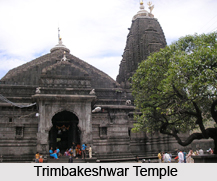
Tourism in Nashik District
Pilgrimage tourism in Nashik district involves visiting the various places of Hindu and Jain worship located here. Some of the holiest sites for Hind...
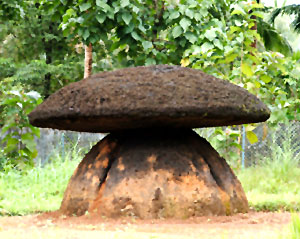
Mangadu, Kerala
Mangadu in Kerala’s Kollam district is a significant megalithic site known for its urn burials, cist burials, menhirs, and stone circles. Excavations...
Related articles in States of India
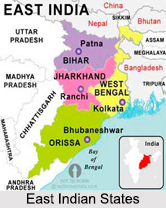
East Indian States
East Indian States comprises of Bihar, Jharkhand, West Bengal, Odisha and also the Union Territory of Andaman and Nicobar Islands. It defines the cult...
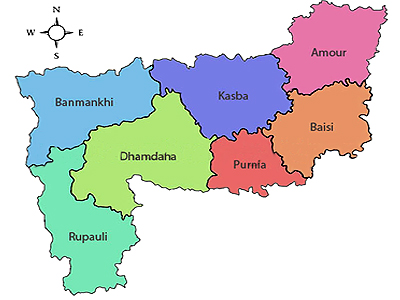
Purnia District in Bihar
Purnia District is located in Bihar and extends from River Ganga to Nepal. The district has a rich Hindu history and glorious past.
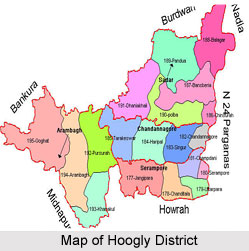
Hooghly district
Hooghly District along the bank of the river Hooghly is one of the principal trading ports of West Bengal.
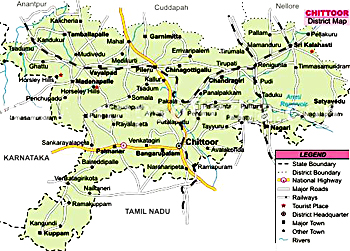
Geography Of Chittoor District
Geography of Chittoor district is spread along the topography of the land which is divided into two natural divisions; Chittoor has a dry and healthy...
Districts of West Bihar
Districts of West Bihar is comprised of medieval monuments that were built by the different governors of Mughal era.