Introduction
The Lendi River originates in Malkapur, located in the Latur district, and traverses approximately 80 kilometers before joining the Manar River at Degloor in the Nanded district in the Marathwada region of Maharashtra state. Serving as a vital water resource for the region, the river supports a wide range of activities, including industrial operations, agricultural irrigation, fisheries, and other human needs. The contributions of Lendi River to the local economy and livelihoods reflect its significance to the communities along its course. The confluence of the Lendi River is situated at Sangavi in Biloli Taluka, marking an important geographical point in its journey.
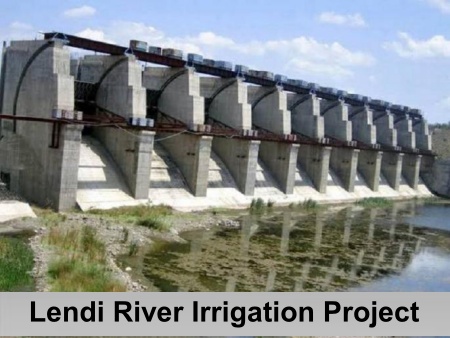
Course of Lendi River
The Lendi River is an important tributary of the Manjira River, flowing across the border regions of Maharashtra and Telangana in central India. The river originates near Udgir and river travels about 80 kilometers. Along its course, the Lendi River is fed by three notable tributaries, namely Tiru, Gurdal, and Bhuvani, which contribute to its overall watershed.
The river system extends across the Nanded and Latur
districts, playing a significant role in supporting the region’s water
resources. Within Nanded district, the Lendi River originates near the village
of Bamni in Mukhed Taluka and flows for approximately 65 kilometers through the
district. As an important water resource in the region, the river supports
various developmental and agricultural activities. To further enhance its
utility and water management capacity, a major irrigation project is currently
under construction at Gonegaon. Numerous small and medium-scale irrigation
projects have already been developed along the Lendi River and its tributaries,
helping sustain agricultural activities and contributing to the economic
well-being of local communities.
Ecosystem of Lendi River
The Lendi River supports a rich and diverse macroinvertebrate community, particularly in terms of molluscan fauna. Studies have identified a total of 15 mollusc species within the river, highlighting the ecosystem’s high biological productivity and ecological health. These bottom-dwelling organisms play a crucial role in the river’s nutrient cycle by converting organic matter, along with meiobenthic organisms, into biomass.
This biomass serves as an important food source for fish and
other aquatic species, making molluscs a key contributor to the river’s
secondary productivity. Through their role in energy transfer and nutrient
recycling, these organisms form an essential component of the Lendi River’s
food chain and food web, helping to sustain the overall balance and functioning
of the aquatic ecosystem.
Flood on Lendi River
The Lendi River is significantly influenced by the region’s monsoon climate, which brings substantial rainfall during the wet season. As a result, the river frequently experiences rapid increases in water levels, leading to swelling and occasional overflow of its banks. During periods of intense rainfall, the risk of flooding in nearby settlements increases, prompting local authorities to issue flood warnings and alerts for villages located along the river’s course. These precautionary measures are aimed at safeguarding communities and minimizing the potential impacts of seasonal flooding.