Introduction

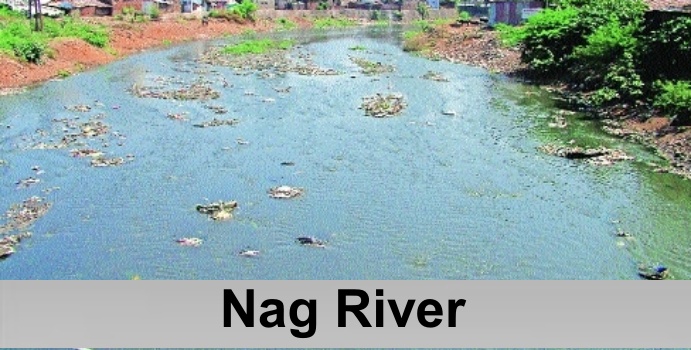
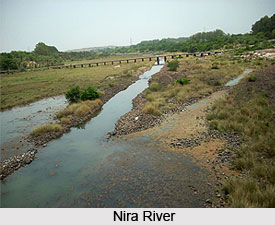
Nag River flows through the city of Nagpur in the Indian state of Maharashtra. The river is closely associated with the city's identity, having lent its name to Nagpur itself. As an important part of the Kanhan–Pench river system, Nag River originates in the Lava Hills near Wadi and traverses the urban landscape before joining larger watercourses downstream.


Course of Nag River

The Nag River rises in the Lava Hills near Wadi village in Maharashtra's Nagpur district, originating at an elevation of approximately 398 meters above mean sea level. From its source, the river initially follows a west-to-east course, marking the beginning of its journey through the region. 

The upper stretch of the river extends for nearly six kilometers before reaching the Ambazari Dam. At this location, the river contributes to the formation of Ambazari Lake, one of Nagpur's most prominent water bodies, through which it continues to flow. The lake serves as an important landmark in the river's course and plays a significant role in the local hydrological system. 

After emerging from Ambazari Lake, the Nag River enters the urban landscape of Nagpur city. As it passes through the city, the river adopts a winding and meandering course, covering approximately 16 kilometers through densely populated and heavily developed areas. Along this stretch, it becomes closely integrated with the city's drainage network, highlighting its importance in managing urban water flow. 

Along its course, the Nag River meets several tributaries at significant confluence points. It merges with the Pioli River near Pawangaon, joins the Pora River near Titur, and eventually converges with the Kanhan River near Sawangi village. These junctions contribute to the river's role within the broader regional drainage network.

Continuing beyond the city limits, the river traverses both urban and rural landscapes before eventually joining the Kanhan River at Agargaon village. From its source in the Lava Hills to its confluence with the Kanhan River, the Nag River spans a total length of about 68 kilometers, making it a significant component of the Kanhan-Pench river system.


Flora and Fauna Supported by Nag River

Historically, the Nag River supported a rich and diverse ecosystem characterized by native riparian vegetation and a variety of aquatic and terrestrial wildlife. The riverbanks were lined with drought-tolerant tree species typical of central India's dry deciduous landscapes. Trees such as neem (Azadirachta indica), peepal (Ficus religiosa), mango (Mangifera indica), ashoka (Saraca asoca), and babul (Acacia nilotica) played a crucial ecological role by stabilizing riverbanks, reducing soil erosion, and providing habitat for numerous pollinators and epiphytic plants. 

The river also supported a range of aquatic vegetation, including emergent and floating macrophytes similar to those found in nearby rivers of the Nagpur region. Species belonging to families such as Cyperaceae and Poaceae contributed to maintaining water quality by absorbing excess nutrients and increasing oxygen levels in the river's less disturbed stretches. These plants formed an essential component of the river's ecological balance and helped sustain aquatic life. 

The Nag River's fauna was equally diverse. Fish communities were dominated by species belonging to the order Cypriniformes, reflecting the broader aquatic biodiversity of the Nagpur district. Indigenous major carp species, including Catla catla, Labeo rohita, and Cirrhinus mrigala, were commonly found in the river and its connected lakes, where they utilized suitable habitats for breeding, feeding, and migration. These fish populations contributed significantly to the ecological productivity of the watershed. 

The river also provided habitat for a variety of reptiles and amphibians. Historical records indicate the presence of the mugger crocodile (Crocodylus palustris), with a specimen reportedly captured within the urban section of the river during the 1970s. Such occurrences suggest that the river once possessed ecological conditions capable of supporting large aquatic predators. The surrounding landscape likewise supported other wetland-dependent wildlife, including leopards (Panthera pardus) in nearby areas and common amphibians such as the Indian bullfrog (Hoplobatrachus tigerinus). 

Ecologically, the Nag River functioned as an important biodiversity corridor linking urban wetlands with the larger Wainganga sub-basin. This connectivity facilitated fish migration, nutrient cycling, and the movement of various species across the watershed. The decomposition of aquatic vegetation contributed to nutrient recycling, while riparian zones acted as natural filtration systems that improved water quality, moderated flooding, and enhanced groundwater recharge within the basaltic terrain of the Deccan Plateau

These ecological processes supported downstream water bodies, including reservoirs such as Gosikhurd, while also sustaining local fisheries and wetland habitats. However, increasing urbanization, heavy sedimentation, and eutrophication resulting from pollution and upstream disturbances have gradually degraded the river's ecological integrity. As a result, habitat quality and species diversity have declined, underscoring the need for ongoing conservation and restoration efforts to preserve the river's environmental significance.


Environmental Challenges on Nag River

Despite its historical and geographical significance, the Nag River has faced severe environmental challenges over the years. Serving as a major drainage channel for Nagpur, the river receives large volumes of urban waste, resulting in extensive pollution and degradation of its ecosystem. Rapid urbanization and inadequate waste management have further intensified the river's environmental problems, affecting water quality and aquatic life.


Conservations of Nag River

Recognizing the river's cultural and historical importance, several initiatives have been undertaken to restore its status and improve its condition. In November 2015, efforts were renewed to reinstate the Nag River on the city's heritage list, from which it had been removed in 2001. These restoration measures aimed not only to preserve the river's historical legacy but also to promote environmental conservation and public awareness about its significance. 

Efforts to restore and revitalize the Nag River gained significant momentum in November 2019 when the National River Conservation Directorate approved the Nag River Rejuvenation Project. Designed as a comprehensive environmental restoration initiative, the project extends beyond the Nag River itself to include the rejuvenation of the Pioli River. Authorities estimated that the ambitious undertaking would require approximately four years to complete. 

In parallel with the rejuvenation efforts, the Nagpur Municipal Corporation (NMC) began preparations for the Nag Riverfront Development Project. The initiative aims to transform the river corridor into a more sustainable and accessible urban space while enhancing its ecological and aesthetic value. 

The urgency of river management became even more apparent following the devastating floods that affected Nagpur in 2023. In response, authorities announced a flood mitigation plan focused on reducing future flood risks and improving the river's capacity to manage excess water. The proposed measures included the removal of encroachments along the riverbanks, as well as extensive deepening and desilting operations at multiple locations. These interventions were intended to improve water flow, strengthen flood resilience, and support the long-term restoration of the river ecosystem. 

Together, these initiatives reflect a broader commitment to rehabilitating the Nag River, improving its environmental health, and restoring its significance as an important natural asset for the city of Nagpur.