
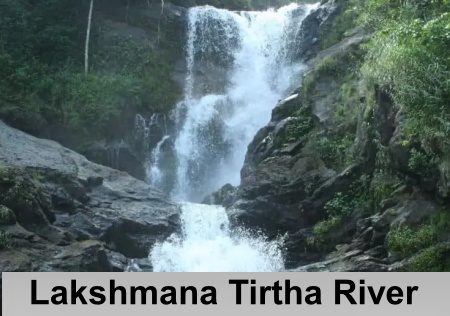
 The Lakshmana Tirtha is a river in the Indian
state of Karnataka
and one of the major right-bank tributaries of the Kaveri River.
Originating in the Kodagu
district, it flows eastward before merging with the Kaveri in the Krishna
Raja Sagara Reservoir. The river holds considerable mythological
significance and is closely associated with the cultural heritage of the
region. In addition to its historical and religious importance, the Lakshmana
Tirtha is renowned for the many popular tourist attractions situated along its
course in the Kodagu (Coorg)
district, making it an important natural and cultural landmark of Karnataka.
The Lakshmana Tirtha is a river in the Indian
state of Karnataka
and one of the major right-bank tributaries of the Kaveri River.
Originating in the Kodagu
district, it flows eastward before merging with the Kaveri in the Krishna
Raja Sagara Reservoir. The river holds considerable mythological
significance and is closely associated with the cultural heritage of the
region. In addition to its historical and religious importance, the Lakshmana
Tirtha is renowned for the many popular tourist attractions situated along its
course in the Kodagu (Coorg)
district, making it an important natural and cultural landmark of Karnataka.
Lakshmana Tirtha River
Lakshmana Tirtha River is an important right-bank tributary of the Kaveri River in Karnataka. Originating in the Brahmagiri Range of Kodagu district, it flows through ecologically rich landscapes before joining the Kaveri at the Krishna Raja Sagara Reservoir. The river is renowned for its mythological significance, scenic beauty, and ecological importance.
Introduction
Legends Associated with Lakshmana Tirtha River
Lakshmana Tirtha River is associated with several legends,
the most well-known of which is derived from the Ramayana. According to
tradition, Lord Rama
and his brother Lakshmana
reached the Brahmagiri Hills while searching for Sita. When Rama became
thirsty, Lakshmana is believed to have shot an arrow into the hillside, causing
a spring to emerge and giving rise to the Lakshmana Tirtha River. Owing to this
sacred origin, the river is revered by devotees and is believed to possess the
power to cleanse individuals of their sins. Consequently, it attracts large
numbers of pilgrims, especially during the festival of Maha Shivaratri.
Course of Lakshmana Tirtha River
The Lakshmana Tirtha River originates at an elevation of
approximately 1,450 metres in the Brahmagiri Range
of Kodagu district, Karnataka. From its source, the river flows eastward
through the relatively flat terrain of South Kodagu before joining the Kaveri
River at the Krishna Raja Sagara (KRS) Reservoir, one of Karnataka's most
important water storage reservoirs. Covering a total length of approximately
180 kilometres, the Lakshmana Tirtha plays a significant role in the region's
hydrological network and contributes to the water resources of the Kaveri
basin.
Tourism Along the Banks of Lakshmana Tirtha River
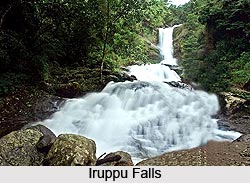 Originating in the Brahmagiri Range of the Western Ghats,
the Lakshmana Tirtha River descends approximately 170 feet to form the
picturesque Iruppu
Falls, one of the most popular freshwater waterfalls
in Karnataka. Located near the Kerala border on the route to Nagarahole
National Park, the falls are a major tourist attraction, drawing
visitors for their scenic beauty and religious significance.
Originating in the Brahmagiri Range of the Western Ghats,
the Lakshmana Tirtha River descends approximately 170 feet to form the
picturesque Iruppu
Falls, one of the most popular freshwater waterfalls
in Karnataka. Located near the Kerala border on the route to Nagarahole
National Park, the falls are a major tourist attraction, drawing
visitors for their scenic beauty and religious significance.
The revered Rameshwara Temple, dedicated to Lord Shiva, is situated on the banks of the Lakshmana Tirtha near the waterfall, making the site an important pilgrimage destination.
After cascading over Iruppu Falls, the river meanders through the forests of Nagarahole National Park before entering the Mysuru district. The town of Hunsur lies along its banks, and the river serves as an important source of drinking water for the local population. Throughout its course, the Lakshmana Tirtha supports the ecological and hydrological systems of the region.
The river and its surrounding landscape are characterized by
rich biodiversity, providing habitat for a variety of wildlife and bird species. The
forested areas adjoining the river are particularly attractive to birdwatchers,
wildlife enthusiasts, and nature lovers. The surrounding hills and dense
vegetation also offer opportunities for nature walks and trekking,
allowing visitors to experience the natural beauty of the Kodagu region.
The most favourable time to visit the Lakshmana Tirtha River and its nearby
attractions is between October and May, when pleasant weather and clear
conditions enhance the region's scenic appeal and facilitate outdoor
recreation.
Flooding on the Banks of Lakshmana Tirtha River
Like many tributaries of the Kaveri River, the Lakshmana
Tirtha experiences a substantial increase in water flow during the monsoon
season. During this period, the river and its waterfalls are at their
fullest, enhancing the scenic beauty of the region. However, the seasonal rise
in water level also leads to the flooding of adjacent paddy fields, influencing
the surrounding agricultural landscape.
Environmental Threats to Lakshmana Tirtha River
Lakshmana Tirtha River faces several environmental challenges that have affected its hydrological regime and ecological health. In the months following the monsoon season, sections of the river often experience significantly reduced flow or dry conditions. This seasonal depletion is attributed to factors such as declining groundwater levels, prolonged exposure to direct sunlight, and the limited riparian vegetation along parts of its course. Unlike the Kaveri River, which benefits from the shade provided by the dense coffee plantations of Kodagu, the Lakshmana Tirtha remains more vulnerable to evaporation and reduced water retention.
Pollution of the river and its tributaries, has emerged as another major environmental concern. Streams such as the Kuranthoad, which flows near Ponnampet and Gonikoppal, are affected by the indiscriminate disposal of solid waste. In addition, untreated wastewater generated during the coffee-processing season, particularly from the depulping of coffee cherries, poses a serious threat to the river's water quality. Further downstream, untreated municipal wastewater from the town of Hunsur is discharged directly into the river, contributing to its deterioration. Illegal sand mining along the riverbed has also become a persistent challenge, causing ecological degradation and creating significant enforcement issues for the district administration.
Recently updated articles in Geography of India
Krishnaveni River
The Krishnaveni River, presently known as the Krishna River, is one of India’s major rivers. Originating in the Western Ghats of Maharashtra, it flows...

Wakal River
The Wakal River is an important tributary of the Sabarmati River, originating in Rajasthan’s Aravalli Range and flowing through Rajasthan and Gujarat....
Pahuj River
Pahuj River is an important tributary of the Sindh River that flows through the Indian states of Madhya Pradesh and Uttar Pradesh. Originating in the...
Arunavati River
Arunavati River is a seasonal right-bank tributary of the Tapi River, flowing through parts of Madhya Pradesh and Maharashtra. Originating in the Satp...
Nira River
Nira River is an important tributary of the Bhima River flowing through Maharashtra. Originating in the Western Ghats, it traverses Pune, Satara, and...
Related articles in Geography of India
Geography of Sikkim
Geography of Sikkim is characterised by a vast array of magnificent hillock that extends from one corner of the state to the other.
Geography of Meghalaya
The suitable climate, highland plateaus, rivers and the flora and fauna together forms the geography of Meghalaya.
Geography of Jammu & Kashmir
Jammu and Kashmir is encompassed by valleys. Some of the dominant valleys of the state are Kashmir Valley, Tawi Valley, Chenab Valley, Poonch Valley,...
Narmada River
Narmada River is regarded as the 5th longest river of India and the life line of Madhya Pradesh. Narmada River basin spreads over an area of about 98,...
Bhima River
The Bhima River is the largest tributary of the Krishna River and is significant in the western and southern Indian states.