
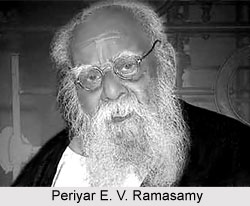
 Erode Venkata Ramasamy was a businessman, politician and a social activist. He was affectionately known as "Periyar", "Thanthai Periyar" or "E. V. R.", who started the Self-Respect Movement or the Dravidian Movement and proposed the creation of an independent state called "Dravida Nadu" comprising South India. He also was the founder of the socio-cultural organization named "Dravidar Kazhagam", a political party with principles of rationalisation, atheism, women rights and caste equality.
Periyar E. V. Ramasamy
Periyar E. V. Ramasamy was a social thinker and a person who wore many hats at the same time. He brought about many changes in the society.
Introduction
Erode Venkata Ramasamy was a businessman, politician and a social activist. He was affectionately known as "Periyar", "Thanthai Periyar" or "E. V. R.", who started the Self-Respect Movement or the Dravidian Movement and proposed the creation of an independent state called "Dravida Nadu" comprising South India. He also was the founder of the socio-cultural organization named "Dravidar Kazhagam", a political party with principles of rationalisation, atheism, women rights and caste equality.Early Life of Periyar E. V. Ramasamy
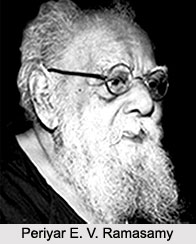 Early life of Periyar E. V. Ramasamy (who was born as Erode Venkata Ramasami Naicker) was spent in the town city of Erode, then a part of Coimbatore District of Madras Presidency in the year 1879 on 17th Spetember. He came from a well-to-do family, where his father - Venkatappa Naicker (or Venkata) was a wealthy businessman and his mother Chinna Thayammal alias Muthammal. He actually had an elder brother by the name of Krishnaswamy and two sisters named Kannamma and Ponnuthoy. Later, he came to be called as "Periyar" meaning `respected one` or `elder` in Tamil.
At the First Provincial Self-Respect Conference of Chenggalpattu, in the year 1929, Periyar E. V. Ramasamy announced the deletion of his caste surname Naicker from his name at the First Provincial Self-Respect. He was a person who could speak three Dravidian languages - Kannada language, Tamil language and Telugu language, with ease. However, his mother tongue was Kannada language.
He attended school for five years and thereafter he joined his father`s business at the tender of 12. He also used to listen to Tamil Vaishnavite guru who gave lectures and speeches in his house enjoying his father`s hospitality. From a very young age he developed several questions within himself and also involved in apparent contradictions in the Hindu mythological stories that he opined to be lies that were spread by Indo-Aryan race. As Periyar grew and understood the social structure in a better manner, he felt that religion is used by people only as a mask to mislead guiltless people and therefore took it as one of his duties in life to warn people against superstitions and priests.
When Periyar was still in his teens (19 years to be precise) his father arranged for his wedding. Nagammai, his bride, was only thirteen years. It was not, altogether, an arranged marriage because Periyar and Nagammai had known each other and were already in love with each other. Nagammai actively supported her husband in his later public activities and agitations. Two years after their marriage, a girl child was born to them. However, this child lived only for five months. The couple had no more children
Scholarly life of Periyar E. V. Ramasamy
Periyar E. V. Ramasamy would often claim that Tamil Language, Telugu language, Kannada language and Malayalam language originated from the same mother tongue of old Tamil. He also explained that Tamil language is called by four different names since it is also spoken in four varied Dravidian states.
Nonetheless, the present understanding of Dravidian language also contains statements which contradict such claims. For example, the currently known classification of Dravidian language also provides the following distinct classes: Southern (including Tamil-Kannada (Malayalam) and Tulu); Central (including Telugu-Kui and Kolami-Parji); and, Northern (including Kurukh-Malto and Brahui).
Periyar E. V. Ramasamy, at the same time, was known to made controversial remarks on the Tamil language and people from time to time. On one instance, he referred to the Tamil people as "barbarians" and the Tamil language as the "language of barbarians". He had some strong ideas and concepts about the vowels in Tamil language.
In stone inscriptions from 400 or 500 years ago, many Tamil letters are found in other shapes. As a matter of necessity and advantage to cope with printing technology, Periyar thought that it was sensible to change a few letters, reduce the number of letters, and alter a few signs. He further explained that the older and the more divine a language and its letters were said to be, the more they needed reform. Because of changes brought about by means of modern transport and international contact, and happenings that have attracted words and products from many countries, foreign words and their pronunciations have been assimilated into Tamil quite easily.
Nonetheless, the present understanding of Dravidian language also contains statements which contradict such claims. For example, the currently known classification of Dravidian language also provides the following distinct classes: Southern (including Tamil-Kannada (Malayalam) and Tulu); Central (including Telugu-Kui and Kolami-Parji); and, Northern (including Kurukh-Malto and Brahui).
Periyar E. V. Ramasamy, at the same time, was known to made controversial remarks on the Tamil language and people from time to time. On one instance, he referred to the Tamil people as "barbarians" and the Tamil language as the "language of barbarians". He had some strong ideas and concepts about the vowels in Tamil language.
In stone inscriptions from 400 or 500 years ago, many Tamil letters are found in other shapes. As a matter of necessity and advantage to cope with printing technology, Periyar thought that it was sensible to change a few letters, reduce the number of letters, and alter a few signs. He further explained that the older and the more divine a language and its letters were said to be, the more they needed reform. Because of changes brought about by means of modern transport and international contact, and happenings that have attracted words and products from many countries, foreign words and their pronunciations have been assimilated into Tamil quite easily.
Social Reforms of Periyar E. V. Ramasamy
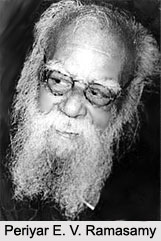 Periyar E. V. Ramasamy made great efforts, right through his life, towards eradication of caste of caste and social reforms. He always wanted to think people to understand that the society was far from ideal and that it is in immediate need off change and reform. He also wanted the government and political parties along with social workers to identify the evils in society and boldly adopt steps to remove them. His philosophy did not discriminate between political service and social service. He felt that first and foremost the duty of government is to efficiently run the social organization, and that the philosophy of religion was to arrange social system.
Periyar E. V. Ramasamy strongly believed that the Muslims and Christians were abiding by this role, but Hindu religion remained totally unsuitable for progress in society. It appeared to him that government did not belong to the people, but it was in a "topsy-turvy" manner, the people were for the government. He absolutely attributed this condition to the state of social system contrived for advantage of a small group of people.
One of the major areas of Periyar E. V. Ramasamy focuses on up-gradation and upliftment of rural population. In a booklet known as Village Periyar plead for rural reform. At that very time, rural India still formed the largest part of Indian subcontinent, in spite of ongoing process of urbanization. Hence, the difference between the urban and rural had meant an economic and social dilapidation for rural inhabitants. Periyar E. V. Ramasamy also wanted to eradicate the idea of "village" as a differentiating word among places, just as idea of "outcast" among social groups. He also strongly backed for a location where neither the name nor situation or its condition implies differences among people. Further, he also encouraged for urbanization of villages by providing public facilities like schools, libraries, radio stations, roads, bus transport, and police stations.
Periyar also felt that a tiny number of cunning people also created caste differences in order to dominate over society. Hence he also emphasized the view that people must look to develop self respect and learn to analyse propositions rationally. Periyar E. V. Ramasamy also took the initiative of explaining that caste system in South India is due to Indo-Aryan influence linked with the arrival of Brahmins from the north. Ancient Tamil Nadu which is actually a part of Tamilakkam, had a different stratification of society in four or five region, determined by natural surrounding and also adequate means of living. He also mentions that animals, birds and worms are considered to be devoid of logic or differences of high and low in their own species.
Religious Belief of Periyar E. V. Ramasamy
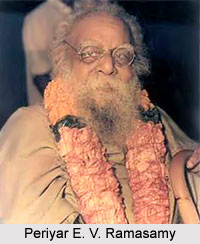 Religious belief of Periyar E. V. Ramasamy resulted in him being considered the Voltaire of South India. Periyar E. V. Ramasamy was mainly regarded as positive propagandist who always condemned the ruthlessness of religious influence on society, mainly the domination of the Brahmin. At a very tender age, he also felt that some people took the help of religion only to shield and deceive innocent people and considered it as his mission in life to warn people against priests and superstitions. Periyar stated that "religion goes hand in hand with superstition and fear. Religion prevents progress and suppresses man. Religion exploits the suppressed classes".
Religious Ideology of Periyar E. V. Ramasamy
Through Periyar"s movement, the Temple Entry Acts of 1924, 1931 and up to 1950 were created for the non-Brahmins. Another accomplishment took place during the 1970s when Tamil replaced Sanskrit language as the Temple language in Tamil Nadu, while Dalits were finally eligible for priesthood. Periyar opposed religion virulently, because according to their views, the so-called men of religion invented myths and superstitions to keep the innocent and ignorant people in darkness and to go on exploiting them.
Periyar and Hinduism
On Hinduism, Periyar believed that it was a religion with no proper distinctive holy books or the origin but to be an imaginary faith preaching the greatness or superiority of Brahmins, the badness or inferiority of the Sudras or the untouchables or Dalits. His contemptuous attitude to the baleful influence of Hinduism in Indian public life is strikingly similar to the anti-Catholic attacks of the enlightenment philosophers. In the year 1955, he was arrested for his public outrage of burning the pictures of Lord Rama at public places, as a symbolic protest against the Indo-Aryan domination and degradation of Dravidian leadership according to the Ramayana epic. The great social reformer, Periyar also criticized the images of Lord Krishna saying that they were Aryan Gods and considered the Dravidians as Sudras to be "sons of prostitutes".
Periyar also openly suggested that those who were marginalised or secluded within the Hindu communities to think of converting to other faiths like Islam, Buddhism or Christianity.
Periyar and Islam
On Islam he said, in many of his speeches, that it was good for abolishing the disgrace in human relationship. He also commended Islam for its belief in one invisible and formless God; proclamation of equal rights for men and women; and advocating of social unity.
Periyar and Christianity
Periyar viewed Christianity similar to the monotheistic faith of Islam, and explained that their faith says that there can be only one God which has no name or shape. Periyar took an interest in Rev. Martin Luther, where both he and his followers wanted to liken him and his role to that of the European reformer. Thus, Christian views such as that of Ram Mohan Roy"s "The Precepts of Jesus" has had at least an indirect influence on Periyar.
Periyar and Buddhism
Apart from Christianity and Islam, he also found in Buddhist religion akin to the philosophy that he believed in. Though he did not accept the religion but somewhat found in that the religion has a basis for his thought and ideology.
Political Life of Periyar E. V. Ramasamy
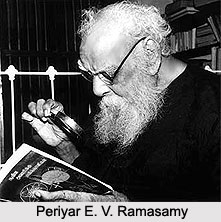 Political life of Periyar E.V. Ramasamy had a very eventful political career. He travelled to several parts of India and also around the world, to gather crucial information about political and social happenings. He, after resigning from business and work, joined Indian National Congress in the year 1919.
In the year 1919, after bidding goodbye to his business and public posts, Periyar joined the Indian National Congress. He also held the post of Chairman of Erode Municipality and sincerely undertook positive programs spreading the use of Khadi, picketing toddy shops, boycotting shops selling foreign cloth, and eradicating untouchability.
Periyar E.V. Ramasamy with Congress Party
In the year 1921, Periyar E.V. Ramasamy courted imprisonment for protesting toddy shops in Erode. When his sister as well as his wife joined the protests it gained the required momentum, and the management was forced to come to a mutual compromise. As a result he was arrested during the Non-cooperation movement and Temperance movement. In the year 1922, during the Tirupur session, Periyar was also elected as the President of Madras Presidency Congress Committee, where he advocated strongly for reservation in government jobs and education. His attempts were also defeated in the Congress party due to strong presence of indifference and discrimination, which of course led to him leaving the party in the year 1925.
Periyar E.V. Ramasamy and Self-Respect Movement
Periyar during the early years of Self-Respect Movement campaigned hard to pressurize and influence the administration in government to take proper measures in order to remove social inequality, even while other nationalist forerunner focussed on the struggle for political independence. The self respect movement in Tamil Nadu was described from the beginning as "dedicated to the goal of giving non-Brahmins a sense of pride based on their Dravidian past". In the year 1952, Periyar Self-Respect Movement Institution was registered with the list of features and plans of the institution. Some of the features can be noted thus;
A. for the diffusion of useful knowledge of political education; B. to allow people to live a life of freedom from slavery to anything against reason and self respect; C. to do away with needless customs, meaningless ceremonies, and blind superstitious beliefs in society; D. to put an end to the present social system in which caste, religion, community and traditional occupations based on the accident of birth, have chained the mass of the people and created "superior" and "inferior" classes... and to give people equal rights; E. to completely eradicate untouchability and to establish a united society based on brother/sisterhood; F. to give equal rights to women; to prevent child marriages and marriages based on law favourable to one sect, to conduct and encourage love marriages, widow marriages, inter caste and inter-religious marriages and to have the marriages registered under the Civil Law; G. to establish and maintain homes for orphans and widows and to run educational institutions
Ever since 1925, Periyar was busy with the propagation of self respect movement. As a result the movement began to grow fast and also received the sympathy of heads of Justice Party from the very beginning.
Anti-Hindi Agitations by Periyar E.V. Ramasamy
When Chakravarthi Rajagopalachari became the Chief Minister of the Madras State in the year 1937 he also compulsorily introduced Hindi language and Hindi literature in schools thereby igniting a series of anti-Hindi agitations. Several Tamil nationalists started vigorous agitation and in the process many people were also arrested. In the year, 1938, a slogan was raised - "Tamil Nadu for Tamilians". It was in protest against the introduction of Hindi at schools. He also explained that the introduction of Hindi was a severe ploy used by Aryans to infiltrate Dravidian culture. He further reason that introduction of Hindi would certainly make Tamils subordinate to Hindi-speaking North Indians. He said that introduction of Hindi would certainly stop the progress of Tamilians. It could also completely nullify or destroy the culture and progression of Tamils. Hence, cutting across party line, politicians from South India rallied in unison in their opposition to Hindi.
Periyar`s Association with Justice Party and Formation of Dravidar Kazhagam
Justice party was founded in the year 1916 with the main objective to oppose the political and economic power of the Brahmin jati group. The main goal was to render justice to non-Brahmin groups. Hence, in order to propagate the idea, the non-Brahmin politicians began propagating an ideology of equality among non-Brahmin jati groups.
In the year 1937, Periyar prepared resistance through the Justice Party for the introdutin of Hindi language. After 1937, the Dravidian movement derived considerable support from the student community. In later years, opposition to Hindi played a big role in the politics of Tamil Nadu.
At a rally in the year 1944, Periyar, in his capacity as the leader of the Justice Party, declared that the party would henceforth be known as the Dravidar Kazhagam, or "Dravidian Association". However, a few who disagreed with Periyar started a splinter group, claiming to be the original Justice Party. This party was led by veteran Justice Party leader P. T. Rajan and survived till 1957.
Later Years in Politics for Periyar E.V. Ramasamy
Inspite of several warning from P. Kakkan, the President of the Tamil Nadu Congress Committee, Periyar in the year 1956 organized procession to the Marina in order to burn pictures of the Hindu God - Lord Rama. Periyar was subsequently arrested and confined to prison. Protests and propaganda politics continued for Periyar and he was arrested many a time as well. On 24th December 1973, Periyar died at the age of 94.
Principle and Legacy of Periyar E. V. Ramasamy
Principle and Legacy of Periyar E. V. Ramasamy is well established and popular among people. He did spent over fifty years giving speeches, propagating the realization that everyone is an equal citizen and the differences on basis of caste and creeds were man-made to keep the blameless and ignorant as underdogs in the society. Although Periyar`s speeches were targeted towards the illiterate and duller mass, scores of educated people were also swayed.
Periyar also viewed reasoning as a special tool. According to him all were blessed with his tool but very few used it. So Periyar used reasoning with respect to subjects of social interests, in his presentations to his audience. Not only was he a social revolutionary, Periyar was also a champion of the underprivileged. His sphere of work was wide and when he took up an issue he went deep into it, took time to understand the aspects, and did not rest until he found a permanent solution. Communal differences in Tamil society were deep-rooted and appeared to be permanent features until Periyar came to the scene.
Rationalism Theory by Periyar E. V. Ramasamy
The main base of Ramasamy`s principle was rationalism. The main fact that helped him draw closer to public was his philosophy and ideology in life. He always wanted the exploited and deprived to have a good life, and sit up and understand their position. He worked towards creating awareness and awakening among the people. Likewise, Periyar also explained that understanding lies in thinking and that the spear-head of thinking is rationalism. On the issue of caste discrimination he stated that no other living being harms or degrades its own class.
Periyar vehemently criticized the capitalists for their control of machineries, creating problems to the workers. Consequently rationalism, which has to lead the way for peaceful life to all, had resulted in causing scarcity and doubts to the people because of dominating forces. In a message to the Brahmin community, Periyar stated, "in the name of god, religion, and sastras you have duped us. We were the ruling people. Stop this life of cheating us from this year. Give room for rationalism and humanism". He further explained that "any opposition not based on rationalism, science, or experience will one day or another, reveal the fraud, selfishness, lies and conspiracies"
Periyar also viewed reasoning as a special tool. According to him all were blessed with his tool but very few used it. So Periyar used reasoning with respect to subjects of social interests, in his presentations to his audience. Not only was he a social revolutionary, Periyar was also a champion of the underprivileged. His sphere of work was wide and when he took up an issue he went deep into it, took time to understand the aspects, and did not rest until he found a permanent solution. Communal differences in Tamil society were deep-rooted and appeared to be permanent features until Periyar came to the scene.
Rationalism Theory by Periyar E. V. Ramasamy
The main base of Ramasamy`s principle was rationalism. The main fact that helped him draw closer to public was his philosophy and ideology in life. He always wanted the exploited and deprived to have a good life, and sit up and understand their position. He worked towards creating awareness and awakening among the people. Likewise, Periyar also explained that understanding lies in thinking and that the spear-head of thinking is rationalism. On the issue of caste discrimination he stated that no other living being harms or degrades its own class.
Periyar vehemently criticized the capitalists for their control of machineries, creating problems to the workers. Consequently rationalism, which has to lead the way for peaceful life to all, had resulted in causing scarcity and doubts to the people because of dominating forces. In a message to the Brahmin community, Periyar stated, "in the name of god, religion, and sastras you have duped us. We were the ruling people. Stop this life of cheating us from this year. Give room for rationalism and humanism". He further explained that "any opposition not based on rationalism, science, or experience will one day or another, reveal the fraud, selfishness, lies and conspiracies"
Contribution of Periyar E. V. Ramasamy towards Women Welfare
Contribution of Periyar E. V. Ramasamy towards Women Welfare is huge as he played a major role, throughout his life, towards women upliftment. He keenly believed that women should realize their rights and be worthy citizens of their country.
Periyar also fought against the traditional customs of marriage a suppression of women in the Indian state of Tamil Nadu. He felt that though arrange marriages were meant to enable a couple to live together throughout life, but it was actually a manipulation to enslave women. What was even worse was the concept of child marriages that prevailed during that time. It was believed that it would be a sin to marry after puberty. Another practise which is still prevalent even today is the dowry system where the bride`s family is supposed to give the husband a huge payment for the bride. The purpose of this was to assist the newly wedded couple financially, but in many instances dowries were misused by bridegrooms. The outcome of this abuse turned to the exploitation of the bride`s parents wealth, and in certain circumstances, lead to dowry deaths. There have been cases where women have been murdered, mutilated, and burned alive because the father of the bride was unable to make the dowry payment to the husband. Periyar fiercely stood up against this abuse meted out against women.
In the ancient times, women in India did not have the property rights of their family or husbands. Periyar seriously fought to address this issue. While birth control remained taboo in society of Periyar`s time, he advocated for it not only for the health of women and population control, but for the liberation of women. He also made efforts to make sure education reached women as well like the male counterpart.
In the Tamil society, Periyar and his movement have achieved better status. It was his conviction that in matters of education and employment there should be no difference between men and women. There was a time when women never pursued higher studies, but now it is seen that women too, opt for engineering studies.
Through his advocacy for the equality of men and women, girls started to receive rights over ancestral property along with male children. In one of his meetings he even wondered why the scientists should not think of producing test tube babies.
Periyar also fought against the traditional customs of marriage a suppression of women in the Indian state of Tamil Nadu. He felt that though arrange marriages were meant to enable a couple to live together throughout life, but it was actually a manipulation to enslave women. What was even worse was the concept of child marriages that prevailed during that time. It was believed that it would be a sin to marry after puberty. Another practise which is still prevalent even today is the dowry system where the bride`s family is supposed to give the husband a huge payment for the bride. The purpose of this was to assist the newly wedded couple financially, but in many instances dowries were misused by bridegrooms. The outcome of this abuse turned to the exploitation of the bride`s parents wealth, and in certain circumstances, lead to dowry deaths. There have been cases where women have been murdered, mutilated, and burned alive because the father of the bride was unable to make the dowry payment to the husband. Periyar fiercely stood up against this abuse meted out against women.
In the ancient times, women in India did not have the property rights of their family or husbands. Periyar seriously fought to address this issue. While birth control remained taboo in society of Periyar`s time, he advocated for it not only for the health of women and population control, but for the liberation of women. He also made efforts to make sure education reached women as well like the male counterpart.
In the Tamil society, Periyar and his movement have achieved better status. It was his conviction that in matters of education and employment there should be no difference between men and women. There was a time when women never pursued higher studies, but now it is seen that women too, opt for engineering studies.
Through his advocacy for the equality of men and women, girls started to receive rights over ancestral property along with male children. In one of his meetings he even wondered why the scientists should not think of producing test tube babies.
Periyar E. V. Ramasamy and the Eradication of Caste
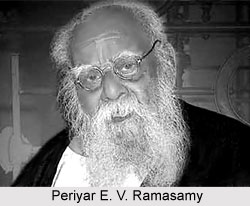 Periyar E. V. Ramasamy played a crucial role in eradication of caste in India. He founded the self respect movement in Tamil Nadu and also formed the Dravidar Kazhagam. On caste system in India, Periyar harshly dealt with the practise of discrimination and its subordination of the different levels it created in society. He also severely attacked those who used who used the system to take advantage of the masses through subjugation and exploitation.
Philosophy of Periyar E. V. Ramasamy
He felt that very few numbers of people created caste distinction in order to dominate over society. Hence he was of the view that one must first develop self respect and rationally learn to analyze proposals. A self respecting and pragmatic individual will realize that caste system has been stifling self-respect and therefore he will strive to get rid of this menace.
Periyar explained during many of his public debates and speeches that the system of caste system in South India was due to the influence of Indo-Aryan, which was linked with the arrival of Brahmins from the North. Periyar believed that people with even a small sense of logic would never give special treatment to Brahmins. Some of the prime examples practised for lower castes to fall at their feet and to even sometimes, wash their feet and drink that water. Gandhi supported caste system in its preservation. On the issue of Untouchables being prevented from drawing water from wells and entering temples, Mahatma Gandhi suggested having separate wells and temples made for them instead. Periyar argued against this by demanding the Vedas of Indo-Aryans to be burnt and their deities to be destroyed since it was their creation of the castes and Untouchables.
Periyar said that caste systems have actually perverted the ideas of peoples about conduct of human beings. The principle of different codes of conduct for each caste based on birth and life, led in accordance with it for centuries, have spoiled the Hindu mentality almost beyond repair, and destroyed the idea of uniformity in conduct. Graded inequality has got so much into the Hindu blood that general intelligence is warped and refused to mend even after English education and higher standards of living.
Service to the Backward Classes
Soon after Periyar entered Congress, he also realized that Brahmin had many more government jobs than the non-Brahmins and that higher education was more or less their prerogative. He also wanted the Indian National Congress to pass a resolution demanding communal representation in education and employment.
Kumarasami Kamaraj was thoroughly convinced that Periyar was only demanding justice for the non-Brahmins who had been neglected and exploited by certain sections of the people for hundreds of years. Therefore he readily accepted Periyar`s suggestion that poor people should have free education.
Recently updated articles in Personalities in India

Governors of Mizoram
The Governor of Mizoram is the constitutional head of the state and is appointed by the President of India. The Governor performs various constitution...
Governors of Jharkhand
Governors of Jharkhand have served as the constitutional heads of the state since its formation on 15 November 2000. Appointed by the President of Ind...
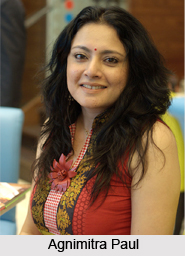
Agnimitra Paul
Agnimitra Paul is an Indian fashion designer and politician serving as a Member of the West Bengal Legislative Assembly from Asansol Dakshin. A senior...
Governors of Uttarakhand
Governor of Uttarakhand is the nominal head of the state. The Governor is also the representative of the President of India in the state of Uttarakhan...
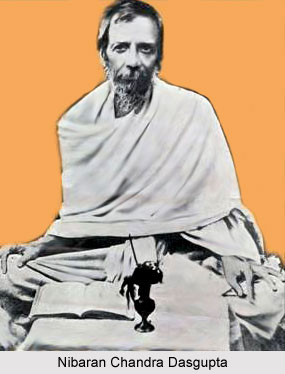
Nibaran Chandra Dasgupta
Nibaran Chandra Dasgupta was a distinct personality of Bengal who became famous for the establishment of ‘Shilpashram,’ a rural industry within the ma...
Related articles in Personalities in India

Sanskrit Theatre Personalities
Sanskrit Theatre Personalities was the main elements of Indian theatre with culture, customs and ethnicity.
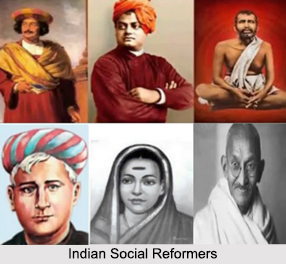
Indian Social Reformers
The Indian Social Reformers are responsible for liberating the nation of several social and religious evils.
Raja Ram Mohan Roy
Raja Ram Mohan Roy is a great Indian social reformer who is celebrated all over the country. He has done many operations for the liberation of women....