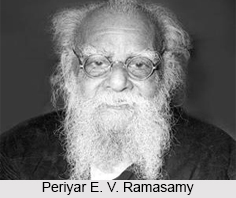
 Self-respect Movement is aimed to achieve a society devoid of backward castes and equal human rights for people. It encouraged the backward castes to possess self-respect with regard to a society based on castes that viewed them to be in the lower ladder of the hierarchy. In the year 1925, the Self-Respect Movement was founded by Periyar E. V. Ramasamy, popularly called Periyar, in the Indian state of Tamil Nadu. The movement, a part of the Dravidian Movement, also incorporates different phases and strands of the Justice Party, the Dravidian Federation and the Dravida Munnetra Kazhagam.
Concept of Self-Respect
According to Periyar, if a man developed self respect then it eventually help him to build a strong individuality. Periyar declared that the Self-Respect Movement alone could be the genuine freedom movement, and political freedom would not be fruitful without individual self-respect. He remarked that the so-called `Indian freedom fighters` were showing disrespect of self-respect, and this was really an irrational philosophy. According to Periyar, political freedom did not cover the concept of self-respect of individual. He believed that self-respect is equally valuable like life and its protection is everyone"s birthright; not same as Swaraj. Periyar described the concept as "Arivu Vidutalai Iyakkam", which means a movement to liberate the intellect.
Anti-Brahmanism in Self-Respect Movement
During the Self-Respect Movement, Tamil Brahmins were frequently oppressed by the lower caste people, which often resulted in attacks on Brahmins. This thing turns the situation into a mass-migration of Brahmin population. According to many, the values of non-Brahmin movement were explicitly anti-Brahmin.
Self-Respect Marriages
Periyar considered the earlier concept of marriages as financial arrangements and a great burden of debt for dowry. So, self-respect marriage system was the most innovative concept of this movement, which brought major sociological changes. Self-respect marriages were conducted without the approval of a Brahmin priest. The Self-Respect Movement encouraged inter-caste marriages, love marriages replaced by arranged marriages that are not constrained by caste.
Feminist Concept of Self-Respect Movement
According to many, the Self-Respect Movement was also partially based on the concept of feminism. Gender relationships and women"s rights took over the Brahminical patriarchy. In Periyar`s model of society, Women were allowed to have contraception and permanent birth control measures. They could choose partners as their choices and divorce them and remarry. Widows were not bounded with religious beliefs, customs and rituals.