Introduction

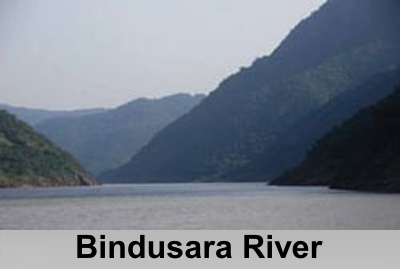
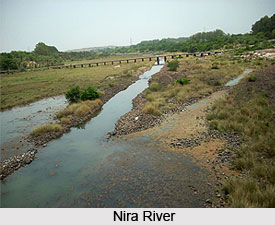
Bindusara River, also known as Bendsura, is a 40-kilometer-long river located in the Beed district of Maharashtra, India. Flowing through the region, it is a tributary of the Sindphana River, which in turn is a sub-tributary of the Godavari River system. As part of the extensive Godavari basin, the Bindusara contributes to the network of rivers that support the ecology and water resources of the region.


Course of Bindusara River

Bindusara River originates in the Balaghat hills near the village of Waghira in Patoda taluka, located in the southern part of Beed district, Maharashtra. Surrounded by hilly terrain, the river is fed by numerous small streams that contribute to its flow. The city of Beed is situated along the banks of the Bindusara, making the river an important geographical feature of the region. 

In several stretches, the Bindusara River narrows considerably and resembles a small stream. The surrounding landscape is characterized by sparse vegetation, rocky surfaces, and undulating terrain. These conditions often contribute to the occurrence of sudden and intense floods during periods of heavy rainfall. Throughout the history of Beed, such floods have caused significant damage to property and loss of life. One of the most devastating incidents occurred on July 23, 1989, when severe flooding affected three settlements in the town, resulting in numerous deaths, missing persons, and extensive property damage. 

The river flows from south to north before joining the Sindphana River approximately 10 kilometers north of Beed town. The Bindusara forms part of the larger Godavari River basin through its connection with the Sindphana.


Etymology of Bindusara River

Bindusara was the second emperor of the Mauryan Empire, ruling from approximately 297 BCE to 272 BCE after succeeding his father, Chandragupta Maurya. He inherited a vast empire that stretched across northern, central, and eastern India and included territories in present-day Afghanistan and Baluchistan. During his reign, Bindusara further expanded Mauryan influence into southern India, reaching as far as the region now known as Karnataka. Historical accounts credit him with bringing sixteen states under Mauryan rule. 

Despite his expansionist policies, Bindusara chose not to conquer the friendly Dravidian kingdoms of the Cholas, Pandyas, and Cheras, maintaining peaceful relations with these southern powers. He was a follower of the Ajivika sect, an ancient Indian religious movement known for its ascetic practices and belief in fate, which existed alongside Buddhism and Jainism

Bindusara also maintained cordial relations with the western regions of India, including the area that is now part of Maharashtra. According to local tradition, the Bindusara River was named in his honor as a tribute to both his accomplishments as a Mauryan ruler and the goodwill he fostered with the region. The river continues to serve as a reminder of his legacy and his connection to western India.