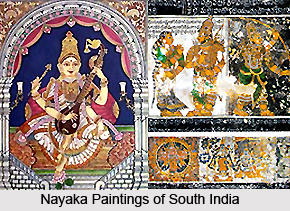
The paintings of the Nayak phase of
Madurai and
Tanjavur was as important as the Vijayanagara phase. The traces of Nayaka paintings can be seen at the
Tiruparuthikundram apart from the Vijayanagara paintings. Most of these paintings of Nayaka period are of the 16th century and few are from the 17th century.
Depiction in Nayaka Paintings
These Nayaka paintings depict the scenes from the life of Rishabhadeva, the first
Thirthankara of Vardhamana, of
Krishna, the cousin of the Thirthankara, Neminatha as well as the life of Neminatha himself. These are all graphically portrayed in a long series with elaborate labels in
Tamil language giving details of each painting which became the usual feature as such labels are seen in Chidambaram paintings and
Tiruvalur etc.
Nayaka Paintings in Tanjavur
In the Tanjavur temple, there is a long panel facing west, in the circumambulatory passage. This shows
Lord Indra on an
elephant,
Agni (the Lord of Fire) on a
ram, Yama (God of Death) on a buffalo,
Niritti on a human mount,
Varuna (Rain God) on a
makara and
Marut (Wind God) on a deer. These Nayaka paintings depict the glory of Indra by repeating him on an elephant at one end. These paintings depict the `
samudra manthana` scene, showing the rising of the objects from the ocean as it was churned. The things rose shown here include the Kalpavriksha (wish-fulfilling tree), Uchchaisravas (celestial horse),
Airavata (heavenly elephant), Kamadhenu (the cow of plenty),
Rambha, Urvasi (celestial nymphs) and others. It also depicts
Goddess Lakshmi is towards one end on a
lotus, with her hands in a posture of assurance of protection and prosperity and is approached by the devatas. Many other such valuable and noteworthy Nayaka paintings can be seen in various
temples of Kumbakonam and other places in Tanjavur district.
Nayaka Paintings in Tiruvarur
The
Tiruvarur temple is among the most famous
Saivite shrines of South India. One of such paintings of the late 17th and early 18th centuries can be seen on the ceiling, between the rows of pillars in the thousand pillared mandapa. In this painting, the great devotee of
Siva, Muchukunda Chola is portrayed as a great friend of Indra and as his great ally in overcoming the asuras. He is shown majestically riding on an elephant in a procession. He is received with great honor by Indra at the entrance of the city and beautiful celestial damsels are shown honoring him from their balconies, which is most beautifully represented.
Nayaka Paintings in Chidambaram
On the ceiling of the large mandapa of Chidambaram temple, there is a nice Nayaka painting depicting the story of the genesis of the
Bikshatana form of Siva and
Mohini form of
Vishnu. The plan of
Siva and Vishnu was to proceed to Darukavana to protect the rishis and rishipatnis (wives of the rishis) by assuming the guise of the naked beggar and the bewitching enchantress. In one of the paintings
Ganesa (the elephant faced god) and Umasahita are shown with rishis,
Skanda (Muruga) with Valli and Devasena. This painting can be seen towards the other end of the mandapa. Here, one can also see
Nandi conversing with Siva and
Parvati in
Kailasa, Nataraja as Sabhapati with Sivakamasundari (
Parvati) surrounded by Ganas dancing and playing musical instruments. These Nayaka paintings here also depict several other stories from Sivapurana, illustrating the lives of saints.
Other Paintings of Nayaka Period
The temple of Tiruvalanjuli has vigorously painted panels depicting Vishnuanugraha Murthi (blessing Vishnu). The story of Muruga teaching Pranava to
Brahma and that of Siva with chinmudra is inscribed here. The paintings of the Nayaka period continue the traditions of the
Vijayanagar craftsmen and they influenced the art of
Mysore, Vellore, Penukonda and
Srirangapattinam.

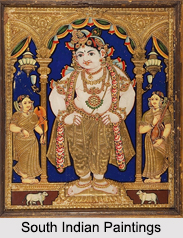
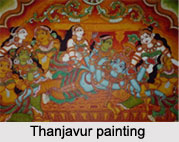 Paintings in South India are famous for their intricate curves and bright colours. There are many schools for painting in South India like the Mysore, Tanjore, Nayaka, Chola and so on. Pallava period paintings are known to us from small fragments recorded in the little shrines to set into the area wall of the Kailashnath temple at Kanchipuram. Mural and album paintings from the last 2 or 3 centuries stay alive in some extent from the South Indian paintings; Hindu paintings from the more isolated past survived to much lesser degree.
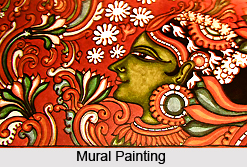 Paintings are the one of the most appropriate ways for the expressions of human imaginations and thoughts since time immemorial. This form of art has been an integral part of the culture and tradition of India. Historical records have furnished numerous evidences of beautiful paintings dating back to the age of early civilization. Various caves and religious places hold the testaments of varied painting forms. Paintings of India have been hugely influenced by the different cultures prevailing in different regions of the country. However, in course of time, many regions have developed their unique style of painting which later became the representatives of their cultural heritage. Paintings of Southern India, over time, have also developed as hugely acclaimed forms of art in India.
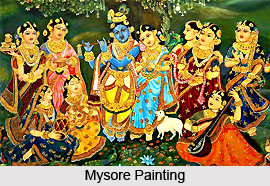 One of the most famous traditional paintings of Karnataka is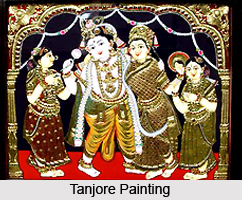
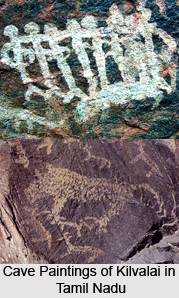 Art has no particular history of its origin. Since the prehistoric days, man had been painting in stones and rocks. Earlier, man was entirely dependent on stones and so they used to settle down in places where the stones can be found nearby. Thus, the beautiful paintings of that period can be found only in those stones and engravings on rocks and caves.
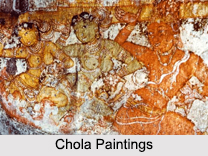 Chola Paintings of South Indian have very high significance in the