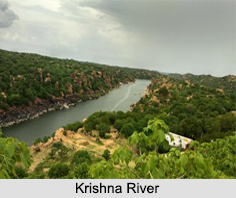
Krishnaveni River

The Krishnaveni River, presently known as the Krishna River, is one of India’s major rivers. Originating in the Western Ghats of Maharashtra, it flows through several states before reaching the Bay of Bengal. Revered for its religious significance, the river supports agriculture, irrigation, biodiversity and communities along its extensive basin.

Introduction

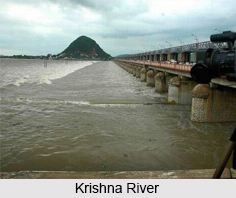
Krishnaveni RiverThe Krishnaveni River, presently known as the Krishna River, is one of the longest rivers in India and is referred to as Krishnaveni in Puranic texts. It originates in the Western Ghats at Mahabaleshwar in Maharashtra, at an elevation of approximately 1,300 feet above sea level. The river flows eastward and ultimately meets the Bay of Bengal at Hamsaladeevi in Andhra Pradesh on the eastern coast. 

The Krishnaveni River or Krishna River flows across the Deccan Plateau. It is the third-longest river in India, following the Ganga and Godavari. In terms of water inflow and river basin area, it ranks as the fourth-largest river in the country, after the Ganga, Indus and Godavari. The river serves as a major source of irrigation for the states of Maharashtra, Karnataka, Telangana and Andhra Pradesh.
Etymology of Krishnaveni River

The word “Krishna” in Sanskrit means ‘dark complexioned’ and “veni” means river. As per legends, Krishnaveni river was created by Gods to help mortals cleanse their sins in Kaliyuga once they take bath in this river. Since the river carries the sins, it is referred to as dark river. Puranas also state this river to be a form of Lord Krishna, hence the river was called Krishnaveni.

Historical Reference of Krishnaveni River

Jain literary sources, including the Kalpasutra and the Nisithacurni, refer to the region around the Krishnaveni (Krishna) River as Abhiradesa, meaning the “land of the Abhiras.” This reference indicates the region’s historical association with the Abhira people. The Abhiras were a legendary community mentioned in ancient Indian epics and scriptures. The Mahabharata describes them as inhabiting areas near the seashore and Somnath in Gujarat, as well as the Matsya region. 

According to tradition, Dattatreya, a revered Hindu deity associated with yoga and the ascetic tradition of Sannyasa, spent some time at Audumber on the banks of the Krishnaveni River.

Puranic Reference of Krishnaveni River

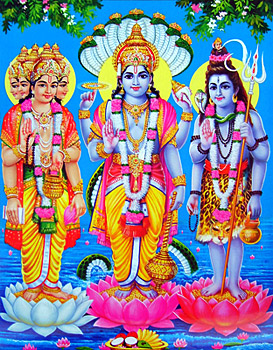
Krishnaveni RiverAccording to religious legends, the Krishnaveni River is regarded as a manifestation of Lord Vishnu, while its tributaries, the Koyna and Venna rivers, are associated with Lord Shiva and Lord Brahma, respectively. Tradition holds that the Hindu Trimurti—Lord Vishnu, Lord Brahma and Lord Shiva—once wished to perform a yajna, or sacred offering ritual. When Brahma’s consort, Savitri, arrived late, Brahma married Gayatri and invited her to participate in the ritual. Upon her arrival, Devi Savitri became enraged and cursed the deities to take the form of rivers. 
As per the legend, the Koyna, Venna (Veni), Savitri and Gayatri rivers, all originate in the Mahabaleshwar hills before eventually merging with the Krishna River. Puranic texts further state that Lord Vishnu transformed himself into the river to protect the world and grant liberation, or Mukti, to devotees during the difficult age of Kali Yuga. 

Beyond its religious significance, the Krishnaveni River is also identified in Kavyashastra as an important river of the Dakshinapatha region. Such references highlight its significance in ancient Indian geographical and literary traditions, reflecting the river’s enduring place in the cultural and historical heritage of India.

Cultural Significance of Krishnaveni River

The Krishna Pushkaram is a Hindu festival celebrated once every 12 years to honour and worship the Krishnaveni River. The festival attracts millions of devotees who gather along the river’s ghats to participate in fairs, prayers and religious rituals. In Maharashtra, the Krishna River is revered as ‘Lokmata’, and the Krishnabai Utsav is celebrated during Baisakh, around May, as an occasion to worship the river. The fertile delta formed by the Krishna and Godavari rivers is widely known as the “Rice Bowl of India.”

Tributaries of Krishnaveni River

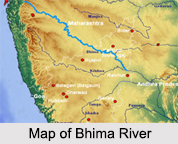
The Krishnaveni River has 13 major tributaries, with the principal ones including the Ghataprabha, Malaprabha, Bhima, Tungabhadra and Musi rivers. Among these, the Bhima River is the longest tributary of the Krishna, or Krishnaveni, River. The Panchganga, Warana and Yerla rivers meet the Krishna near Sangli, and these confluence sites are regarded as sacred by Hindus.

Recently updated articles in Geography of India

Krishnaveni River
Krishnaveni River Thumbnail

Krishnaveni River

The Krishnaveni River, presently known as the Krishna River, is one of India’s major rivers. Originating in the Western Ghats of Maharashtra, it flows...

Wakal River
Wakal River Thumbnail

Wakal River

The Wakal River is an important tributary of the Sabarmati River, originating in Rajasthan’s Aravalli Range and flowing through Rajasthan and Gujarat....

Pahuj River
Pahuj River Thumbnail

Pahuj River

Pahuj River is an important tributary of the Sindh River that flows through the Indian states of Madhya Pradesh and Uttar Pradesh. Originating in the...

Arunavati River
Arunavati River Thumbnail

Arunavati River

Arunavati River is a seasonal right-bank tributary of the Tapi River, flowing through parts of Madhya Pradesh and Maharashtra. Originating in the Satp...

Nira River
Nira River Thumbnail

Nira River

Nira River is an important tributary of the Bhima River flowing through Maharashtra. Originating in the Western Ghats, it traverses Pune, Satara, and...