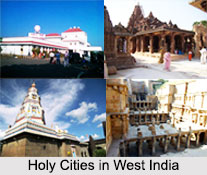
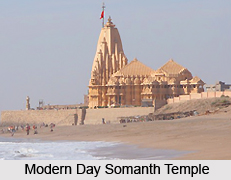
 Somnath is the city located in Veraval region of Saurashtra district in Gujarat. Somnath has a great religious importance. The ancient Hindu temple known as Somnath temple also resides in the region.
Every year the numerous devotees from all over world come to this city of religious and historical importance in order to worship Lord Krishna. This city is also located on west coast of Gujarat and is known for residing one of the Twelve Jyotirlinga of Lord Shiva (Mahadeva).
Somnath temple is also known as Shrine Eternal, Deo Pattan and Prabhas Pattan. Even Somnath temple is recognized for the treasure trove of wealth and goodies.
Somnath enjoys basically the pleasant and temperate climate through out the year. The best time to visit this city is from October to March. During this time, one can enjoy the sightseeing sites and the temples. During monsoon time that is from June to September the arrivals can enjoy rainy days and also at the sightseeing sites. Usually Somnath experiences three types of climate such as winters, summers and monsoons.
Somnath is the important town of religious importance. This is the important tourist attraction site in Gujarat. There is an ancient temple of Lord Shiva at Somnath worshipped by the pilgrims. This temple has been rebuilt in year of 1947 after Independence as it was initially destroyed by the medieval rulers. In May 1951, Rajendra Prasad, the
 First president of India addressed that this Somnath temple will be constructed again. Even he added that this Somnath temple has the power of reconstruction than the power of destruction. On reconstruction of this temple, he made an attempt in Hindu revivalism. This temple has influence from Chalukya style or the Kailash Mahameru Prasad style. The "Shikhar" of this Somnath temple is 150 meters high and has 27 foot tall flag pole at the top.
Somnath is an awe-inspiring land that inhabits several Hindu temples. This pilgrimage place is visited by large number of devotees from all around the world. Tourists visiting Somnath will come across an ancient temple of Somnath. This temple has been rebuilt and razzed eight times and has rich historical relevance behind. Also tourists can visit to Prabas Pata Museum that contains the remains of old temples along with several beautiful fragments such as 11th century ceiling.
Visiting Information
Somnath is a wonderful place that has escaped into the roaring silence of nature. This exotic city of Gujarat, Somnath can easily be arrived. Somnath is connected with well maintained roads and railways. One can travel from Junagadh that is located at a distance of 79 kms far. There are many roads run from this Junagadh city at Chorwad area and help the passengers in reaching the land safe and sound. The tourists can also take State Transport buses and even travel through private luxury coaches. These buses drive from various cities and districts of Gujarat to Somnath city. Tourists can also make their trip more accessible as they can reach at the nearest railway head at Veraval that is located 6kms away from Somnath city.