Although
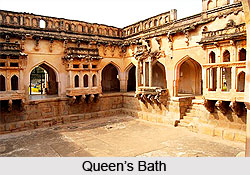
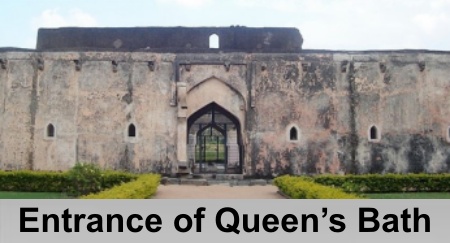
the Queen’s Bath in Hampi appears relatively plain on the exterior, its
interior is ornate and elaborate. The rectangular structure features 24 domes
and Indo-Saracenic-style
arches of varied designs and decorative patterns. One of its distinctive
features is the arrangement designed to prevent water from accumulating around
the building.
Ancient
Hampi had an extensive network of aqueducts and canals that supplied water to
buildings, tanks, baths and temples. Like other public bathing structures in
the region, the Queen’s Bath was connected to an aqueduct to ensure a fresh
water supply. At the centre of the structure lies a square tank, surrounded by
a walkable courtyard.
The Queen’s
Bath is a rectangular structure covering an area of 30 square metres. At its
centre lies a large sunken bath measuring 15 square metres in area and 1.8
metres in depth. The bath is surrounded by elegant arched corridors supported
by pillars, along with projecting, ornately decorated balconies featuring
windows. A mandapa, or auditorium-like pavilion, is also present within the
bathing area, with holes incorporated into its structure for support. The
eastern, western and northern walls feature large open arches at their centres,
complemented by beautifully decorated galleries surrounding the structure.
The
courtyard is surrounded by a vaulted roof and a series of domes, each featuring
distinct decorative patterns. The outer walls of the courtyard are adorned with
small arched windows. A small arched entrance is located beside the southern
portico, which is distinguished by projecting windows overlooking the swimming
pool and stone seating. Steps near this entrance provide access to the upper
floor. The vaulted ceilings and domes in this section feature varied patterns,
while the passage ceilings and balconies are embellished with intricate
plasterwork.
The
octagonal and circular domes of the Queen’s Bath are adorned with intricate
decorative motifs, including semicircular floral panels, rows of parrots, yali
figures, chain patterns, lotuses, flower vines, buds and petals. These
elaborate embellishments enhance the architectural beauty of the domes.
One of the
distinctive features of the Queen’s Bath is its water management system, which
was designed to supply clean water from Kamalapura Lake and drain away
wastewater through small pipes. Water from an external reservoir was channelled
into the structure through a passage made of granite. This passage consists of
a single, well-polished granite block measuring approximately seven feet in
length.
A moat
surrounds the exterior of the Queen’s Bath on all sides, providing privacy when
the structure was in use. Access to the bath is provided by a bridge that
crosses the moat. It is believed that the moat was designed to prevent
unauthorised entry into the building while the royal family was bathing.