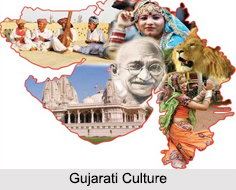
 Culture of Gujarat is curbed out due to inter-mixing of diverse ethnic folks. Gujarat is also called as "Jewel of Western India" and is known for its unique and rich culture. Being the land of Mahatma Gandhi, it also has a history of political upsurge during Indian freedom movement. However, with least number of urban populace, the rural areas of Gujarat and its cultural exuberance are beautifully manifested in its plethora of elements. The Gujarati culture is a blend of their beliefs, customs, inventions, values and technology.
Language of Gujarat
Indo-Aryan language evolved from Sanskrit Gujarati is spoken in Gujarat. The native language spoken in Gujarat is "Gujarati". Surti, kathiawadi and charotari languages all also are wide spoken in Gujarat. People of Kutch speak Kutchi; while Memoni is also spoken among Sindhi memons and Muslims.
 Festivals of Gujarat
The ethnicity of Culture of Gujarat can be best experienced by the vistas of its festivals. In their celebrations, all the Indian festivals are incorporated, along with some special functions of the region. Navaratri is an ancient and colourful festival. It accolades the Divine Power or Shakti, which affirms the entire world, and is personated as the Mother Goddess. Among the local festivals, the International Kite Festival is significant. It is feted at Ahmedabad on January 14, and occurs along with the festival of Makar Sankranti. Kutch Mahotsav is the occasion of touring beautiful places of Kutch peninsula, organised yearly by the Tourism Corporation of Gujarat. Bhadra Purnima is an occasion of worshipping the principal deity of Gujaratis, Goddess Ambaji, believed to be residing in the holy abode of a village temple in Aravallis. Every year on Purnima or full moon, this Ambaji temple is transformed into festival ground where myriads of devotees throng the place for worship.
Fairs in Gujarat
Several fairs are also organised throughout the whole year. Dangs Darbar, Trinetreshwar Mahadev Fair, Vautha Mela are worth mentioning. In Shalmaji area of Gujarat region, a famous fair called Kartik Purnima is conducted in November. It continues for about two weeks and highly mobbed by the Gujarati tribes.
Music of Gujarat
Gujarati Culture is a fountain of music and dancing styles. Moreover, it is due to the Charans and Gadhavis, a community of folk artists and musicians, that the originality of music has been preserved. Rannade songs, Lullaby, Nupital songs, Festive songs, are the various types of folk songs in Gujarat. Marsias is a special form of singing that is performed at funerals. Apart from these, Gujarati musicians have gifted the country with numerous ragas abiding by the names of Gujarat territories. Ahiri, Lati, Gujari Todi, Bilaval, Sorathi, Khambavati are named complying with their places of origin.
 Dance of Gujarat
The most renowned folk dances of Gujarat are Garba, Garbi, Rasaka, Tippani, Padhar-Nritya, Dangi-Nritya etc. Most of these dances have a circle of Mandala as the basic Choreographic pattern. The most famous dance of Gujarat, Garba is deduced from Garbha Deep implying an illuminated lamp inside an earthen pot, full of holes. The females put the vessel with the lamp on their heads, singing and dancing in the musical tunes. Sitting in the centre, the Dholi plays the drum and sets the tempo of the dance.
A group of dancers move in circular pattern to assess steps, marking time by sticks called Dandia, performs Dandia Ras. The dances are performed along with rhythmical music and singing. It is called Garbi in Saurashtra in which only men take part. Rasa Dance is executed with various editions and establishments like Chokdi, Swastik, etc. Tippani Dance is executed by the women of Chorwad region of Gujarat.
Cuisine of Gujarat
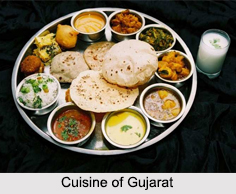
Gujarati Cuisine is very unique and distinct from the rest of the country, as most people here are mainly vegetarians. Khichdi and Chaas are the staple foods of Gujarat. Savouring types of vegetables like potatoes, Brinjals, Cabbages, Cauliflowers, etc vary with the seasons; spices are an integral culinary element, the usage of it too undergoes seasonal flickering. Some of the other notable dishes are Dhokla, Kachori, Bhajiya, Chaat, Khaja, Chakri, Malpua, Peda, Barfi, Doodhpak etc. The dishes are grounded on steamy vegetables and Dals or pulses that are supplemented to a Vaghaar. Namkeens like Cholafali, Ghooghra are prepared by the Gujaratis to savour especially on the occasion of Diwali festivals.
Lifestyle of Gujarat
Culture of Gujarat is typically reflected in the sedentary lifestyle of Gujaratis. The region is historically significant as remnants of Indus Valley civilization found in Gujarat. The conservative nature has debarred the Gujarati populace from enjoying nightlife.
Art and Crafts of Gujarat
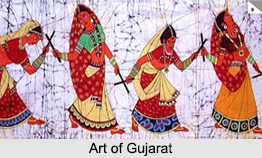
The creativity of Gujarati communities finds expression in its astounding range of embroidery, threading, colouring and publishing techniques, handiworks made from woods, gem and metal of the tribal communities. The Surat based "zari" industry is popular throughout the world for its embroidery work. Some of the famous patterns of embroidery which can be found here are Chalak, Salama, Kangiri and Tiki.
Despite of being among the most industrialized state in India, Gujarat preserves its rich culture and tradition of the ancient past. The plethora of traditions along with a tinge of modernization sums up the culture of Gujarat.