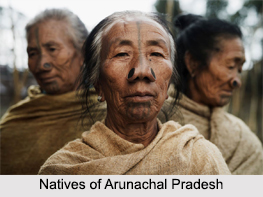
 History of Arunachal Pradesh possesses the rich cultural heritage of the tribal people of Arunachal Pradesh. The Tibeto-Burman stocks are much richer and point unambiguously to a northern origin in modern-day Tibet. Again, the corroboration remains difficult. Culturally, it is clear that most indigenous Arunachali groups align with Burma hill tribals, a fact that could either be explainable in terms of a northern Burmese origin or from westward cultural diffusion.
Ancient history of Arunachal Pradesh
In the Hindu texts like the Kalika Purana and Mahabharata it is mentioned that in the Prabhu Mountains of the Indian Puranas, that is in Arunachal Pradesh, there was a sage Parashurama washed away all the sins. Another source confirmed that the sage Ved Vyas meditated in this place. Later in this place, King Bhishmaka founded his kingdom and Lord Krishna married his consort Rukmini.
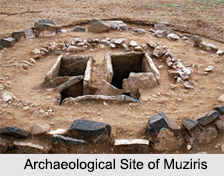
There was a recent excavation where the ruins of 14th Century Hindu temples were found in Malinithan at the foot of the Siang hills in West Siang district are somewhat automatically associated with the ancient history of Arunachal Pradesh, in as much as they fall within its modern-day political borders. However, such temples are generally south facing, never occur more than a few kilometres from the Assam plains area. There is another site of archaeological importance is Bhismaknagar. In this place, the culture of Idu (Mishmi) is found that records the pre-historical times. The third heritage site is the 400-year-old Tawang Monastery. This 400-year-old Tawang Monastery is located in the extreme north-west of the state. It provides some historical evidence of the Buddhist tribal people. The sixth Dalai Lama Tsangyang Gyatso was born in Tawang.
 Medieval history of Arunachal Pradesh
Recorded history from an outside perspective only became available in the Ahom chronicles of the 16th century. In the 16th century, the Ahom kings influenced the region. The population were of Tibeto-Burmese linguistic origin. The tribe consisted of the Dafla Tribe, Bangni Tribe, the Monpa Tribe and they were influenced. Besides them the Membas Trib, Ramo Tribe and Bori Tribe formed minor groups. The Mishmi Tribe exists as Idus, Taraons, and Kamans. They excelled in handicrafts. The Monpa and Sherdukpen Tribe keep the historical records of the existence of local chiefdoms in the northwest as well. North-western parts of this area came under the control of the Monpa kingdom of Monyul. This Monpa Kingdom was flourished in between 500 B.C. and 600 A.D. This region then came under the loose control of Tibet and Bhutan, especially in the Northern areas. The remaining parts of the state, especially those bordering Myanmar, came under the titular control of the Ahom and the Assamese until the annexation of India by the British Government of India in the year 1858. However, most tribes of the Arunachal Pradesh remained in practice largely autonomous up until Indian independence and the formalization of indigenous administration in 1947.
Modern history of Arunachal Pradesh
The aboriginals of Arunachal Pradesh migrated from Tibet. There are practically no records relating to the earlier history of this place except some oral literature and the number of historical ruins found mainly in the foothills dating from the early Christian Era. Earlier Arunachal was popularly called North Eastern Frontier Agency and was constitutionally a part of Assam. Until 1965, the Ministry of External Affairs administered it and later by the Ministry of Home Affairs through the Governor of Assam. The tribe consisted of the Daflas, Bangnis, Monpa Tribe and they were influenced by Buddhist ideals.
From the same perspective, the most unusual Arunachali group by far is the Puroik/ Sulung, whose traditional staple food is sago palm and whose primary traditional productive strategy is foraging. While speculatively considered to be a Tibeto-Burman population, the uniqueness of Puroik culture and language may well represent a tenuous reflection of a distant and all but unknown pre-Tibeto-Burman, Tai and Indo-Aryan past.
In 1913-14, the British administrator, Sir Henry McMahon, drew up the McMahon Line as the border between British India and Tibet during the Simla Conference, as Britain sought to advance its line of control and establish buffer zones around its colony in South Asia. The Tibetan and British representatives at the conference agreed to the line, however the Chinese representative refused to accept the line owing to domestic pressures. Therefore, the line appeared to be invalid without Chinese agreement. Refusing to sign the Simla documents, the Chinese Government escaped according any recognition to the validity of the McMahon Line.
The situation developed when India became independent and the People`s Republic of China was established in the late 1940. India unilaterally declared the McMahon Line to be the boundary in November 1950, and forced the Tibetan administration out of the Tawang area in 1951. The issue erupted again during the Sino-Indian War of 1962. During the war in 1962, China was victorious, voluntarily withdrew back to the McMahon Line, and returned Indian prisoners of war in 1963. The war has resulted in the termination of barter trade with Tibet.
Until 1972, Arunachal Pradesh was administered as the North East Frontier Agency (NEFA). In 1972, it was constituted as a Union Territory and renamed Arunachal Pradesh. On 20th February in 1987, it became the 24th state of the Indian Union.
History of Arunachal Pradesh
Arunachal Pradesh possesses a rich historical heritage of culture of the ancient tribes. Being a bordering state of India, Arunachal Pradesh also has a history of military unrest since ancient Indian age.