Princely State of Tajpuri
The Princely State of Tajpuri was a minor state in present-day Gujarat, located near the Sabarmati River. Governed by a local Thakor under British supervision, it had a small agrarian economy and limited jurisdiction, eventually integrating into independent India after 1948.

Share this Article:

Introduction

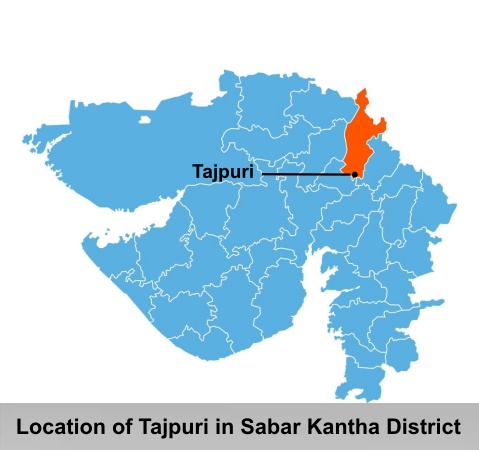
The princely state of Tajpuri was a minor political entity located in western India. It was situated within the present-day Sabar Kantha district of Gujarat. Geographically, the region was situated near the Sabarmati River and fell within the Bijapur sub-division pargana. The landscape of Tajpuri was characterized by its hilly terrain and dense woodland, forming part of the northern expanse of the state. The area is further defined by the presence of the Hathmati River, which flowed through and intersected the region.


Geographical Position of the Princely State of Tajpuri

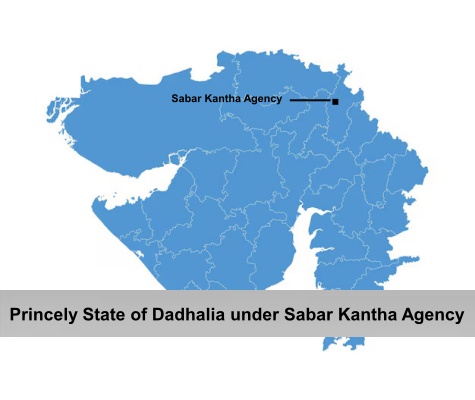
The Princely State of Tajpuri was amongst the former native states during the rule of the British Empire in India. In the early 19th century, the region was appointed as one of the princely states of India under the indirect rule of the British administration. The region was scattered over a total area of 7 sq miles and continues to be a part of the Indian state of Gujarat. The region comprised of a total population of 1,165 in the year 1921. The taluka of Tajpuri was located around 6 miles from Himatnagar, the capital of the princely state of Idar. The region included six villages and was bordered by the territories of Polajpur, Morwad, Hapa, Dedhrota, Derol in British India. A block of the princely state of Idar also bordered the state of Tajpuri. The erstwhile princely state of Tajpuri was under the administrative control of the Baroda Agency, which was incorporated as a part of the Western India States Agency. Later the territory was merged with the state of Gujarat in the Union of India. The state was also a part of the Sabar Kantha Agency and Sadra Division.


History of Princely State of Tajpuri

The Parmar Kolis, who were descendants of a Rajput chief, were the native rulers of the princely state of Tajpuri. The ruling family of the state first settled in Tajpuri state in 1474. The throne of Tajpuri was succeeded by 15 generations of the family since it gained the status of a princely state. The native ruler of the state, who held the title of Thakor, like all other princely states in Gujarat, was ranked in the 6th Class of Mahi Kantha states, before the abolition of the class system in the year 1928. The Thakor exercised limited civil and criminal jurisdiction because the supreme jurisdiction was executed by the British Empire. The Princely State of Tajpuri paid annual tribute to the princely state of Idar and the Princely State of Baroda. According to the Attachment Scheme of 1943, the princely state of Tajpuri was attached to the princely state of Baroda.


Political Position of Princely State of Tajpuri

Unlike prominent salute states such as Idar or Danta within the Baroda Agency, Tajpuri did not receive a gun salute for its rulers, a distinction reserved for higher-ranking states based on their size, revenue, and historical importance. This lack of salute status reflected Tajpuri’s relatively minor position within the established hierarchy of princely states, where ceremonial privileges were limited. Its rulers were typically received without elaborate protocol, often seated at the discretion of the Political Agent rather than accorded formal honors.

The absence of salute rights illustrated the broader British policy of clearly distinguishing between major and minor states within their system of indirect rule. Despite its modest standing under colonial administration, Tajpuri had established early ties with influential regional powers in Gujarat, including Idar and Baroda. These associations placed it within a wider network of feudal alliances across the Mahi Kantha region, contributing to its eventual recognition as a formal minor princely state by the early 19th century. 


Princely State of Tajpuri During British Period

Tajpuri State came under British influence as part of the Mahi Kantha Agency, which was established in 1820 to facilitate indirect rule over numerous small princely states in northern Gujarat. The formal integration of such minor entities began by the mid-19th century, following the consolidation of British paramountcy in the region. The agency eventually encompassed more than fifty states, with British Political Agents, primarily stationed at Idar, overseeing matters such as tribute collection, succession disputes, and limited judicial administration. This arrangement allowed local rulers, or Thakors, to retain nominal sovereignty while ensuring adherence to imperial policies.

By the early 20th century, Tajpuri functioned as a semi-jurisdictional state directly under the supervision of the British Political Agent. Civil and criminal authority was shared, with the ruler exercising jurisdiction over minor offenses, while serious criminal cases and major disputes were referred to the agency’s authority. Relations with the paramount power remained stable throughout this period of indirect rule. Tajpuri consistently paid its tributes and complied with agency directives, avoiding notable conflicts or political alliances. This pattern of cooperation aligned with the broader policies of the British Raj, which favored minimal interference in the internal affairs of compliant minor states.

Despite this relative stability, administrative challenges persisted due to the small scale of the state. Tajpuri often depended on British mediation to resolve boundary disputes and faced recurring revenue constraints, particularly during the famines of the late 19th century. Its attachment to Baroda in 1943 further reflected its continued dependence on larger regional powers. Nevertheless, the state managed to avoid the political unrest and instability that affected some other agencies during the same period.

Social Structure: During the princely period, the social and ethnic composition of Tajpuri State was largely dominated by Koli communities, who formed the principal ruling and landholding class. These groups traced their lineage to Rajput chiefs and often reinforced their status through intermarriage with established Rajput families, such as the Makwanas. Alongside them were agrarian communities like the Kunbis, who played a central role in cultivation and contributed significantly to the region’s agricultural economy.

The population of Tajpuri was predominantly Gujarati-speaking, reflecting the broader linguistic character of the Sabar Kantha region. Within the social hierarchy, Rajputs and Kolis occupied prominent positions, including roles in military service that often came with grants of rent-free land. Meanwhile, Kunbis and other tenant cultivators formed the backbone of the agrarian structure, in some cases acquiring proprietary rights through long-term occupancy.

The administrative and social order was centered around the authority of the Thakor, typically a Koli chieftain, who exercised limited jurisdiction within the state. Owing to administrative constraints, Tajpuri was placed under the direct supervision of British Agency authorities. Governance practices emphasized primogeniture in succession and imposed obligations such as maintaining public order and preventing theft, often enforced through security bonds. These measures effectively integrated local Koli and Rajput elites into the colonial administrative framework while preserving traditional Hindu customs, particularly in matters of land tenure and social conduct. 

Religiously, the majority of the population adhered to Hinduism, consistent with the traditions of the Koli and Rajput communities. A small minority of Muslims, including Meman traders, were also present in the region. Although some among them held rent-free lands in return for service, they constituted only a limited segment of the population and did not exercise significant political influence within Tajpuri. 

Economy: During the colonial period, the economy of Tajpuri State was primarily agrarian in nature, with its revenue largely derived from land taxes imposed on agricultural production. The state encompassed a semi-arid territory of approximately seven square miles, consisting of six villages situated near the Sabarmati River. Agricultural practices in the region were shaped by low average annual rainfall, leading to a predominance of dryland farming. 

Land revenue systems were systematically organized, with taxation implemented through methods such as vighoti, based on acreage, and bhagbari, which involved crop-sharing arrangements. These systems ensured a steady flow of income to the state while structuring agrarian relations among cultivators. 

The agricultural economy was sustained by crops well-suited to the semi-arid conditions. Staple millets, including bajri and jowari, formed the foundation of subsistence farming, while pulses such as gram were also widely cultivated. In areas with access to riverine resources, limited irrigation supported the growth of crops like wheat, sugarcane, and tobacco, adding modest diversity to the agrarian output of the state.


Integrate of Princely State of Tajpuri in India

The last Thakor of the princely state of Tajpuri acceded the territory to the newly independent Union of India after the political withdrawal of the British Government of India from the country on 15th August 1947. After the country was divided between India and Pakistan, the native rulers were given the choice of acceding to either the Dominion of India or the Dominion of Pakistan. The native ruler of the state decided to merge with the Republic of India.

The accession of Tajpuri State to the Indian Union was facilitated through the diplomatic initiatives of Sardar Vallabhbhai Patel, who, as India’s Minister of Home Affairs, led the integration of princely states through the States Department. In 1948, Tajpuri was formally incorporated into Bombay State as part of a broader merger involving numerous small states from the Baroda, Western India, and Gujarat States Agency. This marked the end of its existence as an independent princely entity. 

With the adoption of the Constitution of India in 1950, Tajpuri’s ruling Thakor relinquished all sovereign powers, including the limited civil and criminal jurisdiction previously exercised within its small territorial extent. The region subsequently transitioned to a democratic administrative framework, becoming part of the provincial governance structure of Bombay State, which emphasized elected representation and centralized authority in place of earlier feudal systems. 

By 1960, following the linguistic reorganization of states that led to the creation of Gujarat from Bombay State, the former territory of Tajpuri was fully integrated into the administrative framework of the new state. This development completed its transformation from a minor princely state into a constituent part of modern India.


Share this Article:

More Articles in History of India


History of Uttar Pradesh
The state was the heart of Mahabharata war and the history of Uttar Pradesh is very much the history of India. The place finds its mentions in Hindu epics Ramayana and Mahabharata.
History Of Archaeology In India
History of archaeology in India contributes a lot to define the past history and the social life of India.
Mughal Architecture during Babur
Mughal architecture during Babur marked the foundation of a new architectural era in India, blending Timurid, Persian, and local influences. His reign emphasized garden design, notably the Charbagh layout, and modest yet elegant structures. As the first Mughal emperor in India who introduced this architecture during 16th century Babur’s creations reflected symmetry, functionality, and a deep appreciation for nature.
Princely State of Patdi
The Princely State of Patdi was one of the many princely states under the British Raj, ruled by local Kadva Patidar leaders under indirect British control. Known for its strategic location near the Little Rann of Kutch, Patdi played an important role in salt production and regional trade. Princely State of Patdi or Patri was incorporated as a part of the Baroda Agency, which was a sub division of Western India States Agency.
Architecture during Sayyid and Lodi Dynasty
Architectures during the Sayyid and Lodi dynasty were mainly the tombs and monuments for the dead rulers. It were carefully designed and meticulously constructed.
Brahmanical Sources of Ancient History
Brahmanical Sources of ancient history are contained in the Vedas and they constitute one of the most important literary sources of information about ancient India.
Female Education In British India
The over brimming enthusiasm among zealous Hindu reformers welcomed female education in British India.
Revenue System of Mauryan Empire
Revenue system of Mauryan Empire can be divided into eight categories. The principal revenue of the state was the land revenue, taxes from traders, artisans and professional taxes were also collected.
Mughal Architecture During Jahangir
Mughal architecture during Jahangir`s period was relative dull in comparison to that of Akbar dynasty.
Princely State of Satlasna
Princely State of Satlasna was amongst the former native states of India that was appointed as one of the Indian princely states during the early 19th century.
Coins of Chola Empire
Coins of Chola Empire were issued in gold, silver and copper and carried the Chola emblem.
Social Life during the Pala Period
Religious toleration and simple living were the characteristics of social life during the Pala period.
Coins of the Chalukya Dynasty
Coins of the Chalukya Dynasty was reintroduced in the South India after a brief break of coinage less period of nearly three century. Chalukyas issued coins only in gold and they exhibit a brilliant artistic skill of the engraver.
Costumes of Indus Valley Civilisation
Costumes of Indus valley Civilization have been considered as the basis for Indian clothes. Sophisticated ornaments and make up were used during that age.
Development of Science under Gupta Empire
Development of Science under Gupta Empire was progressive and it had attained considerable perfection. Mathematics, astronomy, medicine, chemistry, physics and metallurgy were the most prominent of the sciences at that time.
Culture under Delhi Sultanate
Culture under Delhi Sultanate had enduring aspects to it. It included the society, the religious condition, literature and art and architecture of that period.
Princely State of Hapa
Princely State of Hapa was incorporated as a part of the Baroda Agency, which was under the administrative control of the Western India States Agency.
Economy Under Chola Dynasty
Economy under Chola dynasty was strong and well developed. The economic life of the people of the Chola Kingdom was well balanced with their social life.
Coins of Khilji Dynasty
Coins of Khilji Dynasty had an influential feature that was followed by the other dynasties.
Religion During Mauryan Dynasty
Religion during Mauryan dynasty became a considerable episode in Indian history with an esteemed lineage of rulers.