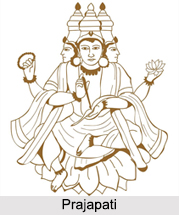
 Prajapati is a "lord of creatures", presiding over procreation and protection of life. As mentioned in the Puranas, Prajapatis were the Progenitors of mankind. They were the 7 mind-born sons of Lord Brahma. The names of the Prajapatis were Bhrigu, Pulastya, Angiras, Marichi, Daksha, Atri and Vasishtha. But according to Vishnu Purana, there are 9 Prajapatis and Pulaka and Kratu were added to the 7 Prajapati names. The Padma Purana replaced Kardama with Vasishtha.
Etymology of Prajapatis
Prajapati is a combination of "praja" (creatures) and "pati" (lord, master). The term "Prajapati" means "lord of creatures". Later in the Vedic texts, "Prajapati" become a distinct Vedic deity. Afterwards, the term "Prajapati" become synonymous with other gods, particularly Lord Brahma, Lord Vishnu and Lord Shiva.
Origin of Prajapatis
The origin of Prajapati is inaccurate. Prajapati appeared in the Vedic texts. He was missing from the "Samhita" (collection of hymns and prayers). Prajapati was younger than Savitar (Vedic deity), and initially the word "Prajapati" was used to describe the Lord Sun. Prajapati"s abstract slowly rose in Vedas. As the theories evolved from the ancient time to more learned speculations, Prajapati originated as a conceptual or semi-abstract deity in the later Vedic settings.
Depiction of Prajapatis
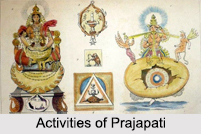 Prajapati has been depicted in numerous ways, both in the Vedas and in the post-Vedic texts. These ranges from being the "creator god" to being same as Lord Brahma, Lord Vishnu, Lord Shiva, Lord Agni, Lord Indra, Lord Vishwakarma, Bharata Muni, Kapila and many others. Following are the different categories of representation of Prajapatis:
In Vedas: Prajapati"s purpose varies within the Vedic texts such as being the one who created the heaven and the earth, water and human beings, the father of gods, the creator of devas and asuras and the Purusha (spirit). In the Rigveda, Prajapati appears as a description for Savitar (Vedic deity), Soma, Lord Agni and Lord Indra, who were all praised as equal, and same. In another place of the Rigveda, Prajapati is described as Hiranyagarbha (golden embryo) which was born from the waters containing everything produced Prajapati. One of the striking features about the Hindu Prajapati myths is the idea that the work of creation of Prajapati was a gradual process, completed in stages of trial and development.
In Chapter 10 of the Shatapatha Brahmana, as well as chapter 13 of Panchavimsa Brahmana, Prajapati has been presented as another theory wherein the Prajapati was a mother who becomes self-pregnant with all the self-generated living creatures, evil Mrityu seizes these living beings within his womb, but as those living beings were a part of the eternal Prajapati, they desired to live long like him. In Jaiminiya Brahmana, Prajapati is described as a spiritual teacher. His student Varuna lived with him for 100 years, studying the art and duties. In Upanishads, Prajapati appears in early Upanishads, among the most significant texts in Hinduism.
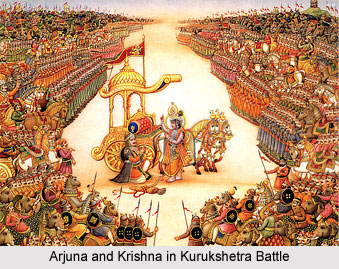
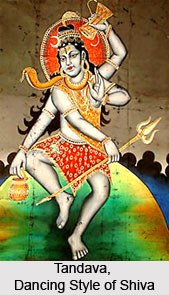
In Post-Vedic Texts: In the Mahabharata, Lord Brahma declared to be a Prajapati who created a lot of human beings. Other chapters of the epics and Puranas declare Lord Shiva or Lord Vishnu to be Prajapati. The Bhagavad Gita uses the name Prajapati to explain Lord Krishna, along with the many other labels. The Grhyasutras (Sanskrit texts) include Prajapati as among the deities who were raised during the wedding ceremonies and prayed for blessings of harmony between husband and wife.
Prajapati is identified with the personifications of Time, Fire, the Sun, etc. He is also identified with various mythical progenitors. In the Puranas, there are groups of Prajapati called "Prajapatayah" who were "rishis" (sages). Mahabharata and the genre of Puranas call various gods and sages as Prajapatis. In the medieval period texts of Hinduism, Prajapati refers to celebrated as the agents of creation, working as gods or sages.
Prajapati was used to suggest one deity namely the lord of all creatures. According to one of the stories of creation, Prajapati shaped the universe and all its beings. Other stories and myths illustrate about his formation from the prehistoric waters.