
 Mughal Gardens in India were built by the rulers of Mughal dynasty from 1526-1707. These gardens were built in Islamic architecture and Persian architecture. Some of the Mughal gardens in India are located in the north Indian states like Jammu and Kashmir, Haryana, Punjab and Delhi.
Mughal Gardens in India
Mughal Gardens in India shows the elegance of art and architectural skill and the Persian conventional architectural design.
Introduction
Mughal Gardens in India were built by the rulers of Mughal dynasty from 1526-1707. These gardens were built in Islamic architecture and Persian architecture. Some of the Mughal gardens in India are located in the north Indian states like Jammu and Kashmir, Haryana, Punjab and Delhi.History of Mughal Gardens in India
 History of Mughal Gardens in India is derived from the Islamic architecture and the Persian architecture. After the Battle of Panipath in 1526 AD, Babur established his kingdom here. Before that Babaur built a garden of Persian cult which is now in Afganisthan. Later from the time of Humayun to Ahmed Shah Abdali, the Mughal rulers in India established gardens for recreation and amusement in different regions of India. These Mughal gardens are now dotted in Indian states like Haryana, Delhi, Old Delhi, Punjab, Uttar Pradesh and Jammu and Kashmir.
Conceptualization of Garden in Mughal era : Babur described his favourite garden as "charbagh". The Agra garden, now known as the Ram Bagh, is thought to have been the first "charbagh" in India. While some of the Mughal gardens are concentrated in modern Bangladesh, Afganistan and Pakistan. These countries have a number of Mughal gardens which differ from their Central Asian predecessors with respect to the highly disciplined geometry.
Formation of Mughal Gardens in India :
 In the first phase of the erection of Mughal gardens, the rulers built their tombs with a formation of garden. Mughal gardens are found in the memoirs and biographies of the Mughal emperors, including those of Babur, Humayun and Akbar.
Early garden in Mughal Era : From the inception of the Mughal Empire, the construction of gardens was a beloved imperial pastime. Babur, the first Mughal conqueror, had gardens built in Lahore (now in Pakistan) and Dholpur. Humayun, his son, does not seem to have had much time for building, he was busy reclaiming and increasing the realm. But he is known to have spent a great deal of time at his father"s gardens. Akbar built several gardens first in Delhi, then in Agra. These gardens tended to be riverfront gardens rather than the fortress gardens that his predecessors built. Building riverfront rather than fortress gardens influenced later Mughal garden architecture considerably.
Garden in Later Mughal Era : Akbar made the gardens in his own way. It was followed by his sons. Jahangir did not build as much, but he helped to lay out the famous Shalimar garden (Jammu and Kashmir) and was known for his great love for flowers. Indeed, his trips to Kashmir are believed to have begun a fashion for naturalistic and abundant floral design. Jahangir`s son, Shah Jahan, marks the apex of Mughal garden architecture and floral design. He is famous for the construction of the Taj Mahal, a sprawling funereal paradise in memory of his favorite wife, Mumtaz Mahal. He is also responsible for the Red Fort at Delhi which contains the Mahtab Bagh, a night garden that was filled with night-blooming jasmine and other pale flowers. The pavilions within are faced with white marble to glow in the moonlight. This and the marble of the Taj Mahal are inlaid with semiprecious stone depicting scrolling naturalistic floral motifs, the most important being the tulip, which Shah Jahan adopted as a personal symbol.
Architecture of Mughal Gardens in India
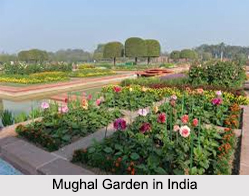 Architecture of Mughal Gardens in India depicts the influence of Arabian and Persian art work and architecture. The "charbagh" system here is flourished from the era of Babur. But later during the rule of Akbar, there lies a slightest change in the architecture of Mughal Gardens. The Mughal gardens are concentrated in India, Afghanistan, Bangladesh and Pakistan. In India, the Mughal gardens are concentrated in Jammu and Kashmir, Haryana, Punjab and Delhi. Some of the most beautifully maintained Mughal gardens in India are Taj Mahal Garden in Delhi, Presidential Gardens in Rashtrapati Bhavan, Delhi, Humayun"s Tomb Garden, Mehtab Bagh, Nishat Gardens in Jammu and Kashmir, Brindavan Gardens in Mysore, Shalimar Bagh in Srinagar, Jammu and Kashmir, Yadavindra Gardens in Haryana, Verinag Gardens in Jammu and Kashmir and Khusro Bagh in Allahabad, Uttar Pradesh.
Design of Mughal Gardens in India : The Mughal gardens design derives primarily from the medieval Islamic garden, although there are nomadic influences that come from the Mughals" Turkish-Mongolian ancestry. The medieval Islamic garden is depicted as the walled off garden protected from the outside world; within, its design. These gardens were rigidly formal, and its inner space was filled with those elements that man finds most pleasing in nature.
Features of Mughal Gardens in India : The essential features of Mughal gardens in India included running water and a pool to reflect the beauties of sky and garden. The trees are of various sorts. Some of the tress are planted to provide shade merely, and others to produce fruits; flowers, colorful and sweet-smelling natural beauty. While the grass usually grew wild under the trees; birds to fill the garden with song and the whole garden is cooled by a pleasant breeze. The garden might include a raised mound at the center, the reminiscent of the mountain at the center of the universe in cosmological descriptions, and often surmounted by a pavilion or palace or a mausoleum.
Turkish Mongolian Element in Mughal Gardens in India : The Turkish-Mongolian elements of the Mughal garden are primarily related to the inclusion of tents, carpets and canopies reflecting nomadic roots. The tents indicated status in these societies, so wealth and power were displayed through the richness of the fabrics as well as by size and number.
Symbols and Motifs in Mughal Gardens in India The Mughal rulers in India and their royal relatives were obsessed with symbol and incorporated it into their gardens in many ways. The standard Quranic references to paradise were in the architecture, layout, and in the choice of plant life; but more secular references, including numerological and zodiacal significances connected to family history or other cultural significance, were often juxtaposed. The numerological figures like the eight and nine were considered auspicious by the Mughal rulers and princes and can be found in the number of terraces or in garden architecture such as octagonal pools.
Humayun`s Tomb
Humayun`s Tomb in Delhi is the tomb of the Mughal Emperor Humayun in Delhi. It is now conceptualized as the garden in Delhi.
Aram Bagh, Agra, Uttar Pradesh
Safdarjung`s Tomb
Tomb of Safdarjung, Delhi is a sandstone and marble mausoleum- garden in New Delhi.
Shalimar Bagh
Shalimar Bagh, Srinagar, Jammu and Kashmir is a Mughal garden in Srinagar, Jammu and Kashmir. Shalimar Bagh was built by Mughal Emperor Jahangir for his wife Nur Jahan, in 1619. Shalimar Bagh is considered the excellent point of Mughal horticulture.
Pinjore Gardens, Haryana
Pinjore Gardens is located in Pinjore, Panchkula district of Haryana. It is an example of the Mughal Gardens style, and was built by the rulers of Patiala.
Khusro Bagh
 Khusro Bagh, Allahabad, Uttar Pradesh is a large walled garden and burial complex in Uttar Pradesh. Khusrau Bagh is situated over forty acres and shaped as a quadrangle. It includes the tombs of Shah Begum, Jahangir`s Rajput wife and the daughter of Maharaja Bhagwant Das and Khusrau Mirza`s mother; Khusrau Mirza, Jahangir`s eldest son and briefly heir apparent to the Mughal throne; and Nithar Begum, Khusrau Mirza`s sister and Jahangir`s daughter.
Qudsia Bagh
Qudsia Bagh, Delhi is an 18th-century garden complex and palace located in Old Delhi. Qudsia Bagh was constructed in 1748 for Qudsia Begum, the mother of Mughal emperor Ahmad Shah Bahadur.
Achabal Gardens
Achabal Gardens, Anantnag District, Jammu and Kashmir is one of the most important and splendid Mughal garden in Kashmir.
Pari Mahal
Pari Mahal, Jammu and Kashmir is a seven terraced garden located at the top of Zabarwan mountain range over-looking city of Srinagar and south-west of Dal Lake.
Chashme Shahi
Chashme Shahi Gardens, Jammu and Kashmir is one of the Mughal gardens built in 1632 by Shah Jahan.
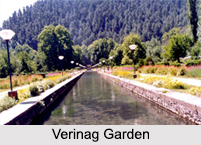
Verinag, Jammu and Kashmir
Verinag, Jammu and Kashmir is a garden in Jammu and Kashmir built by the local Mughal governor.
Roshanara Garden
Roshanara Bagh, Delhi is a garden built by Roshanara Begum, the second daughter of the Mughal emperor Shah Jahan.
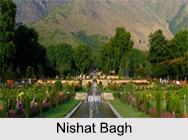
Nishat Bagh
Nishat Bagh, Srinagar, Jammu and Kashmir is a Mughal garden built on eastern side of the Dal Lake. It is the second largest Mughal garden in the Kashmir Valley.
Recently updated articles in States of India
Bandare Waterfalls, Meghalaya
Bandare Waterfalls in South Garo Hills, Meghalaya, is a secluded natural attraction surrounded by dense subtropical forests and rugged mountain terrai...
History of Thissur District
Early History of Thissur District explains flourishing of the port cities. Now these port cities are transformed into archaeological sites.
Tippi Orchid Research Centre, Arunachal Pradesh
Tippi Orchid Research Centre in Arunachal Pradesh is renowned for its rich collection of exotic and endangered orchids. Surrounded by lush rainforest...
Tourism in Nashik District
Pilgrimage tourism in Nashik district involves visiting the various places of Hindu and Jain worship located here. Some of the holiest sites for Hind...
Mangadu, Kerala
Mangadu in Kerala’s Kollam district is a significant megalithic site known for its urn burials, cist burials, menhirs, and stone circles. Excavations...
Related articles in States of India
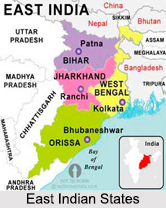
East Indian States
East Indian States comprises of Bihar, Jharkhand, West Bengal, Odisha and also the Union Territory of Andaman and Nicobar Islands. It defines the cult...
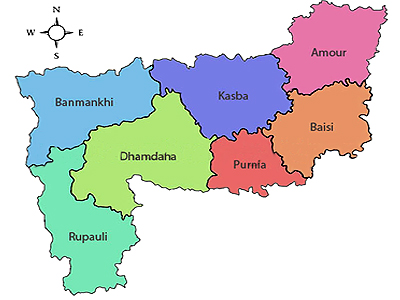
Purnia District in Bihar
Purnia District is located in Bihar and extends from River Ganga to Nepal. The district has a rich Hindu history and glorious past.
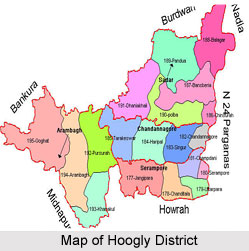
Hooghly district
Hooghly District along the bank of the river Hooghly is one of the principal trading ports of West Bengal.
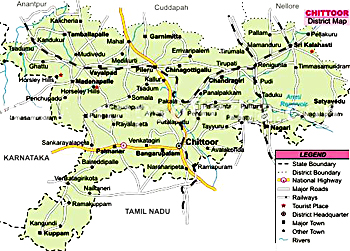
Geography Of Chittoor District
Geography of Chittoor district is spread along the topography of the land which is divided into two natural divisions; Chittoor has a dry and healthy...
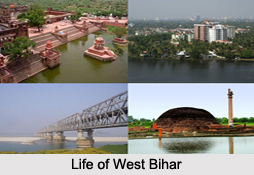
Districts of West Bihar
Districts of West Bihar is comprised of medieval monuments that were built by the different governors of Mughal era.