
 Uttara Kannada district is one of the biggest districts in the state of Karnataka. It is a beautiful place that has been blessed with abundant natural resources. The district has varied geographical features with thick forest, perennial rivers, abundant flora and fauna and a long coastal line of about 140 Kms in length. Uttara Kannada district is bounded by the Belgaum district and the state of Goa in the North, Dharwar District in the East and by Shimoga and Udupi district in the south. The western border is formed by the Arabian Sea. Ranking high among the achievements of the state are the Kali Nadi Hydro Electric Project (KPCL) and the NPCL rank among the achievements of the district. Nuclear Power station established at Kaiga by Nuclear Power Corporation Ltd is one of very few in India. It was commissioned on March 5, 2000. This Pressurised Heavy Water Reactor (PHWR) at Kaiga is indigenously designed, meets the latest safety standards and has state-of-the-art technology including computerised controls.
Uttara Kannada District
Uttara Kannada District is among the biggest districts in Karnataka state; agriculture is the chief occupation of the people residing in the district.
Introduction
Uttara Kannada district is one of the biggest districts in the state of Karnataka. It is a beautiful place that has been blessed with abundant natural resources. The district has varied geographical features with thick forest, perennial rivers, abundant flora and fauna and a long coastal line of about 140 Kms in length. Uttara Kannada district is bounded by the Belgaum district and the state of Goa in the North, Dharwar District in the East and by Shimoga and Udupi district in the south. The western border is formed by the Arabian Sea. Ranking high among the achievements of the state are the Kali Nadi Hydro Electric Project (KPCL) and the NPCL rank among the achievements of the district. Nuclear Power station established at Kaiga by Nuclear Power Corporation Ltd is one of very few in India. It was commissioned on March 5, 2000. This Pressurised Heavy Water Reactor (PHWR) at Kaiga is indigenously designed, meets the latest safety standards and has state-of-the-art technology including computerised controls.History of Uttara Kannada District
The Kadamba rulers ruled over Uttara Kannada district, particularly the region of Banavasi. This area was reigned over by the kings of Vijayanagar empire, Hoysalas, Chalukyas, Rashtrakutas after the Kadambas were defeated. Remnants of a ruined mosque can be noticed in Honnavar town. The Marathas controlled this region during the 1750`s, and later it was annexed by the Mysore kingdom. However, after the Fourth Mysore War in 1799, it was occupied by the British. In 1859, Uttara Kannada district was divided into South Kinara and North Kinara districts and in 1862 the district passed into the Bombay Presidency. In the year 1956, the southern part of Bombay state was included within Mysore, which was later renamed as Karnataka in 1972. This district was an important trade centre since it was visited by Portuguese, French, Arabs, Dutch and British. The famous traveller Ibn Batuta had passed through this place during one of his travels. Rabindranath Tagore, the Bengali poet and nobel laureate had paid a visit to this district during 1882, along with his brother Satyendranath Tagore, when he was 22 years old. Uttara Kannada district has been referred to in the Treaty of Mangalore which had been signed in the year 1784 between the East India Company and Tipu Sultan.
Geography of Uttara Kannada District
Geographical coordinates of Uttara Kannada district are 14.6 ° north 74.7 ° east. The climate of Uttara Kannada district is fairly well balanced. The average temperature is around 33 degree Celsius during summer and 20 degree Celsius during winter. Uttara Kannada District receives heavy rainfall during monsoon period. Bhatkal Taluk records highest average rainfall of 4015 mm where as Mundgod averages lowest at 1296 mm. The major rivers flowing through the district are the Kali River, Gangavali River (Bedti River), Aghanashini River, Sharavati River, Venkatapur River and the Varada River. The depth of flow of these rivers ranges from 9 feet to 10 feet and the riverbank height is about 12 feet to 15 feet. The cultivable land in the district is approximately 10 percent, as the forests dominate the total area. In its 10.25 lakh hectares of total land, 8.28 lakh hectares is forest land.
Demography of Uttara Kannada District
The 2011 census states that Uttara Kannada district possesses a population of 1,436,847 and a sex ratio of 975 females for 1000 males. It puts the literacy rate of the district to about 84.03%.
Culture of Uttara Kannada District
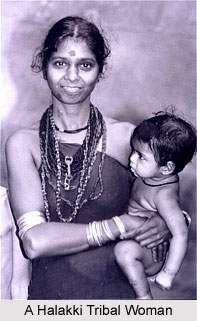
There is a quite a substantial tribal population found settled in the district. The main tribes of the district are Sidhi, Kunabi, Halakki Vokkaliga, Gonda and Gouli. As regards the culture and festivities typical to the place, folk arts like Suggikunitha, Holi Dance, Hulivesha, Siddi Dance are famous and traditional. Yakshagana is also famous in the district. The major regional languages spoken by the people of the Uttara Kannada district are Kannada language and Konkani language. The regional cuisine of Uttara Kannada district consists of delectable seafood and the staple diet of the local inhabitants of this region is rice. Coconuts and cashew nuts are also relished by the people of this district. Tea is also enjoyed by them and it is often flavoured with mint or cardamom. Diwali, Eid Ul Fitr and Eid-Ul-Adha are the other festivals celebrated here.
Education in Uttara Kannada District
 There are a total of 2346 primary schools in the district, and 314 high schools. DDPI is responsible for the overall implementing and supervision of primary and secondary education in the district. At the Taluka level Block Educational Officer is responsible for supervision and administration of primary schools and high schools.
Administration of Uttara Kannada District
The administration of Uttara Kannada district falls under the overview of the Deputy Commissioner. The District is the principal administrative unit below the state level. It is a unit of administration covering most of the departments of Government. The Deputy Commissioner, being the head of the district administration, is perhaps the only officer who exercises powers under the largest number of laws both state and central. In his capacity as the chief head of administration of a district, the Deputy Commissioner has a number of functions to perform. A broad account of these functions is given below.
Law and Order and Magisterial Matters: The first group of functions relates to public safety and tranquillity. Maintenance of Law and order is the joint responsibility of the Superintendent of Police, who heads the Police force in the district, and the District Magistrate. The Deputy Commissioner of the District is also the District Magistrate. Though there is a separate department for the administration of jails, the district Magistrate exercises general supervision over the Jails in his district.
Land Revenue: The second group of functions relates to revenue administration. While the most important component of this group is land administration including maintenance of land records, it also includes the assessment and collection of land revenue and also collection of the other public dues which are collected as arrears of land revenue. The Deputy Commissioner is a designated Revenue officer in various laws governing the land to deal with disputes arising out of land records and management of public lands and properties. The other revenue officers, namely, the Assistant Commissioners, the Tahsildars and the Deputy Tahsildars also perform functions of dealing with land disputes under the overall supervision and control of the Deputy Commissioner.
Development Activities: These include Public Health, Education, Social Welfare, welfare of Backward Classes and communities. Each of these functions is looked after by separate department, headed by a specialist officer in the district. The various special economic programmes like Samgra Grameena Rozgar Yojana (SGRY), Swarnajayanthi Grama Swarozgar Yojana, etc. and the poor people`s housing scheme Indira Awas Yojana, Pradanamantri Grameena Awas Yojana, Ashraya Housing Scheme, Dr. Ambedkar Housing, Navagram Housing are implemented by the Zilla Panchayat, Which is headed by Chief Executive Officer of Zilla Panchayat. The Deputy Commissioner does not get a direct role in these schemes. However, since these programmes call for an integrated effort by various field departments at the district level, Public Works Department and Minor Irrigation, Forest etc., the role of D.C. in co-coordinating and guiding their activities is of prime importance for successful implementation of these programmes. Social Security measures like Old age Pension, Widows Pension, Maternity allowance to expectant mothers and stipends to physically Handicapped persons, Workmen`s compensations matters, rehabilitation of displaced persons under various projects Aids for Religious (Muzrai Schemes) and charitable Institutions and Endowments are also carried out.
Regulatory Functions: These include
(i) control, regulation and distribution of Food and Civil supplies and essential commodities.
(ii) Excise and Prohibition matters.
(iii) All matters relating to Stamps and Registration, Societies registration Act, 1960, Registration of firms under the Indian Partnership Act, 1932.
(iv) Matters relating to urban land (ceiling and regulation), vacant lands in urban areas (prohibition of alienation Act, 1975.
(v) Land Improvement Loans Act, 1963, Agriculturists Loans Act, 1963, Non-agricultural Loans Act, 1958.
Elections and Citizenship Matters: This relates to holding of elections of Parliament, State Legislature and Local Bodies. The Deputy Commissioner is responsible for the proper observance of process of elections from the registration of voters to the declaration of results of elections.
Municipal Administration Matters: The DC is generally responsible for the supervision and proper functioning of the urban local bodies. The implementation of various developmental and anti-poverty measures for the urban poor is monitored by the Deputy Commissioner. The most important of these programmes are the Swarnajayanthi Shahari Rozgar Yojana (SJSRY), Urban Ashraya (Housing), Eleventh Finance Commission development grants and the Integrated Small and Medium Towns Development (IDSMT) Programmes.
Emergency Relief: In situations like floods, famines, accidental fires, earthquakes and other natural calamities, the entire district administration is geared to meet the threat and the DC assumes charge to co-ordinate the activities of the various departments and takes proper steps to alleviate sufferings of the people.
Land Acquisition matters and Land Reforms: Acquisition of land for public purposes, like, construction of development projects, industries etc. are carried out by the Land Acquisition Officers under the control of the Deputy Commissioner.
Residuary Functions: There are a number of executive functions of Government which have not been precisely defined and there is no separate representative of the Government to carry out such duties in the district. It is the DC, in his capacity as the chief representative of Government in the district, who has to deal with all residuary matters. This group of activities includes miscellaneous functions like collections under the small savings schemes, contributions to public loans, implementation of family planning programme etc.
Public Grievances: The DC is the District Public Grievances officer, in consequence of which he maintains the overall responsibility to ensure proper functioning of all departments in the district.
Apart from the above-mentioned functions, the Deputy Commissioner also has to see to a number of other matters. These include Census, Regional Transport Authority, visits of V.I.P.`s, treasuries, budget estimates and matters relating to forestry.
Zilla Panchayat is a body corporate with a legal status, which has been instituted to help facilitate administration in the rural areas. It was constituted under the Karnataka Panchayat Raj Act in the year 1993. The Zilla Panchayat is entrusted with execution of development schemes, providing civic functions in rural areas and looking after the duties of the government delegated in respect of certain department as per the schedule.
Law and Order and Magisterial Matters: The first group of functions relates to public safety and tranquillity. Maintenance of Law and order is the joint responsibility of the Superintendent of Police, who heads the Police force in the district, and the District Magistrate. The Deputy Commissioner of the District is also the District Magistrate. Though there is a separate department for the administration of jails, the district Magistrate exercises general supervision over the Jails in his district.
Land Revenue: The second group of functions relates to revenue administration. While the most important component of this group is land administration including maintenance of land records, it also includes the assessment and collection of land revenue and also collection of the other public dues which are collected as arrears of land revenue. The Deputy Commissioner is a designated Revenue officer in various laws governing the land to deal with disputes arising out of land records and management of public lands and properties. The other revenue officers, namely, the Assistant Commissioners, the Tahsildars and the Deputy Tahsildars also perform functions of dealing with land disputes under the overall supervision and control of the Deputy Commissioner.
Development Activities: These include Public Health, Education, Social Welfare, welfare of Backward Classes and communities. Each of these functions is looked after by separate department, headed by a specialist officer in the district. The various special economic programmes like Samgra Grameena Rozgar Yojana (SGRY), Swarnajayanthi Grama Swarozgar Yojana, etc. and the poor people`s housing scheme Indira Awas Yojana, Pradanamantri Grameena Awas Yojana, Ashraya Housing Scheme, Dr. Ambedkar Housing, Navagram Housing are implemented by the Zilla Panchayat, Which is headed by Chief Executive Officer of Zilla Panchayat. The Deputy Commissioner does not get a direct role in these schemes. However, since these programmes call for an integrated effort by various field departments at the district level, Public Works Department and Minor Irrigation, Forest etc., the role of D.C. in co-coordinating and guiding their activities is of prime importance for successful implementation of these programmes. Social Security measures like Old age Pension, Widows Pension, Maternity allowance to expectant mothers and stipends to physically Handicapped persons, Workmen`s compensations matters, rehabilitation of displaced persons under various projects Aids for Religious (Muzrai Schemes) and charitable Institutions and Endowments are also carried out.
Regulatory Functions: These include
(i) control, regulation and distribution of Food and Civil supplies and essential commodities.
(ii) Excise and Prohibition matters.
(iii) All matters relating to Stamps and Registration, Societies registration Act, 1960, Registration of firms under the Indian Partnership Act, 1932.
(iv) Matters relating to urban land (ceiling and regulation), vacant lands in urban areas (prohibition of alienation Act, 1975.
(v) Land Improvement Loans Act, 1963, Agriculturists Loans Act, 1963, Non-agricultural Loans Act, 1958.
Elections and Citizenship Matters: This relates to holding of elections of Parliament, State Legislature and Local Bodies. The Deputy Commissioner is responsible for the proper observance of process of elections from the registration of voters to the declaration of results of elections.
Municipal Administration Matters: The DC is generally responsible for the supervision and proper functioning of the urban local bodies. The implementation of various developmental and anti-poverty measures for the urban poor is monitored by the Deputy Commissioner. The most important of these programmes are the Swarnajayanthi Shahari Rozgar Yojana (SJSRY), Urban Ashraya (Housing), Eleventh Finance Commission development grants and the Integrated Small and Medium Towns Development (IDSMT) Programmes.
Emergency Relief: In situations like floods, famines, accidental fires, earthquakes and other natural calamities, the entire district administration is geared to meet the threat and the DC assumes charge to co-ordinate the activities of the various departments and takes proper steps to alleviate sufferings of the people.
Land Acquisition matters and Land Reforms: Acquisition of land for public purposes, like, construction of development projects, industries etc. are carried out by the Land Acquisition Officers under the control of the Deputy Commissioner.
Residuary Functions: There are a number of executive functions of Government which have not been precisely defined and there is no separate representative of the Government to carry out such duties in the district. It is the DC, in his capacity as the chief representative of Government in the district, who has to deal with all residuary matters. This group of activities includes miscellaneous functions like collections under the small savings schemes, contributions to public loans, implementation of family planning programme etc.
Public Grievances: The DC is the District Public Grievances officer, in consequence of which he maintains the overall responsibility to ensure proper functioning of all departments in the district.
Apart from the above-mentioned functions, the Deputy Commissioner also has to see to a number of other matters. These include Census, Regional Transport Authority, visits of V.I.P.`s, treasuries, budget estimates and matters relating to forestry.
Zilla Panchayat is a body corporate with a legal status, which has been instituted to help facilitate administration in the rural areas. It was constituted under the Karnataka Panchayat Raj Act in the year 1993. The Zilla Panchayat is entrusted with execution of development schemes, providing civic functions in rural areas and looking after the duties of the government delegated in respect of certain department as per the schedule.
Economy of Uttara Kannada District
The major population lives in rural area undertaking agriculture as their main occupation. Though the district is located in coastal area, it is not so famous for its marine products. But activities connected with fisheries are carried out on large scales with the help of State Government as well as Central Government. The main traditional occupations are agriculture, fisheries, animal husbandry, sericulture, horticulture, beekeeping and leather works etc. Paddy and sugarcane are the main crops of the irrigated region. Ragi and horsegram are the major crops of dry land agriculture.
Temples of Uttara Kannada District
 Temples of Uttara Kannada district are masterpieces of artwork, depicting the Kadamba and Hoysala style of architecture. Uttara Kannada is a district in the southern Indian state of Karnataka. This district is bounded on the northwest by the state of Goa, on the north by Belgaum District, on the northeast by Dharwad District, on the east by Haveri District, on the southeast by Shimoga District, on the south by Udupi District, and on the west by the Arabian Sea. Uttar Kannada District was primarily under Madras Presidency and subsequently came under Bombay Presidency.
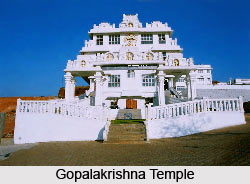
Choleshwar Temple, Ramalinga Temple, Sri Arya Durga Temple, Durga Datta Mandir, Shirali Mahaganapati Mahamaya Temple, Sri Idagunji Vinayaka Devaru Gokarna Ganapati Temple, Shri Ganapati Mahamai Mahishasura Mardhini Temple and Sri Katyayini Baneshwara Temple are some of the important temples of Uttara Kannada district. Avadi Mutt, also known as Gopalkrishna Temple, is named after Avadibai (Laxmibai Narayan Ubhaya), a disciple of Shri RamaVallabh Das (a Maharashtrian saint). The temple enshrines Kaliamardan Moorti and a marble idol of Venugopal (lord Krishna playing on the flute) in standing position. Krishna Jayanti is celebrated in a majestic manner. Durga Datta Mandir and Shri Ganapati Temple are located nearby.
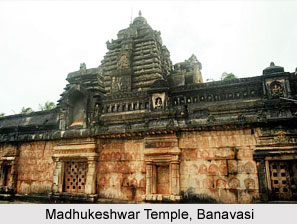
Madhukeshwara Temple is one of the ancient temples of Uttara Kannada district and the only remnant of the ancient Kingdom of the Kadambas is the famous Madhukeshwara Temple of Banavasi. The entire life of the town revolves around this temple. Built in stone around 1,500 years ago, this temple was renovated with additional structures by later dynasties. The presiding deity of Madhukeshwara is Lord Shiva that was installed during the period of the first king of Kadambas.
 This temple displays the architectural styles of different dynasties. The architectural brilliance of the Kadambas is exposed in the Nagara Shikhara, and the Sankalpa mandapa in front reveals the sway of the Chalukyan style. The Nritya mandapa (the dancing hall) with beautiful carvings presents the architectural superiority of Hoysala period. The Garbhagriha is built in a very simple style with nominal carving on the door and the support. Shri Venkatraman Dev Temple is one of the popular temples of Uttara Kannada district, located in Kumta. Besides the presiding deities Lord Gopalkrishna and Venkatraman, other deities such as Lakshmi, Satyabhama and Mukhya Pran Dev are worshipped here.
Mahabaleshwar Temple, one of the most famous temples of Uttara Kannada district is also one of the seven Muktisthala shrines in Karnataka. The Atmalinga of this temple attracts thousands of devotees. The deity is a huge shivling, which according to myth, got rooted here when Ganesh set it down on the ground lord. Mahashivratri is of great significance in this shrine. Kollur Mookambika Temple is located near Gokarna. Also located around Gokarna are Sejjeshwara, Gunavanteshwara, Murudeshwara and Dhareshwara temples. These four temples along with Mahabaleshwar are known as the Pancha Maha Kshetras that are some of the most significant temples of Uttara Kannada district.
Shri Gopalkrishna Temple is an ancient temple located at Sirsi in Uttara Kannada District. Devotees come from far and near to worship the main deity, Shri Krishna Vasudev. The important festivals associated with this temple are Jayanthi Festival, Shri Krishna Jayanti, Gopalkala and Anant Vrata Archana Pooja. Archaks answer questions and clears your doubts on every Thursday. Nearby attractions include Marikamba Temple. The temples of Uttara Kannada district draw almost thousands of devotees all round the year.
Leisure Tourism In Uttara Kannada District
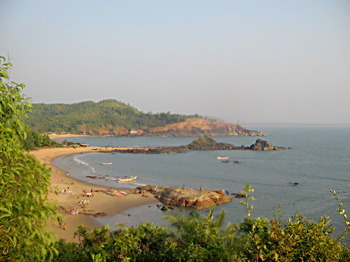 Leisure tourism in the Uttara Kannada district is bound to be a most relaxing experience. There are a number of places situated here, beaches, wildlife sanctuaries, forts, places of historical interest and many more, which provide a most pleasurable and delightful experience to those looking for some leisure tourism in the Uttara Kannada district. The various places of leisure tourism in the Uttara Kannada district are discussed below.
Among the various places of leisure tourism found here, beaches top the list. Among the many beaches found here, the Tagore beach at Karwar is one of the most popular. The Kali River joins and forms `sangam` at the end of the beach. This crescent shaped beach also has a recreational park, colourful music fountain, Toy train, Planetarium and an aquarium to add to its attraction. The Belekeri beach is surrounded by picturesque mountains. To reach here, one has to cross a vast expanse of grass which suddenly drops to the beach, providing a wonderful view of the sea. The Om Beach, so named because of its shape, is mostly frequented by foreigners visiting the state due to the seclusion and privacy it offers. The Alvekodi Beach is pristine and unspoilt, with white sand dazzling in the sun. Nearby is the Brahma devara gudda, with dilapidated old lighthouse. The hillock is a great picnic spot offering memorable sunset view.
Apart from the beaches, there are also islands found in the Uttara Kannada district that offer leisure tourism to the tourists. The Island of Basavaraja Durga, located about a km from the mainland off Honnavar, can be reached through boats and small coasters. At the point of landing is a ruined fort with eight mounted guns. The fort was built by Great Shivappa Naik of Bednur (1648-1670). The island is mostly level and has plenty of fresh water. The Higund Island is a beautiful island situated on the Sharavati River just before it joins the Arabian Sea. The view of the sunset from this island is simply breathtaking.
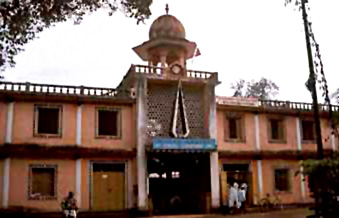 There are many places of antiquity found at the Uttara Kannada district which are of significance from the archaeological point of view. Situated on bank of river Sharavati is the old town of Gerusoppa also called Nagar Bastikeri. It is rich with historical monuments, the Chaturmukha basti being the most prominent one. It is a beautiful structure built in Vijayanagar style with Chaturasara plan. It has four entrances from four directions leading to garbhagrihas. There are four images of Tirthankaras, Vrishabha, Ajita, Sambhava and Abhinandan, seated in padmasana. The engravings in this basti of dwarapalas and other mural designs are very well executed and of refined artistry. The Haliyal is and ancient fort said to have been built by Chatrapati Shivaji. It is a remarkable construction which gives us a glimpse of the warring techniques employed in ancient times. Banavasi, located 24 Kms from Sirsi, is a historical village. Found here are the Madhukeswar Temple and Madhumathi (Parvati) Temple, exemplifying the summit of Kadamba art. The tall Nandis of the temple are famous. The honey coloured Madhukeswar linga shines even in darkness. Another attraction is a stone cot carved from a single stone and many statues of sculptural beauty. There is also a small museum. The Varada River flowing in front of the temple adds to the beauty of the ambience. 20 Kms from Sirsi towards yellapur is Sonda village which was the capital of Sondhe Kings. During the reign of Arasappa Nayaka II, many maths were established here. Among them Vadiraj math, Akalank math, Swarnavalli math are famous. Swarnavalli math is a seat of learning Vedic scriptures.
Also featuring high among the various places of leisure tourism in the Uttara Kannada district are sanctuaries- the Attiveri bird sanctuary and the Anashi Wild Life Sanctuary. 19 Kms from Mundgod one has to take a diversion on Mundgod - Hublic road to reach Attiveri. Migratory birds from Central Asia, Northern Africa and European countries find serene Attiveri a congenial place to breed from October to March. Painted Storks are a special attraction. Anashi pass is in the Sahyadri Range (Western Ghats mountain range) 40 Kms north east of Karwar. From Kadra to Anashi is a 10 Kms of steep ghat section, through thick forest. Motoring through the ghat is an experience in itself with thick jungles and a number of big and small waterfalls which are a feast to the eyes. Wildlife abounds in the area. In the early mornings, one might come across vixen, wild foul, flocks of peacocks and sometimes even a panther. There is a nature camp at the sanctuary that is run by the Forest Department. Tourists can avail of food and lodging here. The Bison River resort on the banks of River Kali near Ganeshgudi is another place of sojourn for the tourists. The resort offers facilities to carry the tourists to see wildlife at Phanasoli, Kavala caves etc. It also offers river rafting facilities at Dandeli.
Thus mentioned are the various places of leisure tourism in the Uttara Kannada district, where tourists can look forward to a bit of relaxation, comfort as well as some adventure.
Nature Tourism In Uttara Kannada District
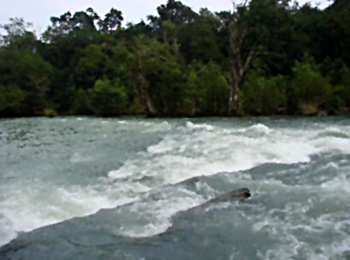 Nature tourism in the Uttara Kannada district promises to be a refreshing trip. There are a number of beautiful places of natural beauty located here which one can visit for when visiting the Uttara Kannada district. Some of these places of nature tourism in the Uttara Kannada district are discussed below.
Guddali Peak, located 1800 feet above sea level, gives a panoramic view of the sea. It is one of the highest peaks of the Haiderghat range which stretches East and West of the Kali River. It is an extremely cool place which served as a summer resort for the British. Belikeri River and joins the Kaiga range at Kaiga. Guddehalli rises conspicuously for miles, an abrupt sheet of granite with thickly wooded sides and a bare tapering point. A five kilometre trekking through mountain jungle crossing brooks and springs, takes you to this spot. The trek itself is a bonanza of enthralling experience. Yana, 28 Kms from Kumta and 65 Km from Sirsi, is nature`s wonder. Known for two gigantic rock formations of a height of 90 and 120 meters called Mohini Shikhara and Bhairaveshwara Shikhara, this beautiful place is a trekker`s paradise. It is surrounded by thickly wooded forests and added attractions to this picturesque spot are the Bhaireshwar temple, and a cave inside the rock formation. Right at the foot of Western Ghats mountain range, 20 Kms from Joida, at Sintheri Temple, River Kaseri flows with great speed before joining River Kali. Currents of water have formed beautiful rock caves and have created small cascades in the valley attracting a great number of tourists. From Dandeli village Gund is 3 kms. At Gund one has to step down some 133 steps to reach Sintheri rock.
Devbag is situated 7 Kms from Karwar, located near the confluence of Kali River. It is a picturesque island fringed with casuarina groves. Approach is mainly through boat from Kodibag jetty. Jungle Lodges and Resorts provide a unique experience of living in log huts. Scuba diving and a number of water sports make the stay a most-fun filled experience. Dandeli, surrounded by thick jungle with River Kali dashing through furiously, is a nature lover`s paradise. Jungle Lodges Resorts has a fine tourist complex called `Kali Wilderness and Adventure Camp`. This is the only place in South India where tourists are offered white water rafting.
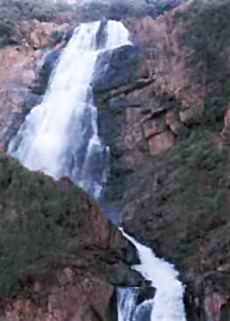 Castle Rock is the border village of the district beyond which is Goa. 10 Kms from Castle rock in the middle of thick forest, along the railway track, the Doodh Sagar falls is a beautiful sight to behold. The area is also a "trekker`s paradise", in every sense. The Shivaganga Falls, 39 Kms from Sirsi, can be reached by crossing athick forest. Here, the Shalmala River falls into a deep valley from a height of 74 metres creating the enchanting Shivganga waterfalls. The river valley presents a captivating view. A little further from the falls is an island locally called Ganeshpal because of a small Ganesh statue situated here. The Satodi falls are located 30 Kms from Yellapur, at the Kattige village. Here, the rivulet Dabbisal jumps in two stages from a height of 32 meters forming a beautiful water fall. Surrounded by green thick forest the waterfall attracts a large number of tourists. An added attraction here is the magnificent view of the backwaters of the Kodasalli dam. The rivulet originates at Shankarathirtha in Sirsi and joins the Manjaguni rivulet to form the Aghanashini River. Near Unchalli this river jumps from a height of 116 meters creating a beautiful water fall, the Unchalli falls. G.D.Lushington, Collector of Canara first discovered this water fall and used to visit this spot frequently and hence this falls is also called Lushington Waterfall. It is popular among the locals as Keppa Jog (deafening) since the fall exudes a thunder like deafening noise while falling. The Burude Jog is located 30 Kms from Siddapur, where a small rivulet called Ilimane first falls to a depth of 60 metres and a little further it again jumps to a depth of 48 metres creating two beautiful waterfalls. The fall is in the middle of a thick forest. 8 Kms from Honnavar, near the confluence of the Sharavathi River and the Sea, there a small water fall and a pool on a hillock, called Apsara Konda. Legend has it that the Apsaras (Heavenly fairies) used to come here to bathe and relax. The place truly exudes heavenly beauty. There is a Devi temple and a branch of Ramachandra mutt. There are several big caves on the hillock called `Pandava caves`. With a view of the river, the sea, the islands, the lush green fields and coconut groves, the Apsarkonda hillock is a real visual treat.
Sykes Point, named after British Collector Sykes, is a breathtaking spot where one can seek unhindered view of the Kali River flowing through the valley below. Nagajhari Power house, situated at the bottom of this peak, can also be seen. The Jenukallu Gudda, 20 Kms from Yellapur, offers a breathtaking view of the valley covered with virgin forests and majestically flowing River Bedti. The view point is atop a sheer cliff of 450 metres height. People normally visit this spot at the time of sun set which transforms the whole valley to an enchanting spot.
Pilgrimage Tourism In Uttara Kannada District
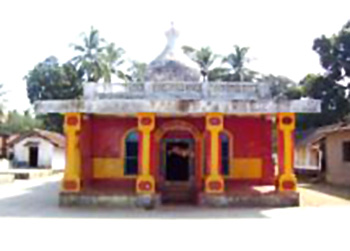 Pilgrimage tourism in Uttara Kannada district consists in visiting a number of beautifully constructed ancient temples located here. Most of these temples date back several centuries and are architecturally quite superior in their construction. Apart from temples, there are also churches and monasteries to be found in the district which are much frequented among the various places of pilgrimage tourism in the Uttara Kannada district.
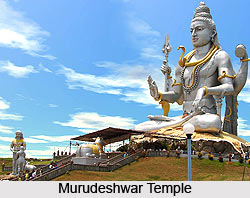
The Shejjeswar Temple, Shejwad, boasts of a thousand year old ancient temple of Shejjeswar or Siddeswar. The temple is said to be one of the five temples of Gokarna mythology where pieces of Atmalinga, which Ravana was carrying, fell. Devotees visit the temple in thousands on Mahashivratri day. The Shanta Durga temple, Sadashivagad, is a 600 year old temple known for its serenity. It is situated on the northern bank of the Kali River, midway on the Sadashivagad hill. Also found here is a 17th century Darga which attracts a lot of Muslim pilgrims. There is a famous Katyayani temple at Aversa, about 25 Kms from Karwar. The distinct feature of this temple is that the shrine is in the shape of a ship. It is family goddess of Kharvis, a fishermen clan. The image of the goddess is said to have been found in the sea. The godess is worshipped with great solemnity during the nine nights of `Navarathri` which precede `Dussera` in October. Besides Kharvis the festival is solemnly attended by many dancing-girls and Konkanis. At Gokarna is a very popular pilgrimage site is known as Dakshina Kashi. Mythology says, Ravana kept the Atmalinga down on the ground against the instructions and could not lift it again. Hence the belief that Gokarn is Lord Shiva`s permanent abode. Kotitheertha is the holy pond near the temple. Devotees usually take bath in the pond before they enter the temple for pooja. On the hillslopes at Dhareswar is the Mahadev temple, said to be around 800 years old. There are four inscribed tablets in the temple. It appears that the construction of temple was started by Rudroji Pandit and completed by Sonappa somewhere between 1500 and 1559. The temple is built of black stone and its walls are ornamented with sculptures. Around the temple are 5 holy pools, Rudra kund, Chakra, Shankh, Vasudha and Nagatirth. A fair is held every year in the middle of January which is attended by a number of devotees. Originally a temple of Chalukya style, the Channabasaveshwara Temple at Ulavi has been renovated and coloured. The pyre of the temple is adorned with statues of Shiva Sharanas (devotees of Lord Shiva). A very famous Jatra is held on `Megha Purnima` with great pomp. The famous Mahtobara Temple at Murdeshwar can today boast of the tallest Shiva statue in the world. The statue has special reflecting eyes, which makes it seem alive. The temple on the beach itself attracts a large number of tourists because of the sea shore ambience. 15 Kms from Honnavar and around 23 Kms from Murdeswar is the ancient Idagunji Ganapati Temple. One has to take a detour from National Highway and travel around 7 kms interior to reach this beautiful temple. The temple is said to be around 800 years old, one of the oldest temples in Uttara Kannada district. The Sri Tulaja Bhavani Temple, Haliyal, was established in 1996, by Sri Tulaja Bhavani Education and Dharmadatti trust, Haliyal, The 4 feet black stone idol of Godess Bhavani was carved in Sivar town, Kolar district. Thousands of devotees from all over Karnataka and states of Maharashtra and Goa visit this temple everyday. The Marikamba Temple at Sirsi is one of the most popular places of religious significance. The present statue of `Devi` was installed in 1669. The temple itself is more than 300 years old. The `Devi` is worshipped as `Amba" the mother. The Marikamba jatra which is held once in every two years is one of the largest jatra in the state. Situated on the banks of the Kawadikere lake is the historic Durgadevi Temple. The temple recently underwent a renovation with beautiful statues of goddesses and angels. The temple is well frequented by devotees and tourists.
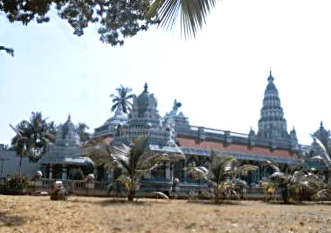 Apart from the many ancient temples located here, pilgrimage places for devotees belonging to other religious beliefs are also seen at Uttara Kannada district.
The Gaden Jangtse Monastic University for Advanced Budhist Learning and Practice is the biggest monastery in Asia. It had become near extinct in Tibet, and was rebuilt on the Indian soil at Doeguling Tibetan Settlement, Mundgod. The construction of New Monastic University building started on June 1998 and was inaugurated on 19 Dec 2001. Inside the prayer hall is a 21 feet tall statute of Lord Buddha. Besides this there are statues of Green Tara, Maitrieya Buddha, Manjushri Buddha and Chenrezig statue. The St. Francis Xavier Church at Chandaver is a large Roman Catholic Church which is held in great veneration by local populace of all communities. The original church of St. Francis Xavier is recorded to have been built in 1678 during the reign of Basappa Nayak of Keladi Nayak dynasty. The church was destroyed in the end of 18th century which is and rebuilt in 1801. The church was rebuilt a second time in 1874. The old church, though an imposing edifice was judged to be beyond normal repairs, and so a new church was built in the area adjacent to the old church. 16 Kms from Bhatkal at Haduvalli is a 14th century Jain temple. 24 Theerthankara idols are installed there. The place was formerly capital of the queen Channabyra Devi. There are two hills Chandragiri and Indragiri which attract the tourists for their scenic beauty.
Uttara Kannada district is therefore extremely rich in its share of religious monuments, offering the tourist a truly enriching experience in pilgrimage tourism.
Tourist places of Uttara Kannada
Uttara Kannada District or `North Kannada` is one of the biggest districts of the Indian state Karnataka. The headquarters of the district has beautiful places. The ruins of an ancient fort can also be seen here. There are lots interesting tourist places in Uttara Kannada. Some of these places are given here:
Karwar in Uttara Kannada District
Karwar is the headquarters of the Uttara Kannada district of the Indian state Karnataka. It can be reached after a thrilling journey through 160 km long road through the scenic sylvan settings from Hubli. Wild animals inhabit the region in abundance. Beautiful hills and valleys characterize this area.
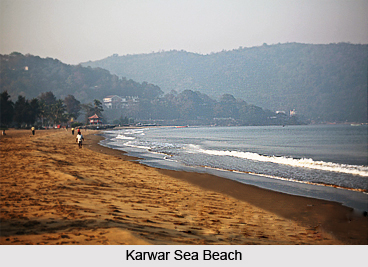 Karwar Beach is situated on the shores of Arabian Sea. There is also an enchanting beach with the fir tree groves providing a cool canopy. The beautiful waters are intermittently scattered upon with docile islets, known as the Oyster Rocks. It is about 11 km from the city of Karwar. A lighthouse can also be seen here. A large number of domestic and foreign ships can be seen here.
Gokarna in Uttara Kannada District
This is a popular pilgrim centre on the Arabian Sea shore. It is situated about 56 km from Karwar and 252 km from Mangalore. The famous Mahabaleshwar temple stands here, which is revered almost on par with the Lord Shiva Temple at Varanasi. This serene temple is considered as a heaven on earth and attracts a large number of pilgrims from far and near. The Shivaratri Festival is a grand event here. Buses ply from important places like Bangalore, Mangalore and Mysore to Gokarna. The KTDC runs hotels to provide accommodation to the tourists.
Ankola in Uttara Kannada District
It is an ancient temple dedicated to Lord Venkataramana. It hash two grand chariots wonderfully made out of wood. Ankola, which evokes Sarpamalika, the king who ruled in the 15th century also has a small beach for a delightful dawdle. This place is near Gokarna.
Sonda in Uttara Kannada District
It is situated about 35 km from Sirsi in the Sirsi taluk. It was a popular Jain centre, which hosts the `Samadhi` of the great scholar Bhattakalanka. A monastery called the Swarnavalli Mutt is also found here. The `Smartha` tradition is practiced here. There are also two ancient temples dedicated to Lord Trivikrama and Lord Sankaranarayana found here.
Ulvi in Uttara Kannada District
It is situated about 32 km from Yellapur. This place is renowned for the serene Gavi Mutt, which consists of a series of caves filled with an air of calmness. It is said that the Sharanas have lived in these caves. One of the caves is named after Akka Nagamma. The remains of a ruined fort can also be seen here.
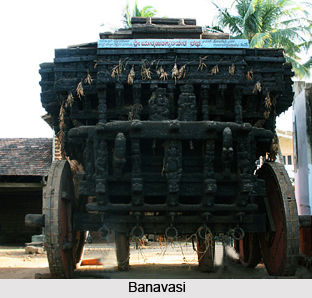 Banavasi in Uttara Kannada District
There is an ancient temple dedicated to Lord Mudhukeswara found here. This Lord is said to be a variation of Lord Shiva. It is situated on the banks of river Varada. This place had for quite some time been the capital of the Kadamba rulers. There stands a once magnificent fortress near the river.
Magodh Waterfalls in Uttara Kannada District
It is situated about 19 km from Yellapur. The energetic waters of the magnificent river Gangavathi fall down through 600 ft giving rise to these ravishing waterfalls. The visitors come here and get smitten by the luxurious natural beautifications. Accommodation can be availed at the Tourist Home run by the KTDC.
Dandeli Wildlife Sanctuary in Uttara Kannada District
It is situated about 40 km from Karwar, 76 km from Dharwad and 104 km from Belgaum. This sanctuary covers an area of 128 sq. km. It is filled with a large amount of teak and bamboo plantations. This sanctuary is located at an altitude varying between 375 and 685 meter above sea level. Lots of elephants, bisons, sambars and the fierce big cats such as the tigers and cheetahs grace the sanctuary. A variety of fascinating birds can be seen flocking around during the migratory season. There are also a couple of watchtowers wherefrom one can have a convenient view of the magnificent creature of the sanctuary. The nearest airport is Belgaum, which is about 152 km from here. Buses are available from Belgaum District and Bangalore to Dhandeli. It can also be reached by train from Alnawar.
Karwar in Uttara Kannada District
Karwar is the headquarters of the Uttara Kannada district of the Indian state Karnataka. It can be reached after a thrilling journey through 160 km long road through the scenic sylvan settings from Hubli. Wild animals inhabit the region in abundance. Beautiful hills and valleys characterize this area.
Karwar Beach is situated on the shores of Arabian Sea. There is also an enchanting beach with the fir tree groves providing a cool canopy. The beautiful waters are intermittently scattered upon with docile islets, known as the Oyster Rocks. It is about 11 km from the city of Karwar. A lighthouse can also be seen here. A large number of domestic and foreign ships can be seen here.
Gokarna in Uttara Kannada District
This is a popular pilgrim centre on the Arabian Sea shore. It is situated about 56 km from Karwar and 252 km from Mangalore. The famous Mahabaleshwar temple stands here, which is revered almost on par with the Lord Shiva Temple at Varanasi. This serene temple is considered as a heaven on earth and attracts a large number of pilgrims from far and near. The Shivaratri Festival is a grand event here. Buses ply from important places like Bangalore, Mangalore and Mysore to Gokarna. The KTDC runs hotels to provide accommodation to the tourists.
Ankola in Uttara Kannada District
It is an ancient temple dedicated to Lord Venkataramana. It hash two grand chariots wonderfully made out of wood. Ankola, which evokes Sarpamalika, the king who ruled in the 15th century also has a small beach for a delightful dawdle. This place is near Gokarna.
Sonda in Uttara Kannada District
It is situated about 35 km from Sirsi in the Sirsi taluk. It was a popular Jain centre, which hosts the `Samadhi` of the great scholar Bhattakalanka. A monastery called the Swarnavalli Mutt is also found here. The `Smartha` tradition is practiced here. There are also two ancient temples dedicated to Lord Trivikrama and Lord Sankaranarayana found here.
Ulvi in Uttara Kannada District
It is situated about 32 km from Yellapur. This place is renowned for the serene Gavi Mutt, which consists of a series of caves filled with an air of calmness. It is said that the Sharanas have lived in these caves. One of the caves is named after Akka Nagamma. The remains of a ruined fort can also be seen here.
Banavasi in Uttara Kannada District
There is an ancient temple dedicated to Lord Mudhukeswara found here. This Lord is said to be a variation of Lord Shiva. It is situated on the banks of river Varada. This place had for quite some time been the capital of the Kadamba rulers. There stands a once magnificent fortress near the river.
Magodh Waterfalls in Uttara Kannada District
It is situated about 19 km from Yellapur. The energetic waters of the magnificent river Gangavathi fall down through 600 ft giving rise to these ravishing waterfalls. The visitors come here and get smitten by the luxurious natural beautifications. Accommodation can be availed at the Tourist Home run by the KTDC.
Dandeli Wildlife Sanctuary in Uttara Kannada District
It is situated about 40 km from Karwar, 76 km from Dharwad and 104 km from Belgaum. This sanctuary covers an area of 128 sq. km. It is filled with a large amount of teak and bamboo plantations. This sanctuary is located at an altitude varying between 375 and 685 meter above sea level. Lots of elephants, bisons, sambars and the fierce big cats such as the tigers and cheetahs grace the sanctuary. A variety of fascinating birds can be seen flocking around during the migratory season. There are also a couple of watchtowers wherefrom one can have a convenient view of the magnificent creature of the sanctuary. The nearest airport is Belgaum, which is about 152 km from here. Buses are available from Belgaum District and Bangalore to Dhandeli. It can also be reached by train from Alnawar.
Recently updated articles in States of India
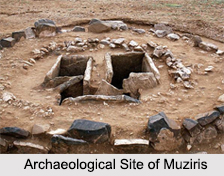
History of Thissur District
Early History of Thissur District explains flourishing of the port cities. Now these port cities are transformed into archaeological sites.
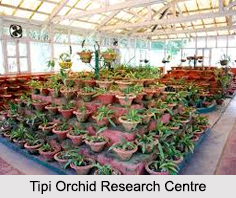
Tippi Orchid Research Centre, Arunachal Pradesh
Tippi Orchid Research Centre in Arunachal Pradesh is renowned for its rich collection of exotic and endangered orchids. Surrounded by lush rainforest...
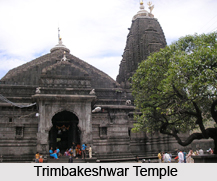
Tourism in Nashik District
Pilgrimage tourism in Nashik district involves visiting the various places of Hindu and Jain worship located here. Some of the holiest sites for Hind...
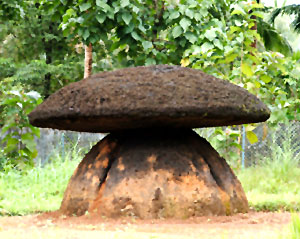
Mangadu, Kerala
Mangadu in Kerala’s Kollam district is a significant megalithic site known for its urn burials, cist burials, menhirs, and stone circles. Excavations...
Devaswom
History of Devaswom is not very ancient and can be dated back to late seventeenth century.
Related articles in States of India
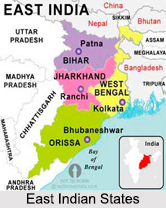
East Indian States
East Indian States comprises of Bihar, Jharkhand, West Bengal, Odisha and also the Union Territory of Andaman and Nicobar Islands. It defines the cult...
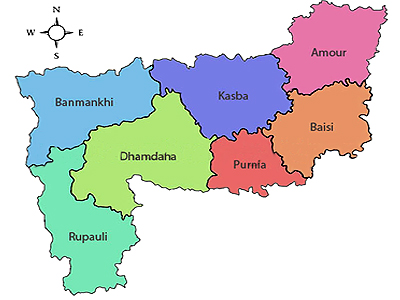
Purnia District in Bihar
Purnia District is located in Bihar and extends from River Ganga to Nepal. The district has a rich Hindu history and glorious past.
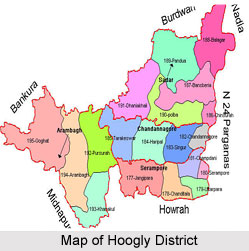
Hooghly district
Hooghly District along the bank of the river Hooghly is one of the principal trading ports of West Bengal.
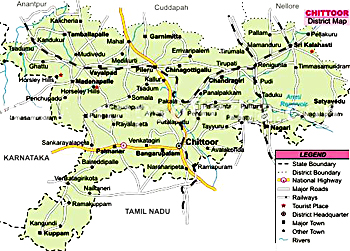
Geography Of Chittoor District
Geography of Chittoor district is spread along the topography of the land which is divided into two natural divisions; Chittoor has a dry and healthy...
Districts of West Bihar
Districts of West Bihar is comprised of medieval monuments that were built by the different governors of Mughal era.