Nagpur City
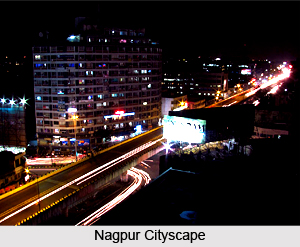
Nagpur is the largest city in central India and also the second capital or winter capital of Maharashtra. It ranks 13 in largest population and is one of the fastest growing cities in the country.

Share this Article:

Introduction

Nagpur, the largest city in central India is also believed to be the winter capital of the state of Maharashtra. It is the headquarter of Nagpur district and Nagpur division and is the third largest city by population of Maharashtra. Nagpur ranks as 143rd largest urban area in world in terms of population. Nagpur is the seat of annual winter session of Maharashtra Vidhan Sabha. The city happens to be the commercial and political center of the state`s eastern Vidarbha region.
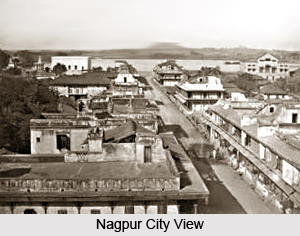
Nagpur  City
Nagpur is also famous throughout the country as “Orange City” for being a major trade center of oranges cultivated in the region. The city was established by Bhakt Buland, a prince of the Gond tribe during the first half of 18th century. It has 14 Talukas and 12 Assembly Segment Constituencies. Due to the presence of several tiger reserves in and around the city, it also called the Tiger Capital of India or the Tiger Gateway of India. The regional office of National Tiger Conservation Authority is in Nagpur.


Etymology of Nagpur

Nagpur is named after the river Nag that flows through the city. The word “pur” means city and is the name commonly given to Indian cities. Mahal, the present name of the old Nagpur city, is situated on north banks of the river Nag. Nagpur was earlier known as "Fanindrapura", a word derived from the Marathi language. The word “fana” means the hood of a snake.


History of Nagpur

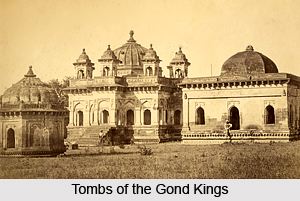
History of NagpurHistory of Nagpur dates back to the early 8th century. Bhakt Buland, a Gond prince of the kingdom of Deogad in the Chhindwara district, founded the present city in the early 18th century. Perceiving the advantage of civilised life in Delhi, he started to build Nagpur as his new capital. His successor Chand Sultan aided him. After Chand Sultan`s death in 1739, clashes regarding succession arose and Raghuji Bhonsle, the Maratha governor of Berar, helped to re-establish the elder son to the throne. As the dissentions continued, Raghuji Bhonsle again intervened in 1743, and the control of Nagpur slowly passed on from the Gonds to the Marathas. It became the capital of the Bhonsles.

The ancient history of Nagpur states the evidence of human existence before 3000 years or in 8th century BC. Mehir burial sites at Drugdhamna (near Mhada colony) point out megalithic culture existed around Nagpur and is still followed in present times. The first reference to the name Nagpur is found in a 10th century copperplate inscription excavated at Devali in the neighbouring Wardha district. The inscription is a record of endowment of a village situated in the visaya (district) of Nagpura-Nandivardhana during time of Rastrakuta king Krsna III in the Saka year 862 (940 CE). Towards the end of third century King Vindhyasakti possibly ruled the Nagpur region and in the 4th century Vakataka Dynasty reigned in the Nagpur region and surrounding areas and carried out good relations with the Gupta Empire. The Vakataka king Prithvisena I moved his capital to Nagardhan that was located at 28 kilometers (17 mi) from Nagpur.

Recent history of Nagpur ascribes the founding of this city to Bakht Buland, a prince of the Gond kingdom of Deogarh in the Chhindwara district. In 1743, the Maratha leader Raghoji Bhonsle of Vidarbha established his honour in Nagpur, after conquering the territories of Deogarh, Chanda and Chhattisgarh by 1751. After Raghoji`s death in 1755, his son and successor Janoji was forced to concede the valuable supremacy of the Maratha Peshwa of Pune in 1769. Despite this, the Nagpur state continued to grow. Janoji`s successor Mudhoji I (d. 1788) attained power in 1785 and bought Mandla and the upper Narmada valley from the Peshwa between 1796 and 1798, after which Raghoji II (d. 1816) acquired Hoshangabad, the larger part of Saugor and Damoh. Under Raghoji II, Nagpur covered certain parts of the presents like Maharashtra, Chhattisgarh, Orissa, and parts of Madhya Pradesh and Jharkhand.

In 1803, Raghoji II joined the Peshwas against the British in the Second Anglo-Maratha War. The British prevailed, and Raghoji was forced to cede Cuttack, Sambalpur, and a part of Berar. This period was significant in history of Nagpur and marked certain cultural changes due to the influence of British rule. After Raghoji II`s death in 1816, his son Parsaji was deposed and murdered by Mudhoji II. History of NagpurDespite the fact that he had entered into a treaty with the British in the same year, Mudhoji joined the Peshwa in the Third Anglo-Maratha War in 1817 against the British, but was forced to surrender the rest of Berar to the Nizam of Hyderabad, and certain parts of Saugor and Damoh, Betul, Mandla, Seoni and the Narmada valley to the British after being defeated at Sitabuldi in modern-day Nagpur city.

From 1853 to 1861, the Nagpur Province consisted of the present Nagpur region, Chhindwara, and Chhatisgarh. The Nagpur Province commenced the start of modern history of Nagpur and became part of the Central Provinces. However, Berar came under the administration of a commissioner under the British central government, with Nagpur as its capital. Berar was added in 1903 and Tata group started the country`s first textile mill at Nagpur, officially known as Central India Spinning and Weaving Company Ltd. The company was popularly known as "Empress Mills".

The history of Nagpur also finds its place in the political activity during India`s freedom struggle and included hosting of two annual sessions of the Indian National Congress. Non-cooperation movement was launched in the Nagpur session of 1920. Nagpur witnessed a Hindu-Muslim riot in 1923 which had profound impact on K. B. Hedgewar. In 1925, he founded RSS, a Hindu nationalist organization, in Nagpur, patronising the idea of creating a Hindu nation. After the 1927 Nagpur riots RSS gained further popularity in Nagpur and the organization grew throughout the nation.

When the Indian states were reorganized along linguistic lines in 1956, the Nagpur region and Berar were transferred to Bombay state, which in 1960 was divided between the states of Maharashtra and Gujarat. In 1994, Nagpur witnessed its most violent day in modern history of Nagpur in form of Gowari stampede deaths.


Geography of Nagpur

Nagpur is important location wise as it is situated at the crossroads of India`s North-South and East-West routes by road rail and air. The city lies on the Deccan plateau and is blessed with several artificial and natural lakes. The Nag River is a tributary of the Kanhan River, which flows in a meandering path through the old city of Nagpur. Ambazari Lake is the largest lake here. Nagpur is accredited for being one of the cleanest and the second greenest city in India (as per 2010 reports).


Climate of Nagpur

Nagpur, Indian CityNagpur city lying on the Deccan plateau of the Indian Peninsula enjoys a tropical wet and dry climate, with dry conditions prevailing for most of the year, since it is far from Bay of Bengal and Arabian Sea. The region has a typical monsoon weather pattern that sets in from July. Nagpur city receives an annual rainfall of 1,205 mm (47.44 in) during the monsoon. The highest recorded rainfall was 304 mm on July 14, 1994. Summers are extremely hot lasting from March to June, with maximum temperatures in May. The peak temperatures are usually reached in May/June and can be as high as 48 degrees C. Winter continues from November to January with temperatures dropping up to 10 degrees C or even below that.


Administration of Nagpur

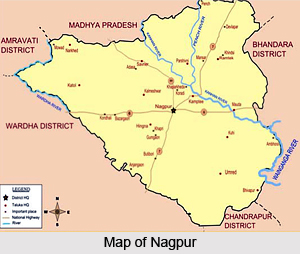
Nagpur is administered by Nagpur Municipal Corporation (NMC), which is democratically elected civic governing body. The seal of Nagpur Municipal Corporation depicts a cobra in the water of a river. According to the Nagpur pact, one session of state legislature and the state legislative council takes place in Vidhan Bhavan, Nagpur. ?It is usually the winter session exception being in 1966, 1971 and 2018 when monsoon sessions took place. The city has its own district court and its own bench of the Bombay High Court established on 9 January 1936. There are 6 Vidhan Sabha constituencies namely Nagpur West, Nagpur South, Nagpur South West, Nagpur East, Nagpur North and Nagpur Central. These are part of the Nagpur Lok Sabha constituency.


Languages spoken in Nagpur

Most of the people living in Nagpur speak Marathi, the official language of Maharashtra. Varhadi dialect of Marathi is spoken in and around Nagpur city. Hindi is also widely spoken in Nagpur. Apart from that a tiny percentage of the population also speaks other Indian languages like Chhattisgarhi, Sindhi, Gujarati, Punjabi, Telugu, Bengali, and Gondi.


Culture of Nagpur

Owing to its central location, Nagpur has become a multi-ethnic in nature with large amount of residents from the neighboring states of Madhya Pradesh, Chhattisgarh, and Andhra Pradesh. The city`s culture is cosmopolitan as it includes a large number of people from other Indian states as well as people belonging to the world`s major faiths and religion. Nagpur plays host to a variety of cultural events throughout the year.


Economy of Nagpur

Nagpur is important for the banking sector as the city has the regional office of Reserve Bank of India opened on 10 September 1956. Sitabuldi market is the major commercial market located at the heart of the city. Nagpur is home the famous ice cream manufacturer Dinshaws, packaged snacks manufacturer Haldiram`s, ready-to-cook food manufacturer Actchawa, spice manufacturer Suruchi International, Ayurvedic beauty and healthcare companies Vicco and Baidyanath and is also the center of explosives and ammunition company Solar Industries.

Nagpur is known for its extensive orange cultivation and is a major centre of orange trade. The Maharashtra Agro Industrial Development Corporation has its multi fruit processing division called Nagpur Orange Grower`s Association (NOGA). Cotton, silk, and handloom industries are major contributors to the economy of Nagpur. It sector and pharmaceutical industries are also flourishing in this city.


Temples in Nagpur

Temples in NagpurTemples in Nagpur which is located in the western Indian state of Maharashtra are important pilgrimage spots which comprise a majority of Hindu and other temples. These temples are dedicated to various Hindu deities and saints, and are regularly visited by innumerable pilgrims throughout the year. Some of these temples are quite ancient and boast of marvellous architectural features.

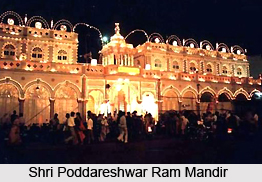
Shri Poddareshwar Ram Mandir : Shri Poddareshwar Ram Mandir is the very site of Hindu religious worship, with the three chief Hindu Gods of Ramayana residing side-by-side. It was erected in 1923 and was constructed with the aide of sandstone and marble. This temple is referred to as the most famous pilgrimage centre in Nagpur, and numerous religious festivals are organised in Shri Poddareshwar Ram Mandir.

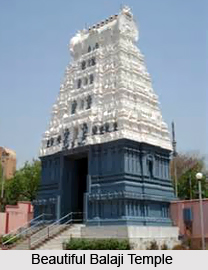
Balaji Temple : Located in the beautiful Seminary Hills, Shri Balaji has architectural influences of both north and south India. Balaji Temple is dedicated to Lord Balaji, an avatar of Lord Shiva and yet another Hindu deity known as Lord Kartikeya. The tranquillity and calm natural surroundings of the nearby hills enhance the divinity of the temple.

Shri Vyankatesh Temple : Shri Vyankatesh Temple in Itwari has the idol adorned in pure gold, brought from Chennai and Swamiji Shri Dharacharyaji had offered the central concept of this temple. Temples in NagpurDuring 1968, its construction was complete and Lord Vyankatesh is the presiding deity of this temple. The idol is composed of black stone, adorned with gold jewelleries. The other festival statues here are also made of gold.
Tekdi Ganapati Temple : Tekdi Ganapati Temple is 250 years old and its idol of Lord Ganesha is believed to be self-existent. The current-day structure of Tekdi Ganapati Temple was modelled in the year 1984. Devotees are of the view that previously the idol was comparatively smaller but its size enhanced gradually with time. Beautiful silver and gold jewels decorate the idol, along with fresh flowers and during `Ekadashi` and `Ganesh Chaturthi`, the idol is adorned with a crown.

Sati Anusuya Mata Temple : Sati Anusuya Mata Temple in Nagpur is a revered spiritual place where Vaidehi Sati Anusuya Mata is believed to have exhibited her holy powers and divine charismatic grace. The `dharmasala` as well as the temple are visited by thousands of pilgrims throughout the year, which are famous for their unique beauty.

Shree Mahalakshmi Jagdamba Mata Temple : Situated on the banks of Koradi Lake, Shree Mahalaxmi Jagdamba Mata Temple is dedicated to Goddess Mahalakshmi. It is existent at a distance of nearly 15 kms away from the northern portion of Nagpur. During `Navaratri`, large quantity of visitors crowds the temple. The temple grounds are illuminated with over 50, 000 lamps during festive events.

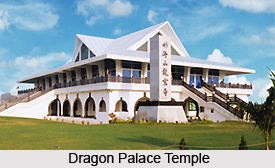
Dragon Palace Temple : The Dragon Palace Temple is an abode of redefined whiteness, constructed by the Ogawa society, Japan which had declared this temple as the `International Monument Dragon Palace Temple`. Temples in Nagpur It is dedicated to Lord Buddha, and has been the recipient of national and international awards for its architectural excellence and unique landscape. Dragon Palace Temple was inaugurated during 1999.
Hazrat Tajuddin Baba Dargah : Hazrat Tajuddin Baba was a famous Sufi saint who had experienced a close connection with `Adwaita` or `oneness`, before which he lost all worldly desires. He had been shifted to a mental asylum by the British, where he became popular as a sage. Devotees often visited the hospital for his `darshan`. Eventually he was granted escape from here by Maharaja Raghuji Bhosale and his palace was offered to the saint. Thereafter, Hindus and Muslims greatly respect and worship Tajuddin Baba.

Cuisine of Nagpur

Varhadi or Savji style cuisine forms the traditional food of the native people in Nagpur. The main feature of the cuisine is the use of different spices ranging from dried herbs to fruit type spices. Desserts and snacks have a special place in Nagpur cuisine. Although vegetarian recipes and quite popular in the region, non-vegetarian delicacies are also enjoyed by the people of Nagpur.


Tourisum in Nagpur

Nagpur has always attracted tourists from all over the country for its ancient religious monuments, festivals, unique craftsmanship, and rich forest areas. The largest hollow or dome shaped Stupa called Deekshabhoomi is located in Nagpur. It is an important place of the Buddhist movement. There are about 30 Jain temples in Nagpur including some of the ancient ones like Sengan Jain temple Ladpura, Parwarpura Jain temple, Kirana oli Jain temple, and Juna oli Jain temple. Tekdi Ganesh Mandir is one of the famous Hindu temples in Nagpur. The most famous shrine or dargah of Tajuddin Muhammad Badruddin is located at Tajabad. Annual Urs and Muharram are celebrated here in great enthusiasm.

The St. Francis De Sales Cathedral and All Saints Cathedral church are also among the most visited sites in Nagpur. The city is also famous for some of the ancient south Indian temples like Sarveshwara Devalayam, Balaji temple in seminary hills, 2 Ayyapa temples, Raghvendraswami Mutt, Murugananda Swami, Nimishamba Devi temple and Subramanyiam devastanam. Traditional art form like folk paintings and sculptures are popular among people visiting Nagpur from other states. The city also boasts of some finest textiles like silk woven sarees and woolen garments.

Nagpur has some of the largest tiger reserves in India. The natural beauty of the city is also marked by beautiful gardens and lakes. Maharajbagh zoo, Gorewada Zoo, Gorewada Lake, Khindsi Lake, Ambazari Lake, Futala Lake, Shukrawari Lake, Sakkardara Lake, Zilpi Lake, Divyang Park, Nagpur Central Museum, Raman Science Centre, and Dwarka River Farms and Amusement Park are some of the famous tourist spots in the city.


Share this Article:

Related Articles

More Articles in Cities of India


Ancient North Indian Cities
Ancient North Indian Cities were developed in the early era that is from the time of Mahabharata, and after the decline of Hindu kings in Northern parts. Some have become desolated and some became the archaeological ruins.
Ancient South Indian Cities
Ancient South Indian Cities witness the rise and fall of many empires from the early era.
Ancient Cities of North West India
Ancient Cities of North West India show the Rajput culture from the early phase, but in medieval era it showed the prominence after having a good relation with Mughals.
Ancient West Indian Cities
Ancient West Indian Cities are now completely in ruins, because of the heavy earthquake in some of the regions.
Holy Cities of North West India
Holy Cities of North West India are grown up in the midst of dry and thorny desert lands with Rajputana art and architecture.
Holy Cities of North India
Holy Cities of North India are having the rich history of Hinduism and the entire civilization was grown up with the hands of beliefs, rituals and the evolution of religion.
Holy Cities of South India
Holy Cities of South India gives the detailed cultural formation of Dravidians from the early era, which later developed to the world by the Pallavas and the Cholas.
Holy Cities of Central India
Holy Cities of Central India have the excellence of art and architecture in temples in the early era.
Holy Cities of East India
Holy Cities of East India refer the places of religious importance. Hinduism, Islam, Christianity and Buddhism are widely spread.
Holy Cities of West India
Holy Cities in West India were established by the rulers of Rajputs and the Satvahana Dynasty and the medieval rulers of Junagadh.
Cities of West Uttar Pradesh
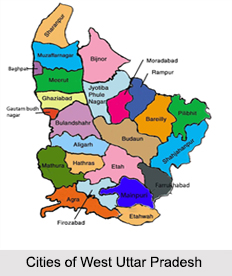
Cities of West Uttar Pradesh include Meerut, Bulandshahr, Ghaziabad, Saharanpur, Muzaffarnagar, Bijnor, Bareilly, Rampur, Agra, Aligarh, Mathura and many others. It comprises the western parts of Uttar Pradesh.
Architecture of Ladakh
Architecture of Ladakh is very typically Buddhist due to the strong influence of the religion here. The architecture is in keeping with the geography and climate of the region.
Architecture Of Madurai
Architecture of Madurai reflects the Hindu architectural pattern as is seen in the lakes, temples and palaces.
Port Cities of South India
Port Cities of South India are developed from the early phase of colonial era when the Portuguese and the French traders came to India
Vaishali Ancient City
Vaishali was an ancient prosperous metropolis, which was probably the first republic of the world.
Kudra City
Kudra, the city in Kaimaur District where agriculture is the prime occupation and in this city there is present Asia’s largest seed cold storage.
Thuraiyur in Tamilnadu
Thuraiyur is a municipality town where the inhabitants are mostly dependent on agriculture and handloom industries.
Dharapuram - Tiruppur
Dharapuram is a town located in Tiruppur district in Tamil Nadu. It is said that the Pandavas resided here in the town.
River Ghats in Haridwar
There are several river ghats in Haridwar, which are considered as popular spots among tourists.
Mataundh - Banda District
Mataundh is a prominent `panchayat town` situated in Banda district of Uttar Pradesh.