Treatment in Ayurveda
Treatment of a disease requires a detailed examination of internal physiological characteristics.

Share this Article:

About Treatment in Ayurveda

Treatment in AyurvedaThere are several types of treatment in Ayurveda. The procedure of treatment varies according to the patient"s mental and physical capability or strength. The kind of disease is the integral factor to choose the types of treatment in Ayurveda.

• Dwividh Chikitsa suggests 2 types of treatment in Ayurveda. In the first category of treatment, the patient has to undergo either "Sheet Upchaar" (cold treatment) or "Ushan Upchaar" (hot treatment).

• Triwidh Chikitsa suggests 3 types of treatment in Ayurvedic form of medicine. The first category of Triwidh Chikitsa includes the procedures of "Devvyaprashay Chikitsa", "Yuktivyaprashaya Chikitsa" and "Satvavajya Chikitsa". In the second category of Triwidh Chikitsa, forms of treatment are Antah-Parimarjan, Bahir-Parimarjan and Shastra-Parimarjan. The third category of Triwidh Chikitsa includes Langhan, Langhan Pachan and Doshavesechan (sanshodhan).

• Chaturwidh Chikitsa suggests 4 types of treatment in Ayurvedic medicine. The 4 paths of treatment in Chaturwidh Chikitsa include Sanshodhan Chikitsa, Snashma, Chikitsa, Ahar Chikitsa and Aachar Chikitsa.

• Panchwidh Chikitsa suggests 5 types of treatment in Ayurvedic medicine. The methods of treatment include, Vamana, Virechana , Nasya, Niruh Basti and Anuvasan Basti.
 
• Shadwidh Chikitsa suggests 6 types of treatment in the Ayurvedic practice. The six methods of Shadwidh Chikitsa are Langhan Chikitsa, Brihan Chikitsa, Rukshan Chikitsa, Snehan Chikitsa, Swedan Chikitsa and Stanbhan Chikitsa.

• Saptwidh Chikitsa refers to the 7 types of treatment in Indian Ayurveda. The methods of Saptwidh Chikitsa include Pachan, Deepan, Shudha (hunger), Trisha (thirsty), Vyayam (excercise), Dhupsewan and Vayusewan. Treatment in Ayurveda
Daswidh Chikitsa refers to the 10 types of treatment in Indian Ayurveda. The ten methods of treatment within the sphere of Daswidh Chikitsa include Vaman, Virechan, Niruh vasti, Nasya, Pachan, Upwas, Pipasa, Vyayam, Dhupsewan and Vayusewan.

The types of treatment in Ayurveda are too vast to be discussed. However, the below-mentioned types of treatment in Ayurveda are the most practised ones in India.

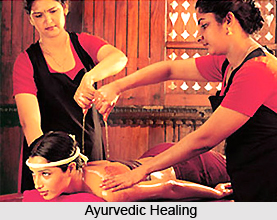
Pizhichil is one of the types of treatment in Ayurveda that requires 2 weeks to be completed. This treatment is very effective in Rheumatic diseases like Arthritis, Paralysis, Paralysis-Agitanus, Hemiphlegia, Sexual Weakness, Nervous Weakness and Nervous disorders and so on.

Njavarakizhi is another type of treatment in Ayurveda of 14 days. It is a process by which the whole body or any specific part of the body is made to perspire by the application of certain medical puddings externally in the form of Boluses tied up in muslin bag. This treatment is for all types of rheumatism, pain in the joints, emaciation of limbs, high blood pressure, cholesterol and certain kinds of skin diseases.

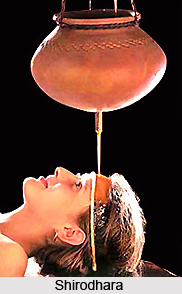
Dhara is the process in Ayurveda, where some Herbal oils, medicated milk and medicated buttermilk are poured on the forehead in a special method for about 45 minutes in a day for a period of 7-21 days. This treatment is particularly for insomnia, vata predominated diseases, mental tension and certain skin diseases.

Basti is the method in Ayurvedic treatment that requires herbal oils and herbal extracts. They are applied through the rectum daily for a period 5 to 25 days. This treatment is for arthritis, paralysis, hemiplegia, numbness, gastric complaints associated with rheumatism and constant constipation. Treatment in Ayurveda
Sirovasthi is one of the types of treatment in Ayurveda, where certain lukewarm herbal oils are poured into a cap fitted on the head for 15 to 60 minutes per day according to the patient`s conditions for a period of one week. This treatment is highly effective for facial paralysis, dryness of nostrils, mouth and throat, severe headaches and other vata originated diseases.

Udvarthanam is a typical massage with herbal powder for about 30 to 45 minutes daily for 2 weeks, and cures Hemiphlegia, paralysis, obesity and certain rheumatic ailments.

Nasya method involves herbal juices and medicated oils. This treatment is highly effective for certain kinds of headaches, paralysis, mental disorders and skin diseases.

Snehapanam is one of the types of treatment in Ayurveda, where medicated ghee is given internally in an increased quantity for about 12 days to treat osteoarthritis, psoriasis and Leukaemia.

In Kizhi, herbal leaves and herbal powders are applied to the whole body in boluses with hot medicated oils for 45 minutes for 2 weeks. This process treats osteoarthritis, arthritis with swelling, spondylosis and sports injuries.

Dhanyamla Dhara is another effective type of treatment in Ayurveda for Hemiphlegia, paralysis and rheumatic complaints, where warm herbal liquid is poured all over the body in a rhythmic way through a special vessel for 45 minutes.

Yoni Prakshalanam is a purification process for genital organs and treats gynaecological disorders, where herbal oils and decoctions are applied through the vaginal route.

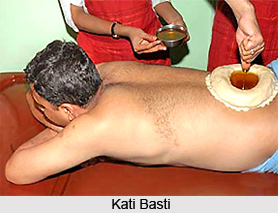
Kativasthi is a treatment where specially prepared warm medicated oil is kept over the lower back with herbal paste boundary; it cures any type of back pain and spinal disorders.

Urovasthi is a similar process that treats asthma and other respiratory problems, heart diseases and muscular chest pain.

Ksheeradhoomam is one of the popular types of treatment in Ayurveda, used for facial paralysis, speech disorders and other nervous disorders of the face.

Thalam is the process where special powder mixed with medicated oil is applied on the top of the head for 20 to 45 minutes. This treatment cures ENT problems, insomnia, migraine and others.

Lepanam process involves medicated herbal paste that is applied on the affected part to cure inflammatory conditions.

Treatment of Common Fever in Ayurveda

Treatment of common fever in ayurveda possesses its own idyllic idioms, referred to by those ancient Indian sages, who also had been successful to even nominate a separate name for fever itself. In the world of ayurvedic medicine, this very ordinary ailment, i.e., common fever or common cold, is referred to as Pratishyaya. All the three doshas in ayurveda are responsible for the occasional occurrence of cold, which however provides effective treatment in common fever. Vata dosha common fever has dry coughs, small amounts of discharge of mucus, a gruff voice, headache accompanied by runny nose. People with pitta dosha who have common colds is sure to have fever, with symptoms like an aching throat, yellowish nasal discharge and continuous snarl of the nasal passage. People with kapha dosha common fever have thick mucus discharges with deadening headaches and heaviness of the head.

Treatment of common fever in ayurveda and its medicines teach that the ailment results from a terrible disparity of the kapha and vata doshas. A cold develops within the body, when one has a surplus of kapha`s cool, accompanied by too much of sneezing. Excess vata energy dilutes agni, or gastric fire, as a result one feels the chill inside the body. Ginger has the property to lessen excess kapha and refurbish agni, making it the best medicine for common fever and influenza. There are two main strategies to balance Kapha. Common fever or Jwar is one of the most systematically delineated entities in Ayurveda. Thirteen types of common fever and its treatment are described hence.

Vataja, Pittaja, Kaphaja, Vata-Pittaja, Vata- Kaphaja, Tridoshaj (intrinsic fevers), Agantuja (extrinsic fever), Kamaja (associated with sex), Shokaja (induced fretfulness and uneasiness), Vishama jwar (malaria), Krodhaja (anger induced) and Bhuta-vistha (of unknown origin) are some of the few common fevers described in ayurvedic treatment and medicine. Depending on the doshic connection or other factors, supplementary symptoms besides rise of temperature are observed on the patient suffering from the illness.

Various herbs available in the market can repair the perfect balance to Kapha fever, especially ginger; however, spices like cinnamon, liquorice, basil and cloves also prove effective in the treatment of common fever in ayurvedic medicine. A patient is advised to take 1 to 4 grams of any of these herbs in a powdered form (four grams equals approximately 2 to 3 teaspoons). Then, the herb needs to be added to 1 cup of boiled water, stirred until it has turned cool before drinking the decoction in full. Practitioners however also recommend that one can have the herb powder together with honey for further warmth in the throat.

Another recipe of ginger tea almost always testifies to be much comforting and valuable while common fever and cold, treated in the ayurvedic format. He/she is suggested to just add under half teaspoon each of ginger powder, fennel seeds and cinnamon and a pinch of clove powder to one cup of hot water. Then, the herbs need to be allowed to absorb for approximately ten minutes, after which they require to be filtered out of the tea before drinking thoroughly. Due to aspirin and ginger serving as both blood dilutants, one is warned to not drink ginger tea within two hours of consuming aspirin.

Herbal Combinations in treatment of common fever in ayurveda

Aconitum Fever Remedy
This ayurvedic herbal remedy is useful for treatment in common fever, accompanied by diarrhoea.

Aconite-Mustaka Home Remedy
This remedy is exceedingly useful for fever, diarrhoea and peevishness of the stomach.

Balachatur bhadraka
This ayurvedic herbal remedy also proves useful for treating common fever, together with diarrhoea.

Hriveradi
This ayurvedic herbal remedy also is very much effective for common fever with diarrhoea.

However, besides these above mentioned treatment of common fever in ayurveda and the traditional way of cure, this specific domain also resorts to some widely selected and chosen processes readily available in a household. For instance, sponging the forehead and the body with lukewarm to cold water is a much commonly recommended ayurvedic practice in instances of high common fever due to sunstroke. In order to achieve more healthier results, one can also add 1 teaspoonful of rose water to the cold water prior to sponging. The rose water could also be poured into an ice-bag and made effective usage for sponging the heated body. The patient is advised to take approximately 20 fresh leaves of holy basil (tulsi) at the onset, after which he/she should also make use of a small piece of ginger and approximately 5 grains of black pepper. All the ingredients then needs to be boiled together in the tea, after which it is necessary to drink the warm liquid as soon as possible, avoiding to let the decoction to cool.

Useful herbs in ayurvedic treatment of common fever Bishop`s Weed (Trachyspermum ammi) - Bishop`s weed possesses the prowess to verily open up congested nasal passages while treating common fever. The seeds are generally tied in a cloth and inhaled directly to unclutter congestions. Bishop`s Weed has proven to efficiently work in treating nasal blockages in children.

Cassia (Cassis fistula) - Cassia roots are much helpful in treating cold and common fever in ayurvedic treatment. The roots are normally burnt, after which the smoke from them is inhaled for betterment purposes. The mucus discharge, however, is known to increase after such a treatment, which also will stop completely after some time.

Cinnamon (Cinnamomum zeylanicum) - Cinnamon, always regarded as beneficial for treatment in common fever in ayurveda, has advised to boil one glass of water together with a pinch of pepper and honey. This lessens the aching throat problems and also bars the cold from turning chronic, or germinating into something severe like pneumonia or influenza.

Cumin seeds (Cuminum cyminum) - Cumin seeds serves an excellent antiseptics, when treating common fever is being spoken about in the ayurvedic world. These seeds thus have beneficial effects if the cold is accompanied with relentless fever. Cumin seeds are also helpful in curing the throat vexations.

Ginger (Zingiber officinale) - Ginger extracts taken several times a day while suffering from bouts of common fever, serve as excellent remedy for treating coughs that accompany common colds. Ginger tea is also extremely efficacious in treating cough and cold, a much acknowledged recipe in ayurveda since long times.

Onion (Allium cepa) - The vegetable onion possesses much power and capability to entirely liquefy the phlegm. This makes the sticky mucus much more dilute, as a result of which it gets discharged out from the nose.

Dietary Treatments for Common Fever in Ayurveda
Patients down with common fever are almost always advised to fast for one day, so that the body toxins get washed out for good; this opens up a healthy passage for the bed-ridden to be treated from fever as soon as possible. Sufferers in such instances generally have to maintain a strict regimen of diet, solely depending upon and following the doctor`s advise. Patients can have steaming vegetable soups, or steamed vegetables with little or no spices in them. Food that is difficult to digest such as cheese, yoghurt, milk, oily and spicy foods and sweets should be avoided at any cost, just to prevent dire consequences of aggravation. Hot food is very much recommended when one is completely down and out with common fever. Hot chicken soup is a traditionally known legendary remedy for treatment of common fever in both ayurveda as well as in every other sphere.

Ayurvedic medicine and its practitioners also advocate dietary changes to treat common fever and cold. A patient is recommended to consume more whole grains and steamed vegetables and fewer meats, dairy products, oily foods, nuts, pastries and sweet fruit juices until the symptoms subside wholly.

Listed down are some well-admired and much accepted strategies to effectively treat common cold and fever through ayurvedic treatment

•A patient suffering from common fever is advised to add a teaspoon of cumin seeds to 1 glass of boiling water. Later, he/she needs to simmer this liquid for a few minutes, filter and allow it to cool. For best treatment in common fever, this decoction must be administered as least 12 times a day. If accompanied by aching throat, one is required to add a few small pieces of dry ginger to the boiling water.

• As an alternative, one can take two garlic cloves crushed and boiled in water, together with half a teaspoon of turmeric powder. This serves as an exceptional antidote for cold.

• Ayurvedic practitioners also recommend patients to grind six pepper corns. This is then required to be added with a glass of warm water, sweetened with 56 batashas (a variation of sugar candy). The decoction must be taken later for a few nights.

• A concoction of ginger juice and honey can also be administered in treating severe cases of common fever, a few times a day. This excellent remedy gives instant relief from cough and cold.

• Lemon serves as an excellent antidote for treatment of common fever, according to ayurveda. As an efficacious measure, a patient is needed to mix the juice of two lemons in 2 and half cups of boiling water dulcified with honey. The solution is best advised to be taken during bed time. It is acknowledged as an incredibly effective remedy for gross bad cold.

• For acute pain and ache in the head, one can boil 1 tablespoon pepper powder in a cup of milk together with a pinch of turmeric. This mix can consequently be taken once daily for the succeeding 3 days.

•In times of severe cold, cough and common fever, one is seriously recommended to take one tablespoon lukewarm honey with 1/4th spoon cinnamon powder daily for 3 days. This process cures not only chronic cough and cold, but also thoroughly clears the sinuses.

Daily usage and intake of honey and cinnamon powder verily beefs up the immune system and protects the body from bacteria and terrible viral attacks. Scientists have established after much research that honey possesses umpteen vitamins and iron in large quantities. Constant utilisation of honey reinforces the white blood corpuscles to defend against bacterial and viral diseases. If one is susceptible to be attacked from repeated colds, a patient is also advised to take the ayurvedic tonic, chavanprash to aid in building immunity.

Bhringasava is one of the most prescribed and recommended ayurvedic remedy for treatment of common fever. This is normally ordained in quantities of 15 ml thrice a day for seven days. The nasal drops referred to as Anutaila are also prescribed by many ayurvedic physicians. Other common medicines include Vyoshaadi vati, Kantara Arya Ava Lehya, Tribhuvana Keerti, etc. These decoctions and preparations needs to be taken in time, just to avoid the fever and cold from getting reborn into severe influenza. Trikatu powder is also variously proposed to be taken along with honey. This eventually lessens and alleviates inflammation of the respiratory tract. Shadbindu taila can be used as nasal drops while in treatment of common fever. This is recommended to be made use of twice daily, as long as the symptoms of common cold are felt and sensed.


Treatment of Urticaria in Ayurveda

Treatment of Urticaria in Ayurveda has helped to address serious issue related to physical disorder. Urticaria and hives is also acknowledged as "Sheeta Pitta" in Ayurveda; however, some also choose to refer to it as `Nettle rash`. Urticaria has since historical times, been recognized as a pathetically excruciating disease when the patient had outbreaks all over the body; there can come about elevated red patches, which may further possess white margins, patches are also whitish but demarcated by red perimeters. In either stage, the feeling of itchiness is so severe that the patient is driven to frantic scratching measures for Urticaria.

The most contemporary medical opinion swerves round the fact that some kind of allergy is the root cause of hives, which is assigned to fluctuating bursts of thermal conditions. Treatment of Urticaria in Ayurveda as such comes equipped with meticulous methods and processes to aid sufferers. Ayurvedic treatment of hives is of the faith that either or all the `humours`, when vitiated, could horribly stimulate this very irritable disease. Some of the known situations of humour vitiation are having cold water beverage just after rigorous exercising, or endangering the body to frigidity when it is hot, when plagued with some parasite, mental upheaval etc. But, the most probable cause of Urticaria is when "pitta" dosha vitiates and kaphavayu is aggravated.

Treatment of Urticaria and hives in Ayurveda, principally deals with its most elementary identification of the root cause of an individual, dealing with the three doshas within an individual, vata, kapha and pitta. When interrupted or stirred, "Vata" dosha is primarily responsible for inducing Urticaria; a pricking sensation is preponderant and this type of Urticaria is also termed as "Sheeta pitta". Then again, when agitated with the "Kapha" dosha it is also basically responsible for itching as the disease`s predominant symptom, and this type of Urticaria is termed as "Udarda".

As a beginner`s curriculum necessary for the treatment of Urticaria in Ayurveda, administering of Indian mustard (Brassica juncea) oil and a fomentation with hot water has mostly been proven beneficial. Induced vomiting and induced gentle purgation are also experimented to promote well-being. Products like Sameerpannag, Sutshekhar, Arogyavardhini, and Gandhak Rasayan are also known to cure Urticaria. The medicines for Urticaria treatment in ayurveda like Kamdudha, Mukta and Gairik are useful in lessening the burning sensation, verily linked with itching in hives.

However, it needs also to be kept in mind that patients suffering and the sufferers who have reached a chronic stage, may not respond pronto to the above mentioned ayurvedic treatment for Urticaria. Encompassing within the ayurvedic treatment for Urticaria or hives, it is always ensured with complete care and attention that the purification of blood is done in a methodical manner.

Intestinal worms are also said to a major aggravating cause for Urticaria; hence, one is always counselled to firstly polish off the worms, not forgetting the nettlesome constipation. It always needs to be kept in mind that, where there is filth and constipation, worms in intestines are bound to brood and stimulate Urticaria together with other complications.

There exist four cardinal medicines for patients suffering from this very itchy and swelling trouble. These medicines include - Arogya Vardhini Rasa, Suta Shekhara Rasa, Kamadugha Rasa, and Haridra Khanda.

Arogya Vardhini Rasa and Suta Shekhara Rasa : Arogya Vardhini Rasa and Suta Shekhara Rasa are advocated for patients suffering from the most severe form of hives. The sufferer can have each one of them separately or as a compound (mixture) of both the medications: Arogya Vardhini Rasa and Suta Shekhara Rasa. The recommended dosage of this very treatment of Urticaria in ayurveda is to mostly blend 0.5 gram of the medication(s) with a teaspoonful of honey and administer that to the patient thrice daily.

Kamadugha Rasa : The primary ingredient of Kamadugha Rasa is red ochre (Gairika). The largely recommended dosage of this ayurvedic treatment for Urticaria is to have a teaspoonful of honey, which in fact should be mixed with half-a-teaspoon of Kamadugha Rasa. The patient later needs to be administered this medication four times each day.

Red Ochre (Gairika) : This has been known to ayurvedic practitioners since historic times, which is also acknowledged to comply with and according to Ayurvedic principles. Gairika however demands a scrupulous preparative process. One is advocated to mix a teaspoonful of the powder with an equal quantity of honey and later, have one teaspoonful of the concoction thrice every day.

Haridra : Haridra is employed in umpteen Indian households as a brilliant tastemaker in curries. Standard consumption of the normal quantity of Haridra debars the occurrence of hives. The preparation process of this very treatment of Urticaria in ayurveda begins with the fact that Haridra is indeed slightly bitter to taste, and many patients known to dislike the raw taste of Haridra. In such instances, Haridra powder can be sweetened with sugar and milk. The raw Haridra powder can also be tinctured with plain drinking water and later be consumed in teaspoonfuls thrice daily.

Haridra Khanda : Haridra powder is available commercially in the form of granules across various Ayurvedic counters in the country. These granules further possess a palatable taste and for that very reason solely it is has been renamed as Haridra Khanda. Haridra Khanda is prepared with the main ingredient being Haridra. This ayurvedic treatment for Urticaria is quite an easy home-made preparation. The dosage is counselled by medicos to be fixed at one teaspoonful of the granules, which needs to be blended with a cup of warm water and administered to the patient thrice every day.

Besides these already mentioned list of home remedies for treating Urticaria and hives by ayurvedic measures, some other household remedies does also exist, which can be stated as below:
* Massaging the affected portion with coconut oil helps to attain relief from itching
* If the Urticarial cause is some external physical agent like heat or cold stroke, it is necessary to keep the patient under a blanket for sometime. After sweating out entirely, the patient should acquire some relief.
* Ginger juice mixed with water is also acknowledged as a masterpiece treatment for curing Urticaria by ayurveda.
* `Doob` (grass) mixed with turmeric powder can aid one to earn relief from itching.
* Giloy, Turmeric, Neem chal, Dhanvyas syrup under home remedial measures from ayurvedic world, have also proven to be useful.

Therpeutical Treatment for Urticaria in Ayurveda : Some reasonable amounts of these ingredients mentioned below can be administered with liberation:
* Sheetpittbhanjan Ras
* Khadirarisht
* Haridrakhand
* Kaishore Gugglu

Dietary Treatment of Urticaria in Ayurveda : The patient suffering from this cumbersome hives itchiness, is exhaustively recommended to consume garlic and onion on a regular basis, for long lasting measures. Vegetables having a bitter taste like drumsticks and bitter gourd are also beneficial for such patients with Urticaria. Such people have also been asked to live on an entirely salt-free diet. Patients suffering from Urticaria must also keep off from having sour food items like curd.


Ayurveda for Healthy Skin

Ayurveda for Healthy SkinAccording to Ayurveda every separate individual has separate type of skin that needs specific skin care routine and unique diet chart. Though there are certain tips that help to maintain the luster of the skin regardless of the skin type.

Diet: The collagen layer under the skin becomes thinner without the proper nourishment and a kind of degeneration takes place. Over time skin can even shrink due to under nourishment. To keep the skin healthy and glowing a proper diet routine should be maintained. Fresh, whole organic foods should be taken instead of packaged, canned, frozen or processed foods and leftovers. These foods have poor nutritional value and are not easily digested. This causes impurities that have localized effects in the skin. The resulting accumulation of toxins blocks circulation and causes irritation in the skin depriving the skin from further nutrition and natural cleansing process.

* Skin nourishing foods should be taken.

* Leafy green vegetables have much higher vitamins and mineral contents (especially iron and calcium) and are high in antioxidant properties. They help to keep the skin well nourished and protect the skin from premature aging. * Sweet juicy fruits such as melons, grapes, plums, pears and stewed apples are excellent diet in breakfast for the all skin types.

* A variety of grains should be taken over different meals and mixed grain servings should be tried at breakfast and lunch. Millet, barley, amaranath, quinoa, cous-cous etc should be included in the main menu with rice and wheat.

* Light, easily digested proteins like legume soups(especially yellow split mung dals), whole milk, paneer, lassi etc should be tried in the diet to keep the skin healthy and fresh.

* Oils like ghee (clarified butter) and organic, extra virgin olive oil should be included in the diet as they add luster to the skin.

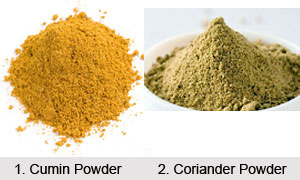
* Spices like turmeric, cumin, coriander and black pepper improves digestion, nourishment and cleansing of the skin from the impurities.

* Microwaving and boiling the vegetables causes loss of 85% of the antioxidant content. So steaming and saut‚ing are the best way to eat vegetables.


Share this Article:

Related Articles

More Articles in Ayurveda in India


Kerala Ayurveda
Kerala Ayurveda offers the best of Ayurvedic treatments and medicinal massages for the wellbeing and a healthy lifestyle. Specifically designed treatments are prepared to treat modern day maladies like stress, respiratory problems, eye ailments and skin diseases.
Gurukul System of Ayurveda
Gurukul system of Ayurveda used to teach the students in a way so that they can become an expert physician.
Physiology of Ayurveda
The physiology of Ayurved comprises the doshas, dhatus, malas and agni, that collectively contribute to a healthy body.
Seven Dhatus in Ayurveda
Seven Dhatus or tissues, namely Rasa, Rakta, Mansa, Meda, Asthi, Majja, and Shukra are vital for a healthy body.
Origin of Ayurveda
With a history of more than five thousand years, Ayurveda is the most ancient Indian medical science
Ayurvedic Recipes
Ayurvedic Recipes are prepared according to Ayurvedic principles and provide maximum health benefits.
Facial Diagnosis in Ayurveda
Facial diagnosis in Ayurveda involves reading the facial features for analysing and deciding the line of treatment.
History of Ayurveda
History of Ayurveda dates back to 5,000 years old and is widely considered to be the oldest form of health care in the world.
Use of Somraj as Medicines
Somraj is a medicinal plant in Ayurveda with numerous health benefits.
Traditional Indian Medicine in Ancient Period
Traditional Indian medicine in ancient period was practised by high profile people. It was divided into major groups Rasausadhi Sampradaya (alchemists) and Banausadhi Sampradaya (herbalist).
Charaka Samhita
Charaka Samhita is an ancient Ayurvedic text written by Charaka, which describes all the possible aspects of diseases and its remedy.
Pitta Dosha
Pitta Dosha is one of the three doshas that regulates the digestive and metabolic processes in the human body.
Siddha Medicine
Siddha medicine is the oldest medicinal practice that not only cures diseases but also arrests the ageing process.
Use of Kanak Champa as Medicines
Kanak Champa has a wide application in traditional system of Indian medicine.
Ashtanga Ayurveda
Ashtanga Ayurveda refers to the eight limbs of Ayurveda. Ayurveda was divided by great Indian seers into destine eight branches.
Shirovirechana
Shirovirechana eliminates the increased doshas and toxins which are accumulated in head and neck are expelled through nose and mouth along with nasal and oral secretions.
Ayurvedic Kidney Bean Sabji
Ayurvedic kidney bean sabji is a mouth-watering nutritious dish which balances all the doshas.
Ayurveda - Traditional Medical System
Ayurveda is an elaborated holistic medical system of India with a rich history of more than 5000 years.
Ayurvedic Raitas
Ayurvedic raitas help in digesting the meal. Ayurvedic raitas can be of varied types depending on the vegetable used as main ingredient.
Use of Asphalt as Medicines
Asphalt or Silajatu is the most important drug of Ayurvedic and folk medicine systems.
Use of Pointed Gourd as Medicines
Pointed Gourd is a very ancient Ayurvedic medicinal herb and vegetable.