Pitta Dosha
Pitta Dosha is one of the three doshas that regulates the digestive and metabolic processes in the human body.

Share this Article:

Introduction

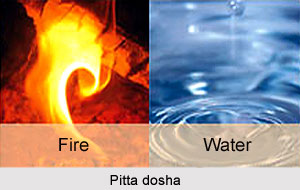
Pitta Dosha, Tridosha in AyurvedaPitta Dosha is one of the Tridoshas which is made up of the elements fire and water. It is responsible for thirst, digestion, hunger, heat regulation, vision, softness and lustre, intellect, cheerfulness and sexual vigour. In short, this dosha governs all changes taking place in the physiology, from the digestion of food to the regulation of feelings, emotions and sensory perceptions.

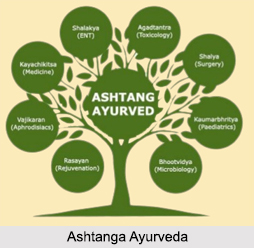
According to Ashtanga Ayurveda, the site of existence of pitta is between the naval line and the "epigastrum" line. Ashtanga Ayurveda talks about the three bodily humours or doshas - vata, pitta and kapha, which determine the body"s physical and mental functions. For a healthy, vital and well-protected body, a balanced condition of the three doshas is mandatory. These doshas are in fact derived from the five components, namely space, air, fire, water and earth, which are collectively termed as the Pancha Mahabhutas. Each dosha combines any two of the five Bhutas and out of these two, one dominates.


Characteristics of Pitta Dosha

Pitta Dosha, Tridosha in AyurvedaThe Charaka Samhita, a well known Ayurvedic text, defines the characteristics of Pitta dosha in the following way: hot and a little sycophantic (sahasnehamushnam), liquid and acidic (dravamlam), sharp, burning (tikshnam), always flowing in an unbounded manner (saram); pungent and sharp (katuhu). People of pitta personality tend to be of medium proportions and frame. They possess warm skin that is very fair or glowing and may be sensitive. Their fine hair may show signs of premature greying or thinning. These people are intelligent and strong-minded in thought, speech and action. They show signs of purpose and ambition in each step as well as intensity in their voice whenever they speak. They are moderate sleepers and like to stay in cooler environments. Balanced pitta is specifically characterized by self-confidence and entrepreneurship.


Types of Pitta Dosha

Types of Pitta DoshaTypes of Pitta dosha are formed from the element of water. The five types of Pitta dosha are: pachaka, ranjaka, sadhaka, alochaka and bhrajaka. Pachaka is considered in Ayurveda as the first fire of the body. It exists in the small intestine, duodenum, gall bladder, liver, and pancreas and supports the remaining four fires.

Pachaka`s main action is to dissolve and digest the food we eat. Pachaka also regulates body temperature. After digestion pachaka separates the food`s nutritive elements from its waste elements. If an imbalance is created here it causes indigestion and nausea.

Ranjaka is the second fire of Pitta that controls the formation and preservation of blood. It is located in the liver, spleen, and stomach. It also provides the blood with its color and oxygen. If ranjaka is damaged then bile compounds may appear in the blood it may cause diseases like anaemia and jaundice.

Sadhaka is the finest of the fires and is a requisite to the activity of Pitta. It rules along with prana in the heart. Along with udana, it governs memory and the retention and wellness of all mental functioning. If sadhaka is impaired psychic disturbances, mental disorientation, extreme emotional states, and craving for extreme foods, drugs, and so on.

Alochaka is the fourth fire of Pitta that exists in the eyes. It gives the eyes their shine as well as diffuses light and its spectrum of colors throughout the body. When the fourth fire is vitiated, vision is impaired and eyes appear yellow.

The fifth fire, bhrajaka, is located in the skin that gives the skin its shine. It protects the body from extreme atmospheric conditions. It facilitates the assimilation of light, wind, water and oil through the skin. If this is disturbed it causes skin diseases like psoriasis, eczema, and leukoderma.


Remedies for Pitta Dosha

Food with bitter, sweet and astringent tastes find favour with the pitta constitution. An excessive intake of hot, spicy or sour foods, fermented, fried, oily, stale and "fast foods"; artificial colourings and flavourings, sour or unripe fruits and alcoholic drinks, hamper the normal pitta constitution of the body. Prolonged exposure to the sun, experiencing hot weather, indoor heat, chemicals, corrosives and undergoing strenuous exercises augment the constitution of pitta. In addition, an excess of normal human impulses such as mental tensions, fighting, fasting, cruelty, jealousy, competition and greed can cause a misbalance in the pitta.

Thus a person in whom pitta dominates, Ashtanga Ayurveda suggests proper diet and various Yoga therapies. If the pitta is well balanced, the digestive system functions properly thus ensuring proper metabolism.


Diet for Pitta Dosha

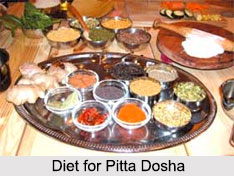
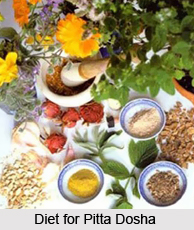
Diet for Pitta DoshaPitta dosha is characterized by the elements like hot, sharp, light, sticky and oily. People with a pitta dosha are of medium build, with greater muscular development. They have soft and warm skin and also have a lot of body heat. They often perspire excessively. These kinds of people may experience premature graying of hair, baldness or excessive hair fall. Their skin has a tendency of developing acne, rashes, bruises or sunburn easily.

Thus, Ayurveda recommends that a person in whom the pitta dosha is dominant should consume those foods, which aggravates pitta. Such a person should take cool, dry, heavy, bitter or astringent food and also mildly natural sweet food is known to pacify pitta.

Foods to Include in Diet : There are various foods that can be included in the diet like milk, beans, and boiled vegetables. Mild spices like cumin, coriander and cilantro are also advantageous. Ghee, coconut oil, olive oil, cardamom, sprouts, coriander seeds and raw foods are very good for such person.

Such a person can eat most of the vegetables like asparagus, bell pepper, broccoli, brussel sprouts, cabbage, cauliflower, celery, corn, cucumber, lettuce, mushroom, peas, parsnip, potato, squash, and zucchini. Fruits like apples, banana, dates, coconut, grapes, lychee, mango, melons, and pomegranate can be eaten.
Diet for Pitta Dosha Beverages like cool drinks, milk, water, coconut milk, fruit and vegetable juice can be consumed.

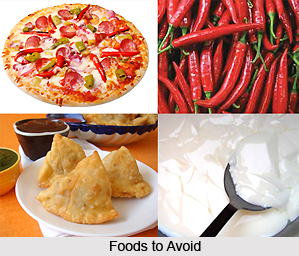
Foods to Avoid : Spices, pungent and oily foods, mainly aggravate pitta dosha. Curry, fried foods and foods having strong odour like garlic and ginger also worsens the condition. Chillies are also known for increasing vata - pitta. Snacks, pickles and fermented food are also known for increasing pitta dosha. Grains like brown rice, millets, rye and corn also increases pitta dosha.

Such persons should not consume vegetables like beets, carrots, tomatoes, garlic, eggplant, onions and olives. Unripe and sour fruits should not be consumed by such person and mainly fruits like grapefruits, papayas, bananas, apricots berries, cherries, citrus fruits, cranberries, pineapple, plums rhubarb and peaches.

Junk food like pizza, burger, hot dog, roll, samosa, pastry and deep-fried snacks generally elevates pitta dosha. Smoking, drinking alcohol, tobacco and food items like vinegar, wafers, curds, corn, mustard and til oil are also known to aggravate pitta dosha.


Moong dal Khichari for Pitta Dosha

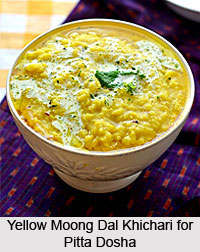
Moong dal Khichari for Pitta DoshaKhichari is a very simple dish which is beneficial for young and old alike, and is also considered to be the best option for introduction of solid food to babies. It is very nourishing and relatively easy to digest, generally not creating abdominal gas or bloating.
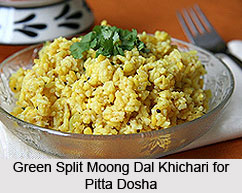
Moong Dal is one the most cherished foods in Ayurveda. Both rice and moong beans are easily digestible and nutritious, which make khichari a healing as well as soothing food for digestive tract. It is tridoshic; balancing all three doshas-kapha, pitta and vata and especially when cooked with spices, is appropriate for each dosha.

Ingredients for Yellow Moong Dal Khichari for Pitta Dosha:

•1cup of basmati rice
•1cup yellow moong dal
•1 1/2 inch piece of fresh ginger, peeled and chopped
•A handful of coriander leaves chopped
•2tbs unsweetened, shredded coconut
•6cup water
•3tsp ghee
•1/4tsp salth
•1/2tsp turmeric powder

Method:
Wash the moong dal and rice. It is better to soak them for 2 hrs before cooking. Blend well the ginger, coconut, cilantro along with 1/2cup water till it becomes a paste. Heat the ghee on medium flame in a large saucepan and add the paste along with turmeric and salt. The mixture should be stirred well. The rice should be mixed well along with moong dal. To this mixture add 6cups of water. Boil this mixture uncovered for 5mins. Then cover the saucepan, leaving the lid slightly open. Lower the flame and cook for nearly 25-30mins until the dal and rice are completely cooked.

Ingredients for Green Split Moong Dal Khichari for Pitta Dosha:
Moong dal Khichari for Pitta Dosha
•3/4 cup basmati rice
•1/2 cup green split moong dal
•1/2 tbsp ghee
•1 tsp cumin seeds
•1 tsp mustard seeds (optional)
•1/4 tsp hing
•1/2 inch ginger, finely chopped (pitta)
•1/2 tsp turmeric
•1/2 tsp salt
•1/2 tsp red chilli powder
•4 cups water

Method:
Place rice and dal together in large mixing bowl. Rinse several times under running water. Drain and reserve. Set heavy-bottomed saucepan over medium heat and add ghee or oil. When warmed, add cumin and mustard seeds (if using) and hing. Stir until seeds pop, about 30 seconds. Add chopped ginger, sauté 30 seconds. Add reserved rice and dal, turmeric, salt and chilli powder. Mix in gently. Add water and bring to a boil over high heat, stirring occasionally. Cover saucepan, reduce heat to low and cook undisturbed until tender, about 30 minutes. Switch off heat, let khichari rest 5 minutes. Fluff it up gently with a fork and serve.

Spices Beneficial for Pitta Dosha: The spices added to the khichari enhance the nutritional value on account of their medicinal qualities. Basmati Rice, split Moong beans, Cumin seed, small Cardamom, Fennel seed, Mustard seed, Turmeric powder, Coriander, Cinnamon, Rock salt, and Ghee works as a cooling agent to the digestive system.

Other Health Benefits of Khichari Moong Dal Khichari for Pitta Dosha
In Ayurveda, this mix of rice and moong beans is considered extremely easy to digest and is said to purify the digestion and cleanse the body of toxins, much like other cleansing diets. The work of the digestive system is lessened, allowing for greater healing and cleansing.

Wholesome meal: Khichari is a balance of carbohydrate and protein. Moong beans additionally are a good source of dietary fibre, vitamin C, calcium, magnesium, phosphorus and potassium. It has all the 10 essential amino acids, making it a complete protein. Freshly-cooked khichari eaten with pure cow"s ghee provides the right amount of macro-nutrients, complex carbohydrate, protein and fat. Adding vegetables to it makes it a complete meal.
Gluten-free: People who suffer from gluten sensitivity or celiac disease, cannot process gluten which is storage protein found in certain grains like wheat, rye, barley. But they can opt to eat khichari on a few days as it packs enough nutrition and yet is light and gluten-free.
Balances dosha: This dish can be served any time of the day. It is known for its ability to detoxify the body and balance the three doshas - Vata, Pitta and Kapha. It is a tridoshic food which has a calming effect on the body and is a staple of an Ayurvedic diet. A delicious and nourishing dish of rice, moong cooked with ghee, salt and turmeric, adding the balance of basic elements - earth and water for increasing energy and immunity, fire for stimulating digestive enzymes.
Easy to digest: Khichari is soothing for the intestine and helps in settling an upset stomach when eaten with curd. For babies and elderly, it is a hearty meal packed with nutrients and easy to digest as both have slow metabolism and their digestive strength is weak too.


Share this Article:

Related Articles

More Articles in Ayurveda in India


Kerala Ayurveda
Kerala Ayurveda offers the best of Ayurvedic treatments and medicinal massages for the wellbeing and a healthy lifestyle. Specifically designed treatments are prepared to treat modern day maladies like stress, respiratory problems, eye ailments and skin diseases.
Gurukul System of Ayurveda
Gurukul system of Ayurveda used to teach the students in a way so that they can become an expert physician.
Physiology of Ayurveda
The physiology of Ayurved comprises the doshas, dhatus, malas and agni, that collectively contribute to a healthy body.
Seven Dhatus in Ayurveda
Seven Dhatus or tissues, namely Rasa, Rakta, Mansa, Meda, Asthi, Majja, and Shukra are vital for a healthy body.
Origin of Ayurveda
With a history of more than five thousand years, Ayurveda is the most ancient Indian medical science
Ayurvedic Recipes
Ayurvedic Recipes are prepared according to Ayurvedic principles and provide maximum health benefits.
Facial Diagnosis in Ayurveda
Facial diagnosis in Ayurveda involves reading the facial features for analysing and deciding the line of treatment.
History of Ayurveda
History of Ayurveda dates back to 5,000 years old and is widely considered to be the oldest form of health care in the world.
Use of Somraj as Medicines
Somraj is a medicinal plant in Ayurveda with numerous health benefits.
Traditional Indian Medicine in Ancient Period
Traditional Indian medicine in ancient period was practised by high profile people. It was divided into major groups Rasausadhi Sampradaya (alchemists) and Banausadhi Sampradaya (herbalist).
Charaka Samhita
Charaka Samhita is an ancient Ayurvedic text written by Charaka, which describes all the possible aspects of diseases and its remedy.
Pitta Dosha
Pitta Dosha is one of the three doshas that regulates the digestive and metabolic processes in the human body.
Siddha Medicine
Siddha medicine is the oldest medicinal practice that not only cures diseases but also arrests the ageing process.
Use of Kanak Champa as Medicines
Kanak Champa has a wide application in traditional system of Indian medicine.
Ashtanga Ayurveda
Ashtanga Ayurveda refers to the eight limbs of Ayurveda. Ayurveda was divided by great Indian seers into destine eight branches.
Shirovirechana
Shirovirechana eliminates the increased doshas and toxins which are accumulated in head and neck are expelled through nose and mouth along with nasal and oral secretions.
Ayurvedic Kidney Bean Sabji
Ayurvedic kidney bean sabji is a mouth-watering nutritious dish which balances all the doshas.
Ayurveda - Traditional Medical System
Ayurveda is an elaborated holistic medical system of India with a rich history of more than 5000 years.
Ayurvedic Raitas
Ayurvedic raitas help in digesting the meal. Ayurvedic raitas can be of varied types depending on the vegetable used as main ingredient.
Use of Asphalt as Medicines
Asphalt or Silajatu is the most important drug of Ayurvedic and folk medicine systems.
Use of Pointed Gourd as Medicines
Pointed Gourd is a very ancient Ayurvedic medicinal herb and vegetable.