| Kerala |
|
|
|

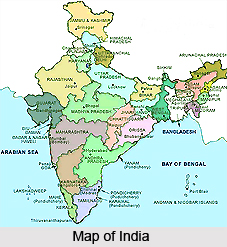
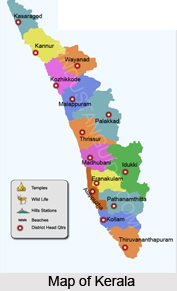
Kerala is an Indian state on the tropical Malabar Coast of southwestern India. Kerala is one of the smallest states in India and was formed in 1956. It has an area of 15,005 sq. miles. about one percent of the total land area of India. Kerala is a land of great natural scenery. From the majestic heights of the Western Ghats the country undulates westward presenting a vista of silent valleys clothed in the richest green. This page on Kerala Includes information on geography, language, history, culture and economy and provide links to district towns, villages
|
|
| |
| Orissa |
|
|
|

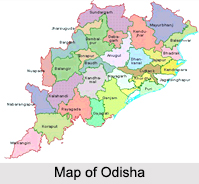
Orissa, bounded on the west by the thickly forested hills of the Eastern Ghats and on the east by nearly 500 km coastline of the Bay of Bengal, is a beautiful Indian state covering an area of 156, 000 sq. kms.Orissa, referred to as “The Soul of India”, is a mystical land where the past and the modern today form a harmonious blend. This Indian state is filled with awe inspiring monuments, thousands of master craftsmen and artists, numerous wildlife sanctuaries, stunning natural landscapes . Orissa is noted for its classical dance Odissi and many folk forms like Chhau, Chaiti Ghoda, Patua Jatra and tribal forms.
|
|
| |
| Maharashtra |
|
|
|
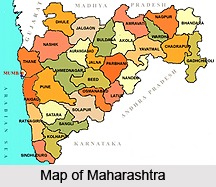
The name Maharashtra means the The Great State or Great Nation.Located in the north of Indian Peninsular, with a command of the Arabian Sea through its port of Mumbai, Maharashtra has a remarkable physical homogeneity, enforced by its underlying geology. The Sahyadri Range is the physical backbone of Maharashtra.The name Maharashtra first appeared in a 7th century inscription and in the account of a Chinese traveler, Hiuen-Tsang. After Indian independence, in 1960 a separate Maharashtra state was carved out from Bombay presidency and Central provinces. The principal language of the state is Marathi.
|
|
| |
| Tripura |
|
|
|

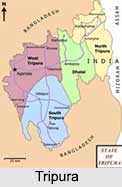
Tripura is one of the seven Indian states in the north eastern part of India . It is bounded on the north, west, south and south-east by Bangaldesh.The land was known as "Tuipra" meaning a land adjoining the water.Tripura is mentioned in the Mahabharata and the Puranas. The name is even found on the pillar inscriptions of Emperor Ashoka. Tripura was a princely state before its merger with the Indian Union. Tripura became a Union Territory without legislature with effect from November 1, 1956 and a popular ministry was installed in Tripura on July 1, 1963. On January 21, 1972 Tripura attained statehood.
|
|
| |
|
|
| Andaman & Nicobar Islands |
|
|
|

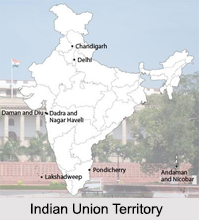
The Andaman and Nicobar Islands are described as the Tourist`s Paradise. It lies in the Indian Ocean and comprises of two islands namely, the Andaman Islands and the Nicobar Islands. These islands are an archipelago of 572 emerald islands, islets and rocks known as Andaman & Nicobar Islands. This Indian island stretches over a length of more than 700 kms. The name Andaman is believed to have come from Handuman, which in Malay language means god Hanuman.The unparalleled beauty of these islands, create in men a love of nature with a caressing tenderness, a wistful fondness for all its delicate nuances.
|
|
| |
|
|
| Chandigarh |
|
|
|

Chandigarh, Indian Union territory, was planned by the famous French architect Le Corbusier. The Union Territory of Chandigarh is located in the foothills of the Shivalik hill ranges in the north, which form a part of the fragile Himalayan ecosystem. Chandigarh derives its name from the temple of "Chandi Mandir" located in the vicinity of the site selected for the city. Tree plantation and landscaping has been an integral part of the city`s Master Plan.This arrangement of road-use leads to a remarkable hierarchy of movement, which also ensures that the residential areas are segregated from the noise and pollution of traffic.
|
|
| |
| Culture of West Bengal |
|
|
|

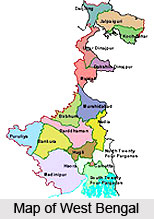
Culture of West Bengal is called as the Centre of Indian culture.Culture of West Bengal boasts its enduring richness in the reformation movements, making the whole of Indian culture an upheaval. The proponents of Bengal Renaissance, Ram Mohan Roy, Vidyasagar, and also the Young Bengalees had largely contributed in curbing the culture of West Bengal in the mold of Western thoughts. However the tradition and ethnicity were not uprooted, rather they were enmeshed with the new trends. The whole of Bengal are mesmerized by the eloquent music and dance styles. Truly Bengali music and dance is an inseparable part of the culture of West Bengal. Music comprises a long tradition of religious and secular themes.
|
|
| |
|