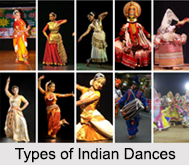
 East Indian Dances comprise of an eye-catching combination of classical, folk and tribal dance forms that replicate the history of the region spanning over a time frame of hundred years. As a result of developing over several eras, the dances of eastern India have been catalysed by various factors.
East Indian Dances are the outcome of several religious inspirations, cultural expressions, as well as entertainment. Eastern India; coloured by the rainbow of cultural and linguistic characteristics; even thrives to be a standalone barricaded by the shadow lines of historical influences intermingled with the existing traditions of the land. Eastern India had been the historical centre of the Kalinga, Sunga and Pala empires, who had the monopoly of the political reigns to their kitty. The states also experienced the rule of Mughals and then the British empires that influenced the culture, music and tradition of eastern India a lot. Thus the major dances that emerged as the popular dance forms of the region include several folk and tribal dances along with classical dance forms.
Some of the East Indian Dances are as follows:
 Jhijhian: Jhijhian dance is a dance style, well-liked in Bihar. This is a ritualistic dance performed during no-rain time and aims at building the God of rain pleased. The dance is accompanied by a song which is full of prayers to Lord Indra, the rain God. The participants of the dance comprise a lead singer, harmonium player, a flute player, and a dholak player.
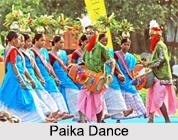
Paika: Another popular dance form of Bihar is Paika. The dance reminds us of infantry and its quickness, courage, and excitement. The dance is popular mainly in the Mayurbhanj region. A flat ground is essential for its performance. This dance displays the skills and the ability of the dancers to handle these weapons. The dance reaches its climax with the fast beats produced by "Mandal". Performers wear colourful turbans and tight dhotis and stand in two rows. Holding the wooden swords and shields in their hands, warriors engage in a fierce mock combat.
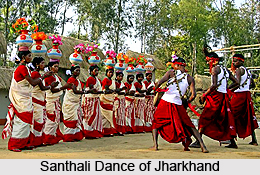
The Santhal Dance: This dance is based on the folk dance of Madhya Pradesh. This is the dance that usually wraps the themes related to the matters of gender and land rights. Both men and women take part in the Santhal dance.
Phagua: This is a dance that is performed by the males in the time of Hindu festival Holi. Throughout their performance, the dancers throw coloured water and powder on each other. Women also join this Phagua dance in some of the parts of Jharkhand.
 Paika Dance: Paika is the dance of Jharkhand that is performed on the traditional occasions such as festivals and weddings. This dance is performed by the males along with the customary weapons like the shield and the sword. The musical instruments that are used to accompany this form of dance are nagara, dholak and shehnai.
Agni Dance: In the Rig Veda, Agni was described as the god of fire. The Agni dance is considered as the spiritual dance of Jharkhand. It is usually performed on the occasion of Bipu or Manda worship in Jharkhand.
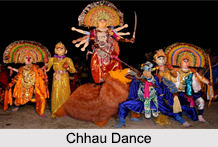
Chhau Dance: Chhau Dance is one of the most renowned tribal martial dances of India. The dance is known as Seraikella Chhau in Jharkhand, Mayurbhanj Chhau in Odisha and Purulia Chhau in West Bengal. Since the dance is supposed to have originated in the Purulia district of Bengal, it is known as such in the state. Chhau masks have mainly human features slightly modified to suggest what they are portraying. The performer`s face being expressionless, the dancer`s body communicates the total exciting and psychological tensions of a character. His feet have a sign language; his toes are lively, functional, and expressive, like those of animal.
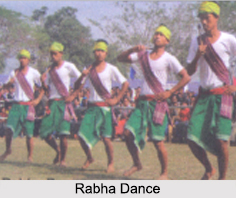
Rava Dance: Rava dance is from the northern part of West Bengal. These dances are performed chiefly by Rava Women. Their dances contain Fai Nang Mein or Welcome Dance, Nak Chung Baini or the dances reminiscent of catching prawn, Baishar Bidan or New Year"s Dance and Larai Lunji or War Dance. Dances of Rava Community are multi-coloured and rhythmic accompanied by melodious music. The theme includes their daily lives and joys of various festivals.
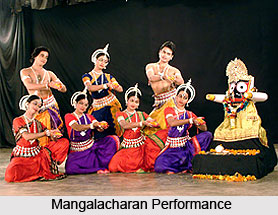
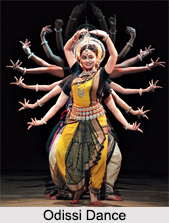
Odissi Dance: Odissi dance is the classic classical dance form of Odisha and has its origin in the temples. The rhythm, the bhangis and mudras used in Odissi dance have a distinctive superiority of their own. Odissi dance deals largely with the love theme of Radha and Krishna.
 Dalkhai Dance: During this dance, men join them as drummers and musicians. The dance is accompanied by a rich group of folk music played by a number of instruments known as Dhol, Nisan, Tamki, Tasa and Mahuri.
Gotipua Dance: The Gotipua dance has been performed in Odisha by young boys who dress up as female to honour Lord Jagannath and Lord Krishna. The actual form of the dance is executed by a group of boys who perform acrobatic figures inspired by the life of Radha and Krishna.
Mahari Dance: Mahari custom of the Sri Mandira is the gorgeous Parijata flower of art and history of Utkal. Mahari Dance coming from the Nata temple of the temple has reached and extended to the stage and shastriya Odissi dance art. Now a day"s ordinary man having seen the round eye of Lord Jagannath has become wholeness of Karatali under this remains cleanliness action wholeness of Mahari.
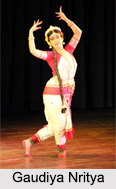
Gaudiya Nritya: The Gaudiya Nritya is a classical Bengali Dance form, performed with drama, history, poetry, colour and music. It"s an antique classical dance form originated in West Bengal, it"s mostly a temple art meant for spiritual expression.
Tiger Dance of Odisha: Baagh Naach is even known by another name known as Tiger dance. Also this dance asks for vigorous movements and steps and even is carried out by professional dancers only. Majority of the locals celebrate various kinds of religious and traditional festivals and events. Therefore dancers of Baagh Naach perform this dance form on various festivals or events or even on some special occasions.