Introduction
The Reddy community is a socio-economically and politically
influential community predominantly found in South India.
Traditionally regarded as village headmen, they possess a rich and enduring
history that dates back to the Satavahana period
of the 2nd century BCE. Over the centuries, members of the Reddy community have
made significant contributions to society, playing vital roles in governance,
social welfare, and economic development.

Known for their strong sense of social responsibility and
entrepreneurial spirit, Reddys have historically been prominent landowners and
successful businessmen. Their legacy spans a wide spectrum of fields, including
royalty, academia, science, civil services, business and entrepreneurship,
politics, arts, entertainment, freedom movements, social activism,
philanthropy, literature, and poetry.
Etymology of Reddy
The Telugu term “Reddi,” which evolved from earlier forms such as “Raddi,” “Rattodi,” “Rathis,” “Rattas,” and “Rattakudi,” is believed to be linked to the Sanskrit term “Rashtrakuta.” Historically, the title was used for village headmen entrusted with organizing agricultural cultivation and collecting taxes within their villages. From as early as the seventh century, members of the Rattakudi families held significant positions within royal administrations. One copperplate inscription records the grandfather of a dynastic founder as a sainya-nayaka, or commander of military forces.
The Reddi dynasty, which ruled coastal and central Andhra
from 1325 to 1448 CE, governed the region for more than a century.
Historically, the Reddy community is known as warriors and agricultural
farmers. In contemporary times, the Reddys continue to be a politically
influential and socio-economically prominent community in the Telugu-speaking
states of Telangana
and Andhra
Pradesh.
Origin of Reddy Community
Reddys were generally believed to have originated after the decline of the Rashtrakutas and the rise of the Kalyani Chalukyas in 900 CE. The Kalyani Chalukyas appointed the former soldiers of the Rashtrakutas, who were called as "Raddis", as village chieftains. In due course of time, "Reddy" became the title given to the village headman or chieftain.

The Reddys originally belong to the 4th and last caste - the Sudra. They have, through the ages, assumed the role of Kshatriyas. The term Reddy was a title denoting temporal authority. The Kakatiyas had 72 Nayakas under them, among whom were the Reddys and the Velamas, two sections antagonistic to each other. The Reddy Community were classified into three groups according to the regions where they flourished, the Kondaveeti Reddys, the Oruganti Reddys and the Painati Reddys.
Varna System in Reddy Community
In South India, dominant communities such as the Reddys and Nairs
occupied a social position comparable to the Kshatriyas and Vaishyas of
northern India. However, unlike their northern counterparts, their status was
not formally sanctified by religion, as Brahmins did not officially recognize
them as Kshatriyas or Vaishyas
within the Brahmanical varna system. Despite this distinction, land-owning
communities like the Reddys historically formed part of the ruling and regal
classes, and in practice were analogous to the Kshatriyas of Brahmanical
society.
History of Reddy Community
With the submergence of the Kshatriya rulers under the onslaught of the Muslim invaders, on whom they inflicted crushing defeats, the Reddys emerged as a power in the Deccan. The confrontation between Warangal, the Kakatiya capital and Delhi led the resourceful Reddys to make a drive in 1329 for the liberation of the Deccan from the Muslims.
Reddy Community During Kakatiya Period: During the Kakatiya period, the terms Reddi and its variant Raddi were used as honorific status titles. The title broadly denoted village headmen. After the Kakatiyas established themselves as independent rulers, several subordinate chiefs under their authority adopted the title- Reddi.
Under Kakatiya rule, Reddi chiefs were appointed as generals and soldiers, and some served as feudatories. During this period, certain Reddi leaders succeeded in carving out feudal principalities of their own. Among the most prominent were the Munagala Reddi chiefs, whose status as feudatories of the Kakatiya dynasty is confirmed by inscriptions. These Reddi feudatories actively resisted incursions from the Delhi Sultanate and played a key role in defending the region from Turkish invasion.
Formation of Reddy Kingdom: Following the death of Pratapa Rudra in 1323 CE and the subsequent collapse of the Kakatiya Empire, several Reddi chiefs emerged as independent rulers. Among them, Prolaya Vema Reddi is believed to have played a pivotal role in establishing an independent Reddi kingdom in 1325 CE. He proclaimed sovereignty and founded the Reddi dynasty, with its base at Addanki. The Reddi Kingdom, also known as the Kondavidu Reddi Kingdom, ruled parts of southern India from 1325 to 1448 CE.
Reddy Community During Vijayanagara Period: The post-Kakatiya period witnessed the simultaneous rise of the Vijayanagara Empire and the Reddi dynasty. In the early years, the two powers were engaged in a territorial struggle for dominance over the coastal regions of Andhra. Over time, however, they set aside their rivalry and formed an alliance against common adversaries, notably the Bahmani sultans and the Recherla Velamas of Rachakonda, who had allied themselves together. This political partnership between Vijayanagara and the Reddi Kingdom was further strengthened through a matrimonial alliance, when Harihara II of Vijayanagara gave his daughter in marriage to Kataya, the son of Kataya Vema Reddi.
Following the death of Veerabhadra Reddi in 1448 CE, the Gajapati ruler Kapilendra of Kalinga dispatched an army that succeeded in gaining control over the Reddi Kingdom. However, after Kapilendra’s death, Gajapati authority weakened, and the territories of the former Reddi Kingdom eventually came under the control of the Vijayanagara Empire.
In the subsequent period, members of the Reddi community rose to prominence as military chieftains under the Vijayanagara rulers. Accompanied by their private armies, they played a significant role in supporting Vijayanagara military campaigns and territorial expansion. These chieftains, known as Poligars, were entrusted with military responsibilities during times of war, as well as revenue collection on behalf of the state, which they remitted to the royal treasury. While operating under imperial authority, they exercised substantial autonomy within their respective regions. Historically, the Reddis held particular dominance in the Rayalaseema region.
Reddy Community during Golconda Period: During this period, members of the Reddi community governed several samsthanams (tributary estates) in the Telangana region, ruling as vassals under the Golkonda sultans. Among the most prominent figures were Ramakrishna Reddy, Pedda Venkata Reddy, and Immadi Venkata Reddy. Throughout the period of Golkonda rule, the Reddys continued to serve as influential local authorities in the Telangana region, functioning as chieftains, village policemen, and tax collectors.
Reddy Community during British Period: During the British period, one of the most prominent figures from the Reddi community was Uyyalawada Narasimha Reddy. He mounted a challenge to British authority by leading an armed rebellion against the British East India Company in 1846. Captured the following year, he was executed in 1847. His uprising stands among the earliest organized rebellions against British rule in India, occurring nearly a decade before the Indian Rebellion of 1857.
At the same time, many Reddys formed part of the landed
gentry, known as Deshmukhs, and were integrated into the administrative
framework of the Nizams
of Hyderabad. Several members of the community served as noblemen in
the courts of the Nizam Nawabs and occupied high-ranking positions within the
Nizam’s administration. Alongside these roles, a number of Reddys were also
actively involved in resistance against the Nizam’s rule. In 1941, communist
leaders Raavi Narayana Reddy and Baddam Yella Reddy transformed the Andhra
Mahasabha into a united mass organization opposed to the Nizams, leading an
armed struggle against the regime.
List of Reddy Kingdoms
During the medieval period and the subsequent colonial era,
large parts of present-day Andhra Pradesh and Telangana in the Indian
subcontinent were governed as sovereign or princely states by various dynasties
belonging to the Reddi community. These princely states are:
·
Atmakur Amarchinta Samsthanam
·
Domakonda Samsthanam
·
Gadwal Samsthanam
·
Munagala—Gurlapaty Samsthanam
·
Wanaparthy Samsthanam
Population of Reddy Community
Reddy Community belongs to the Telugu speaking community that is split into numerous subsections. Though they are to be found in Tamil Nadu (where they are known as Reddiars) and Karnataka, they belong to Andhra Pradesh and constitute nearly one-fourth of the total population. Telangana, Rayalaseema and the districts of Nellore and Guntur are their chief places of residence.
Society of Reddy Community
Reddy Community is largely settled in Andhra Pradesh. One of the main features of the society is that they respect women. In fact, women have been allotted an important position in the society. They are brought up with proper education and given opportunities to choose their own career.
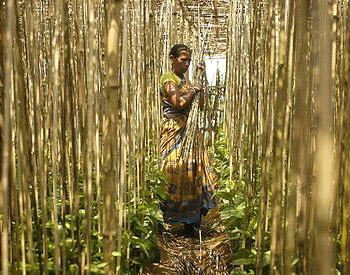
Agriculture is considered the main occupation of the Reddi
community but vocational diversification is also evident. They are in the mica
business, undertake forest, timber and abkari contracts and deal in wholesale
trade in jaggery, groundnut and onions. Many Reddis are also involved with the
entertainment business, such as, films. They are also represented in government
service, particularly in the police, forest, revenue and agriculture
departments.
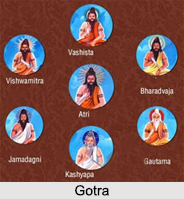
The Reddis have no gotras nor can they trace their lineage to any of the rishis. Those who were once famous as fighters, are farmers and are the backbone of the Andhra economy. Their community is cohesive and compact with a complex of rigid, built in, mutually exclusive ramifications with a rural bias. The subsections are best distinguished by the tools they use, the crops they raise, the methods of farming they favour, the wealth in terms of lands and cattle they own and the manner in which they utilize their leisure.
The Reddis are more influential than other communities in the villages. Because of their wealth and numbers, they dominate the affairs of all the panchayats. Most of the legislators from Telangana are Reddis. They constitute the ambitious, property-owing elite of the village. Their assets include acres and acres of arable land, flour mills, ginning institutions, vineyards, cinemas and real estate.
A practical, down-to-earth people, they make natural leaders. This community has produced many eminent people including a president of India who was formerly Speaker of the Lok Sabha, Sanjiva Reddy.
Reddi women have held prominent positions in Indian society. Muthulakshmi Reddi who received the Padma Bhushan in 1956 was the first woman graduate in medicine and surgery from the University of Madras. This recipient of five gold medals was the founder of the Cancer Institute in Madras. She later went into politics, and represented India at several international conferences for women. Sarojini Pulla Reddi was the first woman mayor of the municipal corporation of Hyderabad and Secunderabad, assuming office in July 1965. Others such as Sudha Reddi and Yasoda Reddi have been educationists and members of Parliament.