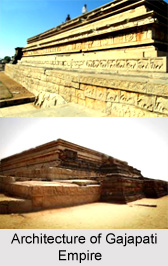
 Gajapati Empire was the medieval Hindu empire in India, concentrated in Odisha, Andhra Pradesh and West Bengal, and the eastern and central parts of Madhya Pradesh and the southern parts of Bihar from 1434-1541.
The kingdom of Odisha reached the zenith of its glory in the 15th and 16th centuries under the Gajapati empires of the solar dynasty. This period witnessed the greatest expansion of kingdom.
The Surya Vamsi rulers of Odisha ruled for hundred and five years only. Yet under this short-lived rule Odisha had reached the pinnacle of its success. They were not only great monarchs but also great lovers and patrons of art and literature.
The renaissance in Oriya literature is traced from this period. The rulers of Gajapati Dynasty encouraged local language and introduced Oriya in their stone inscriptions and copper plates. A number of poets, dramatists and erudite scholars flourished under their noble patronage whose contribution to Sanskrit and Oriya Literature is great.
The reign of Kapilendradeva inaugurated a new epoch in the history of Odisha. His glorious activities were not only directed to carve out a vast empire. He was a zealous guardian of Hindu culture and an ardent devotee of Lord Jagannath. Inscriptions which were contemporary to the ruler and literature during his period provide enough evidences of the fact that the king was a great patron of dance and music.
Gajapati Kapilendra was succeeded by his son Purusottamadeva who had ascended the throne in March 1467 A.D. He was also a devout worshipper of Jagannath just like his father and he had richly endowed the Puri Temple with jewels and villages immediately after his ascension. He was a generous and kind hearted ruler. The king was a poet and a learned man himself and as a result he took keen interest in the diffusion of learning.
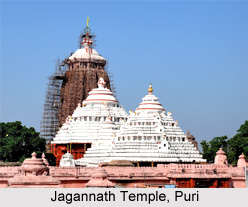
Purusottamadeva defeated Saluva Narasingha of Kanchipuram and married his daughter Rupambila who was renamed as Padmavati. There is a popular legend prevailing about this war and marriage which has immensely influenced the Oriya Literature and painting. It is said that during the time of Purusottamadeva dancing girls of the temple were held in high respect and a woman of high family considered it a great honour to be permitted to serve as a dancing girl. From various instances it is very evident that the king was a patron of dance as he had encouraged dancing girls in the temple.
Prataparudradeva, the son of Purusottamadeva was a great patron of learning. The period of Prataparudradeva witnessed the splendid achievements in religion and culture and the catholic Gajapati activity patronised the intellectual movements by his unsparing liberality.
It was during this period that the great Vaishnava saint Chaitanya came and settled in Puri. Being well versed in Vaishnava theology Prataparudradeva highly honored Shri Chaitanya and his greatest follower Ramananda.
Ramananda during the Gajapati period is credited for introducing abhinaya in the dance of devadasis and he was also the first to engage devadasis to take part in drama, for till then the performers in drama had been exclusively men and boys. This is because Prataparudradeva by an order had made singing and dancing of Geeta Govinda compulsory in the Jagannath Temple of Puri. Thus in order to enact Geeta Govinda in the form of dance it was necessary to incorporate abhinaya into it.
It is evident that the Gajapti rulers were great patrons of art and culture. The various rulers gave attention to the all encompassing development of the state especially in terms of art, culture and literature.