Indus River is embedded in the history of India and gave the country its name. One of the oldest civilizations of the world namely, the Indus Valley Civilization once existed on the bank of Indus River. This river is located in three different countries namely, Pakistan, India and China. In terms of annual flow, Indus River is the 21st largest river in the world.
Geography of Indus River
The total length of Indus River is about 3, 610 kilometers (2243 miles), out of which the river flows for about 1,114 km in India. The total drainage area of the river is 1,165,000 square kilometers (450,000 square miles). The annual flow of Indus is about 243 cubic kilometers. Indus River system largely depends on snow and glaciers from the Karakoram Range, Hindu Kush and the Himalayan Range of Tibet. The flow of the river depends on the season. The flow of the river decreases during winters and during monsoons, the river floods its banks. Indus River is amongst the few rivers in the world, which has a tidal bore. The Indus provides shelter to about 25 amphibian species and mammals. The blind Indus River Dolphin is a mammal which has been recorded only in the Indus River.

Origin of Indus River
Indus River originates in Tibet at the confluence of the Sengee and Gar rivers, which flow through the Nganglong Kangri and Gangdise Shan mountain ranges.
Course of Indus River
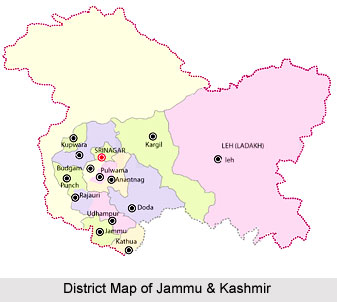
After its birth, Indus River flows in the northwesterly direction through Ladakh and different places in Pakistan. The river enters India in Jammu and Kashmir and forms a striking gorge. Tributaries namely, Zanskar River, Shyok River, Nubra River and Hunza River meet the Indus in the Kashmir region. The Indus flows calmly through the plains of Punjab and Sind. Its primary mouth is the Arabian Sea and the secondary mouth is the Rann of Kutch.
Tributaries of Indus River
The main tributaries of Indus River flowing in India are Jhelum River, Chenab River, Ravi River, Beas River and Sutlej River. These five tributaries are known as the rivers of Punjab. The name "Punjab" is based on these five tributaries. Also, Suru River, Zanskar River, Shingo River, Soan River, Shyok River and Wakha River (flowing through Wakha Valley) journey through India. Gilgit River, Hunza River, Astore River, Gomal River, Kabul River, Shigar River, Kunar River, Ghizar River, Zhob River and Gar Tsangpo flow in countries outside India like Pakistan.