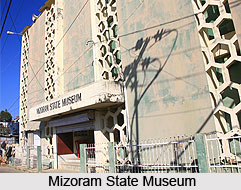
 Museums of Odisha are the storehouses of its great tradition and culture. Large number of tourists from all parts of India and various other parts of the world visit this Indian state to have a look into its ancient architectural designs of the stupas, temples and various other artifacts which are reminiscent of the bygone ages. While on a tour of Odisha, one can pay a visit to some of the museums of Odisha in order to catch a glimpse of the rich historical past of the state.
Odisha State Museum
Among the museums in Odisha, the Odisha State Museum is the most prominent one. This museum came into being as a result of the initiatives taken by Professor Ghanshyam Dash and Professor N.C Banerjee of Ravenshaw College in the year 1932. They had started gathering some of the exclusive and rare items related to the ancient historical past of Odisha. At first, the museum was stationed in the premises of the Ravenshaw College and from 1938 onwards it came to be known as Provincial Museum of Odisha. The exhibits of the Orissa State Museum include artifacts related to armory, archaeology, numismatics, epigraphy, paintings, anthropology, mining and geology. From the date of its establishment till the present time, the Orissa State Museum is working for the development of the glorious sculptures and art in Odisha.
Besides these, it also puts on display a very rich and creditable assortment of archaeological findings, stone inscriptions, tools belonging to as early as the Bronze and Stone Age, palm-leaf manuscripts, rare copper plates, paintings and folk music instruments of the state. Several palm leaf manuscripts preserved in this museum are the major tourist attractions and 52 of the total manuscripts are published with the initiative taken by the museum authority. There are several manuscripts on display which are made up of ivory, bamboo leaf, hand-made paper, kumbhi bark and bhurja bark. These differ in shape, style and size. About four hundred manuscripts on display in the museum are grouped with regard to their monochrome and color variety. There are exhibits of very rare epigraphic records in the Epigraphic Gallery of the museum.
Archaeological Museum
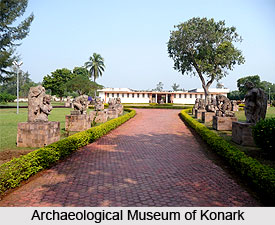
Konark in Odisha attracts large tourists throughout the year. But the major crowd pullers are the monuments and museums in Konark. An important museum in Konark is the Archaeological Museum. Constructed in the year 1968, this museum preserves several parts and pieces of sculptures available from the Sun Temple. The various sections and fragments put on display in this museum depict the economic and socio-religious situations of the 13th century. There are four galleries in the Archaeological Museum and these galleries display about 260 antiquities which were collected from the site of excavation of the Sun Temple in Konark.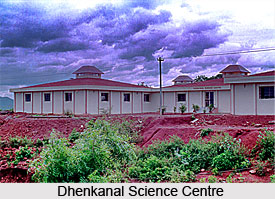
Out of the four galleries possessed by this museum, the first gallery contains 62 antiquities which include the sculptures found in the complex of the Sun Temple. Prominent among these sculptures is the sand stone idol of Surya and scenes of incarnations of Lord Vishnu depicted by chlorite stone sculptures. There are also several items of Khandolite and other stones. The second gallery of this museum possesses 108 works of art. These are the reconstructed wall of temple, head of a crocodile, celestial nymphs and dikpals, luxuriously carved stone images of drummer, flora and fauna, etc.
The third gallery holds 45 items including the idols of Surya Narayana, celestial nymphs, the king and the troop, Gaja-Vyala, etc. There are also several erotic figures on display in this gallery. The newly formed fourth gallery of this museum bears 45 works of art. These include lion, crocodile head, elephants, man tied by the elephant trunk, a portion of the image of Lord Surya, a dance performance being watched by a king, salabhanjikas, erotic couples, swans with garland and scroll works. The corridor of this museum presents the picture of archaeological sites and antique monuments of Odisha, focusing on the development, growth and origin of the architecture of Odisha.
Museum of Man
Museum of Man is located in Bhubaneshwar, the capital city of Odisha. It is one of the best museums of the state and is worth visiting. This beautiful museum is actually a research centre which possesses various facts related to the evolution and origin of several tribal communities living in different parts of the state. This museum is situated near the Baramunda bus stand. It gives an account of the art and culture of about sixty five tribal groups living in this state. The main aim of constructing the Museum of Man was to display the types of houses of the adivasis (tribal communities) living in Odisha. These adivasis are the Kondh, Santhal, Juang, Saora and Gadaba. A large number of tourists from various parts of the world visit this museum to have a glimpse of these houses. One can also get to see the picture of the tribes living in Odisha and various other details related to them.
Dhenkanal Science Centre
One of the most interesting and frequently visited museums in Odisha is the Dhenkanal Science Centre. It is an integral part of the National Council of Museums. The National Council of Museums is an autonomous society which runs under the Department of Culture, Government of India. This museum started to function in the Dhenkanal district, Odisha in the year 1995. Dhenkanal Science Centre possesses several beautiful parks and galleries. It is visited by students, teachers, general public of the local area and also people from various other states and country. Dhenkanal Science Centre is the second science museum of its kind in the state which possesses a unique science park at Kapilas. This science centre is situated on the top of a hill, overlooking the Dhenkanal town. The science museum is a very suitable place of amusement for adults as well as kids and one can play musical instruments, have some fun with the mirror, etc. One can see the rise of hot air balloon, the carrying of one`s whisper by the parabolic reflectors to a long distance, the performance of acrobatics by balls, the change of seasons and the end of day leading to night can be observed here. The hatching of chicks from eggs, birds in their habitats, the camouflage of a lizard and the entire life system presented in an eco pool. Dhenkanal Science Centre also arranges TTP or the Teachers` Training Programmes, science quiz, science seminars, etc for teachers as well as school children. There is a mobile science exhibition bus of this science centre which carries the voice of science to each and every place of Dhenkanal and other districts of Odisha.
Other Museums of Odisha
There are several other museums of Odisha which include the Ganjam District Museum, Berhampur Branch Museum, Branch Museum, Cuttack; District Museum, Bargarh; etc.