
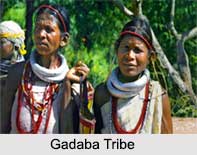
 Gadaba Tribe of Odisha is reckoned as one of the oldest and jovial tribes in India. These Gadaba tribes mostly are located in the southern fringes of the Nabarangpur, Malkangiri and Koraput districts of Odisha. Their main occupation is agriculture but they also give due importance to cattle rearing.
Gadaba Tribe
Gadaba tribes of Odisha are the ancient tribes of India and are mainly agrarian people.
Introduction
Gadaba Tribe of Odisha is reckoned as one of the oldest and jovial tribes in India. These Gadaba tribes mostly are located in the southern fringes of the Nabarangpur, Malkangiri and Koraput districts of Odisha. Their main occupation is agriculture but they also give due importance to cattle rearing.Origin of Gadaba Tribe
It is believed that they have their ancestral home in the north Vindhya mountain ranges. In fact, Gadaba has got a link with "Gada", which is a name of brook or a streamlet found in this portion of the Indian Territory. The houses of these Gadaba truly reflect their cultural heritage. These Gadaba tribes have developed their own language, which is popularly known as "Gutob".
Society of Gadaba Tribe
The Gadabas can be divided into 3 groups: Bada Gadaba, Halar Gadaba and Parenga Gadaba. In appearance, they can be distinguished by their yellow-brown complexion, dark-brown eyes, prominent cheek-bones and broad flat nose.
The gadaba tribes construct their houses in two rows, each facing one another, with some large `way` situated between them. The leader of the village lives in a separate house which is the largest and is located in the center of one of these rows. In front of the headman house a banyan or the mango tree, is planted and just at the foot of the tree a stone `platform` is built. This is the seat for the leader of the village who use to preside a court session for settling several disputable issues of the whole of the Gabada village.
Their special drink, salaps, is very sweet and highly intoxicating. Prepared from the juice of the salaps tree, it is their community drink.
Following the tradition of many of the tribal communities, the spinsters and bachelors of the Gabada community are prohibited from sleeping at their respective parental houses during night. Instead all the unmarried girls sleep together at a common place. Bachelors too do the same. In this way two distinctive households are built for both boys and girls individually.
Marriage in a Gadaba community takes place mostly by elopement, usually on the weekly market day or on days of festivals when people from different villages congregate. The boy and girl run away to a distant village stay there for some nights and then return to their village when they are declared married.
The best way to understand a Gadaba community and its societal norms is by checking out the villages, such as, Koraput, where they are concentrated.
The gadaba tribes construct their houses in two rows, each facing one another, with some large `way` situated between them. The leader of the village lives in a separate house which is the largest and is located in the center of one of these rows. In front of the headman house a banyan or the mango tree, is planted and just at the foot of the tree a stone `platform` is built. This is the seat for the leader of the village who use to preside a court session for settling several disputable issues of the whole of the Gabada village.
Their special drink, salaps, is very sweet and highly intoxicating. Prepared from the juice of the salaps tree, it is their community drink.
Following the tradition of many of the tribal communities, the spinsters and bachelors of the Gabada community are prohibited from sleeping at their respective parental houses during night. Instead all the unmarried girls sleep together at a common place. Bachelors too do the same. In this way two distinctive households are built for both boys and girls individually.
Marriage in a Gadaba community takes place mostly by elopement, usually on the weekly market day or on days of festivals when people from different villages congregate. The boy and girl run away to a distant village stay there for some nights and then return to their village when they are declared married.
The best way to understand a Gadaba community and its societal norms is by checking out the villages, such as, Koraput, where they are concentrated.
Religion of Gadaba Tribe
Gadaba community has got immense respect for various gods and goddesses. Thakurani is the supreme deity and is symbolized by slabs of stone and is also worshipped by "dishari." Spirits also are consecrated.
Festival too is an important part of the Gabada society. Bandapana parab, Dussehra parab, push parab, and chaita parab are some of the religious festivals that are feted by theses Gabada tribes. Dance and singing are part and parcel of these festivals.
Their biggest festival is Chaitra Parba during which the women weave kerengs in their houses and the men go hunting. When they return, they have a community dinner irrespective of age and status and eat, drink and dance throughout the night.
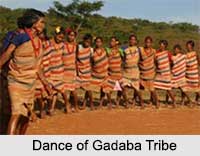
"Dhemsa" dance is quite popular where the women dancers wear the famous karenga saree. While the women dance in semi circle with step three and four, which even rises to eight. The body is often bent forward, showing skillful moves on the heels. The men only play the musical instruments like huge drums, palmudi baja, madal, fluits, tamak and mahuri. Melodious songs are composed by Gabada tribes compose as per the different occasions. These songs are sung at the time of dancing performances of these Gabada tribes.
Festival too is an important part of the Gabada society. Bandapana parab, Dussehra parab, push parab, and chaita parab are some of the religious festivals that are feted by theses Gabada tribes. Dance and singing are part and parcel of these festivals.
Their biggest festival is Chaitra Parba during which the women weave kerengs in their houses and the men go hunting. When they return, they have a community dinner irrespective of age and status and eat, drink and dance throughout the night.
"Dhemsa" dance is quite popular where the women dancers wear the famous karenga saree. While the women dance in semi circle with step three and four, which even rises to eight. The body is often bent forward, showing skillful moves on the heels. The men only play the musical instruments like huge drums, palmudi baja, madal, fluits, tamak and mahuri. Melodious songs are composed by Gabada tribes compose as per the different occasions. These songs are sung at the time of dancing performances of these Gabada tribes.
Culture of Gadaba Tribe
The Gadabas also regard cattle-raising as the true source of their wealth. They believe in sacrificing pigs, cows and buffaloes at the altar of their "Vanadevata" (god of the jungle). Almost every family rears pigs irrespective of its status and size and keep dogs to ward off evil spirits.
Costumes of Gadaba Tribe
A Gadaba woman usually wears a two-piece dress which is very colourful, often striped in red, blue and white, which is woven by the women themselves. The textile is made from the bark of the Kereng plant. The ornaments they wear are not very different from those of other tribes. They wear beads of various colours in the hair, silver necklaces and very big brass earrings. The kerengis are being slowly replaced by the saree. Men wear only a piece of cloth `Languti` with a flail which hangs in front.
Festivals of Gadaba Tribe
The Gadaba people have a dozen festivals around the year. The most important among them are "Poos Porop", "Choith Porop" and "Bandha Pond Porop". All these three are associated with the first fruits. For every festival there is a puja and a sacrifice conducted which are meant to thank or appease the spirits.
Occupation of Gadaba Tribe
 Agriculture is the main occupation of the Gadaba tribe, thus making their society an agrarian one. Moreover, some of them involve in other activities like gathering forest products, fishing and hunting. They use animals and its products for various purposes. The cows and buffaloes are utilized mainly for ploughing. They do not milk the cows, as they believe it reduces the strength of the animals.
Recently updated articles in Tribes of India
Arakh Tribe
Arakh Tribe is one of the ancient tribes located in several parts of central India. Their origin dates back to the Tughlaq era. Arakh tribe appears to...
Traditional Dress of Nyishi Tribe
Traditional Dress of Nyishi Tribe is worn during festivals and social gathering. Men wear a cane helmet surmounted with the beak of the great Indian H...
Pasi Community
Pasi is an aboriginal race of India and are mainly distributed over the northern region of the country. The traditional occupation of Pasi is the extr...

Bhojas
Bhojas have been described as a very important tribe in the Aitareya Brahmana. Historical records have said that the Bhojas were settled towards the s...
Traditional Dress of Karbi Tribe
Traditional Dress of Karbi Tribe can be easily recognized by the artistic designs inherited from their forefathers. Karbis have their own traditional...
Related articles in Tribes of India
Sentinelese Tribe
Sentinelese tribal community is one of the most isolated and secluded tribes that are found in the whole world.
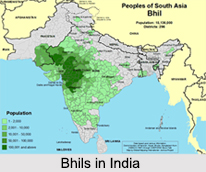
Bhil Tribe
The people of the Bhil tribe are the most widely distributed tribal groups in India.
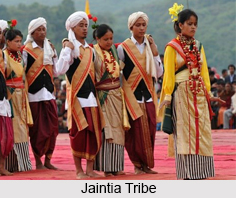
Jaintia Tribe
Jaintia Tribes are located in the Jaintia Hills of Meghalaya. They are also called the Pnars. They are famous for weaving of carpet, making of musical...
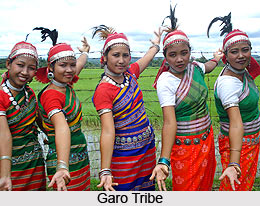
Garo Tribes
Garo Tribes are one of the matrilineal tribes of North-East India who reside in the Garo hills of Meghalaya. Historically, the tribe originated in Tib...
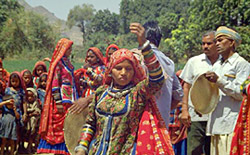
Garasia Tribe
The Garasia tribal community holds a significant position within Indian culture, renowned for their distinctive way of life and rich cultural heritage...