
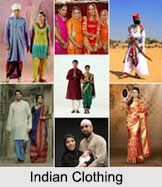
 Indian Clothing is renowned throughout the world, for its ethnic wears, perfectly depicting the richness and exuberance of the cultural heritage. The Indian clothing style is considered as unique and exclusive. Indian clothing categorises separate dresses, depending on seasonal variations and geographical locations. Besides the traditional dresses, Indian clothing also includes various styles and patterns of western dresses and clothing styles. However, in the villages of India, traditional clothing like Kurta, Sarees, Lungi, Dhoti and Pyjama are more common. A lot of variations including regional as well as religion mark the styles of Indian clothing. A plethora of colours and textures in garments can be witnessed in Indian Clothing.
Indian Clothing
Indian Clothing, available in diverse styles, corresponds to the unique styles for men and women incorporating the ethnicity and cultural heritage of the country.
Introduction
Indian Clothing is renowned throughout the world, for its ethnic wears, perfectly depicting the richness and exuberance of the cultural heritage. The Indian clothing style is considered as unique and exclusive. Indian clothing categorises separate dresses, depending on seasonal variations and geographical locations. Besides the traditional dresses, Indian clothing also includes various styles and patterns of western dresses and clothing styles. However, in the villages of India, traditional clothing like Kurta, Sarees, Lungi, Dhoti and Pyjama are more common. A lot of variations including regional as well as religion mark the styles of Indian clothing. A plethora of colours and textures in garments can be witnessed in Indian Clothing.Types of Clothing in India
Type of clothing in India is mainly dependent on the various regions, cultures, geography, climate and the local traditions of the numerous states, districts, towns and villages of this country. The Indian populace prefers various kinds of clothing, ranging from simple `dhotis`, `lungis`, kurta- pyjamas, sarees to contemporary fashionable accessories like sherwanis, jeans, different types of skirts, tops, Western formals like shirts and trousers amongst manifold other items. Indian dresses also vary according to festive, social or religious festivals and regional traditional customs of the nation. Communities belonging to Hindus, Muslims, Christians, Anglo- Indians, Sikhs and Parsis are clad in their specific Indian costumes.
 Saree
Saree
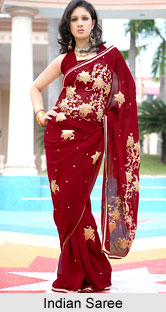
Sarees form the traditional attire for Indian women and are unstitched Indian clothes which are wrapped around the body in several different forms, as per the norms of the various Indian states. Sarees possess many kinds of names, depending on the region of their origin. For example, Banarasi sarees of Northern India, Sambalpuri sarees of Eastern India, Paithani sarees of Western India, Kanjeevaram sarees of Southern India, Pashmina silk sarees of Kashmir, Baluchari sarees of the state of West Bengal, etc are a few categories of the multiple kinds of sarees found in India. Blouses are worn alongwith sarees, and halter necks, backless and designer blouses are quite popular among modern Indian women. Pudavai of Tamil Nadu, kupsas of Karnataka, Bandhani sarees, Chanderi, Gujarati brocade sarees and many other varieties of sarees exist in India. Maharashtrian style, Bengali style, Gujarati style and Bengali style are the existent styles of draping the saree.
Salwar Kameez
Salwar kameez is the customary attire of Punjabi women and are also used by the ladies residing in the North-Indian states of Haryana, Himachal Pradesh and Kashmir. Women in Sindh and Kashmir generally wear the `suthan`, which is similar to the salwar kameez. Loose trousers which are tied around the waist and long tunics are the main characteristics of this costume. A `dupatta` or `odhani` (veil) is used to accompany a salwar kameez. The fabric of dupatta includes georgette, chiffon, silk, cotton and others. Several Bollywood movies have popularized the concept of wearing salwar kameez.
 Churidar-Kurta
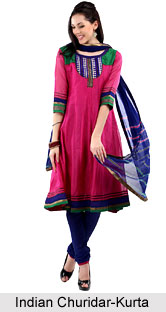
Churidar-kurta is a contemporary version of the salwar kameez. Churidar is a beautiful pyjama which gathers near the ankles and is fitted tightly below the knees. A long kurta is clad, to accompany the churidar and this tunic extends below the knees. The design of churidar marks a sharp contrast with that of salwar kameez. The churidar kurta cannot be combined with a dupatta or chunni, unlike salwar kameez. Kurtas are generally made of various designs, styles and are adorned with gorgeous motifs. It is shaped like a long shirt and is said to be the Indian counterpart of skinny jeans, which form a garment of Western countries.
 Lehenga Choli
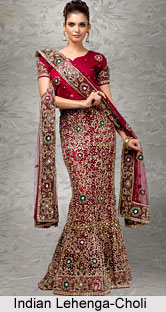
Lehenga choli, also referred to as the ghagra choli is the traditional Indian costume of the states of Gujarat and Rajasthan. The attire includes the lehenga, a tight-fitting choli and odhani or stylish dupatta. The choli is mainly a smart garment with short sleeves, low neck and elaborate designs of rich embroidery. Numerous styles of lehengas are popular amongst Indian ladies, particularly the ones which are embellished with mirrors and used during the Garba dance in Navaratri. Ghagra cholis are very sought after attires, especially during festivals and Indian weddings. Lehengas are also worn by Indian brides during their marriage. Chaniya choli is yet another variety of this very same Indian costume. However, they are generally avoided as a regular wear due to their heavy and elaborate clothing materials. Contemporary Indian designers are fond of experimenting with the styles and patterns of this type of Indian dress.
Pattu Pavadai
Pattu Pavadai, also termed as `langa davani` is a traditional Indian costume popular in Southern parts of the country and is mainly worn by teenagers and little girls. Pavada is a conical, silk garment, decorated with a golden border. It consists of a long piece of cloth which hangs from the waist, straight to the toes. Rajasthani girls also wear this garment prior to their wedding.
Mundum Neriyathum
Residents of Southern India, especially Kerala are known to use this cloth. The lower piece of garment is known as the `mundu` while the upper part of the cloth is termed as the `neriyathu`. This attire is the ancient form of saree worn by the local women of Kerala.
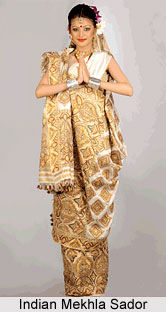 Mekhela-Sador
Mekhela-Sador is a unique, traditional Assamese costume generally worn by Assamese women, belonging to all ages. It comprises three pieces of garments. It is clad like a sarong, which is attached to the waist and tucked inside. The pleats of Mekhela are towards the right side, as against the folds in the Nivi style of the Indian saree which are pleated to the left side. An underskirt is used while wearing it. Strings are never utilized to tie a Mekhela. The Sador is a long cloth which is wrapped over the upper portion of the body. `Riha` is the third piece which is worn under Sador and is narrow. The Riha is worn like an Orni.
Dhoti
Dhoti is one of the ancient traditional costumes of India and is generally used in various portions of the nation, especially Southern India. Men in Indian villages are often clad in dhoti. Measuring about four to six feet in length, a dhoti is a white strip of garment. It is carefully wrapped around both the legs and tucked near the waist with the aide of a belt which might be decorative, jewelled or embroidered. A dhoti is named the `Mundu` in Hindi, Marathi, `Pancha` in Telugu, `veshti` in the state of Tamil Nadu and `panche or lungi` in Kannada. Shirts are worn alongwith dhotis.
Sherwani
Indian menswear includes a long, beautiful jacket with buttons throughout the entire length of the attire of sherwani. Nehru collars are attractive features of sherwanis. The length of Indian costumes reaches upto the knees and is worn alongwith tight trousers which are called churidars. The churidars are loosely fitted around the thighs but are right near the ankles. Sherwanis are often used during weddings and other festive occasions. Indian grooms favour sherwanis, which are brightly coloured or cream coloured and decorated with semi precious stones. Sometimes a scarf or dupatta is used to compliment a sherwani.
Headgear
Headgears like the Indian turban or `pagri` is popular in several parts of India. Other kinds of headgear like `Gandhi cap` and `Taqiyah` are also worn in the country. `Dastar` pagri is worn by the Sikhs, `Pheta` is used by the Marathis in Maharashtra, `Mysore Pheta` pagri which were worn by the kings of Mysore and `Rajasthani pagari` which is worn by the local residents of Rajasthan.
Indian garments are available in vibrant colours, patterns, styles and designs which depict the versatility and unique beauty of Indian women. Therefore, besides the several kinds of Indian menswear, Indian markets are flooded with diverse forms of fashionable accessories for Indian women. Inhabitants of urban India have adopted a Westernized style of dressing, while residents of rural areas of the country have adhered to the traditional costumes like dhoti-kurta, or saree. Indians favour a wide variety of clothing due to the fact that every state of India is represented in different ways, through their indigenous garments.
Saree
Sarees form the traditional attire for Indian women and are unstitched Indian clothes which are wrapped around the body in several different forms, as per the norms of the various Indian states. Sarees possess many kinds of names, depending on the region of their origin. For example, Banarasi sarees of Northern India, Sambalpuri sarees of Eastern India, Paithani sarees of Western India, Kanjeevaram sarees of Southern India, Pashmina silk sarees of Kashmir, Baluchari sarees of the state of West Bengal, etc are a few categories of the multiple kinds of sarees found in India. Blouses are worn alongwith sarees, and halter necks, backless and designer blouses are quite popular among modern Indian women. Pudavai of Tamil Nadu, kupsas of Karnataka, Bandhani sarees, Chanderi, Gujarati brocade sarees and many other varieties of sarees exist in India. Maharashtrian style, Bengali style, Gujarati style and Bengali style are the existent styles of draping the saree.
Salwar Kameez
Salwar kameez is the customary attire of Punjabi women and are also used by the ladies residing in the North-Indian states of Haryana, Himachal Pradesh and Kashmir. Women in Sindh and Kashmir generally wear the `suthan`, which is similar to the salwar kameez. Loose trousers which are tied around the waist and long tunics are the main characteristics of this costume. A `dupatta` or `odhani` (veil) is used to accompany a salwar kameez. The fabric of dupatta includes georgette, chiffon, silk, cotton and others. Several Bollywood movies have popularized the concept of wearing salwar kameez.
Churidar-Kurta
Churidar-kurta is a contemporary version of the salwar kameez. Churidar is a beautiful pyjama which gathers near the ankles and is fitted tightly below the knees. A long kurta is clad, to accompany the churidar and this tunic extends below the knees. The design of churidar marks a sharp contrast with that of salwar kameez. The churidar kurta cannot be combined with a dupatta or chunni, unlike salwar kameez. Kurtas are generally made of various designs, styles and are adorned with gorgeous motifs. It is shaped like a long shirt and is said to be the Indian counterpart of skinny jeans, which form a garment of Western countries.
Lehenga Choli
Lehenga choli, also referred to as the ghagra choli is the traditional Indian costume of the states of Gujarat and Rajasthan. The attire includes the lehenga, a tight-fitting choli and odhani or stylish dupatta. The choli is mainly a smart garment with short sleeves, low neck and elaborate designs of rich embroidery. Numerous styles of lehengas are popular amongst Indian ladies, particularly the ones which are embellished with mirrors and used during the Garba dance in Navaratri. Ghagra cholis are very sought after attires, especially during festivals and Indian weddings. Lehengas are also worn by Indian brides during their marriage. Chaniya choli is yet another variety of this very same Indian costume. However, they are generally avoided as a regular wear due to their heavy and elaborate clothing materials. Contemporary Indian designers are fond of experimenting with the styles and patterns of this type of Indian dress.
Pattu Pavadai
Pattu Pavadai, also termed as `langa davani` is a traditional Indian costume popular in Southern parts of the country and is mainly worn by teenagers and little girls. Pavada is a conical, silk garment, decorated with a golden border. It consists of a long piece of cloth which hangs from the waist, straight to the toes. Rajasthani girls also wear this garment prior to their wedding.
Mundum Neriyathum
Residents of Southern India, especially Kerala are known to use this cloth. The lower piece of garment is known as the `mundu` while the upper part of the cloth is termed as the `neriyathu`. This attire is the ancient form of saree worn by the local women of Kerala.
Mekhela-Sador
Mekhela-Sador is a unique, traditional Assamese costume generally worn by Assamese women, belonging to all ages. It comprises three pieces of garments. It is clad like a sarong, which is attached to the waist and tucked inside. The pleats of Mekhela are towards the right side, as against the folds in the Nivi style of the Indian saree which are pleated to the left side. An underskirt is used while wearing it. Strings are never utilized to tie a Mekhela. The Sador is a long cloth which is wrapped over the upper portion of the body. `Riha` is the third piece which is worn under Sador and is narrow. The Riha is worn like an Orni.
Dhoti
Dhoti is one of the ancient traditional costumes of India and is generally used in various portions of the nation, especially Southern India. Men in Indian villages are often clad in dhoti. Measuring about four to six feet in length, a dhoti is a white strip of garment. It is carefully wrapped around both the legs and tucked near the waist with the aide of a belt which might be decorative, jewelled or embroidered. A dhoti is named the `Mundu` in Hindi, Marathi, `Pancha` in Telugu, `veshti` in the state of Tamil Nadu and `panche or lungi` in Kannada. Shirts are worn alongwith dhotis.
Sherwani
Indian menswear includes a long, beautiful jacket with buttons throughout the entire length of the attire of sherwani. Nehru collars are attractive features of sherwanis. The length of Indian costumes reaches upto the knees and is worn alongwith tight trousers which are called churidars. The churidars are loosely fitted around the thighs but are right near the ankles. Sherwanis are often used during weddings and other festive occasions. Indian grooms favour sherwanis, which are brightly coloured or cream coloured and decorated with semi precious stones. Sometimes a scarf or dupatta is used to compliment a sherwani.
Headgear
Headgears like the Indian turban or `pagri` is popular in several parts of India. Other kinds of headgear like `Gandhi cap` and `Taqiyah` are also worn in the country. `Dastar` pagri is worn by the Sikhs, `Pheta` is used by the Marathis in Maharashtra, `Mysore Pheta` pagri which were worn by the kings of Mysore and `Rajasthani pagari` which is worn by the local residents of Rajasthan.
Indian garments are available in vibrant colours, patterns, styles and designs which depict the versatility and unique beauty of Indian women. Therefore, besides the several kinds of Indian menswear, Indian markets are flooded with diverse forms of fashionable accessories for Indian women. Inhabitants of urban India have adopted a Westernized style of dressing, while residents of rural areas of the country have adhered to the traditional costumes like dhoti-kurta, or saree. Indians favour a wide variety of clothing due to the fact that every state of India is represented in different ways, through their indigenous garments.
Fibres in Indian Clothing
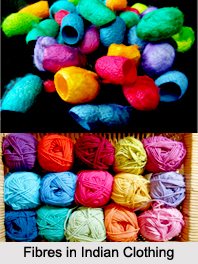 Textile fibres can be created from many natural sources like animal hair or fur, insect cocoons as with silk worm cocoons, as well as semi-synthetic methods that use naturally-occurring polymers, and synthetic methods that use polymer-based materials. Fabrics and textiles play a vital role in meeting our basic clothing needs. Evidently, the textiles and fashion industry has emerged as a dominant sector in Indian industry. Fabrics are closely associated with every aspect of our lives right from birth till death.
A wide variety of natural fibers are used in traditional handloom or textiles. Natural fibers can be defined as substances that are obtained from plants, animals, minerals or from geological processes, which are biodegradable over time. They can be spun into filaments, threads or ropes and can be woven, knitted, matted or bound. The commercially important natural fibers are those cellulosic fibers obtained from the seed hairs, stems, and leaves of plants; protein fibers obtained from the hair, fur, or cocoons of animals and the crystalline mineral asbestos.
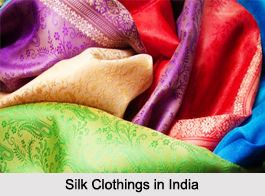 There are definite advantages in using natural fibers over synthetic ones even though they are slightly more expensive and shrink with time. Natural fibers are resistant to fire and does not cause skin irritations.
A few common fibers and the processes involved in making them are listed below:
Jute
Jute is also called "Golden fiber" because of its color and key role in the fiber industry. Jute is one of the strongest natural fibers and ranks second only to cotton in terms of global production. Jute fiber is commonly known for its usage in making gunny bags and sacks. Jute is also used for making clothes to wrapping bales of cotton, twine, rope, matting, curtains, chair coverings, carpets, geo-textiles and backing for linoleum flooring.
Cotton
Cotton fiber is known to human kind for almost 5,000 years. It is made up of pure cellulose with softness and breathability. It absorbs moisture readily, provides natural comfort, is eco-friendly and also improves biodiversity and biological cycles. Cotton is commonly used in textile industry, apart from this they are used in making fishnets, coffee filters, gun powder, cotton paper and fire proof apparel and gauze bandages.
Silk
Silk is a natural fibre made by the silk worm larvae. Silk is often used to make cloth. The cloth can be made into clothes, rugs, bedding, or can be used to write or paint on. Silk fibres are very strong. In the past, silk was used to make parachutes.
Wool
Wool fibre is the natural hair grown on sheep and is composed of protein substance called keratin. Wool has been used for blankets, horse rugs, saddle cloths, carpeting, felt and upholstery.
Materials for Indian Clothing
Materials for Indian clothing like crepe, cotton, georgette, silk, brocade, tissue, satin, polyester and organza produce diverse types of Indian costume which reflect the diversity of Indian cultures and regions. Indian menswear and ladies-wear consist of various types of designs and styles, which all depend on the kind of the basic materials utilized in weaving them. Different states of India manufacture Indian costumes with the aide of several types of materials, which vary according to the customs of the local communities and their traditions.
Cotton
Cotton is an ancient material for weaving several types of Indian clothes. Lightweight salwar-kameez and saree have been used by Indian women since ages since it is a very fine fibre. Cotton dresses are quite comfortable and easy to wash, besides their strong durability. The different types of cotton fabrics which are used to manufacture clothes are Pure Cotton, South Cotton, Mix Cotton, Crush Cotton, Ahmedabad Cotton, Khadi Cotton and Rajasthani Cotton. As the general Indian climate is hot and humid, Indians prefer wearing cotton fabrics as they keep the bodies cool.
 Crepe
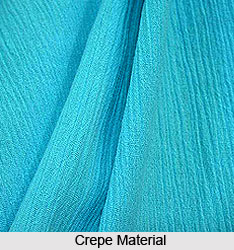
Crepe
Woven with silk fibres, crepe is mainly used while weaving suits and bridal-wear in India. Though crepe was originally woven in silk, today one can avail of crepe-made Indian costumes in some major fibres.
Georgette
A fusion of polyester and nylon is utilized to manufacture georgette materials. Its softness, gracefulness and delicate look impresses Indian women, which is the reason behind the numerous kinds of Indian clothes made of georgette like sarees, etc.
Silk
Silk is considered one of the eternal favourites among all the Indian clothing materials. This luxurious fabric is used to weave a wide variety of Indian clothes like sarees, modern tops, salwar kameez and others. Its lustrous appearance makes almost every Indian garment quite admirable.
 Chiffon
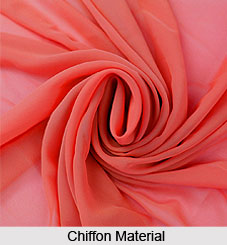
The fabrics of silk and nylon are combined to create chiffon. Chiffon is a transparent material which imparts an elegant physical appearance to it. However, despite its delicate feel, it is strong and durable, which is the primary reason for its use in innumerable Indian clothes.
Satin
Satin is manufactured in almost a similar technique as the fibre of cotton. This material possesses a soft luster.
Brocade
Heavy silk fabric, adorned with beautiful floral designs, woven with the help of silver or gold threads. Jacquard and ornamental brocades are in high demand throughout the country. Contrasting colours are used on brocade materials to create attractive Indian clothes.
Tissue
This material is woven completely from polyester whose major feature is its resistance to wrinkles. Clothes made from tissues can be washed in machines and is also dry cleanable. Cotton tissues and silk tissues are the popular tissue materials in India.
Net
A unique mesh-like look is lent by this open fabric which is made by joining the intersections in a crocheted manufacturing process. India clothes like lehenga-choli, dupattas of certain salwar kameez, sari and numerable other clothes use net materials.
Organza
Polyester, silk, rayon and nylon are the basic materials used to manufacture a crisp and lightweight fabric called organza.
Polyester
Polyesters are synthetic, artificial fibres which possess certain features like increased strength as compared to other materials for making clothes, minimum care requirement, abrasion resistant and many other qualities.
The fabrics and textile of Indian clothes determine the external appearance and feel of the final products. Since India was the very first place which grew cotton, Indian garments like dhotis and saris were primarily made from cotton. Silk was another popular basic material of most of the Indian costumes. Moss crepe, denim, rayon and gold are other commonly utilized materials in Indian dresses. Sarees, salwar kameez and many other items of Indian clothing consist of golden threads, golden `zari` work, and golden ornaments.
Cotton
Cotton is an ancient material for weaving several types of Indian clothes. Lightweight salwar-kameez and saree have been used by Indian women since ages since it is a very fine fibre. Cotton dresses are quite comfortable and easy to wash, besides their strong durability. The different types of cotton fabrics which are used to manufacture clothes are Pure Cotton, South Cotton, Mix Cotton, Crush Cotton, Ahmedabad Cotton, Khadi Cotton and Rajasthani Cotton. As the general Indian climate is hot and humid, Indians prefer wearing cotton fabrics as they keep the bodies cool.
Crepe
Woven with silk fibres, crepe is mainly used while weaving suits and bridal-wear in India. Though crepe was originally woven in silk, today one can avail of crepe-made Indian costumes in some major fibres.
Georgette
A fusion of polyester and nylon is utilized to manufacture georgette materials. Its softness, gracefulness and delicate look impresses Indian women, which is the reason behind the numerous kinds of Indian clothes made of georgette like sarees, etc.
Silk
Silk is considered one of the eternal favourites among all the Indian clothing materials. This luxurious fabric is used to weave a wide variety of Indian clothes like sarees, modern tops, salwar kameez and others. Its lustrous appearance makes almost every Indian garment quite admirable.
Chiffon
The fabrics of silk and nylon are combined to create chiffon. Chiffon is a transparent material which imparts an elegant physical appearance to it. However, despite its delicate feel, it is strong and durable, which is the primary reason for its use in innumerable Indian clothes.
Satin
Satin is manufactured in almost a similar technique as the fibre of cotton. This material possesses a soft luster.
Brocade
Heavy silk fabric, adorned with beautiful floral designs, woven with the help of silver or gold threads. Jacquard and ornamental brocades are in high demand throughout the country. Contrasting colours are used on brocade materials to create attractive Indian clothes.
Tissue
This material is woven completely from polyester whose major feature is its resistance to wrinkles. Clothes made from tissues can be washed in machines and is also dry cleanable. Cotton tissues and silk tissues are the popular tissue materials in India.
Net
A unique mesh-like look is lent by this open fabric which is made by joining the intersections in a crocheted manufacturing process. India clothes like lehenga-choli, dupattas of certain salwar kameez, sari and numerable other clothes use net materials.
Organza
Polyester, silk, rayon and nylon are the basic materials used to manufacture a crisp and lightweight fabric called organza.
Polyester
Polyesters are synthetic, artificial fibres which possess certain features like increased strength as compared to other materials for making clothes, minimum care requirement, abrasion resistant and many other qualities.
The fabrics and textile of Indian clothes determine the external appearance and feel of the final products. Since India was the very first place which grew cotton, Indian garments like dhotis and saris were primarily made from cotton. Silk was another popular basic material of most of the Indian costumes. Moss crepe, denim, rayon and gold are other commonly utilized materials in Indian dresses. Sarees, salwar kameez and many other items of Indian clothing consist of golden threads, golden `zari` work, and golden ornaments.
Recently updated articles in Costumes in India
Costumes of Union Territories of India
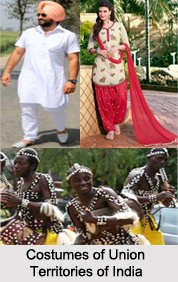
Costumes of the Union Territories are as different as their culture. These eight union territories are equally vibrant in their dressing as compared t...
Costumes of Delhi
Costumes of Delhi embody the rich cultural heritage of the city while showcasing a unique fusion of traditional elements and modern trends. From the p...
Traditional Dresses of Odisha
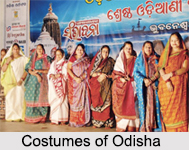
Traditional Dresses of Odisha reflects the unique culture of the state. Odisha has an ancient culture and popular for classical dance. It is also home...
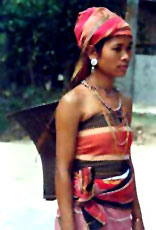
Traditional Dresses of Tripura
Traditional Dresses of Tripura have their own traditional ethnicity. The traditional costumes of Tripura, such as Risa, Rignai, and Rikutu Gamcha, ref...
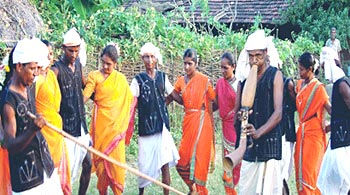
Traditional Dresses of Dadra and Nagar Haveli
The traditional dresses of Dadra and Nagar Haveli reflect the region’s tribal heritage. Women often wear saris, chaniyas (skirts) with blouses, or dra...
Related articles in Costumes in India
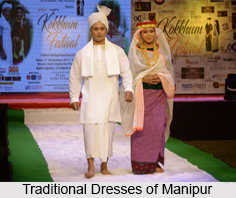
Traditional Dresses of Manipur
Traditional Dresses of Manipur are simple and easy to wear. The patterns and designs on the costumes are very unique and colourful. Manipuris are sett...
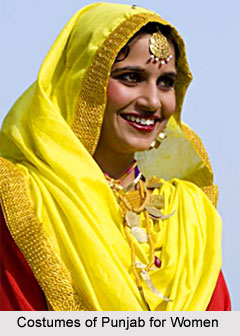
Costumes of Punjab
Costumes of Punjab breathe vibrancy. Tradition marks the dress of the women:; colourful Salwar Kameez while Kurta-Pyjama or Lungi is worn by men.
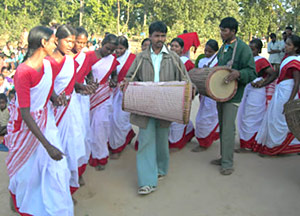
Traditional Dresses of Jharkhand
Traditional Dresses of Jharkhand embody the simplicity and elegance of its inhabitants. From the one-piece Bhagwan worn by men to the sarees and Tussa...
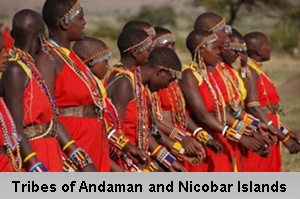
Costumes of Andaman and Nicobar Islands
The costumes of Andaman and Nicobar Islands showcase a fascinating blend of indigenous tribal traditions and influences from modern settlers. While th...
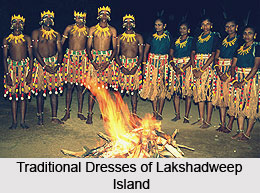
Costumes of Lakshadweep
Costumes of Lakshadweep reflect a blend of tradition and cultural identity. Women typically wear the Kachi with a Thattam and embroidered jacket, whil...