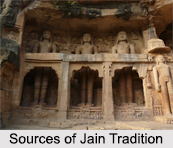
 Sources of Jain History are the ones from which one obtains the knowledge of Jain history. They are mainly literary works like inscriptions and archaeological sources like antiquities of all types, like buildings, monuments, coin and many other things. Literary works are the most profitable for the purpose of research. Jains themselves have tried to describe the history of their faith in the whole series of writings.
Literary Sources of Jainism
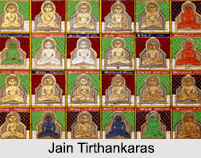
A great part of the works written by Jains, in which the history of the Jain faith is discussed, has a purely mythical legendry character; it does not appear to be their duty. Many historical works of Jains, in spite of these deficiencies, contain valuable material and offer useful information. The information given in the literary works of the Jains can be used to check the information given in the Brahmanic Buddhist or other writings. In the Buddhist literature, Jainism is not shown as a new religion but is referred to as an ancient religion. In fact it is mentioned in the Buddhist literature that Gautama Buddha himself practiced penance according to the Jain way before he propounded his new religion. In the Rig Veda there are clear references to Rishabha, the 1st Tirthankara.
 Jain Inscriptions
The results of the research obtained from the inscriptions are more reliable than those obtained from literary works. Inscriptions were mostly carved immediately after a particular event. Therefore, they possess a certain freshness and nearness to reality which is lost in literary descriptions which were written later. Most of the inscriptions are the records of the foundation of temples or the idols of Gods, of estates or immunities granted by a pious king or a believing layman.
Archaeological Sources of Jainism
The archaeological sources like antiquities and monuments of various types contribute to the history of Jainism. It has been recorded in the Kharvela inscription engraved in Hathi Gumpha, Udaygiri caves in Bhubaneshwar, Odisha. Rishabhadeva was worshiped and his statue was highly valued by his followers.
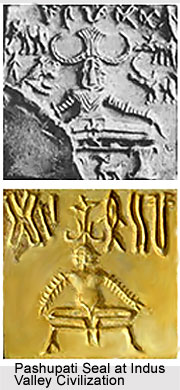
Other archaeological evidences belong to the Indus Valley Civilization of the Bronze Age in India that lends support to the hoary antiquity of the Jain tradition. It suggests the prevalence of the practice of worship of Rishabhadeva, along with the worship of other deities. The earliest found icons of the Tirthankara are; a torso from Lohanipur, (near Patna) of 3rd century B.C.