
Bhagwan Rishabh Dev was born to Emperor Nabhi Raja and Queen Marudevi at Ayodhya in the Ikshvaku clan. It is believed that Rishabh Dev existed before civilization developed. He taught masses agriculture, tending of animals, cooking, and more. He had one hundred and one sons.
Bhagwan Rishabh Dev`s eldest son Bharat was a Chakravarti Emperor - the vanquisher of the known world. It is believed that India was named Bharata-varsha or Bharata after him. This has been mentioned in various Indian Puranas such as Agni Purana, Vishnu Purana, Markandeya Purana, Brahmanda Purana, Matsya Purana, Kurma Purana, Shiva Purana and Skanda Purana. King Baharat however, later retired to become an ascetic and achieved Moksh. Marichi, Bhagwan Rishabh Dev`s grandson later became Mahavir. He achieved `kevalgnan` or endless knowledge at Palitana and achieved nirvana (Moksh) at Ashtapad Mountain in Himalaya Mountains.
Bhagwan Rishabh Dev is regarded as an incarnation of Lord Vishnu according to the Hindu text of Bhagavata Purana. One can also find his reference in the Vishnu Purana and Shiva Purana. As per Bhagavata, he was born to show the masses of this world the path of redemption. It was he who advised the masses to follow the path of undying happiness. He is regarded as the founding father and promoter of Sramanic culture.
Modern scholars are of opinion that Rishabh was a historical person and that his birth period can be placed established at the end of Stone Age and beginning of Agriculture age. The modern historians on the other hand are of opinion that there exists some relation between Bhagwan Rishabh Dev and Indus Valley civilization. The terracotta seals and other excavations at Harappa and Mohenjodaro provide a link between Rishabh and Indus Valley Civilization. Even the standing deities on the seals also show Kayotsarga (a standing or sitting posture of meditation) position. The Kayotsarga posture is peculiarly Jain and according to the Adi Puran Book, the Kayotsarga posture is said to have its connection with the penance of Rishabh, also known as Vrishabh."
Bhagwan Rishabh Dev propagated his religious faith having the five great vows as its fundamental theme. He went to the Ashtapad Mountain as he realized that all his remaining karmas are nearing their end.
Bhagwan Rishabh Dev, along with ten thousand other monks maintained a six day fasting without water. He seated himself in the meditation in the Paryanka pose. On the thirteenth day of the dark half of the month of Magh, when the moon entered the Abhijit lunar mansion he got enlightenment and thus got relieved of his entire ailments. The lord of Gods, Saudharmendra, Emperor Bharat, many Gods and men assembled and celebrated the auspicious event of Bhagwan Rishabh Dev`s Nirvana.
Bhagwan Rishabh Dev
Rishabh Dev, an enlightened soul, was regarded as the incarnation of Lord Vishnu. He was the first Jain Tirthankara in India.
About Bhagwan Rishabh Dev
Iconography of Rishabh Dev
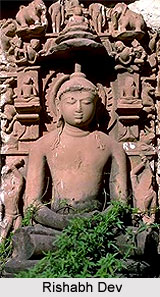 The images of Bhagwan Rishabh Dev at Khajuraho Temples have been carved elaborately in different forms. There are all together four images of the Lord, three in seated posture and one in standing pose. The images are adorned with figures of Yakshas and Yakshis and other goddesses with their vahana. The four images have been described in details below:
Seated Images of Rishabh Dev
First Image of Rishabh Dev : The first image is 56"X 30" in height. The Jina here has forearms and legs that are in damaged state. The Lord is shown in dhyana mudra on a lotus spread on a high and ornate cushion. Image of a bull has also been carved here. Two figures of devotees in standing pose with folded hands are visible. The figures of Navagrahas have been arranged in panel on either side of bull figure. From the left side the first figure represents the Lord Surya. It is two armed and seated in cross legged. In his hands he holds long stalked lotuses. The following six figures are seated in lalita pose and show the abhaya mudra in their right arms. With their left hanging arms they bear kamandulu. The eighth figure is of Rahu. The bust can be seen here and the image is surmounted by the figure of Ketu. Its lower portion looks like a serpent.
Figures of many Jinas are also visible here. On each side of the Yaksha Yakshi image figure of a seated Jina can be seen. Here the images of flywhisk bearers are in damaged condition. Above these a pair of standing Jinas has been carved on either side of the flywhisk bearers in front of the pilasters. An elephant with two riders have also been carved at the top of each pilaster. They are seen holding a vase. A couple of hovering figures of the maladharas can be seen holding a garland. They are much mutilated. The images are surrounded by clouds. The carved figures of a standing Jina can be seen on either side of the maladhara couple. Other than these there are couple of other flying maladharas carved here which are in damaged state. Five figures of seated Jinas are sculptured at the top back slab. However, three of them are lost. These seated Jinas are flanked on both sides by eight standing Jinas. Among these two figures at the right corner are damaged. The upper part of the parikara is much broken. There are images of Yakha and Yakshi here. The image of the Yakshi is four armed and has been carved at the left corner. She rides on garuda and carries a lotus and a disc in her right and left upper arms. With her lower right and left arms she holds a fruit and a ring. In image of the Yaksha has been carved on the right hand side. It is four armed and is bull faced Yaksha. It is seated in bhadrasana. Two arms of the Yaksha are broken here. With the remaining upper and lower left aims he holds a parasu and a fruit. The hair of the Jina is done in jata-juta fashion with three straight locks of hair falling on each shoulder. There is a halo round the head with a corolla in the centre, and also showing a row of lotus petals, a band and linear designs. The image belongs to the first half of the 11th century A.D.
Second Seated Image of Rishabh Dev : The second image of Rishabh Dev in Khajuraho is seated on an ornate cushion placed on a pedestal. It was earlier supported by pilasters but is now damaged. The height of the image is 42"x 25". A small image of a bull has been carved below the dharmachakra. The image of the Lord is flanked by Yaksa Yaksi figures, namely Sarvanubhuti and Chakresvari. They are carved in pillared niches. The Yakshi here is four armed and is seen riding a garuda. In his upper pair of hands she holds discs while her lower right and left arms show respectively the varada mudra and a conch shell. The image of the Yaksha has two arms bearing an abhaya mudra and a mongoose-skin purse respectively in his right and left hands. At each extremity of the pedestal is seated a devotee with folded hands, the figure to left being that of a female. Above these Yaksha Yakshi figures on either side there appears, a standing Jina, slightly smaller in size than the middle. The images are now headless. The images are adorned with trilinear umbrellas and are topped by disembodied figures. They are seen beating the drums and the nimbuses of lotus petals and beaded border. The Jinas are flanked by a single flying vidyadhara, holding a garland. An elephant with a rider is also visible here. Beside elephant figures at each edge is carved a seated Jina figure in a pillared niche. Another Jina figure is found seated at the top. The upper part is designed like the sikhara of a temple with three successive tiers.
The hair of Rishabh Dev is done in schematic curls. A nimbus created round the head of the Jina is composed of a blossom circlet and prominent garland like band. Depending upon the style, iconography and its execution the image of the Lord may be dated to the early 12th century A. D.
Third Seated Image of Rishabh Dev : The third seated image of Rishabh Dev in Khajuraho Temples is sheltered in the old open air Archaeological Museum. Earlier the museum was known as Jardin Museum. The image is flanked by Yakshis like Chakreswari and Ambika, in front of the pedestal. The image is 50" x 27" in height and is made of buff coloured sandstone. On the basis of both of style and iconography it belongs to the mid 12th century A.D. here the Lord is adorned with a srivatsa symbol in the centre of the chest and is seated cross legged. He is shown in deep meditation. His hands are laid in the lap. An image of a bull is also carved here. It is flanked by two small figures of worshippers on either side. Two four armed seated goddesses are visible on the sides of the dharmachakras. The image of the goddess on the right hand side is of Ambika and is adorned with gorgeous necklaces and other usual ornaments. She is seen wearing a dhoti and holding in her two left arms hands, a lotus. However, her right arms along with the legs are broken off. Her mount, a lion is carved below her seat. The goddess on the left side is embellished with necklaces and other ornaments. Except for her upper right, all the other arms and legs are damaged. In that surviving hand she holds a mace. Her mount is a garuda and is carved below the seat. The goddess is Chakreswari. Images of four-armed figures of a male and a female have been magnificently carved the two corners of the pedestal. They are seated in lalitasana with one leg hanging down from the pedestal and the other being folded. The image of the goddess on the left side is seen holding lotuses in her two upper arms; while her lower right and left show respectively the abhaya mudra and a fruit. The on right hand side four-armed, bull-faced, figure of Gomukha Yaksha is visible. He holds a parasu and a manuscript respectively in its upper right and left arms. With the lower left hand he holds a kamandalu. Above these figures there appears, on each side a four armed female figure sitting in lalita pose. The two female figures hold lotuses in the two upper arms. In the lower left and right she holds a kamandalu and the abhaya mudra respectively. The image of Rishabh Dev is flanked by male figure on either side. They are carved in tribhanga pose and are richly decorated with ornaments. These figures hold the flywhisks. Images of elephants with riders are visible above each shoulder of the Jina on either side. The hair of the Jina, arranged in small ringlets shows three lateral strands. The nimbus that has been made behind the head consists of blossom circlet that is bordered by a band.
Figures of many Jinas are also visible here. On each side of the Yaksha Yakshi image figure of a seated Jina can be seen. Here the images of flywhisk bearers are in damaged condition. Above these a pair of standing Jinas has been carved on either side of the flywhisk bearers in front of the pilasters. An elephant with two riders have also been carved at the top of each pilaster. They are seen holding a vase. A couple of hovering figures of the maladharas can be seen holding a garland. They are much mutilated. The images are surrounded by clouds. The carved figures of a standing Jina can be seen on either side of the maladhara couple. Other than these there are couple of other flying maladharas carved here which are in damaged state. Five figures of seated Jinas are sculptured at the top back slab. However, three of them are lost. These seated Jinas are flanked on both sides by eight standing Jinas. Among these two figures at the right corner are damaged. The upper part of the parikara is much broken. There are images of Yakha and Yakshi here. The image of the Yakshi is four armed and has been carved at the left corner. She rides on garuda and carries a lotus and a disc in her right and left upper arms. With her lower right and left arms she holds a fruit and a ring. In image of the Yaksha has been carved on the right hand side. It is four armed and is bull faced Yaksha. It is seated in bhadrasana. Two arms of the Yaksha are broken here. With the remaining upper and lower left aims he holds a parasu and a fruit. The hair of the Jina is done in jata-juta fashion with three straight locks of hair falling on each shoulder. There is a halo round the head with a corolla in the centre, and also showing a row of lotus petals, a band and linear designs. The image belongs to the first half of the 11th century A.D.
Second Seated Image of Rishabh Dev : The second image of Rishabh Dev in Khajuraho is seated on an ornate cushion placed on a pedestal. It was earlier supported by pilasters but is now damaged. The height of the image is 42"x 25". A small image of a bull has been carved below the dharmachakra. The image of the Lord is flanked by Yaksa Yaksi figures, namely Sarvanubhuti and Chakresvari. They are carved in pillared niches. The Yakshi here is four armed and is seen riding a garuda. In his upper pair of hands she holds discs while her lower right and left arms show respectively the varada mudra and a conch shell. The image of the Yaksha has two arms bearing an abhaya mudra and a mongoose-skin purse respectively in his right and left hands. At each extremity of the pedestal is seated a devotee with folded hands, the figure to left being that of a female. Above these Yaksha Yakshi figures on either side there appears, a standing Jina, slightly smaller in size than the middle. The images are now headless. The images are adorned with trilinear umbrellas and are topped by disembodied figures. They are seen beating the drums and the nimbuses of lotus petals and beaded border. The Jinas are flanked by a single flying vidyadhara, holding a garland. An elephant with a rider is also visible here. Beside elephant figures at each edge is carved a seated Jina figure in a pillared niche. Another Jina figure is found seated at the top. The upper part is designed like the sikhara of a temple with three successive tiers.
The hair of Rishabh Dev is done in schematic curls. A nimbus created round the head of the Jina is composed of a blossom circlet and prominent garland like band. Depending upon the style, iconography and its execution the image of the Lord may be dated to the early 12th century A. D.
Third Seated Image of Rishabh Dev : The third seated image of Rishabh Dev in Khajuraho Temples is sheltered in the old open air Archaeological Museum. Earlier the museum was known as Jardin Museum. The image is flanked by Yakshis like Chakreswari and Ambika, in front of the pedestal. The image is 50" x 27" in height and is made of buff coloured sandstone. On the basis of both of style and iconography it belongs to the mid 12th century A.D. here the Lord is adorned with a srivatsa symbol in the centre of the chest and is seated cross legged. He is shown in deep meditation. His hands are laid in the lap. An image of a bull is also carved here. It is flanked by two small figures of worshippers on either side. Two four armed seated goddesses are visible on the sides of the dharmachakras. The image of the goddess on the right hand side is of Ambika and is adorned with gorgeous necklaces and other usual ornaments. She is seen wearing a dhoti and holding in her two left arms hands, a lotus. However, her right arms along with the legs are broken off. Her mount, a lion is carved below her seat. The goddess on the left side is embellished with necklaces and other ornaments. Except for her upper right, all the other arms and legs are damaged. In that surviving hand she holds a mace. Her mount is a garuda and is carved below the seat. The goddess is Chakreswari. Images of four-armed figures of a male and a female have been magnificently carved the two corners of the pedestal. They are seated in lalitasana with one leg hanging down from the pedestal and the other being folded. The image of the goddess on the left side is seen holding lotuses in her two upper arms; while her lower right and left show respectively the abhaya mudra and a fruit. The on right hand side four-armed, bull-faced, figure of Gomukha Yaksha is visible. He holds a parasu and a manuscript respectively in its upper right and left arms. With the lower left hand he holds a kamandalu. Above these figures there appears, on each side a four armed female figure sitting in lalita pose. The two female figures hold lotuses in the two upper arms. In the lower left and right she holds a kamandalu and the abhaya mudra respectively. The image of Rishabh Dev is flanked by male figure on either side. They are carved in tribhanga pose and are richly decorated with ornaments. These figures hold the flywhisks. Images of elephants with riders are visible above each shoulder of the Jina on either side. The hair of the Jina, arranged in small ringlets shows three lateral strands. The nimbus that has been made behind the head consists of blossom circlet that is bordered by a band.
Standing Image of Rishabh Dev
The standing image of Rishabh Dev at Khajuraho Temples dates back to the late tenth or early eleventh century A.D. It has been estimated on the basis of style and architecture. The image has been carved magnificently and looks very appealing. It is flanked by the Jain figures and with his vahana.
The image of Rishabh Dev is seen standing on a lotus that has been placed over a covering cloth that hangs from the pedestal. The left hand of the Jina below the elbow is damaged. A bull is carved in the centre of the pedestal in front of the dharmachakra. It is vahana of the Lord. In the two corners of the pedestal figures of the yaksha and yakshi of the Jina, Sarvanubhati and Chakreswari have been carved. The Yakshi here is four armed and is carved on the left corner. She rides on a garuda and holds in her two upper and lower right arms respectively a disc and the abhaya mudra. The Yaksha is four armed and is seen sitting on the right corner. He holds a purse and a fruit respectively in his right and left arms. Image of worshippers sitting close to the feet of the Lord with their hands joined in reverence is visible. Two bearers holding long stalked lotus in one hand and flywhisk, hanging downwards, in the other hand are carved. Seated figures of Jinas also adorn the temple. Image of an elephant with two riders have been carved at the top of each framing pilaster. The elephants are seen holding a vase. A small standing Jina figure is carved beside the flanking attendants. The image of Lord Parshvanatha has also been carved here. It is surmounted by a three hooded cobra and is in standing pose. All the fifty-two small Jina figures have been carved with nimbus. In the image carved, the triple parasol adorned with festoons has been supported by a stand. It is believed that the figure fifty-two might have been taken from the fifty-two Sasvata Jinalayas of Nandisvaradvipa. These have been a very popular form of representation in among both the Jain sects. The halo behind the head of the Lord is made of corolla, blossom circlet, rosette and some floral motif. Figures playing flute have been magnificently carved at the back of the slab at the top corner.
The hair of Rishabhanath is arranged in ringlets with three lateral strands over each shoulder. According to Swetambara works Kalpasntra of Acharya Bhadrabahu and the Trisastisalakapurusacaritra of Hemachandra all the Jinas except Rishabh Dev plucked their hair in five handfuls when they renounced the world. Rishabh dev on the contrary tore four handfuls of hair.
The image of Rishabh Dev is seen standing on a lotus that has been placed over a covering cloth that hangs from the pedestal. The left hand of the Jina below the elbow is damaged. A bull is carved in the centre of the pedestal in front of the dharmachakra. It is vahana of the Lord. In the two corners of the pedestal figures of the yaksha and yakshi of the Jina, Sarvanubhati and Chakreswari have been carved. The Yakshi here is four armed and is carved on the left corner. She rides on a garuda and holds in her two upper and lower right arms respectively a disc and the abhaya mudra. The Yaksha is four armed and is seen sitting on the right corner. He holds a purse and a fruit respectively in his right and left arms. Image of worshippers sitting close to the feet of the Lord with their hands joined in reverence is visible. Two bearers holding long stalked lotus in one hand and flywhisk, hanging downwards, in the other hand are carved. Seated figures of Jinas also adorn the temple. Image of an elephant with two riders have been carved at the top of each framing pilaster. The elephants are seen holding a vase. A small standing Jina figure is carved beside the flanking attendants. The image of Lord Parshvanatha has also been carved here. It is surmounted by a three hooded cobra and is in standing pose. All the fifty-two small Jina figures have been carved with nimbus. In the image carved, the triple parasol adorned with festoons has been supported by a stand. It is believed that the figure fifty-two might have been taken from the fifty-two Sasvata Jinalayas of Nandisvaradvipa. These have been a very popular form of representation in among both the Jain sects. The halo behind the head of the Lord is made of corolla, blossom circlet, rosette and some floral motif. Figures playing flute have been magnificently carved at the back of the slab at the top corner.
The hair of Rishabhanath is arranged in ringlets with three lateral strands over each shoulder. According to Swetambara works Kalpasntra of Acharya Bhadrabahu and the Trisastisalakapurusacaritra of Hemachandra all the Jinas except Rishabh Dev plucked their hair in five handfuls when they renounced the world. Rishabh dev on the contrary tore four handfuls of hair.
Recently updated articles in Religion in India
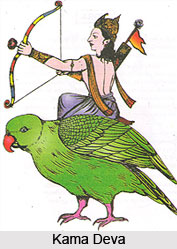
Kusumayudha
Kusumayudha is a name of Kamadeva, the Hindu God of Love. Depicted with a sugarcane bow and flower-tipped arrows, he represents attraction and longing...
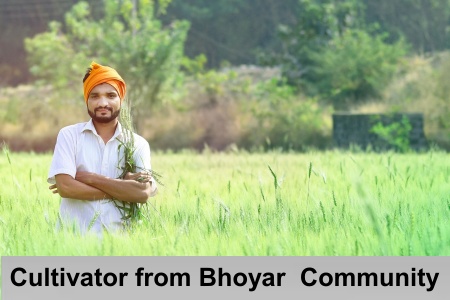
Bhoyar Caste
Bhoyar Caste is largely found in the Central Provinces of the country. Traditional occupation of Bhoyars is agriculture. They are good cultivators and...
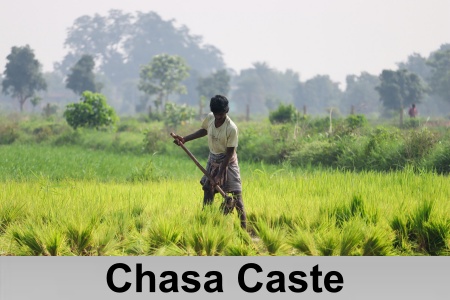
Chasa Caste
Chasa caste is a prominent agrarian community native to Odisha. Traditionally associated with cultivation and farming, Chasas have historically played...
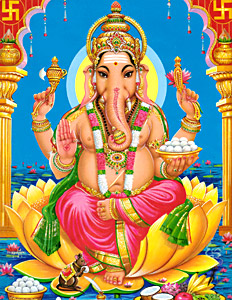
Vigneswara, A Form of Lord Ganesha
Lord Vigneswara is another form of Lord Ganesha or Vinayaka, prominently worshipped as the God of intelligence and good luck in the Indian subcontinen...
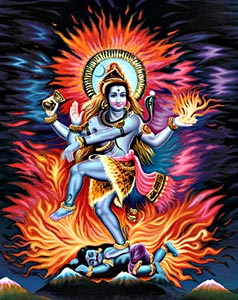
Maheswara
Maheswara, meaning “the Great Lord,” is a revered name of Lord Shiva in Hindu tradition. It represents Shiva’s supreme authority over creation, preser...
Related articles in Religion in India
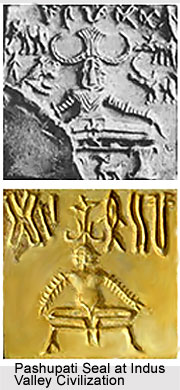
Religion in Indus Valley Civilization
Religion in Indus Valley Civilisation included Hinduism, Buddhism and Jainism. Details about the religion in Indus Valley Civilization have been gathe...
Iyer Brahmin
Iyer Brahmins are originally from Tamil Nadu of South India. They are known for their adherence to Advaita philosophy and Smarta traditions. Tradition...
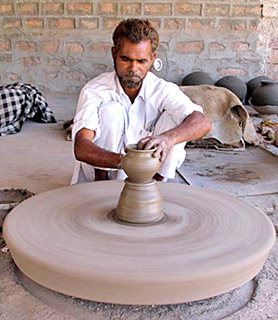
Kumbhakar / Kumhar Caste
Kumbhakar or Kumhar caste is a traditional artisan community in India known for pottery making. Derived from Sanskrit word Kumbhakar, meaning potter,...

Gujjars in Mughal Era
Gujjars in the Mughal era enjoyed great power. Further their power increased with the decline of Aurangzeb, Mughal emperor.
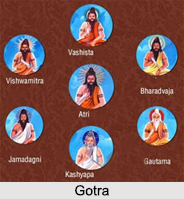
Gotra in Hinduism
In Hinduism, gotra refers to a lineage system tracing descent from ancient sages, primarily through the paternal line. Originating from Vedic traditio...