Introduction
The State of Karnataka is located in the south western part of India. The geographical terrain of this state is characterized by rivers, hill ranges, forests, waterfalls and beaches. It’s natural beauty, along with monuments, world heritage sites, temples etc. draw tourists to this state. Lakes of Karnataka are no exception in this regard. They have also added value to the tourism of this state. Lakes in Karnataka can be broadly divided into lakes in Bengaluru and lakes in Mysuru as these two places have the maximum number of lakes and water bodies. Apart from these, there are several other lakes across Karnataka.
Lakes in Bengaluru
Lakes in the metropolitan area of Greater Bangalore and the Bangalore Urban district are reservoirs of varying sizes, constructed over several centuries by different empires and dynasties as part of rainwater-harvesting systems. Historically, these lakes functioned primarily as irrigation tanks or sources of water supply, with secondary uses such as bathing and washing. Their creation and maintenance were driven by the absence of a major nearby river and the demands of a growing settlement. As Bangalore evolved from a small settlement into a city, the original purposes of these tanks gradually shifted.
Over time, some lakes have been reconsidered as recreational spaces, while others have been built over. Several lakes have shrunk in size and are now in varying stages of deterioration. Pollution has become a major concern, exemplified by Bellandur Lake, which has effectively been used as a sewage reservoir. In response, numerous public and private initiatives have been undertaken to address sewage treatment, prevent dumping, and curb encroachment.
Some of the famous lakes of Bengaluru are:
Agara Lake: Agara Lake is an 80-acre waterbody
located in Agara, Bangalore. It forms part of the Varthur lake series, with
Madiwala Lake situated upstream and Bellandur Lake downstream. The lake is
encircled by a walking and cycling track, and a park is located at its northern
end.
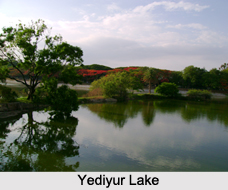
Yediyur Lake: This Lake, located near Basavanagudi in Bengaluru, is believed to date back to the Hoysala period, making it approximately 1,400 years old. This serene waterbody is popular among local residents, particularly joggers and birdwatchers, and also serves as a site for idol immersion during Ganesh Chaturthi.
Arekere Lake: Arekere Lake is located in the Arekere–Hulimavu area of Bangalore. The lake has a perimeter of approximately 3 kilometres (1.9 miles) and is believed to be a man-made water reservoir created around 100 years ago.
Bellandur Lake: Bellandur Lake beautifies the suburb of Bellandur in the southeast of Bengaluru. It is the largest lake in the city. This lake has a catchment area of about 148 square kilometers, maximum length of about 3.6 km and maximum width of about1.4 km. Sewage acts as a major threat to this lake.
Allalasandra Lake: Allalasandra Lake is a popular destination in Bangalore, valued for its serene environment. The large water body supports a wide variety of bird species and has become a favored spot for birdwatchers. An open-air gym and a children’s park located adjacent to the lake add to its appeal for visitors of all ages.
Doddanekundi Lake: Doddanekundi Lake is one of the many lakes in Bangalore. Once regarded as the cleanest lake in the city, it has since been adversely affected by rapid urbanization, which has left it in poor condition. Despite these challenges, the lake continues to offer some of the most striking views of the surrounding area. Several non-governmental organizations are actively working to restore and improve its condition.
Hebbal Lake: Hebbal Lake is located north of Bengaluru at the mouth of National Highway 7. The catchment area of this lake is about 3750ha. This lake was established in 1537 by Kempe Gowda. Sewage inflow into Hebbal Lake has threatened it. To restore this lake a project was initiated under the Indo-Norwegian Environment Programme.
Hesaraghatta Lake: Hesaraghatta Lake is a man-made reservoir located about 18 kilometres northwest of Bengaluru in the state of Karnataka, India. Created in 1894 across the Arkavathy River, the freshwater lake was developed to meet the city’s drinking water needs. This important water body now forms an integral part of the recently declared Hesaraghatta Grasslands Conservation Reserve, enhancing its ecological value and biodiversity significance.
Jakkur Lake: Jakkur Lake is one of the largest lakes in Bangalore and is situated on the northern side of the city. It takes its name from the locality of Jakkur and spans approximately 35 hectares (86.5 acres), featuring several islands within its expanse.
Madiwala Lake: Madiwala Lake is one of the largest
lakes in Bangalore, India, covering an area of approximately 114.3 hectares.
Until the early 1990s, the lake’s water was fit for drinking, but the inflow of
industrial waste and sewage since then has rendered it unsuitable for
consumption, leading to gradual pollution. Despite this, the lake remains a
habitat for many migratory bird species. It is administered by the Karnataka
State Forest Department, which is responsible for its routine maintenance.
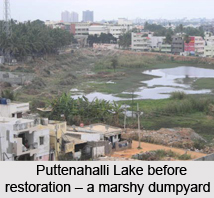
Puttenahalli Lake (JP Nagar): Puttenahalli Lake is a small, restored freshwater lake located in JP Nagar 7th Phase in South Bangalore. Covering an area of about 13 acres, the lake is primarily fed by rainwater and surface runoff diverted through channels. Once on the brink of extinction, the lake has been revived through the efforts of the Puttenahalli Neighbourhood Lake Improvement Trust (PNLIT) and has since become a haven for birdwatchers, progressing steadily toward full restoration.
Puttenahalli Lake (Yelahanka): Puttenahalli WS Lake, also spelled Puttanahalli Lake, is a 10-hectare water body located near Yelahanka. It is distinct from another similarly named lake, Puttenahalli Lake in JP Nagar, South Bangalore. Biodiversity experts have identified 49 species of birds breeding at this lake.
Rachenahalli Lake: Rachenahalli Lake is situated in Thanisandra in North Bangalore. Spanning about 104 acres, the lake once served as a vital resource for agricultural activities and livestock in the surrounding villages until the turn of the century. However, development activities, including extensive concrete construction, have disrupted the natural flow of water, causing the lake to overflow during periods of heavy rainfall.
Sankey lake: Sankey Lake is an artificial lake situated in the western part of Bangalore, bordered by the neighbourhoods of Malleshwaram, Vyalikaval, and Sadashivanagar. Covering an area of approximately 15 hectares (37.1 acres), the lake was constructed in 1882. It was historically linked to Miller’s Tank and Dharmambudhi Tank and was developed as a safeguard against water shortages.
Sarakki lake: Sarakki Lake is located in the southern part of Bengaluru, within the suburb of J. P. Nagar, along Puttenahalli Main Road. It is one of the largest lakes in Bangalore and originally covered an area of about 84 acres (34 hectares). By 2013, approximately 34 acres (14 hectares) had been encroached upon by private builders and other establishments. The Sarakki Lake Improvement Trust (SLAIT) was formed in 2012 to undertake efforts toward the lake’s revival.
Madiwala Lake: Madiwala Lake is one of the largest
lakes in Bengaluru, India, covering an area of approximately 114.3 hectares.
Until the early 1990s, the lake’s water was suitable for drinking. Over time,
however, the inflow of industrial waste and sewage has rendered the water unfit
for consumption, leading to a gradual deterioration in water quality and
increasing pollution.
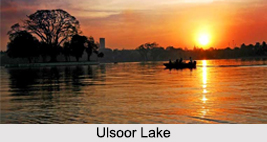
Ulsoor Lake: Ulsoor Lake, also known as Halasuru Lake, is one of the largest lakes in Bangalore and is situated on the eastern side of the city. Spanning about 50 hectares (123.6 acres), the lake features several islands. A portion of the lake is under the control of the Madras Engineer Group, while the remaining area is managed by the Bruhat Bengaluru Mahanagara Palike (BBMP). Over time, the lake has faced multiple pollution-related threats.
Vibhutipura Lake: Vibuthipura Lake is located in the Hindustan Aeronautics Limited suburb in the southeastern part of Bengaluru. It forms part of the Bellandur–Varthur Lake series. The lake was originally maintained by the state forest department, after which administrative control was transferred to the Bangalore Development Authority (BDA) and later to the Bruhat Bengaluru Mahanagara Palike (BBMP).
Yelahanka Lake: Yelahanka Lake is a water body located near Yelahanka, a suburb of Bangalore. At one point, the lake was severely polluted and emitted a foul odour due to the discharge of industrial effluents, sewage, and garbage. Following restoration efforts, the lake’s water-holding capacity was increased through desilting, which helped improve the groundwater table in surrounding areas and reduced dependence on Cauvery water.
Yele Mallappa Shetty Lake: Yele Mallappa Shetty Lake is one of the largest lakes in Bangalore and is located on the eastern outskirts of the city, beyond Krishnarajapura. Constructed in the early 1900s, it is an artificial water reservoir spread over approximately 490 acres (198.3 hectares). The lake serves as a significant biological hotspot, particularly for migratory bird species.
Chelekere Lake: Chelekere Lake is a scenic water body situated in the heart of the city of Bengaluru. With partially paved pathways encircling the lake, it attracts visitors engaged in a variety of activities, from birdwatching to jogging. It stands out as one of the city’s ideal spaces for relaxation, offering a chance to reconnect with nature.
Kaikondrahalli Lake: Kaikondrahalli Lake is located in Kaikondrahalli, in south-east Bangalore, and spans approximately 48 acres. It is part of Bangalore’s traditional tank system, developed hundreds of years ago and interconnected with other lakes through an extensive network of canals. Historically, the lake played an important role in supplying water to the surrounding agricultural lands.
Bellandur Lake: Bellandur Lake is situated in the
suburb of Bellandur in the south-eastern part of Bengaluru and is one of the
largest lake in the city. It forms an integral part of the Bellandur drainage
system, which drains the southern and south-eastern regions of Bengaluru. The
lake receives water from three upstream chains of lakes and has a catchment
area of approximately 148 square kilometres.

Lakes in Mysuru
Mysuru or Mysore is home to several significant lakes, of which Karanji, Kukkarahalli, and Lingambudhi are the most prominent. These lakes function as important urban green spaces and serve as biodiversity hubs, supporting birdwatching, recreation, and ecological balance within the city.
Some famous lakes in Mysuru are:
Hebbal Lake, Mysore: Hebbal Lake, located in the city
of Mysore, is a habitat for many migratory bird species, with several
birdwatching points situated along its circumference. The lake was severely
polluted due to the inflow of industrial effluents, sewage, and refuse. In
response, a restoration project is currently underway to establish a sewage
treatment plant and address the pollution challenges.
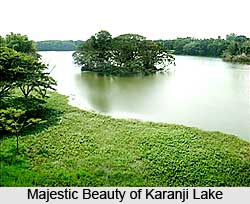
Karanji Lake: Karanji Lake, also known as Fountain Lake, is located in the city of Mysore. The lake is encircled by a nature park that includes a butterfly park and a walk-through aviary, which is the largest of its kind in India. Karanji Lake is owned and managed by the Mysore Zoo Authority.
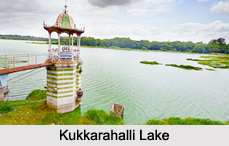
Kukkarahalli Lake: Kukkarahalli
Lake is situated in Mysore. A
ruler of Mysore Dynasty namely, Mummadi Krishnaraja
Wodeyar had established this lake in the year 1864. It was constructed to
provide water for irrigation to about 4000 ha of land
outside the city. This lake is troubled by eutrophication. The condition of
eutrophication has been attributed to sewage, land encroachments, etc.
Consequently, steps have been initiated to restore this lake.
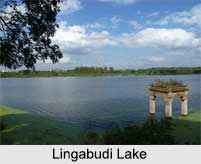
Lingambudhi Lake: Lingambudhi Lake
is located in the Indian city of Mysore. In 2020, a botanical garden was
established on the lake’s premises, featuring several designated sections,
including the Arboretum Block, Rose Block, Argentea Block, and a separate block
dedicated to endangered species.
Other Lakes in Karnataka
Apart from these lakes, Karnataka is also home to other popular lakes like Bookanakere Lake, Bheemasandra Lake, Machenahalli Lake, and Thattekere Lake. The state also has abundant natural water bodies such as Kunda, vada Kereand many others.
Ayyanakere: A lake called Ayyanakere is located in Sakharayapatna village, about 18 km from Chikmagalur. The ruler of Sakharayapatna village namely, Rukmangada Raya is believed to be the constructor of this lake. Hoysala Kings are credited with the renovation of this lake which took place in 1156 A.D. This lake is a source of water for 1560 hectares of agricultural lands.
Hirekolale Lake: At a distance of 10 km from Chikmagalur & 50 km from Kemmanagundi, Hirekolale Lake is a beautiful manmade lake situated in Chikmagalur. It is one of the well-known tourist places in Chikmagalur. Surrounded by high mountains, this beautiful lake is awe-striking for every spectator. This lake was built to supply water to Chikmagalur town and assist in the irrigation of lands in all the villages situated nearby.
Honnamana Kere Lake: At a distance of 7 km from Somwarpet and 46 km from Madikeri, Honnamana Kere is a lake situated at Doddamalthe village in Coorg district of Karnataka. Honnamana Kere Lake is the biggest natural lake and one of the sought after Coorg destinations. The lake is surrounded by mountains, cliffs and a huge expanse of coffee plantations along with two hills named Gavi Betta and Mori Betta. It has been named after Goddess Honnamma, whose temple is situated adjacent to the lake as well. It is believed that the goddess had sacrificed her life to save this village.
Kundavada Kere: Kunduvada Kere is a picturesque lake
situated in the Davangere district of Karnataka, India. Spanning approximately
200 acres, the lake is encircled by lush green hills and scenic landscapes that
enhance its natural charm. It has emerged as a popular tourist attraction and
remains a favoured retreat for local residents seeking a peaceful place to
relax and unwind.
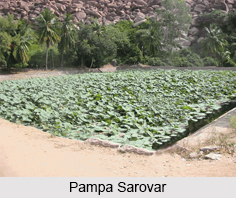
Pampa Sarovar: A lake called Pampa Sarova is located near Hampi in Koppal district. This lake has mythological significance. According to Hindu mythology, an avatar of Shiva`s consort Parvati namely, Pampa had performed penance to express her devotion to Shiva at Pampa Sarovar. Hindu mythology also highlights Pampa Sarovar as the place where Shabari, a devotee of Lord Rama waited for His arrival.
Sanapur Lake: Sanapur Lake is located in the Gangavathi taluk of Koppal district in Karnataka. The lake receives its water from the Tungabhadra Dam canal and has gained recognition as a local tourist attraction.
Agastya Lake: Agastya Lake, also known as Agasthya Lake or referred to as Vatapi Lake, is an artificial lake constructed between the 5th and 7th centuries in Badami, Karnataka, South India. Overlooked by the renowned Badami cave temples, the lake has become a popular tourist destination.
Thonnur Lake: Thonnur Lake, also known as Tondanuru kere, is a natural lake formed by rainwater harvesting from surrounding hills. The Yadavanadi river flowing nearby is also a major source of water for this lake. Expanding over 2000 acres of land, this lake has a dam used for irrigation. This place is also a tourist spot.
Manipal Lake: Manipal Lake is a serene and picturesque landmark that lends its name to the vibrant town of Manipal. Covering more than 75 acres, the lake is bordered by a 1.9-kilometre walking track, which has made it a popular destination for nature lovers, fitness enthusiasts, and birdwatchers.
Unakal Lake: Unkal Lake is a scenic water body located in the Unkal locality of Hubli. Serving as a popular picnic destination, it is also a major source of drinking water for the twin cities of Hubli and Dharwad. Nearly 110 years old, the lake spans close to 200 acres and is encircled by a lush garden that attracts visitors seeking peace and serenity.
Mattur Lake: Mattur Lake, located in the village of Mattur in Karnataka, India, is a picturesque water body set amid lush greenery and a tranquil environment. The lake serves as an important source of water for local areca nut and coconut farms, while also sustaining a diverse ecosystem that draws nature enthusiasts and birdwatchers.
Galikere Lake: Galikere Lake is a scenic water body located near the town of Chikmagalur in Karnataka. Encircled by hills and lush greenery, the lake offers a serene environment that appeals to nature lovers. It also attracts birdwatchers, as a variety of avian species inhabit the area.
Vishnuteerth Lake: Vishnuteerth Lake is a popular tourist attraction situated in Kumta, Karnataka. Located a short distance from Gokarna, the lake is known for its clean, refreshing waters and tranquil atmosphere, making it a favored spot for swimming.
Gudnapur Lake: Gudnapur Lake, situated near Banavasi in Karnataka’s Uttara Kannada district, is an ancient and historically significant water body constructed by the Kadamba dynasty around the 5th century. The lake is also known for the scenic Bangareshwar Temple located along its bank.
Madagadakere Lake: Madagadakere is a large lake located approximately 35 kilometres from Chikmagalur in Karnataka. As it is not frequently visited by tourists, the area remains clean and pristine. Surrounded by hills on three sides, the lake offers a striking and scenic landscape. It is situated close to the more popular Ayyana Kere.
Hadinaru Lake: Hadinaru Lake is a freshwater lake located about 23 kilometres from the city of Mysuru, near the Kabini River. The lake supports several species of waterbirds and also attracts numerous migratory birds. It is particularly renowned as the annual, temporary winter habitat of the Bar-headed Geese.
Kaggalipura Lake: Kaggalipura Lake is a significant local water body that supports rich biodiversity and serves as a popular destination for birdwatching, with species sightings enhanced by its proximity to the Bannerghatta National Park buffer zone. However, the lake faces challenges such as encroachment and pollution, highlighting the need for ongoing conservation efforts.
Kelageri Lake: Kelageri Lake is located along Kelageri Road in Dharwad, in the area known as Someswara Gudi, and is also popularly referred to as Someswara Keri. It is an artificial lake, distinguished by the presence of abundant lotus plants. The lake functions as a local recreational space, provides a habitat for birds, and serves as a point of interest for photography, offering a pleasant retreat within the city’s vicinity.
Hulikere Lake: Hulikere Lake is a man-made water body located in Hassan, Karnataka, and stands as a remarkable architectural achievement of the Hoysala kings. Surrounded by lush greenery, the lake features stone steps descending to the water, creating a picturesque setting. The structure is adorned with several shrines, believed to represent the constellations, which further enhance the site’s enchanting ambience.
Amrita Sarovar: Amrita Sarovar is a natural lake located in the Nandi Hills of Karnataka and serves as a major source of water for the surrounding region. Also known as the Lake of Nectar, it is fed by perennial springs that sustain its waters year-round. The lake has become a favored destination for birdwatchers and nature enthusiasts, drawn by its tranquil setting and rich biodiversity.
Fort Lake or Kote Kere: Fort Lake, also known as Kote Kere, is one of the popular picnic spots in Belgaum City. Located directly in front of the Durga Temple entrance of Belgaum Fort, it serves as a welcoming landmark for tourists visiting the city. Surrounded by lush greenery, the lake features walkways along its perimeter and regularly attracts visitors.