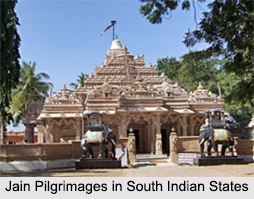
 India is the land where Jainism originated. Across the length and breadth of India lay the Jain temples and shrines and hold immense attraction for all those who desire to see the great Jain architectural splendour, and to know and understand the teachings of Lord Mahavira and the other Jain Tirthankaras. The essence of Jain religion and its preaching is very well reflected in different Jain temples and shrines in South Indian states.
Jain Pilgrimages in South Indian States
Sravana Belgola, 62 miles from Mysore is probably the most well known spot in South India by the Jains. This Jain temple has a massive black stone structure of Gomateshwara, The first Thirthankara standing 18 metres tall. Every 12 years devotees flock to the temple to conduct a "Mahamastakabhisheka", wherein the statue is anointed with milk, saffron paste and dusted with powders of sandalwood, turmeric and vermilion.
The Dharamnath temple located in Mattancherry, Cochin is regarded to be the most important shrine for the Jain community in Kerala. It is said to be about a 100 years old and is made in marble with beautiful pillars sculpted like elephant trunk brackets, quite similar to the ones of the Dilwara temples in Mount Abu.
Wayanad on the other hand has a number of Jain temples dotting its area. The most famous of these temples is the Puliyarmala Jain temple, also known as the Anantnath Swami temple. The temple is made in granite and is constructed in traditional Dravidian architecture style.
Kulpakji is also an extremely important pilgrimage centre for the Shwetambara Jains of South India. The Kulpakji temple is located in the little village of Kolanupaka, Andhra Pradesh. It houses 3 idols in its inner sanctum; of Lord Rishabha, Lord Neminatha and Lord Mahavir. The idol of Lord Rishabha here is carved out of green stone, and makes for an interesting view, and is historically named "Manikyaswami". The idol of Mahavira is 130 cm tall and is said to be carved out of a single piece of Jade. This area in Andhra Pradesh is particularly important because over 20 Jain inscriptions have been found here. A Manasthamba of 1125 AD was also found and this led to it flourishing as a Jain pilgrimage centre.