Swetambara Sect

Swetambara Sect is one of the two main sects of Jainism. They wear white clothes and believe that even women can achieve Moksha. The members of the Swetambara Sect practise ahimsa in all way possible.

Introduction

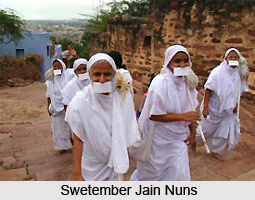
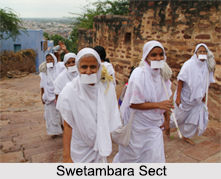
Swetambara Sect, Jain SectsSwetambara Sect is one of the two main sects of Jainism. Jainism is divided into two main sects. They are the Digambaras and the Swetambaras. The word “Swetambara” means white-clad. The ascetics of the Swetambara sect wear white clothes. Swetambaras believe that women can attain Moksha and they also have a belief that Tirthankara Mallinath was a woman.

Presently within the Swetambara sect there are 2,510 Monks and 10,228 nuns. Some of the Swetambara monks and nuns cover their mouth with a white cloth while talking so that they do not kill any organism in the process. Rather it can be said that they practice Ahimsa in every possible way.

Origin of Swetambara Sect

Swetambaras follow the lineage of Acharya Sthulibhadra Suri. Kalpasutra of Jainism has mentioned some of the ancient lineages of the Swetambaras. History says that Swetambara monastic order traces its origin to "Vrahada Gachchha" which was founded in 937 AD. Some of the prominent classical orders of the ancient days were "Kharatara Gachchha" (1024 AD), "Tapa Gachchha" (1228 AD) and "Tristutik Gachchha".

Sub-Sects of Swetambara

Swetambara sect has also been divided into a number of sub-sects. The major sub-sects of the Swetambara community are;
Murtipujaka
Sthanakvasi
Terapanthi

Murtipujaka Swetambaras: The original form of the Swetambaras was the Murtipujaka Swetambaras. They were the worshippers of idols. They worship the idols with flowers, saffron and ornamented jewels. Their ascetics cover their mouth with strips of cloth while speaking; otherwise they keep them in their hands. They collect food in their bowls from the Sravakas or householders` houses and eat at their place of stay. They mostly dwell in temples or reserved buildings. The Murtipujaka Swetambaras are concentrated in Gujarat.

Sthanakvasi Swetambaras: The Sthanakvasis were not originally part of the Swetambaras but they had arisen as a reform group from the Lonkan sect. As they do not have much difference with the Swetambaras they call them Swetambaras without any hesitation. But a major difference of the Swetambaras and the Sthanakvasis was that the Sthanakvasis did not believe in idol worship. As a result they do not have temples but have prayer halls where they carry out their regular prayers.

Terapanthi Swetambaras: Terapanthis are the last big schism in the Swetambara sect. This Pantha of the Terapanthis are becoming popular. Still now the number of Terapanthis is limited in India and is mostly concentrated in the areas of Jodhpur and Mewar of Rajasthan.

Reform Movements in Swetambara Sect

Reform Movements in Swetambara SectIn the early decades of the twentieth century few prominent movements of a socio-religious nature took place among the Swetambara Sect. The `Bala-diksha Pratibandha Andolana` i.e. the `Prevention of Initiation of Children Movement` was initiated by important intellectuals and social workers amongst the Murtipujaka Swetambara Jains.

The movement was started to protest against the prevailing large- scale practice of initiating adolescents and young children sometimes who are even below 10 years to the ascetic order of the sect. It was felt that small children are not at all in a position to take an independent decision regarding the adoption of the ascetic career as a goal in their life.

The movement was carried on for a long time. Due to prolonged controversies, the opinion of the general public went in favour of putting a ban on such practise of initiation of children into ascetic life. It also favoured of prescribing an age limit for entry into the ascetic order. However, in spite of forceful propaganda and general awakening, the movement of `Bala-diksha Pratibandha Andolana` could achieve much success in discontinuing the practice, but the actual frequency of such initiations became much less. The youth amongst the Swetambara Jains took a lead in the initiation of the movement. They also founded a new organization by the name Jain Yuvak Sangh for carrying out this and other social reforms amongst Jains. Due to this agitation the old princely State of Baroda passed legislation prohibiting initiation of children in the state.

Another movement by the name `Ek Acharya Andolan`, i.e. the `One Religious Head Movement` was started by the Sthanakvasi Swetambara Jains. The movement was initiated by the intellectuals and social workers to establish the power with power of one acharya (pontiff) on the entire ascetic order of the Sthanakvasi denomination.

The `Ek Acharya Andolan` was quite successful and the system of supremacy of one acharya was recognised and accepted by the Sthanakvasi Jains. With the initiation of the movement all the monks of the Sthanakvasi section from all over India were brought under the direct control of one acharya. This helped in restoring the much needed unity amongst the laity of the Sthanakvasi section also.

Recently updated articles in Religion in India

Chasa Caste
Chasa Caste Thumbnail

Chasa Caste

Chasa caste is a prominent agrarian community native to Odisha. Traditionally associated with cultivation and farming, Chasas have historically played...

Vigneswara, A Form of Lord Ganesha
Vigneswara, A Form of Lord Ganesha Thumbnail

Vigneswara, A Form of Lord Ganesha

Lord Vigneswara is another form of Lord Ganesha or Vinayaka, prominently worshipped as the God of intelligence and good luck in the Indian subcontinen...

Maheswara
Maheswara Thumbnail

Maheswara

Maheswara, meaning “the Great Lord,” is a revered name of Lord Shiva in Hindu tradition. It represents Shiva’s supreme authority over creation, preser...

Anganyasa and Karanyasa
Anganyasa and Karanyasa Thumbnail

Anganyasa and Karanyasa

Anganyasa and Karanyasa are preparatory rituals in Hindu worship that sanctify the body and hands through the recitation of sacred mantras and symboli...

Kumbhakar / Kumhar Caste
Kumbhakar / Kumhar Caste Thumbnail

Kumbhakar / Kumhar Caste

Kumbhakar or Kumhar caste is a traditional artisan community in India known for pottery making. Derived from Sanskrit word Kumbhakar, meaning potter,...