Male Social Activists have been the path breaker and shower towards the Indian call for Renaissance and social development. They are numerous and significant amidst the socio-cultural map of India.
Aga Khan played a crucial role during the
Khilafat Movement. He fought to resist the break-up of Caliphate and uphold the issue to the international forums. He was leader of the Muslim delegation to the British Prime Minister, Lloyd George. Aga Khan continued to serve for the benefits of the Muslim. In 1924 he was nominated for the Nobel Prize for Peace for his endeavor to keep up tranquility between Turkey and the western powers. He was appointed the chairman of the All Parties Muslim Conference in 1928-29.
In 1930-33, he went as a leader of the Muslim delegation to the Round Table Conferences. In 1932, he recommended accord of minorities, for which he was conferred with Communal Award. In 1932 He was sent to represent India at the League of Nations. He was an outstanding statesman for that was elected President of the League of Nations in July 1937. He was the only Asian to hold this post. During the World War II, Aga Khan was exiled in Switzerland and he could not partake in the affairs of the Muslims of India.
Bijoy Krishna Goswami was a prominent social reformer and religious figure in India during the
British period. The life of Bijoy Krishna Goswami can be identified as a circular pilgrimage from orthodox
Vaishnavism through
Brahmo Samaj of Tagore, Sen and the Sadharan and then returning finally to the devotional Vaishnavism of Chaiva. Bijoy Krishna did not found any single structured movement throughout his life. However, he did inspire a revival of Vaishnavism through his disciples like Bipan Chandra Pal. He was greatly responsible for the revival of
Vaishnavism in Bengal during the nineteenth century.
Debendranath Tagore was the founder of the Brahmo Religion in 1848, which today is identical with Brahmoism. This is the youngest religion of India and Bangladesh. Debendranath Tagore was born in May 15, 1817 to the great "Prince" Dwarkanath Tagore. This Bengali personality is the father of `Gurudev`
Rabindranath Tagore.
He was even the editor of
Tattwabodhini Patrika which changed the character of Indian vernacular journalism. It popularised the positive aspects of the religious scriptures. It criticised messiah worship and focused on the spiritual and ethical aspects of human personality. It propagated harmony. This magazine was a mouthpiece of
Tattvabodhini Sabha.
Vinoba Bhave stands as a symbol for the struggle of the good against the evil, of spiritual against the mundane. He was an Indian social reformer and founder of the Bhudan Yajna or land-gift movement. Vinoba was a spiritual visionary, whose spirituality had a pragmatic stance with intense concern for the deprived. He was a brilliant scholar who could knowledge accessible to ordinary people. He was Gandhi`s ardent follower, who could retain originality in thinking. His idea of the land-gift movement was conceived in 1951 while he was touring villages in the province of Andhra Pradesh, a landholder offered him acreage in response to his appeal for land on behalf of a group of landless untouchables, or Harijans.
Motilal Seal contributed enough money for the welfare of common people. He established a guest house at Belgharia near Calcutta and a bathing ghat on the bank of the
Hooghly River which is mostly known as Motilal Ghat. He donated the Land of
Calcutta Medical College. In 1843 Seal`s Free College was set up by him and Jews teachers were appointed for spreading the concept of secular education. He also donated huge money and cooperation for the establishment of Hindu Charitable Institution and Hindu Metropolitan College. Motilal Seal also supported
Vidyasagar`s move for remarriage of widows.
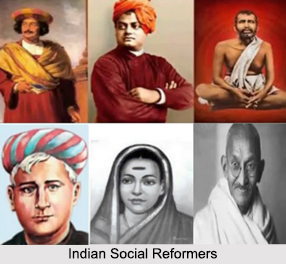
Raja Ram Mohan Roy worked as a Social Reformer. He rejected the barriers of caste divisions and stood forth as the high priest of Universalism and Love. The best example of his life-long crusade against social evils was the historic agitation he organized against the inhuman custom of women becoming
Sati. When the orthodox Hindus petitioned to Parliament to withhold its approval of Bentinck`s action of banning the rite of Sati, he organized a counter-petition of enlightened Hindus in favour of Bentinck`s action. He was a champion of women`s rights. He attacked polygamy and the degraded state to which widows were often reduced. To raise the status of women he demanded that they be given the right of inheritance and property.
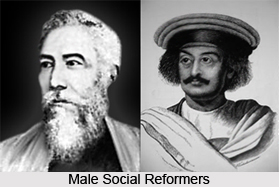 Ram Mohan Roy
 has had a huge impact in the Indian society over the past century. In 1815 he founded the Atmiya Sabha. In the weekly meetings of the Sabha the members discussed the basic principles of Hinduism. In 1819, he defeated a great scholar named Subrahmanya Sastri on the question of idol worship. Since then the Christian missionaries extended their full support to Ram Mohan Roy. In 1821 William Adam, a Christian missionary began to have faith in the doctrine of Advaita i.e. unity of individual and universal soul. William Adam had close contact with Ram Mohan Roy and he founded the Calcutta Unitarian Committee. Since then the Christian Missionaries parted company from Ram Mohuna and they did not agree with the doctrine of Advaita of which Ram Mohan was a great advocate.
Mahamati Prannathji met many saints and tried to unite them so that they could raise a revolt against the despotic Mughal Emperor,
Aurangzeb. He attended many religious congregations like the
Kumbh in
Allahabad,
Haridwar and tried to convince many Hindu saints that instead of praying to thousands of deities, one should pray to the Supreme Lord, the "Advaita Brahman". In
Haridwar, many saints and learned people were impressed by his philosophy. They realized that the time for the incarnation of "Vijayabhinand Budh Ji" had come which signified that satanic instincts of human beings will be ended and all will come under the folds of true religion - which is one and the only one and for all.
Kulandei Francis went to Natrampalayam, a remote rural village in Krishnagiri district where his exposure to the local villagers` miseries proved to be a life-changing experience. In that year he renounced his priesthood. After that in 1979 he founded the Integrated Village Development Project. He educated himself in Social Development and Rural Management from Canada and the Philippines. The Integrated Village Development Project offers training to rural students in enhancing their skills namely training in rural sanitation, rural accountancy, management, giving educational support for students in high schools, scholarships and also in computer skills. Then, with the help of development organizations, he undertook a micro-water shed programme that, over twenty-two years, built three thirty one mostly small check dams that caused beneficial to poor cultivators and their families in sixty villages. Kulandai Francis`s main objective is to eradicate the poverty, illiteracy and other social ills from villages of India.
Frank Anthony managed to secure equal payments for all the Europeans and Indian Commissioned officers in the National Defence Council and nominated reserve seats to the Lok Sabha -Lower House in India`s Parliament-for the Anglo Indians, as a minority community of India. Frank Anthony was against the partition because it would be injurious to the minority communities of India. He also demanded special provision for the Anglo-Indians in the Indian Constitution as the member of the constituent assembly of India. Frank Anthony established the All India Anglo-Indian Educational Trust and served as its chairman. Presently this institution runs five Frank Anthony Public and Junior Schools in Calcutta,
Delhi and
Bangalore. He was also the chairman of the Indian School Certificate Examination. Frank Anthony launched several schemes to provide scholarships and loans to the Anglo Indian student who are willing to take up Teacher`s Training. As a lawyer he successfully defend Mehr Chand Khanna, the ex-finance minister of North-West Frontier Province in 1952.In 1978 he refused the offer by Indira Gandhi of Governorship of Punjab and the Vice-Presidentship of India to continue social service.
Bala Gangadharanatha Swami is another
Indian Social Activist who created a decade of social work to attain betterment for Indians. The mutt witnessed a revolutionary progress under his leadership with several of his flagship projects in education, religion and social service. The seer focused on providing humanitarian services including providing basic necessities like food, education and health for lakhs of people during the last four decades. Seer in his speeches always made it a point to highlight the value of trees and their relevance to the survival of agriculture in this modern age. He was the first person to start a rural medical college at Belur in
Mandya district when quality treatment was a dream comes true for the people in villages. Seer who was decorated with doctorate degrees from couple of universities and titles by several organizations both in India and abroad was awarded the
Padma bhushana in 2010 by the union government.
Periyar E. V. Ramasamy, throughout his life, has worked extensively towards the betterment of Indian society and also helped in making sure that social taboo like the caste system and other superstitions were completely eradicated. He made great contribution towards promotion of education among the needy and poor people, and also worked to make a better society for women. Periyar E. V. Ramasamy worked hard for eradication of caste system from the society.
Bhai Puran Singh as a young man he decided to dedicate his life to the selfless service to the humanity. That is why; he founded Pingalwara in the year 1947 with only a few patients, those who were the neglected and rejected found in the streets of Amritsar. Bhai Puran Singh was an early advocate of Green Revolution that was projected during the time of
Indira Gandhi. Bhagat Puran Singh was spreading awareness about environmental pollution, and growing soil erosion long before such ideas became popular. He also used to publish his ideal in the recycled paper. He was a mature environmentalist and visionary. He initiated tree plantation drives, organized talks and lectures on various issues concerning the environment and social life, and also wrote a large number of books regarding the same. Some of his famous works include "Education of man", "Righteousness alone exalts a nation", "Plant or Perish", "The Way," "The Increasing Population", and many others books that projected on the upliftment of Indian Society.
In the 1994 it was the initiative taken by
Dr. P.K Gopal which had helped to establish IDEA (Integration, Dignity & Economic Advancement of people affected by leprosy), of which he is the able President. He is also Chairman of the National Forum of Persons Affected by Leprosy. In 1996 he became a member of the Medico-Social Commission of ILEP (The International Federation of Anti-Leprosy Associations), during which time he published a book called `Guidelines for Socio-Economic Rehabilitation` which is still widely used by organizations around the world. Dr Gopal is the International President of the International Association for Integration, Dignity and Economic Advancement (IDEA), which he helped to set up in 1994. This international advocacy and human rights organisation is working hard to end the effects of isolation, stigma and discrimination people affected by leprosy experience, which played a key role in the development of the United Nation`s Guidelines for the Elimination of Discrimination against Persons Affected by Leprosy and Their Family Members.
Dr Gopal is the President of the National Forum of Persons Affected by
Leprosy. In September 2011 he was part of a delegation that met with the honourable President Smt.
Pratibha Devisingh Patil to urge the speedy implementation of recommendations outlined in the Action Taken Report tabled by the Petitions Committee in the House on 22nd November 2010, to empower persons affected by leprosy.
In communication with Mr Douglas Soutar, General Secretary of ILEP, Dr Gopal noted that he has been able to achieve what he has with the support of the ILEP Federation and by ILEP Members, particularly FAIRMED.
The Hindu quoted Dr Gopal on 26th January 2012 as saying that the government and NGOs should not dilute their leprosy eradication efforts as new leprosy cases are being reported every year.
Anna Hazare : Anna Hazare in the recent times has attracted the headlines for his protest against the corruption. His demand for the formulation of a separate Lokpal to take care of corruption issues has been successful in striking a chord among the people of the country.
Baba Amte: Baba Amte was an Indian social worker and activist who worked for the empowerment of poor. He was honoured with numerous national and international awards for his selfless service to the society his entire life.

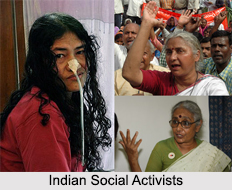 Indian Social Activists have strived throughout the years for the betterment and development of the Indian society. It is their unending zeal and the spirit to earn rights for fellow Indians that have aided natives for their unfathomable progress. Indian Social Activists had attempted to eliminate social evils like caste distinctions and promote equality among all. In the post-independent era, Indian traditional ideas about social change and political protest went through a revolution. The Gandhian form of Satyagraha or non-violent protest through parades and marches, meetings and other passive forms of protest is still admired.
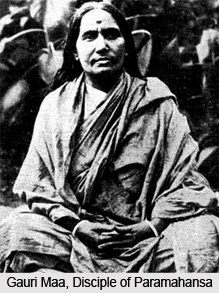 Indian women activists have raised their voice against social evils like
 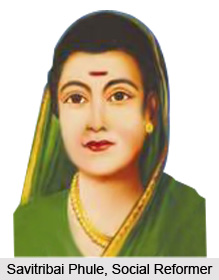 Savitribai Phule :
 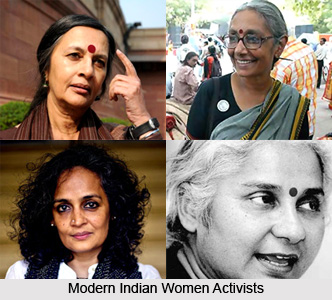 Medha Patkar :