
Bijoy Krishna Goswami was a prominent social reformer and religious figure in India during the British period. He was born on 2nd August, 1841 in a village in the eastern part of Bengal, named Santipur. His family was the hereditary priests of the Chaitanya sect and the family members were also deeply religious, orthodox and unaffected by western culture or the new education. Bijoy Krishna Goswami was introduced to this religiosity right in his childhood and he was highly devoted to the idol of Krishna. He studied a traditional curriculum in the local elementary and high school.
However, there was restlessness and questions against the Hindu institutions and beliefs in the mind of Bijoy Krishna Goswami right from his childhood and he also felt uncomfortable in his expected role as a priest and Guru. As a result, he fled from his home in 1859 and attended the Sanskrit College in Calcutta. He met Debendranath Tagore in Calcutta and witnessing his poor condition, Tagore decided to aid him financially. Tagore also initiated Bijoy Krishna to the Brahmo Samaj and he soon became the religious preceptor of Bijoy Krishna Goswami. Tagore later sponsored Bijoy Krishna`s study at the Calcutta Medical College as well.
While staying in Calcutta, Bijoy Krishna Goswami got exposure to the western ideas and the ideology of the Brahmo Samaj and this intensified his questioning of Hindu institutions and beliefs. He started to attend the Brahmo services by 1860s and he enthusiastically got involved with this movement. Soon, he abandoned his sacred thread and as a result, his family broke with him and his caste brotherhood also expelled him. However, Bijoy continued his involvement with the Brahmo Samaj and participated in the Sangat Sabha and its theological discussions, in 1861. When, Keshab Chandra Sen joined the Brahmo Samaj movement, Bijoy Krishna Goswami got deeply influenced with Sen and accepted his leadership. Bijoy Krishna also became a successful Brahmo missionary. A conflict rose between Bijoy Krishna Goswami and Debendranath Tagore in 1864, when Tagore tried to reinstate the sacred thread. This conflict increased with time and during the first schism of Brahmo Samaj, Bijoy Krishna followed Keshab Chandra Sen to join the newly formed Brahmo Samaj of India.
However, when Keshab Chandra Sen started to insist that he was the `Saviour` of Hinduism, Bijoy Krishna Goswami criticised Sen for his `Avatarism`. He also got partially disillusioned with the Brahmo Samaj and stated studying the `Chaitanya Charitamitra`, a biography of the great saint, Sri Chaitanya. Bijoy Krishna studied the biography under the guidance of Harimohan Pramanik and he also visited various Vaishnava gurus, during that period. His connection with the Brahmo Samaj was still intact and he again became active as Brahmo missionary in 1869. However, Bijoy increasingly started to blend devotional Vaishnavism as taught by Chaitanya with his own concept of Brahmoism.
With the help of his impressive personality, Bijoy Krishna Goswami soon started to attract people towards him and many people became his disciple. Most of the followers of Bijoy Krishna Goswami were from the eastern Bengal and Bijoy Krishna established the Bharat Ashram in 1872. The advanced devotees lived together in the Ashram while searching for spiritual enlightenment. Bijoy Krishna Goswami also met Swami Ramkrishna Paramahansa Dev during that period and he started to reconsider his view on monotheism, the role of gurus, and the worship of the goddess Kali, being influencesd by Ramkrishna Paramahansa.
Bijoy Krishna Goswami soon began to search for a Guru who would be able to satisfy his spiritual quest and during this search; he met a Punjabi Brahman, named Brahmananda Paramahansa. Brahmananda initiated him into the formal stage of a renunciant, Sanyas and gave him the name of Swami Hariharananda Saraswati. After that, Bijoy Krishna Goswami left his concern for social service and started studying Yogas and Bhakti. He also returned to worshipping the idols of Radha, Krishna and Durga.
Bijoy Krishna Goswami soon started to preach his own vision of religion and became a Guru. He accepted his own disciples. As his colleagues from the Brahmo Samaj started to criticise his new religious style, Bijoy Krishna Goswami left the Sadharan Samaj. He finally broke up with the Brahmo movement in 1885 and started his career as a spokesman of revived Vaishnavism. Bijoy Krishna Goswami visited Brindaban and Mathura in 1890 and travelled to Allahabad to join the festival of Kumbh Mela. He went to Dacca (Dhaka, the capital of Bangladesh) in 1888 and lived there till 1888-1897 at his own Ashram He left Bengal and went to Puri in March 1897 and died there.
The life of Bijoy Krishna Goswami can be identified as a circular pilgrimage from orthodox Vaishnavism through Brahmo Samajs of Tagore, Sen and the Sadharan and then returning finally to the devotional Vaishnavism of Chaiva. Bijoy Krishna did not found any single structured movement throughout his life. However, he did inspire a revival of Vaishnavism through his disciples like Bipan Chandra Pal. He was greatly responsible for the revival of Vaishnavism in Bengal during the nineteenth century.
Bijoy Krishna Goswami
Bijoy Krishna Goswami started his life with orthodox Vaishnavism and ended in devotional Vaishnavism of Chaiva.
Recently updated articles in Personalities in India

Governors of Mizoram
The Governor of Mizoram is the constitutional head of the state and is appointed by the President of India. The Governor performs various constitution...
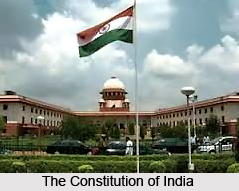
Governors of Jharkhand
Governors of Jharkhand have served as the constitutional heads of the state since its formation on 15 November 2000. Appointed by the President of Ind...
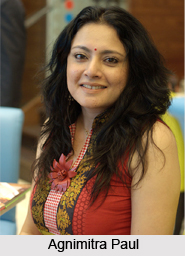
Agnimitra Paul
Agnimitra Paul is an Indian fashion designer and politician serving as a Member of the West Bengal Legislative Assembly from Asansol Dakshin. A senior...
Governors of Uttarakhand
Governor of Uttarakhand is the nominal head of the state. The Governor is also the representative of the President of India in the state of Uttarakhan...
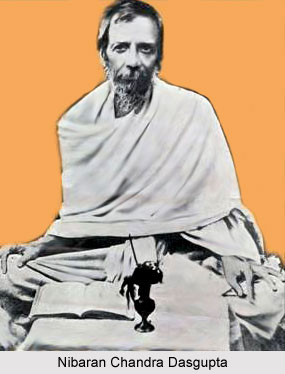
Nibaran Chandra Dasgupta
Nibaran Chandra Dasgupta was a distinct personality of Bengal who became famous for the establishment of ‘Shilpashram,’ a rural industry within the ma...
Related articles in Personalities in India

Sanskrit Theatre Personalities
Sanskrit Theatre Personalities was the main elements of Indian theatre with culture, customs and ethnicity.
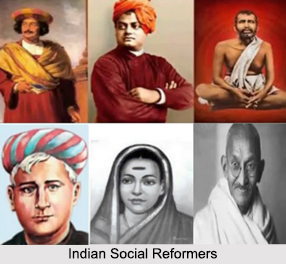
Indian Social Reformers
The Indian Social Reformers are responsible for liberating the nation of several social and religious evils.
Raja Ram Mohan Roy
Raja Ram Mohan Roy is a great Indian social reformer who is celebrated all over the country. He has done many operations for the liberation of women....