
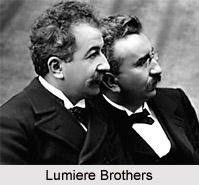
 History of Indian cinema dated back to the year 1896. The Lumiere Brothers first demonstrated the art of cinema to the sub continent. Bombay was the first Indian city that screened Cinematography, six short films by the Lumiere Brothers. The success of these films led to the screening of more foreign films, for instance, "Vitagraph" by James B. Stewart and "Moto-Photoscope" by Ted Hughes. In other words introduction of cinema in India took place with the aid of the colonisers. The Indian film industry is the oldest and the largest in the world with over 1200 movies released annually.
History of Indian Cinema
History of Indian cinema made its journey from the silent era through the golden age. India witnessed the arrival of cinema in the year 1896.
Introduction
History of Indian cinema dated back to the year 1896. The Lumiere Brothers first demonstrated the art of cinema to the sub continent. Bombay was the first Indian city that screened Cinematography, six short films by the Lumiere Brothers. The success of these films led to the screening of more foreign films, for instance, "Vitagraph" by James B. Stewart and "Moto-Photoscope" by Ted Hughes. In other words introduction of cinema in India took place with the aid of the colonisers. The Indian film industry is the oldest and the largest in the world with over 1200 movies released annually.Prehistoric Era in Indian Cinema
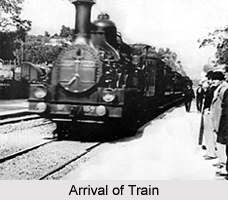 The prehistoric era in Indian cinema started with the coming of the Lumiere Brothers` films. After demonstrating their cinematography to Europe the Lumiere brothers took their art to Asia through representatives. In India it was to Mumbai, the erstwhile Bombay, which had the honor of receiving the first envoys of this new invention. The main reason for opting Bombay was that it had an English speaking Indian elite population as well as many British inhabitants. It was finally on 7th July, 1896, at Hotel Watson in Bombay. The Lumiere operator Maurice Sestier presented the first reels ever shot of real films. The show consisted of films, such as, Arrivée d`un Train á la Gare de la Ciotat (The Arrival of a Train at the Ciotat Station) and La Sortie de l`Usine (Leaving the Factory). The audience comprised of English and Westernized Indians.
A week later the Novelty Theatre started projections of the vast stock of short films of the Lumiere repertory. These films were accompanied by an orchestra and attracted house-full shows. Men and women were seated separately in the audience and tickets were affordable too. In no time at all the hugely popular travelling shows were including these short films in their programmes. After these followed films like James B. Stewart`s Vitagraph in 1897 and Moto-Photoscope by Ted Hughes and others. The projections often took place in prestigious theatres but were also held under tent like canopies or on grounds, popularly known as `maidans.` The other two metropolises of colonial India-Kolkata and Chennai soon followed suit. Kolkata was then the capital of British Raj and it had its first cinema hall was set up in 1898. On the other hand Chennai had its first movie theatre in 1900.
The projections of short newsreels started in 1897-98. These were films with titles, such as, The Races in Poona or A Train Entering the Station in Mumbai. These films were generally shot by European cameramen. Other subjects included the bazaars, religious processions, monuments, plays and several others. The English in India gave the impetus to this movement. In this respect the two names that must be mentioned are that of Stephen and Hudson from Kolkata.
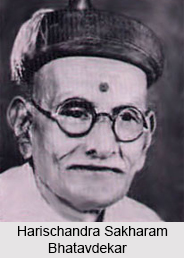
The Indians, in general, showed great and immediate enthusiasm for this exciting novelty. The person who introduced the Indian cinema to the European camera was Sakharam Bhatvadekar. He was responsible for the first Indian newsreel in 1901, The Return of Wrangler Paranjpye to India. It echoed the nationalist sentiments. Another pioneer and native Indian director was Hiralal Sen from West Bengal. His first film was Dancing Scenes from the Flowers of Persia, 1898. This puts the age of Indian cinema more than 100 years and makes it one of the oldest in the world, apart from the Western nations, like, Russia and Japan.
From 1900 onwards India started importing 23 metre films but subsequently the duration of the reels increased. During this time too the traveling film shows would go from city to city and even to rural areas. Such cinema was quite popular in those days. At a time they usually showed two to three films.
 The strong influence of its traditional arts, music, dance and popular theatre on the cinema movement in India in its early days is probably responsible for its characteristic enthusiasm for inserting songs and dance sequences in these films till date. As a result the films came to be hailed as some of the lengthiest to be found in the history of world cinema. The travelling operators played a major role in popularizing the habit of going to the cinema halls throughout India. They were also instrumental in establishing the base for the cinema industry in the sub-continent. Fairs and religious festivals were the occasions for these shows to take place.
India is one of the rare examples of a non-Western country where cinema was not confined to the big cities but managed to penetrate into the inner pockets of the country. Even today the Indian public, both in cities and the countryside, consists of some of the most avid and enthusiastic moviegoers to be found in the world. The elite as well as the rural migrants to the city switched at an early stage from the theatre to cinema.
In response to the public demand permanent movie halls started to come up by 1906-07. Some of the major European and American entertainment companies invested in the establishment of these movie theatres. From 1904-05 onwards American as well as European films which included French art films as those of Melies and others were imported into India. These films were immensely popular. The increasing number of halls from 1920 onwards made the cinema culture in India more or less urban specific.
On the other hand the audience was growing tired of the foreign produced films as those did not deal with their culture or preoccupations and this led to more indigenous productions, especially of newsreels based on political stories about the British Raj. Other local, political and historical subjects filmed at that time are a mine of knowledge for a research into the then Indian lifestyle. Professionals in the field of traditional entertainment, as well as those working in the field of new cinema, began to feel that instead of importing films the time had arrived to make fiction films at home. These films were to be made with a time limit of 30-40 minutes.
With India`s ancient cultural heritage in the various spheres of the arts, theatre, mythology, religious and literary texts there was actually no dearth of themes on which the films will be based. The emerging nationalist sentiment in the face of the colonial rulers was also an important factor in the growth of indigenous cinema.
The next step gave a completely new face to Indian cinema as it ushered into the era of silent films.
Transformation from Silent Films to Talkies
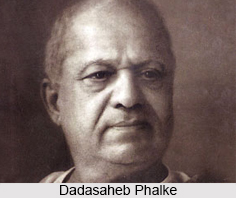
A kaleidoscopic view of History of Indian Cinema includes the pioneering efforts of Save Dada (Harischandra Sakharam Bhatavdekar). He made two short films as early as in 1897. Initial short films in India were directed by Hiralal Sen, starting with "Flower of Persia" (1898). In 1900 the entire Indian entertainment sector underwent huge changes and the emergence of Dadasaheb Phalke took Indian cinema to new heights. Thus, breaking the path of the silent era in films, "Raja Harishchandra", was released in 1913. During this time the main sources for Indian films were the mythological texts. The rapid growth of the Indian cinema led to the end of the silent era and ushered in the era of the talkies. The latter introduced the Indian cinema in a completely new way to the audiences. Now, one could hear the actors and actresses talking, laughing, singing and crying. Initially films were made in Hindi, Tamil, Bengali and Telugu and these films proved to be phenomenal successes.
Revolution of Indian Cinema
 1930s and 1940s witnessed the rise of film personalities, such as, Debaki Bose, Chetan Anand, S.S. Vasan, Nitin Bose and others. Their contributions helped the Indian cinema to grow further. By this time apart from Bombay (Mumbai), the film industry shaped up well in down south too. The Tamil, Telugu and Kannada film industries were making indigenous films as well. By late 1940s films in India were made in various languages but the religious influence was predominant. With struggle for independence the entire scenario altered. Indian cinema then saw films based on the erstwhile contemporary social issues. Movies no longer were limited to the periphery of entertainment; they were now potent instruments to educate the masses as well.
Indian Cinema during 1950s
The golden period in the History of Indian Cinema is attributed to the 1950s. Guru Dutt, Mehboob Khan, Raj Kapoor, Balraj Sahani, Nargis, Bimal Roy, Meena Kumari, Madhubala, Dilip Kumar graced the screens. In south India, esteemed actors like Rajkumar, Gemini Ganesan, NT Rama Rao and several other actors and actresses entertained the audiences. Besides them, numerous singers, composers, scriptwriters, cameramen and other technicians lend a helping hand in making some of the most outstanding films that carved their own niches in the History of Indian Cinema.
Formation of Art Films in India
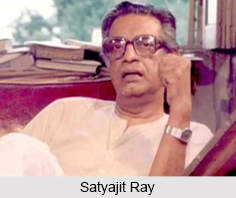 In Bombay while the magic of Guru Dutt and Bimal Roy was preponderant, then Indian cinema moved one step further with the release of K. Asif`s "Mughal-e-Azam" in 1960. A trail of romantic movies followed all over India. While the Indian commercial cinema enjoyed popularity amidst the movie goers, Indian art cinema did not go unnoticed. Adoor Gopalakrishnan, Ritwik Ghatak, Aravindan, Satyajit Ray, Shaji Karun and several other art film directors were making movies that took India to international fame and glory.
Indian Cinema during 1970s
By 1970s Indian cinema enjoyed the histrionics of superstars like Rajesh Khanna, Sanjeev Kumar, Waheeda Rehman, Asha Parekh, Tanuja and others. This was truly the red letter year for Hindi cinema as Ramesh Sippy`s "Sholay" proved to be an iconoclast and gave to Indian cinema its new superstar Amitabh Bachchan. The years 1970 to 1948 are called the Bachchan era in the History of Indian Cinema.
Indian Cinema during 1980s
At one hand Hindi cinema was growing in leaps and bounds and on the other the regional films were making their presence felt too. A number of well established Hindi film stars who became a part of the star system in India actually began their career with the Indian regional films. 1980s saw the rise of several women directors, such as, Aparna Sen, Prema Karnath, Meera Nair and others. It was also the year when Rekha wooed the audiences with her stunning performance in "Umrao Jaan". The regional films like Malayalam, Kannada, Telugu, Bengali and others produced a number of romantic films. Renowned film personalities like Balachander, I.V. Sasi, Balu Mahendra, Mani Ratnam, Ram Gopal Varma and others made their marks as well.
Indian Cinema"s Meeting with Modern Technology
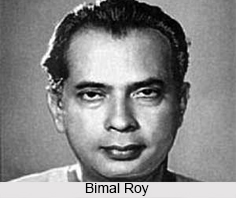 With romantic films at the helm the Indian cinema ushered into 1990s. A mixed genre was witnessed during this time. Romantic, thriller, actions and comic movies were made. Gradually the face of Indian cinema was undergoing changes once again. The audiences, too, were getting weary of similar storylines. Hence the contemporary Indian cinema, keeping pace with time and technology, witnessed "Dolby Digital Sound" effects, advanced special effects, choreography, international appeal, further investments from corporate sectors along with finer scripts and performances. The aesthetic appeal of cinema became important for the filmmakers.
Stars like Shahrukh Khan, Rajinikanth, Madhuri Dixit, Aamir Khan, Chiranjeevi, Juhi Chawla, Hrithik Roshan, and others explored all possible techniques to enrich Indian cinema with their performances. Even in contemporary India cinema a troupe of new faces came. The post generation of the existing stars are making Indian cinema rich in its true sense using their youthful vivacity and talent. Films, such as, "Gandhi", "Terrorist", "Amu", "Phir Milenge", "Diksha", "Tare Zamin Par", "Pipli live", are intended to educate the mass. Films such as "Sarkar", "Rajneeti", "Page 3", and "Fashion" reflect the political and social scenarios of contemporary society. As years fly away Indian cinema betters itself with more number of films making it to the golden pages of its history.
Hundred Years of Indian Cinema
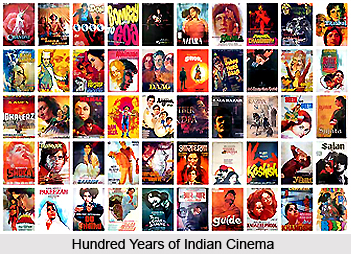
Hundred Years of Indian Cinema celebrates the spirit of Indian Cinema and its history. Indian Cinema is the celebration of the expression of the self and the cinematic moments where every reel counts.
The genre of Silent Films marked the apotheosis of film sojourn. Directed by Dadasaheb Phalke they charted the beginning of the nation`s longstanding affair with cinema. It was almost 100 years later that filmmaker Shivendra Singh Dungarpur conformed to tell the tale of a man who was not a film maker by birth or by chance but boarded the cinematic train and courted films his entire life. His documentary feature, Celluloid Man, celebrates PK Nair, the founder of National Film Archive of India, a man Indian cinema owes more than it has ever acknowledged.
If Phalke was the father of Indian Cinema, Irani was the father of the talkie. The talkies changed the face of Indian cinema. Apart from looks, the actors not only needed a commanding voice but also singing skills, as music became a defining element in Indian cinema. The year also marked the beginning of the Talkie era in South Indian films. The first talkie films in Bengali (Jumai Shasthi), Telugu (Bhakta Prahlad) and Tamil (Kalidas) were released in the same year.
The exhibitors or the pioneer film maker realized they were unleashing a mass entertainment medium that would hold millions in sway for the next hundred years. The French might have introduced the concept of moving images, but little did anyone know that India would one day become the largest film industry in the world. It`s a miracle that Indian cinema has withstood the test of time despite the vast cultural differences in the past 100 years.
Indian cinema conjures an identity that is very unique and unmatched. From the moments of black and white movies enamoured silence as expression to 3D the journey has been long but the movie essence remains to thrill. Although the internet downloads and television engages in a secret mission cannibalize the theatrical revenues of Indian films, the lure of the 35 mm is something else altogether. It was Phalke who introduced India to world cinema at a time when working in films was taboo. After the success of his film `Raja Harishchandra`, several filmmakers in Bombay and Madras began making silent films. By the mid 1920s, Madras had become the epicenter for all film related activities. Raghupathi Venkaiah Naidu, SS Vasan, AV Meiyappan set up production houses in Madras to shoot Telugu and Tamil films.
 The Middle Years of Hundred Years
The forties was a tumultuous decade; the first half was ravaged by war and the second saw drastic political changes all over the world. In the middle of the Second World War in 1945 came `Kismet` starring Ashok Kumar which became one of the biggest hits in the history of Indian cinema. It had some bold themes - the first anti-hero and an unmarried pregnancy. It clearly showed that the filmmakers of the era were bolder than the times in which they were living in. A close relationship between epic consciousness and the art of cinema was established. It was against this backdrop that filmmakers like V. Shantaram, Bimal Roy, Raj Kapoor and Mehboob Khan made their films. In the meantime, the film industry had made rapid strides in the South, where Tamil, Telugu and Kannada films were taking South India by storm. By the late 1940s, films were being made in various Indian languages with religion being the dominant theme. 1940s to late 1950s was also the golden era of music. Shankar Jaikishan, O.P. Nayyar, Madan Mohan, C. Ramchandra, Salil Chowdhury, Naushad, S D Burman all had their distinctive style. Each vied with the other to produce some of the most unforgettable melodies India has ever known. 50s and 60s were considered as the Golden Age of Indian cinema. Filmmakers like Satyajit Ray, Ritwik Ghatak, Guru Dutt, Bimal Roy, Mehboob Khan, K Asif, Raj Kapoor, KV Reddy, L V Prasad and Ramu Kariat made waves in their respective film industries and they went on to make classics like Pather Panchali, Madhumati, Do Bheega Zameen, Shree 420, Awaara, Pyasa, Mother India, Mughal E Azam, Mayabazar and Chemmeen among many other films. In the south, N.T. Rama Rao, M. G. Ramachandran, Sivaji Ganesan, Rajkumar, Prem Nazir dominated the film industry for more than three decades before making way for the next generation of actors like Rajinikanth, Kamal Haasan, Mammootty, Mohanlal, Chiranjeevi and Balakrishna.
The 70s completely changed the way films were made, especially in Hindi film industry. Changing social norms and changing economies influenced movies and the companies that made them. The narrative style changed. The story structure changed. Characters changed. Content changed. Masala films were the demand of the time. The genre promised instant attraction and had great entertainment value. It was the age of the angry young man and Amitabh Bachchan rose to prominence thanks to the success of Sholay, Zanjeer and Deewar. While Dev Anand, Rajesh Khanna, Jitendra and Dharmendra continued to bask in the glory of back to back hits, the actresses were not far behind. Right from the time of Savitri, Vyjayanthi Mala, Nargis, Waheeda Rehman and Sharmila Tagore to Sridevi, Rekha, Smita Patil, Hema Malini, several actresses became heartthrobs of the nation.
While Indian commercial cinema enjoyed popularity among movie-goers, Indian art cinema did not go unnoticed. Adoor Gopalakrishnan, Ritwik Ghatak, Aravindan, Satyajit Ray, Shyam Benegal, Shaji Karun and several other art film directors were making movies that gave India international fame and glory.
Modern era of Hundred Years
The eighties saw the advent of women film makers such as Vijaya Mehta (`Rao Saheb`), Aparna Sen (`36- Chouwringhee Lane`, `Parama`), Sai Pranjpye (`Chashme Baddoor`, `Katha`, `Sparsh`), Kalpana Lazmi (`Ek Pal`), Prema Karanth (`Phaniamma`) and Meera Nair (`Salaam Bombay`). It was also the decade when sultry siren Rekha wooed audiences with her stunning performance in `Umrao Jaan` in 1981.
And then in 90`s, it was a mixed genre of romantic, thrillers, action and comedy films. A stark upgrade can be seen on the canvas as technology gifted the industry Dolby digital sound effects, advanced special effects, choreography and international appeal. The development brought about investments from the corporate sector along with finer scripts and performances. It was time to shift focus to aesthetic appeal. And stars like ShahRukh Khan, Rajnikanth, Madhuri Dixit, Salman Khan, Aamir Khan, Chiranjeevi, Juhi Chawla and Hrithik Roshan began to explore ways to use new techniques to enrich Indian cinema with their performances.
In recent years, Hindi cinema has undergone a massive change due to the emergence of new age filmmakers like Anurag Kashyap, Rajkumar Hirani, Dibakar Banerjee and Vishal Bhardwaj. Of late, Tamil and Marathi cinema has witnessed similar changes with several new filmmakers coming forth to cater to a niche audience.
As the world has become a global village, the Indian film industry has reached out further to international audiences. Apart from regular screenings at major international film festivals, the overseas market contributes a sizeable chunk to Bollywood`s box office collections. Regular foreign Investments made by major global studios such as 20th Century Fox, Sony Pictures, and Warner Bros put a stamp of confirmation that Bollywood has etched itself on the global podium.
To celebrate 100 years of cinema in India, the Government of India, in cooperation with the film industry, has proposed to line up a host of activities between May 3, 2012 and May 3, 2013. It has also proposed to present a tableau of 100 years of Indian Cinema at the Republic Day parade next year. The Information and Broadcasting Ministry has also instituted a centenary award which will be given to a path- breaking film every year at the International Film Festival of India (IFFI) in Goa. The first centenary award would be given at the IFFI 2012 which will be held in Goa in November this year.
Indian cinema, despite all its peculiarities, has been a reflection of the socio-economic, political and cultural changes that took place in the country. Here`s hoping that Indian movies continue to entertain us the way they`ve been doing since 10 decades.
The genre of Silent Films marked the apotheosis of film sojourn. Directed by Dadasaheb Phalke they charted the beginning of the nation`s longstanding affair with cinema. It was almost 100 years later that filmmaker Shivendra Singh Dungarpur conformed to tell the tale of a man who was not a film maker by birth or by chance but boarded the cinematic train and courted films his entire life. His documentary feature, Celluloid Man, celebrates PK Nair, the founder of National Film Archive of India, a man Indian cinema owes more than it has ever acknowledged.
If Phalke was the father of Indian Cinema, Irani was the father of the talkie. The talkies changed the face of Indian cinema. Apart from looks, the actors not only needed a commanding voice but also singing skills, as music became a defining element in Indian cinema. The year also marked the beginning of the Talkie era in South Indian films. The first talkie films in Bengali (Jumai Shasthi), Telugu (Bhakta Prahlad) and Tamil (Kalidas) were released in the same year.
The exhibitors or the pioneer film maker realized they were unleashing a mass entertainment medium that would hold millions in sway for the next hundred years. The French might have introduced the concept of moving images, but little did anyone know that India would one day become the largest film industry in the world. It`s a miracle that Indian cinema has withstood the test of time despite the vast cultural differences in the past 100 years.
Indian cinema conjures an identity that is very unique and unmatched. From the moments of black and white movies enamoured silence as expression to 3D the journey has been long but the movie essence remains to thrill. Although the internet downloads and television engages in a secret mission cannibalize the theatrical revenues of Indian films, the lure of the 35 mm is something else altogether. It was Phalke who introduced India to world cinema at a time when working in films was taboo. After the success of his film `Raja Harishchandra`, several filmmakers in Bombay and Madras began making silent films. By the mid 1920s, Madras had become the epicenter for all film related activities. Raghupathi Venkaiah Naidu, SS Vasan, AV Meiyappan set up production houses in Madras to shoot Telugu and Tamil films.
The Middle Years of Hundred Years
The forties was a tumultuous decade; the first half was ravaged by war and the second saw drastic political changes all over the world. In the middle of the Second World War in 1945 came `Kismet` starring Ashok Kumar which became one of the biggest hits in the history of Indian cinema. It had some bold themes - the first anti-hero and an unmarried pregnancy. It clearly showed that the filmmakers of the era were bolder than the times in which they were living in. A close relationship between epic consciousness and the art of cinema was established. It was against this backdrop that filmmakers like V. Shantaram, Bimal Roy, Raj Kapoor and Mehboob Khan made their films. In the meantime, the film industry had made rapid strides in the South, where Tamil, Telugu and Kannada films were taking South India by storm. By the late 1940s, films were being made in various Indian languages with religion being the dominant theme. 1940s to late 1950s was also the golden era of music. Shankar Jaikishan, O.P. Nayyar, Madan Mohan, C. Ramchandra, Salil Chowdhury, Naushad, S D Burman all had their distinctive style. Each vied with the other to produce some of the most unforgettable melodies India has ever known. 50s and 60s were considered as the Golden Age of Indian cinema. Filmmakers like Satyajit Ray, Ritwik Ghatak, Guru Dutt, Bimal Roy, Mehboob Khan, K Asif, Raj Kapoor, KV Reddy, L V Prasad and Ramu Kariat made waves in their respective film industries and they went on to make classics like Pather Panchali, Madhumati, Do Bheega Zameen, Shree 420, Awaara, Pyasa, Mother India, Mughal E Azam, Mayabazar and Chemmeen among many other films. In the south, N.T. Rama Rao, M. G. Ramachandran, Sivaji Ganesan, Rajkumar, Prem Nazir dominated the film industry for more than three decades before making way for the next generation of actors like Rajinikanth, Kamal Haasan, Mammootty, Mohanlal, Chiranjeevi and Balakrishna.
The 70s completely changed the way films were made, especially in Hindi film industry. Changing social norms and changing economies influenced movies and the companies that made them. The narrative style changed. The story structure changed. Characters changed. Content changed. Masala films were the demand of the time. The genre promised instant attraction and had great entertainment value. It was the age of the angry young man and Amitabh Bachchan rose to prominence thanks to the success of Sholay, Zanjeer and Deewar. While Dev Anand, Rajesh Khanna, Jitendra and Dharmendra continued to bask in the glory of back to back hits, the actresses were not far behind. Right from the time of Savitri, Vyjayanthi Mala, Nargis, Waheeda Rehman and Sharmila Tagore to Sridevi, Rekha, Smita Patil, Hema Malini, several actresses became heartthrobs of the nation.
While Indian commercial cinema enjoyed popularity among movie-goers, Indian art cinema did not go unnoticed. Adoor Gopalakrishnan, Ritwik Ghatak, Aravindan, Satyajit Ray, Shyam Benegal, Shaji Karun and several other art film directors were making movies that gave India international fame and glory.
Modern era of Hundred Years
The eighties saw the advent of women film makers such as Vijaya Mehta (`Rao Saheb`), Aparna Sen (`36- Chouwringhee Lane`, `Parama`), Sai Pranjpye (`Chashme Baddoor`, `Katha`, `Sparsh`), Kalpana Lazmi (`Ek Pal`), Prema Karanth (`Phaniamma`) and Meera Nair (`Salaam Bombay`). It was also the decade when sultry siren Rekha wooed audiences with her stunning performance in `Umrao Jaan` in 1981.
And then in 90`s, it was a mixed genre of romantic, thrillers, action and comedy films. A stark upgrade can be seen on the canvas as technology gifted the industry Dolby digital sound effects, advanced special effects, choreography and international appeal. The development brought about investments from the corporate sector along with finer scripts and performances. It was time to shift focus to aesthetic appeal. And stars like ShahRukh Khan, Rajnikanth, Madhuri Dixit, Salman Khan, Aamir Khan, Chiranjeevi, Juhi Chawla and Hrithik Roshan began to explore ways to use new techniques to enrich Indian cinema with their performances.
In recent years, Hindi cinema has undergone a massive change due to the emergence of new age filmmakers like Anurag Kashyap, Rajkumar Hirani, Dibakar Banerjee and Vishal Bhardwaj. Of late, Tamil and Marathi cinema has witnessed similar changes with several new filmmakers coming forth to cater to a niche audience.
As the world has become a global village, the Indian film industry has reached out further to international audiences. Apart from regular screenings at major international film festivals, the overseas market contributes a sizeable chunk to Bollywood`s box office collections. Regular foreign Investments made by major global studios such as 20th Century Fox, Sony Pictures, and Warner Bros put a stamp of confirmation that Bollywood has etched itself on the global podium.
To celebrate 100 years of cinema in India, the Government of India, in cooperation with the film industry, has proposed to line up a host of activities between May 3, 2012 and May 3, 2013. It has also proposed to present a tableau of 100 years of Indian Cinema at the Republic Day parade next year. The Information and Broadcasting Ministry has also instituted a centenary award which will be given to a path- breaking film every year at the International Film Festival of India (IFFI) in Goa. The first centenary award would be given at the IFFI 2012 which will be held in Goa in November this year.
Indian cinema, despite all its peculiarities, has been a reflection of the socio-economic, political and cultural changes that took place in the country. Here`s hoping that Indian movies continue to entertain us the way they`ve been doing since 10 decades.
Recently updated articles in Indian Movies
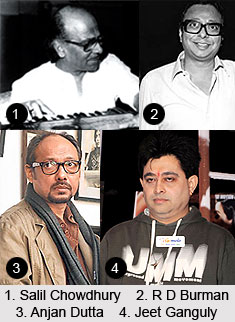
Bengali Music Directors
Bengali Music Directors have consistently delivered melodious songs for the entertainment of the audiences. Over the years there have been some popula...

Padma Shri Awardees (2010-2019)
Padma Shri Awardees (2010-2019)
Padma Shri Awardees (2000-2009)
Padma Shri Awardees (2000-2009)
Padma Shri Awardees (1981-1989)
Padma Shri Awardees (1981-1989)
Padma Shri Awardees (1970-1979)
Padma Shri Awardees (1970-1979)
Related articles in Indian Movies
Odia Cinema
Colloquially known as Ollywood, the industry of Odia Cinema is based in Cuttack and is a popular on the regional basis.

Telugu Cinema
Telugu cinema, also known as Tollywood, is the segment of Indian cinema dedicated to the production of motion pictures in the Telugu language, widely...
Bengali Cinema
Bengali Cinema has proved itself class apart instead of being a regional film industry. It has its own charm and attraction which is enough to make it...

Assamese Film Actresses
Assamese Film Actresses have carved a niche for themselves in the history of regional films. They are talented and credible with susceptible style. Th...