
 Odia Cinema did not emerge in the era of silent movies. In 1974, the Government of Odisha declared film making and construction of cinema theatres as an industry in the state and 2 years later in 1976, it established the Odisha Film Development Corporation in Cuttack. Also known as Ollywood, the name is a portmanteau of the words Olly and Hollywood.
Odia Cinema
Colloquially known as Ollywood, the industry of Odia Cinema is based in Cuttack and is a popular on the regional basis.
Introduction
Odia Cinema did not emerge in the era of silent movies. In 1974, the Government of Odisha declared film making and construction of cinema theatres as an industry in the state and 2 years later in 1976, it established the Odisha Film Development Corporation in Cuttack. Also known as Ollywood, the name is a portmanteau of the words Olly and Hollywood.History of Odia Cinema
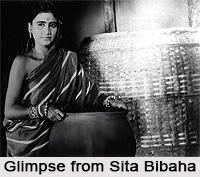
The history of Odia cinema is of a glorious past. The first Odia film "Sita Bibaha" was released in the year 1936 and was an important part of the struggle for a manifestation of Odia cultural identity in celluloid form and it is a movable history. The film was a mythological drama by Mohan Sunder Deb Goswami, who not only directed but also produced and acted in this film.
The pace of Odia film production in the initial years was very slow. After Sita Bibaha, only two films were produced until 1951. A joint consortium of landlords and businessmen who collected funds after 1948 produced those two movies. The 1951 production of Roles to Eight was the first Odia film with an English name. It was released 15 years after the first Odia film, Sita Bibaha. It was the fourth Odia film produced by Ratikant Padhi.
Almost after 15 years of the release of Sita Bibaha another Odia film in the serious stream was released in 1966, Matira Manisha. It bagged the National Award, this film was directed by Mrinal Sen. His example was an encouragement enough for other film directors to follow suit. Awareness for serious filmmakers also received a boost. Social melodramas and mythological films were made in the meantime for the regional audiences. Since then several talented Odia actors and actresses have served the film industry. It is due to their contributions and the efforts on the part of the Odia directors that the Odia films received recognition.
 Some of the Odia films are Lalita (1949), Saptasaiya (1950), Amari Gaan Jhua (1953), Kedar Gouri (1954), Mahalakshmi Pooja (1959), Nua Bou (1962), Sadhana (1964), Manikajodi (1964), Amada Bata (1964), Malajanha (1965), Kaa (1966), Adina Megha (1970), Mana Akasha (1974), Abhimaan (1977), Punar Milan (1977), Jalal Adeni (1977), Agni Pareeksha (1980), Akshi Tritiya (1981), ), Jwain Pua (1982), Babula (1985), Bagula Baguli (1986), Jorjar Mulak Tar (1987), Ashok Sharma (1988), Kanyadaan (1988), Andha Diganta (1989), Akasar Akhi (1989), Asuchi Mo kalia Sune (1989), Dora (1993), Jibana Dhara (1995), Jhilli (1996) and many more in the modern era of Odia Cinema.
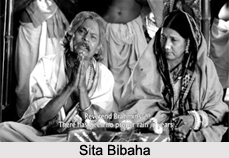 It took a relatively long period for the Oriya Seventh Art to start its feature film. The first film was Sita Bibaha in 1934. This was a landmark film in the history of Oriya cinema. The Oriya cinema came into existence in 1934-36 and has produced more than 300 films in the past years. The commercial films are more or less similar throughout India. Rather it is the arthouse cinema that was revived by the New Cinema in the 1980s that has given the Oriya cinema a generation of talented filmmakers. Most of these Oriya directors are graduates from FTII, Pune.
In 1975 the creation of the Orissa Film Development Corporation encouraged the construction of cinema halls. In the year 1960, for the first time in the history of Oriya cinema, Sri Lokenath received the National Award. The first Oriya actor to receive the National Award was Prasantha Nanda, one of the most talented people that the state has ever seen. Today numerous Oriya actors have made their own niche in Oriya films and given the industry the much needed boost.
Directors like AK Bir helped Oriya cinema to come out of its hibernation and reach the national and international arena as well. The history of Oriya cinema comprise of some of the most talented Oriya people in its film industry. the path that has been etched out by the maestros lie open in front of the present generation of stars and the generations to follow as well. All they need to do is follow these paths and take Oriya cinema to dizzying heights.
The pace of Odia film production in the initial years was very slow. After Sita Bibaha, only two films were produced until 1951. A joint consortium of landlords and businessmen who collected funds after 1948 produced those two movies. The 1951 production of Roles to Eight was the first Odia film with an English name. It was released 15 years after the first Odia film, Sita Bibaha. It was the fourth Odia film produced by Ratikant Padhi.
Almost after 15 years of the release of Sita Bibaha another Odia film in the serious stream was released in 1966, Matira Manisha. It bagged the National Award, this film was directed by Mrinal Sen. His example was an encouragement enough for other film directors to follow suit. Awareness for serious filmmakers also received a boost. Social melodramas and mythological films were made in the meantime for the regional audiences. Since then several talented Odia actors and actresses have served the film industry. It is due to their contributions and the efforts on the part of the Odia directors that the Odia films received recognition.
Some of the Odia films are Lalita (1949), Saptasaiya (1950), Amari Gaan Jhua (1953), Kedar Gouri (1954), Mahalakshmi Pooja (1959), Nua Bou (1962), Sadhana (1964), Manikajodi (1964), Amada Bata (1964), Malajanha (1965), Kaa (1966), Adina Megha (1970), Mana Akasha (1974), Abhimaan (1977), Punar Milan (1977), Jalal Adeni (1977), Agni Pareeksha (1980), Akshi Tritiya (1981), ), Jwain Pua (1982), Babula (1985), Bagula Baguli (1986), Jorjar Mulak Tar (1987), Ashok Sharma (1988), Kanyadaan (1988), Andha Diganta (1989), Akasar Akhi (1989), Asuchi Mo kalia Sune (1989), Dora (1993), Jibana Dhara (1995), Jhilli (1996) and many more in the modern era of Odia Cinema.
It took a relatively long period for the Oriya Seventh Art to start its feature film. The first film was Sita Bibaha in 1934. This was a landmark film in the history of Oriya cinema. The Oriya cinema came into existence in 1934-36 and has produced more than 300 films in the past years. The commercial films are more or less similar throughout India. Rather it is the arthouse cinema that was revived by the New Cinema in the 1980s that has given the Oriya cinema a generation of talented filmmakers. Most of these Oriya directors are graduates from FTII, Pune.
In 1975 the creation of the Orissa Film Development Corporation encouraged the construction of cinema halls. In the year 1960, for the first time in the history of Oriya cinema, Sri Lokenath received the National Award. The first Oriya actor to receive the National Award was Prasantha Nanda, one of the most talented people that the state has ever seen. Today numerous Oriya actors have made their own niche in Oriya films and given the industry the much needed boost.
Directors like AK Bir helped Oriya cinema to come out of its hibernation and reach the national and international arena as well. The history of Oriya cinema comprise of some of the most talented Oriya people in its film industry. the path that has been etched out by the maestros lie open in front of the present generation of stars and the generations to follow as well. All they need to do is follow these paths and take Oriya cinema to dizzying heights.
Odia Cinema of Modern Age
One of the most sensitive films made in the 1900s was Malajanha (1965). It was directed by Nitai Palit. This Odia film is a sensitive melodrama about an unmarried couple in which the woman ends up committing suicide because of the persecution of the people of her village. Another musical drama, Arundhati (1967) also made an impact with the audiences. It was directed by Prafulla Sengupta.
Odia Film in National Hemisphere
The first Odia film that bagged the National award was Sri Lokenath in the year 1960; it was the directorial venture of the reputed Odia director Prafulla Sengupta. This was a great achievement as far as Odia films were concerned as the industry till then was in a nascent stage. In this very year Prasantha Nanda also fetched the National Award as best actor for the film Nau Bau. With two National awards in hand the Odia film industry appeared on the national level. Prasantha Nanda went ahead and became one of the most celebrated stars in the Odia film industry. He was an actor, director, screenplay writer, and lyricist and even as a playback singer. He has contributed greatly to the development of the Odia films.
Odia Film in National Hemisphere
The first Odia film that bagged the National award was Sri Lokenath in the year 1960; it was the directorial venture of the reputed Odia director Prafulla Sengupta. This was a great achievement as far as Odia films were concerned as the industry till then was in a nascent stage. In this very year Prasantha Nanda also fetched the National Award as best actor for the film Nau Bau. With two National awards in hand the Odia film industry appeared on the national level. Prasantha Nanda went ahead and became one of the most celebrated stars in the Odia film industry. He was an actor, director, screenplay writer, and lyricist and even as a playback singer. He has contributed greatly to the development of the Odia films.
Oriya Cinema Actors
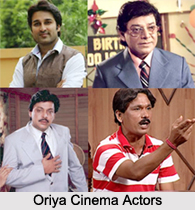 A number of Oriya actors have helped the Oriya film industry to grow with their performance and hard work. While some of the senior actors like Bijay Mohanty, Uttam Mohanty and others are busy with character roles today a new crop of actors have evolved who are taking Oriya cinema to new heights.
Some actors have shifted behind the camera as directors after a successful stint as actors. Such a list would include the names of the ailing Oriya star Hara Patnaik and Bijaya Jena. The latter is a well known Oriya female actor. Her film Hakim Babu won National Award for the Best Oriya Film. Today she is also a successful director and producer. A list of female Oriya actors would include the following names:
ORIYA ACTORS
| Uma Devi | Mamata Ray Choudhury | Aarminta | Sasmita Pradhan | Mamuni |
| Gloria Mohanty | Dipa Sahoo | Prajukta Kulkarni | Moumita | Naina Das |
| Chapala Nayak | Rupalekha ray | Rachana Banrjee | Arpita | Ritu Das |
| Gitisudha Jena | Malabika Mohanty | Chandiata Sabat | Debashree Ray | Upasana Singh |
| Urbasi Tripathy | Subhra Pati | Puspita | Koel | Mithi |
| Dr.Sukhalata Das | Minu | Arura | Rupa Ganguli | Archita |
| Minati Das | Jaya | Singdha Mohanty | Dipti Naval | Debajani |
| Jharana Das | Shrabani | Dipti Nath | Nandita Das | Adyasa |
| Sujata Ananda | Bijayini Mishra | Anjana | Manaswini Ray | Lisa Mohanty |
| Soudamini Mishra | Aparajita | Sabitri | Pushpa Panda | Namrata |
| Geeta Rao | Tapati Bhatacharya | Kanta Singh | Lekha Nanda | Lipi Parida |
| Banaja Mohanty | Sangeeta Das | Puja Mishra | Anushree | Nikita |
| Niharika Sahoo | Mala Mathews | Jyoti Mishra | Jaya Mill | Leslie Tripathy |
| Anita Das | Baisali | Ushasi Mishra | Manjula Kuanra | Jaya |
| Mahasweta | Rameswari | Sweta Mallik | Manju Pradhan | Dipti Rekha Panda |
| Rita chand | Archana Joglekar | Mama Mishra | Roja Ramani | Dipa Sahoo |
| Tandra Ray | Indira Krishnan | Chinki | Rekha Jain | Priyambada Ray |
| Kshyanaprava Sadangi | ShreePrada | Pinki Pradhan | Anu Choudhury | Antara Biswas |
| Tripura Mishra | Mohini | Meghana Mishra | Barsha PriyaDarshini | Priyanka Mohapatra |
| Mala Bose | Shehnaz | Sangita Satpathy | Gayatri Jariwala | Anisha Das |
The leading male Oriya actor today is Sidhanta Mohapatra. He is responsible for several hit films in the Orissa film industry. Other Oriya actors are:
| Gopal Ghosh | Gobinda Tej | Anubhav |
| Goura Prasad Ghosh | Uttam Mohanty | Sritam Das |
| Sarat Pujari | Chakrapani | Sunil Kumar |
| Akshya Mohanty | Ajit Das | Arindam |
| Pramod Panigrahi | Ajit Kar | Sagar Mishra |
| ShreeRam Panda | Kasi Ratha | Samaresh Routray |
| Harish Mohapatra | Srikanta Nanda | Dusmanta |
| Prasant Nanda | Prithwiraj Nayak | Abhaya Kumar |
| Suresh Mishra | Mihir Das | Budhaditya |
Prominent actors from Bengali films like Mithun Chakraborty and Ashish Vidyarthi have also forayed into Oriya cinema. Their participation has given a much desired boost to the Orissa film industry.
Oriya Cinema Actresses
 Some of the finest cinemas of India are produced from Orissa. The very best of ethnic cinemas belong to the directors of Orissa. However, credit of such brilliant work partially belongs to the Orissa cinema actresses. Devoid of commercialized economy and any underground money, movies made in Orissa possibly reflect the last stage of celluloid innocence, as ever known in the history of films.
Anu Chowdhury is a leading actress, worked in both Oriya and Bengali films. She is based in Bhubaneswar at Ollywood, but works simultaneously in Tollywood (Bengal film industry) respectively. Her debut Oriya film was Maa Goja Bayani and Bengali film was Swapan Saha directed Jor in 2008. Anu began her career as a child artist and later became an established actress in Oriya Film Industry. She made her debut in "Maa Gojabayani" and overwhelmed everyone with her fantastic performance.
Aparajita Mohanty is a prominent Oriya actress with a lot of influential movies in her kitty. She was considered as the premier Oriya actress for quite a long period in her illustrious career. Presently, she does some character roles in movies and tele-serials. She is the wife of legendary Oriya actor Uttam Mohanty.
Barsha Priyadarshini is one of the famous Oriya actresses who also worked in Bengali films. Her debut Oriya film was E Juga ra Krushna Sudama and her first Bengali film was Swapan Saha directed Jor in 2008. Mahasweta Roy has been a leading Oriya as well as Bengali film industry. She is often critically referred to as one of the best Oriya actresses so far. She has been honored with many awards for her performances in many movies. Presently, she is involved in Ollywood doing some character roles and some tele serials simultaneously.
Recently updated articles in Indian Movies
Bengali Music Directors
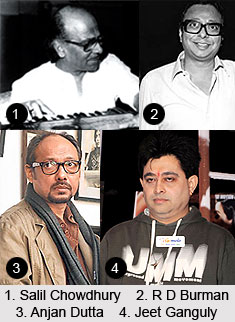
Bengali Music Directors have consistently delivered melodious songs for the entertainment of the audiences. Over the years there have been some popula...

Padma Shri Awardees (2010-2019)
Padma Shri Awardees (2010-2019)
Padma Shri Awardees (2000-2009)
Padma Shri Awardees (2000-2009)
Padma Shri Awardees (1981-1989)
Padma Shri Awardees (1981-1989)
Padma Shri Awardees (1970-1979)
Padma Shri Awardees (1970-1979)
Related articles in Indian Movies

Telugu Cinema
Telugu cinema, also known as Tollywood, is the segment of Indian cinema dedicated to the production of motion pictures in the Telugu language, widely...
Bengali Cinema
Bengali Cinema has proved itself class apart instead of being a regional film industry. It has its own charm and attraction which is enough to make it...
Assamese Film Actresses
Assamese Film Actresses have carved a niche for themselves in the history of regional films. They are talented and credible with susceptible style. Th...