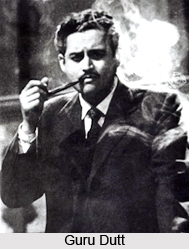
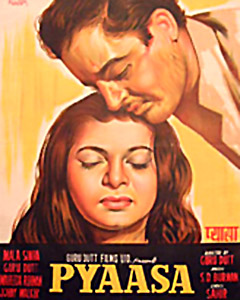
 In the cinematographic history of India, Guru Dutt (1925-64), author, director and producer, has left the image of a somber and self-destructive romantic hero haunted by failure and death. Guru Dutt marked the Indian film industry by a completely different personal approach that is being rediscovered and admired even today. He is remembered in the history of Indian cinema as the brooding passionate romantic who tried to reflect the changing social situation in India in the fifties. Within his short life, he created some of India`s most socially conscious movies like Pyaasa (Thirsty, 1957), Kaagaz ke Phool (Paper Flowers, 1960) and Baazi (1951). Guru Dutt introduced Waheeda Rehman in CID (1956) and propelled her to stardom through his films.
The childhood of Guru Dutt was troubled due to financial constraints and internal problems, however he derived his inspiration towards performing arts from his maternal uncle and took formal training of dancing from the maestro Uday Shankar. The early career of Guru Dutt was spent in various occupations, but finally he found his way through the world of entertainment as a true performer.
Guru Dutt as a director created a benchmark in Indian films. Apart from the films of the other directors in which he acted he himself made 8 films. Some of them were commercial failures because they went so much against the trend of the cinema of his age. However, three have remained as the cult films of Guru Dutt, having influenced Indian commercial cinema from within. In 1951 he was invited by Dev Anand to make Baazi whose script was co signed by Guru Dutta and Balraj Sahni. It is a fairly lighthearted American style film. Guru Dutt as a choreographer also created magic in his numbers and his Guru - Uday Shankar, largely inspired his movements.
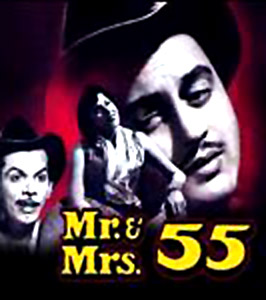
In the first film produced and directed by him, Aar Paar (1954), in which he also played the lead role, with Johnny Walker, Guru Dutt enacts an offhand, optimistic and typical Bombay street hero. The hero is shown in a neo-realistic and sensitive light. Then followed another comedy Mr. and Mrs. 55. Influenced from the spirited American style, this comedy pondered on the very Indian theme that love is induced by marriage, even an arranged one. Commercial success greeted this lively story of a young heiress whom the will of her father requires to be married within a month in order to be entitled to the property.
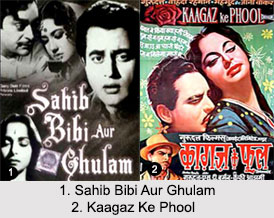
Guru Dutt`s films are also said to manifest by certain nostalgia, most evident in Sahib, Bibi aur Gulam, a film that explores the decline of feudal landed family. An aristocratic character, a flair for style, characterizes this film. Guru Dutt as a producer in all of his films was to show mastery over cinematic elements, from lighting and camera-work to film composition; and every film bears the unmistakable imprint of his work. Though not known widely outside India, the characters played by Guru Dutt as an actor is often compared to that of any director working at that time around the world. His brilliant career came to a premature end with his suicide.
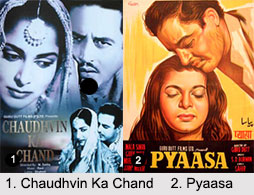
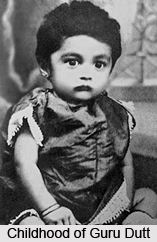 Guru Dutt or Vasanth Kumar Shivashankar Padukone was born on July 9, 1925 and was a Hindi film director, producer, and actor. This legend has made the exemplary 1950-`60s classics such as Pyaasa (The Thirsty One), Kaagaz Ke Phool (Paper Flowers), Sahib Biwi Aur Ghulam (The Gentleman, the Wife and the Servant) and Chaudhvi Ka Chaand (The Fourteenth Day Moon).
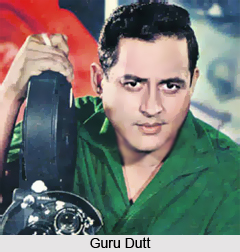 Guru Dutt left home for the first time to join an office as a telephone operator at a Lever Brothers factory in
 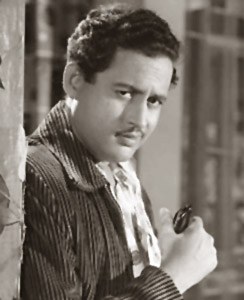 Guru Dutt further consolidated his position in the Bombay Film Industry with other hits like Mr and Mrs 55 and Pyaasa. Guru Dutt`s genius as a director finds expression in his incorporation of songs into the descriptive texture of the films. Songs in his films are not simply an added attraction; rather they are tools used as a vehicle to move the narrative further. This usage of songs is noticeable even in his debut film Baazi. The song ` Suno gajar kya gaaye` did set a new trend with the vamp warning the hero and as usual the song was the medium. This usage of a musical number was not seen before in Hindi films.
 Guru Dutt`s film in 1959, Kaagaz Ke Phool was a strong disappointment. This film has projected a great deal of love, money, and energy, which was a self-absorbed tale of a famous director (often played by Guru Dutt) who falls in love with an actress (played by
  Guru Dutt`s directorial genius is overwhelmingly perceptible in his use of light and shade. The use of light and shade in all Guru Dutt`s films created a fitting atmosphere where romance can thrive at its best. His usage of light and shade to this paranormal effect can be best represented by the song-`Saakiya aaj mujhe neend nahin aayegi` from the film Sahib Bibi aur Ghulam. Guru Dutt is also attributed with using cinemascope for the first time in the arena of Indian cinema. He also utilized close up shot to probe deeper into the characters` consciousness.
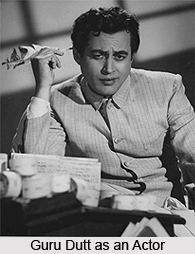 Guru Dutt, a versatile personality in Indian Cinema contributed to the film industry in the capacities of an actor, director, producer, choreographer and writer. He first tried out his ability in choreography for the film `Lakhrani` and eventually became famous across the arena of performing arts as an actor, director and producer is his real claim to fame. Film historians virtually remember Guru Dutt for his forefront movement in Indian cinema through his sensitive performances and mostly for the lyrical conduct of all the subjects that he selected to explore.
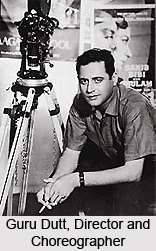 The basic training given to Guru Dutt in the field of dancing is credited to the internationally famous danseuse Uday Shankar. Guru Dutt lived along with his family in Calcutta, while he completed his basic education. Financial constraints did not allow him to study above the degree of matriculation, which he completed in 1941. Guru Dutt was creative from a young age and had keen interested in photography. His natural inclination for dancing and emoting people attracted majority of his near ones. His love for music especially Hindi and Bengali folk film music from a tender age was clearly noticeable.
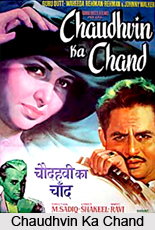 Guru Dutt rose to a position of an undisputable star after his 1960 production Chaudhvin Ka Chand with Waheeda Rehman, which proved to be a massive hit. This film also saved his studio from ruining. Guru Dutt also produced the legendary film in 1962 - Sahib Bibi Aur Ghulam. He also acted in the lead role alongside
 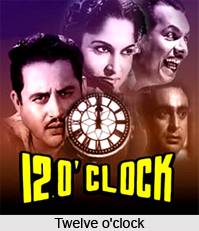 Along with his own productions, Guru Dutt also worked with outside productions like Twelve o`clock (1958), Sautela Bhai (1962), Bahurani (1963), Bharosa (1963), Suhagan (1964), Sanjh Aur Savera and many others. Guru Dutt has worked opposite almost all the famous heroines of the times. In 1952, days before `Jaal` was released Guru Dutt founded a production company in partnership with Haridasrshan Kaur, actress
  The cult films of Guru Dutt uncover the depths of the filmmaker`s personality and crystallize his aspirations, his phobias and his conceptions of cinema and life, revealing an irrepressible wish for death. The despair and pessimism of P.C. Barua"s "Devdas" continues in his films.
 His next film, "
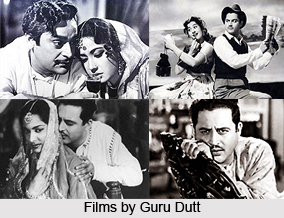 Guru Dutt Movies Pvt. Ltd. is also known as GDMPL in short. This organization is an Indian movie production company, started by legendary actor-director, Guru Dutt. His son `Arun Dutt` runs guru Dutt Movies Pvt. Ltd. is presently. Arun Dutt wrote and directed film Khule Aam (1992).