Introduction

The Gupta Empire spanned from the mid-to-late 3rd century CE until 590 CE. At its height, between approximately 319 and 550 CE, the empire extended across much of the Indian subcontinent, a period widely celebrated as the Golden Age of India. Education during Gupta age was given utmost importance. Holy places and capitals of kingdoms were the common centers of learning. Among the capitals, Pataliputra, Valabhi, Ujjain and Padmavati were famous centers of learning while AyodhyaMathura, Nasik and Kanchi were famous centers of education.

Education During Gupta Age

There were the Agrahara villages where Brahmans were educated and supported by the revenues of these villages. The teachers of these Agrahara were so qualified that they often attracted students from far and wide. In South India centers of learning were known as Ghatikas. Various mahaviharas functioned across the Gupta Empire, serving as enduring centers of learning for centuries. Among them, Nalanda emerged as a pivotal institution, playing a crucial role in fostering the patronage of arts and scholarship during the 5th and 6th centuries CE.

System of Education During Gupta Age

According to Lord Manu, the founder of Hinduism and progenitor of humanity, there were two types of teachers in the world. One was ‘acharya’ and the other was ‘upadhya’. The acharyas were entrusted with fundamental teachings of Vedas, Upanishads and Kalpasutra. The acharyas took their work as ‘work of charity’ and refrained from taking fees from pupils. The Upadhyas took teaching as a profession and charged the pupils. For scholarly education, study of Dharmashastras, Smriti, itihasa-puranas and heterodox scriptures were included in the syllabus. For non-scholarly education, mathematics, science of warfare, astronomy, astrology and medicine were included. Education was generally permitted to the people belonging to the upper stratum of society. Brahmins were eligible for all types of education, while the Kshatriyas and Vaishyas were eligible only for some fields of learning. But the Sudras were deprived completely from any light of education.

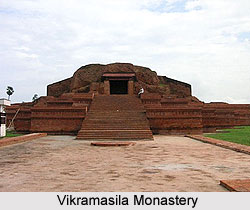
The most famous centers of learning were the monastic colleges founded mostly by the Buddhists. These centers contributed to creating a harmonious cultural life of the people. Taxila, Varanasi, Ujjain and Amravati were other famous centres of learning before the Gupta Age. University of Taxila, though had lost its former glory due to Hun invasion, yet had maintained its standard. Valabhi in Gujarat and Vikramasila in Bihar were other famous centers of learning.

Education During Gupta Age

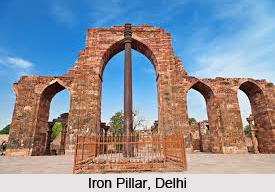
Technical education was also imparted by the guilds. Technical training included metallurgy, ivory and diamond cutting, woodwork. This was usually done in the family itself as professions had become hereditary. Sometimes artisans took outside students as trainees. Elementary education probably commenced at the age of five and was imparted by teachers who were called Daraka-charyas. Lipisalas or primary schools did exist in many villages. Children used to write either on wooden boards in colour or by the finger on the ground covered with sand. Excellence in metallurgy is proved by the Iron Pillar, Delhi of King Chandra.

Universities During Gupta Period

Education occupied a central place in the Gupta period, reflecting the high value placed on learning and intellectual development. Unlike in many other parts of the world at the time, women were also granted access to education, highlighting the relatively progressive social outlook of the era. Numerous educational institutions and universities were established in major cities, serving as important centers of learning and scholarly exchange.
Education During Gupta Age

Nalanda University
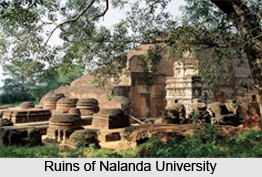
Nalanda University can be considered as an epitome of education in the Gupta age. Nalanda in Magadha was the international university and students from Asia had come there to pursue their higher education. Established by Kumaragupta I in the 5th century, it was the largest of its kind in the contemporary world to which scholars of different castes, creeds and races hailing from India and from countries like China, Japan, Korea, Java, Sumatra, Tibet, Persia, and Mongolia flocked for advanced studies. The university provided hostels for the students. There was catholicity of method in education and curriculum was liberal. Wide varieties of subjects were taught. The curriculum included systems of philosophies of different religions in India as well as arts and sciences. The state provided revenues of more than hundred villages for the upkeep of the university. There were a hundred lecture halls where classes were held daily. Scholarship was measured by the number of Sutra collections a student was able to master. Time was regulated over a wide area of Northern India by the Nalanda water clock.

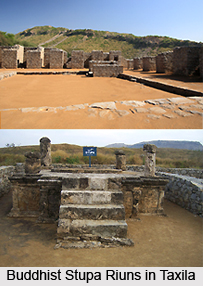
Takshashila University
Takshashila University stood among the earliest centers of higher learning in the world. Founded around 700 BCE, long before the rise of the Gupta Empire, it emerged as a prominent hub of advanced education and intellectual pursuit, attracting scholars from across different regions.

Varanasi University
Varanasi University drew scholars and students from across the world, establishing itself as a distinguished center of higher learning. During this period, numerous influential works of literature and philosophy were composed there, enriching India’s intellectual heritage. The institution also earned recognition for its advanced research in medicine and science. The renowned physician Charaka, celebrated for his foundational contributions to Ayurveda, was among its notable students. Education at Varanasi was conducted through specialized gurukulas and guided by learned teachers, or Acharyas, sustained by the Gupta Empire’s strong patronage of learning.
Education During Gupta Age

Valabhi University
Valabhi University, situated in Saurashtra, Gujarat, emerged as a leading center of higher learning during the late Gupta and post-Gupta period, approximately between 475 and 1200 CE. Founded under the patronage of the Maitraka dynasty, which initially served as vassals of the Guptas, the institution gained prominence as a major hub of Hinayana Buddhism, secular studies, and international commerce. The Chinese traveler Yijing noted that the standard of education at Valabhi was comparable to that of Nalanda in Bihar, underscoring its reputation as one of the foremost academic institutions of the time.

Amravati Learning Centre
Amravati emerged as a distinguished center of learning and a prominent Buddhist site before and during the early Gupta age. Renowned for its stupas and monasteries, it held great importance as a hub for Buddhist philosophy, art, and religious studies, contributing significantly to the intellectual and spiritual life of the period.

Ujjain Learning Centre
Ujjain, also known as Ujjaini, rose to prominence as a leading center of higher education during the Gupta age (c. 320–550 CE), particularly in the fields of astronomy, mathematics, and astrology. Situated along the banks of the Kshipra River, the city became a vital hub of scientific inquiry and intellectual pursuit. Its advanced observatory, strategically positioned on what was then considered the zero meridian of longitude, further enhanced its status as a centre of astronomical and mathematical study.

Pataliputra Learning Centre
Pataliputra functioned as the imperial capital of the Gupta Empire from the 3rd to the 6th century CE, serving as a major center of administration, culture, and intellectual life during India’s celebrated Golden Age. Although the renowned Nalanda University was established nearby in the 5th century, Pataliputra itself remained a vital hub for the study of arts, literature, and science. Strong royal patronage fostered a flourishing cultural environment, particularly supporting the growth of Sanskrit literature, including the celebrated works of Kalidasa.

Achievements in Education During Gupta Age

Large-scale land grants to the Brahmanas during the Gupta era reflected their rising dominance, a development that significantly shaped the education system. This growing influence contributed to notable advancements and achievements across various fields of learning.

In the Field of Mathematics: One of the most significant intellectual advances of the period was the development of decimal system notation. The place-value system reached its most refined form during India’s Golden Age, laying the foundation for future mathematical progress. Although a distinct symbol for ‘zero’ did not exist in the Gupta period, the mathematician Aryabhata ingeniously employed powers of ten with null coefficients to signify its value. The Guptas also used alphabetical characters to represent numbers, demonstrating a sophisticated numerical framework. Aryabhata’s methods further enabled precise calculations, including the accurate determination of the diameter of curved surfaces.

Trigonometry emerged as another landmark achievement of this era. Scholars articulated methods to calculate the area of a triangle and introduced fundamental concepts such as the ‘sine,’ which became central to later mathematical and astronomical studies. Alongside these innovations, new techniques were devised to solve complex problems involving Diophantine equations, the Aryabhata algorithm, algebra, and geometry.

Education During Gupta Age

In the Field of Astronomy: The theory of gravity was well understood by astronomers of the Gupta period, reflecting the advanced state of scientific thought at the time. Among the leading figures of this era, Aryabhata made several groundbreaking contributions. He proposed that the Earth is spherical rather than flat and demonstrated that it rotates on its own axis each day. He further argued that the apparent movement of the stars was, in fact, a consequence of the Earth’s rotation, challenging the long-held belief that it was the sky itself that moved. 

In the Field of Medicine: During the Gupta period, mercury and iron were commonly used in medical treatments, reflecting a well-developed understanding of chemistry and its practical applications. The use of these substances suggests that scientific knowledge was not only theoretical but also actively practiced. Physicians of the era were trained in surgical procedures and possessed the skills necessary to perform operations when required. 

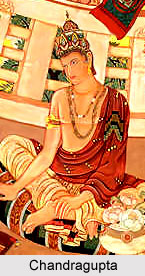
In the Field of Literature: Literature flourished to its highest level during the Gupta dynasty, marking a golden age of artistic and intellectual expression. Poetry and romantic comedies dominated literary themes, with works focusing more on human emotions and behavior than on purely religious ideas. Sanskrit literature, in particular, enjoyed immense popularity and received generous patronage from Gupta rulers. Among them, Chandragupta II stood out for his support of scholars and poets. His court was said to have hosted nine eminent poets, including Kalidasa, who is widely regarded as ancient India’s greatest poet and playwright. 

Alongside Sanskrit, Prakrit literature also thrived under Gupta rule. One of its most notable works was the Paumacariyam, which exemplified the richness of this literary tradition. The period also witnessed the final compilation of the Vedic Puranas, giving them their enduring form. The Markandeya Purana gained particular prominence during this time, reflecting the growing worship of the goddess Durga and highlighting the dynamic religious and cultural landscape of the era. 

Kama Sutra: The Kama Sutra, a renowned guide to the pursuit of kama, or sensual pleasure, with particular emphasis on sexual relationships, is believed to have been composed during the Gupta period. It was authored by a celibate yogi named Mallanaga Vatsyayana in the 4th or 5th century CE. In the Western world, the text is best known for its detailed descriptions of 64 lovemaking positions, some of which require exceptional flexibility, and for the artistic and instructional illustrations that often accompanied them. Beyond its popular reputation, the work also offers insights into relationships, social conduct, and emotional intimacy.