Home > Society > Religion in India > Barai Caste
Barai Caste
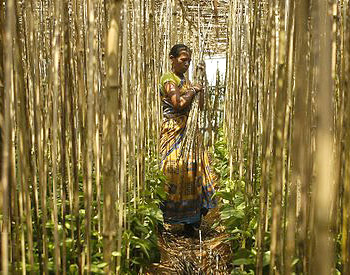
Barai Caste is the professional cultivator caste of betel leaf. Tamboli and Pansari are the terms used indifferently to the people of Barai Caste. The diversity of names of the sub-divisions of Barai Caste highlights the mixed elements that formed the caste.

Share this Article:

Introduction

Barai caste is the cultivator caste and also the sellers of betel-vine leaf. Tamboli and Pansari are the other names used to denote this caste. People of Barai caste are mainly spread over the central region of India. However, there are some shades of variation in the meaning of these terms. Like for instance, the term Barai signifies especially one who grows betel vine, the term Tamboli indicates the seller of prepared betel vine; while the term Pansari means a dealer of betel-vine leaves. However, in the provinces of Bengal, Barai and Tamboli are considered as distinct castes because the occupations of growing and selling of betel-leaf are practiced separately. Barai caste mainly resides in the regions of Amraoti, Buldana, Nagpur DistrictWardha District, Saugor and Jabalpur District. Moreover, the betel leaves are mainly cultivated in the northern districts of Saugor, Damoh and Jabalpur and also in the plains of Nagpur.


Etymology of Barai

No probable derivation has been obtained for the name Barai. It is believed that the name comes from bari, meaning an enclosure, and it simply signifies gardener. Another derivation of the name is from barana, to prevent hailstorms, a calling still practiced in northern part of India.


Origin of Barai Caste

The origin of Barai caste is traced to northern Indian settlements, where members adapted to the specialized agricultural niche of betel leaf cultivation alongside the expansion of regional commerce. Ethnographic surveys from the late nineteenth and early twentieth centuries describe the Barai as comparable to gardening castes such as the Mali, while clearly distinguishing them by their exclusive focus on the betel vine, known locally as paan. These accounts point to a pattern of adaptive economic specialization rather than participation in broad-based agrarian activity. The occupation itself likely developed in response to favorable environmental conditions in humid, riverine landscapes, which supported intensive vine cultivation on trellises rather than the production of staple crops.

By the medieval period, Barai communities had taken root in districts of present-day Uttar Pradesh, including Mirzapur and Gorakhpur, as well as in parts of Bihar. Their presence coincided with the growing consumption and commercialization of betel leaves under Mughal administration, when paan became an established commodity and a source of estate revenue in regions such as Mahoba in the Allahabad area. Colonial ethnographic records place the Barai firmly within these Gangetic heartlands, offering little evidence of an earlier or more widespread distribution. This pattern suggests migratory settlement shaped by trade routes and market demand, emphasizing practical economic integration rather than claims of indigenous precedence or pre-Mughal dominance.

The Barai are distinct from similarly named castes such as the Barhai, traditionally associated with carpentry, as well as from regional counterparts like the Barujibi of Bengal. Although the latter also engage in betel-related occupations, they maintain separate endogamous boundaries and cultural practices rooted in eastern India.


Social Position of Barai Caste

Barai caste holds a significant position in the society owing to the fact that they produce one of the most esteemed luxuries of the diet of the higher classes. In the central provinces of the country, the cultivation of betel vine has probably flourished to a considerable extent over three centuries. The Barai caste appears to be mainly a Hindu occupational caste, including a number of settlers from northern and eastern India. The population of this caste includes a large proportion of the non-Aryan immigrants.


Varna Status of Barai Caste

In village hierarchies, the Barai occupied an intermediate position ranked below Vaishya trader castes such as Banias yet above Scheduled Castes. This placement was reflected in limited forms of ritual acceptance, including conditional commensality with Brahmins, a privilege denied to groups associated with polluting occupations like tanning or scavenging. Village panchayat practices and customary rankings emphasized occupational purity, and the Barai’s role in the betel trade positioned them as intermediary service providers. At the same time, strict boundaries remained in place, inter-caste marriage and unrestricted shared meals with dvija varnas were prohibited. This shows how their agrarian and manual occupational identity sustained a subordinate status rooted in practice rather than in abstract notions of social equality.

Within this context, certain Barai subgroups advanced claims of Kshatriya origin, drawing on myths of descent from cursed Rajput lineages, such as the Chauhans, who were said to have adopted betel cultivation as an act of penance. These assertions, however, find little support in historical evidence. They are uncorroborated by martial traditions, records of land grants, or the Vedic textual validations typically associated with varna mobility. Ethnographic accounts consistently note the absence of warrior lineages or ruling genealogies, suggesting that such origin stories functioned more as aspirational narratives than as reflections of causally grounded positions within pre-colonial social hierarchies.


Divisions of Barai Caste

Barai caste has several endogamous divisions namely Chaurasia, from Chaurasi pargana of the Mirzapur District; Panagaria from Panagar in Jabalpur; Mahobia from Mahoba District; Jaiswar from Rai Bareli District; Gangapari, and Pardeshi or Deshwari, meaning foreigners. All these divisions have territorial names. These sub-divisions are an indication that a large proportion of Barai caste have come from northern and eastern region of the country and the diverse batches of immigrants constituting the distinct endogamous divisions on their arrival. People of Barai caste are mainly found in the states of Uttar Pradesh, Bihar, Madhya Pradesh, and Odisha.

Other sub-castes of Barai caste are Dudh Barais, the Kunbis who have adopted this profession and became Barais; the Jharia and Kosaria, the Purania or old Barais; the Kumhardhang, said to be the descendants of a potter on whose wheel a betel plant grew; and so on. The Barai caste is also categorised into a large number of exogamous groups which may be classified as per their names as territorial. Some examples of the territorial names include Kanaujia of Kannauj, Burhanpuria of Burhanpur, Chitoria of Chittorgarh city in Rajputana, Deobijha, name of a village in Chhattisgarh, and Kharondiha from Kharond. If the group is named after another caste, it indicates that a man of that caste eventually became a Barai and formed a family.


Society of Barai Caste

In their society, marriage within the same exogamous group is prohibited. Girls get married before reaching the stage of adolescence. Polygamy is also allowed in their society. Barai castes celebrate a number of festivals and are very religious by nature. They religiously observe the festival of Nag Panchami. They are known for their indigenous culture and traditions.


Share this Article:

More Articles in Religion in India


Religion in Indus Valley Civilization
Religion in Indus Valley Civilisation included Hinduism, Buddhism and Jainism. Details about the religion in Indus Valley Civilization have been gathered from archaeological artefacts.
Shaivism Religion
Shaivism is the second largest “religious community” in modern India with its roots deeply seated in the Hindu Vedic belief.
Vaishnavism
Vaishnavism is among the more popular denominations of Hinduism, with its own distinctive ideas about spirituality and morality. Vaishnavism concentrates on worshipping god Vishnu and of his incarnations.
Hinduism Religion
Hinduism is more of a philosophy which is a way of living according to the understanding of the principles of Vedas and Upanishads.
Islam
Islam is a religion that beliefs in Allah as the one and only God and creator of the Universe. Islamic law or Sharia is characterised by the five pillars of Islam which comprise the essential duties of every Muslim.
Christianity
Christianity is a religion based on the teachings and life of Jesus Christ and it is the largest religion in the world.
Buddhism
Buddhism is a religion and a philosophy that encompasses a wide variety of beliefs, practices and traditions that are chiefly based on the teachings of Gautama Buddha and its later disciples.
Jainism
Jainism chronologically preceded the religion of Buddhism. It is considered as one of the oldest religions of India. Jainism in India shared with Hinduism and Buddhism. It is an integral part of South Asian religious belief and practice, but it is not a Hindu sect and not a Buddhist heresy, as earlier scholars believed.
Zoroastrianism
Zoroastrianism, closely related to Judaism, Christianity and Islam was founded by Zoroaster.
Sikhism
Sikhism is a religion started by Guru Nanak in land of Punjab in 15th century A.D.
Iyer Brahmin
Iyer Brahmins are originally from Tamil Nadu of South India. The Iyers have always taken an interest in preserving the arts and sciences.
Barai Caste
Barai Caste is the professional cultivator caste of betel leaf. Tamboli and Pansari are the terms used indifferently to the people of Barai Caste. The diversity of names of the sub-divisions of Barai Caste highlights the mixed elements that formed the caste.
Dangi Caste
Dangi Caste is largely distributed in the high land regions, and the word Dangi is said to have originated from the geographical features of their territory. Main occupation of the members of Dangi Caste is cultivation.
Nadar Caste
One of the most renowned castes of Tamil Nadu is the Nadar caste. The Nadar community is a mixture of sub-castes and classes of different origins, which came under one banner of Nadar caste gradually.
Kumbhakar Caste
Kumbhakar is the potter caste who manufactures all kinds of earthen vessels.
Gujjars in Maharashtra
Gujjars in Maharashtra have several sub-castes. Here, in this state the Gurjars are listed as a separate caste. They are included in the Maharashtra OBC list.
Awasthi Brahmin
Awasthi is a surname or a family name of a particular sub-caste of Brahmins in the Indian continent.
Bhoyar Caste
Bhoyar Caste is largely found in the Central Provinces of the country. Traditional occupation of Bhoyars is agriculture. They are good cultivators and mostly grow sugarcane.
Gujjars in Mughal Era
Gujjars in the Mughal era enjoyed great power. Further their power increased with the decline of Aurangzeb, Mughal emperor.
Origin of Vaishnavism
Origin of Vaishnavism shares its attributes to many sources and religious evolution, dating back to pre-Vedic epoch.
Gotra in Hinduism
In Hinduism, gotra refers to a lineage system tracing descent from ancient sages, primarily through the paternal line. Originating from Vedic tradition, it plays a crucial role in identity and marriage customs. Individuals from the same gotra are considered to share a common ancestor and are traditionally prohibited from intermarrying.