
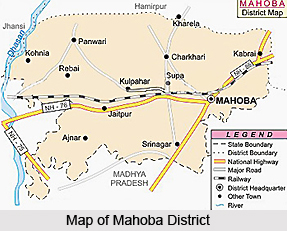
 Mahoba District, an administrative district of Uttar Pradesh, was initially a part of Hamirpur District. Mahoba city is the district headquarters and it forms a part of Chitrakoot division. Total area of Mahoba District is around 2884 sq kms. As per 2001 census, total population of this administrative district is 708447. Administration of Mahoba District has three tehsils namely Mahoba, Charkhari and Kulpahar and there are four development blocks in this district.
Mahoba District
Mahoba District of Uttar Pradesh formerly constituted a part of Hamirpur District. Mahoba District is known for its rich history.
Introduction
Mahoba District, an administrative district of Uttar Pradesh, was initially a part of Hamirpur District. Mahoba city is the district headquarters and it forms a part of Chitrakoot division. Total area of Mahoba District is around 2884 sq kms. As per 2001 census, total population of this administrative district is 708447. Administration of Mahoba District has three tehsils namely Mahoba, Charkhari and Kulpahar and there are four development blocks in this district.History of Mahoba District
H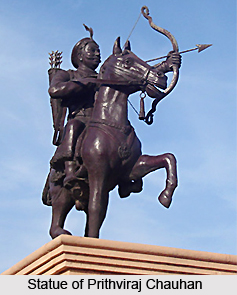 istory of Mahoba District suggests that the name Mahoba is derived from `Mahotsav Nagar`, the city of great festivals, which were celebrated here by Chandra Verman, founder of the Chandella Dynasty. Another tradition preserves three other names of the city - Kekaipur, Patanpur and Ratanpur. Before the rise of Chandellas, Mahoba was held by the Gaharwar and Pratihar clans of Rajputs. The Chandela ruler Chandra Verman, who hailed from Maniagarh, took it over from Pratihar rulers and adopted it as his capital. Later, Vakpati, Jejja, Vijai Shakti and Rahila Deva succeeded him.
Among the later Chandela rulers whose names are particularly associated with some of the local monuments are Vijai-pal (1035-1045 AD) who built the Vijai Sagar Lake, Keerti Verman (1060-1100 AD) built Keerat Sagar Tank and Madan Verman (1128-1164 AD) who built Madan Sagar. The last prominent Chandella ruler was Parmardi Deva or Parmal whose name is still popular due to the heroic deeds of his two Generals `Alha` and `Udala` who own many battles. Further, according to the history of Mahoba District, the reign of Parmardi Deva or Parmala, the 15th ruler of the dynasty witnessed the fall of Mahoba. In 1182 AD, differences arose between Parmala and Delhi king Prithviraj Chauhan who gave an ultimatum stating certain conditions to be fulfilled by Parmala or to surrender. Eventually, Mahoba was seized. And his General Chamund Rai even made a surprise attack on the region.
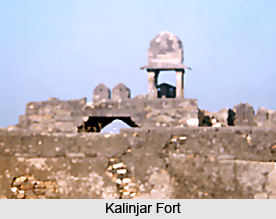 Later, Prithviraj Chauhan captured Mahoba despite the brave fight put-up by the Banafer brothers: Alha and Udal. Parmala had to retreat to Kalinjar leaving Mahoba in the hands of the conqueror. This event is considered as the beginning of the end of Chandella rule over the region. Two decades later, Qutub-Ud-Din Aibak vanquished Mahoba and Kalinjar in 1203 AD. Later, Trailokya Verman, another son of Parmala, recovered Mahoba and Kalinjar but the Chandellas lost their eminence in the region. Mahoba had to lose its independence and it became a part of the Delhi Sultanate. After about two centuries of obscurity, Chandela ruler Keerat Pal Singh rose to power and re-established his domain over Kalinjar and Mahoba. Keerat Pal Singh battled bravely with Sher Shah Suri, while defending Kalinjar Fort in 1545 AD. Sher Shah, however, captured the fort.
History of Mahoba District also talks about the account of Rani Durgavati`s deeds. She administrated her territory admirably well after the death of Raja Dalpat Shah and in 1564 AD gallantly resisted the unprovoked aggression of Akbar, Mughal Emperor. However, in the post Chandela period the history of Mahoba District gets obscure. It was under the reign of Delhi Sultans. Local traditions ascribe and associate Bhar and Gond Tribe who held their administrations in the region from time to time. Later, with the rise of Chhatrasal Bundela, Mahoba passed under his sway but failed to acquire and kind of pre-eminence. In 17th century AD Chhatrasal declared independence and put a stiff resistance against Aurangzeb.
Later, under the treaty of Bassein in 1803 AD the Marathas ceded Bundelkhand area to British rulers. Its administration was, however, carried over by the subedar of Jalaun until 1858 AD when it was finally annexed by the East India Company. Mahoba was made the headquarters of a sub-division in the district of Hamirpur. Its later history is un-eventful except for the local revolt in the first freedom struggle of 1857 AD. Mahoba District also contributed in the freedom struggle of the country. Mahoba District came into existence on 11th of February, 1995.
istory of Mahoba District suggests that the name Mahoba is derived from `Mahotsav Nagar`, the city of great festivals, which were celebrated here by Chandra Verman, founder of the Chandella Dynasty. Another tradition preserves three other names of the city - Kekaipur, Patanpur and Ratanpur. Before the rise of Chandellas, Mahoba was held by the Gaharwar and Pratihar clans of Rajputs. The Chandela ruler Chandra Verman, who hailed from Maniagarh, took it over from Pratihar rulers and adopted it as his capital. Later, Vakpati, Jejja, Vijai Shakti and Rahila Deva succeeded him.
Among the later Chandela rulers whose names are particularly associated with some of the local monuments are Vijai-pal (1035-1045 AD) who built the Vijai Sagar Lake, Keerti Verman (1060-1100 AD) built Keerat Sagar Tank and Madan Verman (1128-1164 AD) who built Madan Sagar. The last prominent Chandella ruler was Parmardi Deva or Parmal whose name is still popular due to the heroic deeds of his two Generals `Alha` and `Udala` who own many battles. Further, according to the history of Mahoba District, the reign of Parmardi Deva or Parmala, the 15th ruler of the dynasty witnessed the fall of Mahoba. In 1182 AD, differences arose between Parmala and Delhi king Prithviraj Chauhan who gave an ultimatum stating certain conditions to be fulfilled by Parmala or to surrender. Eventually, Mahoba was seized. And his General Chamund Rai even made a surprise attack on the region.
Later, Prithviraj Chauhan captured Mahoba despite the brave fight put-up by the Banafer brothers: Alha and Udal. Parmala had to retreat to Kalinjar leaving Mahoba in the hands of the conqueror. This event is considered as the beginning of the end of Chandella rule over the region. Two decades later, Qutub-Ud-Din Aibak vanquished Mahoba and Kalinjar in 1203 AD. Later, Trailokya Verman, another son of Parmala, recovered Mahoba and Kalinjar but the Chandellas lost their eminence in the region. Mahoba had to lose its independence and it became a part of the Delhi Sultanate. After about two centuries of obscurity, Chandela ruler Keerat Pal Singh rose to power and re-established his domain over Kalinjar and Mahoba. Keerat Pal Singh battled bravely with Sher Shah Suri, while defending Kalinjar Fort in 1545 AD. Sher Shah, however, captured the fort.
History of Mahoba District also talks about the account of Rani Durgavati`s deeds. She administrated her territory admirably well after the death of Raja Dalpat Shah and in 1564 AD gallantly resisted the unprovoked aggression of Akbar, Mughal Emperor. However, in the post Chandela period the history of Mahoba District gets obscure. It was under the reign of Delhi Sultans. Local traditions ascribe and associate Bhar and Gond Tribe who held their administrations in the region from time to time. Later, with the rise of Chhatrasal Bundela, Mahoba passed under his sway but failed to acquire and kind of pre-eminence. In 17th century AD Chhatrasal declared independence and put a stiff resistance against Aurangzeb.
Later, under the treaty of Bassein in 1803 AD the Marathas ceded Bundelkhand area to British rulers. Its administration was, however, carried over by the subedar of Jalaun until 1858 AD when it was finally annexed by the East India Company. Mahoba was made the headquarters of a sub-division in the district of Hamirpur. Its later history is un-eventful except for the local revolt in the first freedom struggle of 1857 AD. Mahoba District also contributed in the freedom struggle of the country. Mahoba District came into existence on 11th of February, 1995.
Demography of Mahoba
As of 2011 India census, Mahoba has a population of 95,216. Mahoba has an average literacy rate of 74.91 per cent, higher than the state average of 67.68 per cent. The male literacy is 82.03 per cent and female literacy is 66.88 per cent with 12.68 per cent of the population under 6 years of age.
Schedule Caste and Schedule Tribe constitute 14.93 per cent and 0.42 per cent of the total population in Mahoba. Based on the census 75.21 per cent of the total population are Hindus, 23.64 per cent are Muslims and the rest is occupied by other faiths.
Schedule Caste and Schedule Tribe constitute 14.93 per cent and 0.42 per cent of the total population in Mahoba. Based on the census 75.21 per cent of the total population are Hindus, 23.64 per cent are Muslims and the rest is occupied by other faiths.
Tourism in Mahoba District
 There are many places of historical and archaeological interest as well as scenic lakes dotted with rocky islets in Mahoba. The temples of Mahoba are built in the same style as the Khajuraho temples. Some of the places of interest at Mahoba are as follows:
Kakramath Temple: This temple is well-preserved granite which is dedicated to Lord Shiva and is located at the Madan Sagar. Its basic plan is similar to the temples of Khajuraho. The Madan Temple dedicated to Lord Vishnu stands nearby.
Vijay Sagar Pakshi Vihar: Vijay Sagar Pakshi Vihar is located at 5 km from town. This is a picturesque bird sanctuary that has been developed on the shores of Vijay-Sagar, which was built by Vijay Pal Chandela (1035-1060 AD).
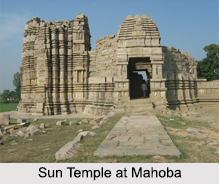
Sun Temple at Rahila Sagar: This 9th century granite Sun Temple lies to the west of Rahila Sagar, built by Chandela ruler Rahila who ruled between 890 and 910 AD. Though, today this temple is in a ruined state, it still stands as the premium example of early Pratihara architecture in the area.
Manaiya Devi Temple: This is the temple of the tutelary deity of the Chandelas and stands on the shores of Madan Sagar, near the fort. In front of it is monolithic granite pillar, 18 ft. high and 1.75 ft wide at the base. The shrine of Pir Mubarak Shah, a Muslim saint who came from Arabia in 1252 AD, is nearby
Lakes in Mahoba: Kirat Sagar, built by Kirtivarman between 1060 AD and 1100 AD, has fine embankments with granite steps. Madan Sagar, built by Madanvarman between 1128 AD and 1165 AD, is very picturesque. Other lakes include Kalyan Sagar, Vijay Sagar and Rahila Sagar.
Gokhar Hill: This is the hill where Guru Gorakhnath resided with his disciples. It has dramatic granite rock formations, with caves and waterfalls. The spot is ideal for climbing and picnics.
Other places of interest at Mahoba include the Jain and Buddhist shrines, the Alha Udal Chowk, Barichandrika Devi Temple, Ram Kurd, Suraj Kurd and Shiva Temple at Katheswar. Today, the town is known for its fine betel leaf cultivation and granite rocks.
Recently updated articles in States of India
Bandare Waterfalls, Meghalaya
Bandare Waterfalls in South Garo Hills, Meghalaya, is a secluded natural attraction surrounded by dense subtropical forests and rugged mountain terrai...
History of Thissur District
Early History of Thissur District explains flourishing of the port cities. Now these port cities are transformed into archaeological sites.
Tippi Orchid Research Centre, Arunachal Pradesh
Tippi Orchid Research Centre in Arunachal Pradesh is renowned for its rich collection of exotic and endangered orchids. Surrounded by lush rainforest...
Tourism in Nashik District
Pilgrimage tourism in Nashik district involves visiting the various places of Hindu and Jain worship located here. Some of the holiest sites for Hind...
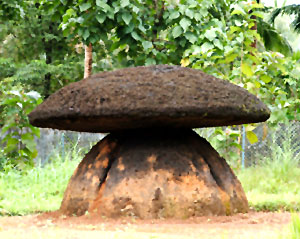
Mangadu, Kerala
Mangadu in Kerala’s Kollam district is a significant megalithic site known for its urn burials, cist burials, menhirs, and stone circles. Excavations...
Related articles in States of India
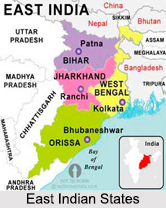
East Indian States
East Indian States comprises of Bihar, Jharkhand, West Bengal, Odisha and also the Union Territory of Andaman and Nicobar Islands. It defines the cult...
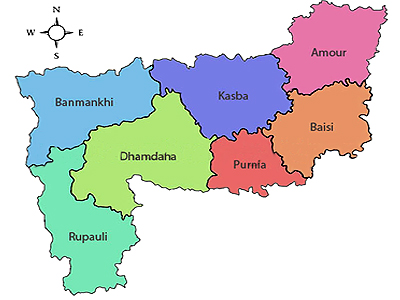
Purnia District in Bihar
Purnia District is located in Bihar and extends from River Ganga to Nepal. The district has a rich Hindu history and glorious past.
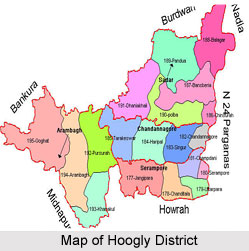
Hooghly district
Hooghly District along the bank of the river Hooghly is one of the principal trading ports of West Bengal.
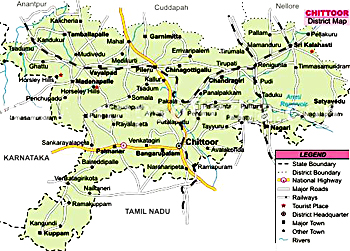
Geography Of Chittoor District
Geography of Chittoor district is spread along the topography of the land which is divided into two natural divisions; Chittoor has a dry and healthy...
Districts of West Bihar
Districts of West Bihar is comprised of medieval monuments that were built by the different governors of Mughal era.