 The Treaty of Bassein proved to be an important event in the history of British supremacy in India. During the latter half of the 18th century, the British East India Company managed to establish their rule over most parts of India.
Background of the Treaty of Bassein
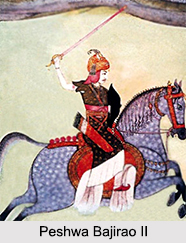
The influence of Nana Phadnavis in Poona was increased after being victorious over the Nizam at Kharda. During this time, the Marathas were engaged in constant strife among themselves and certain splintering was taking place due to the dictatorship of Nana Phadnavis. After undergoing several critical plots, the son of Raghoba, Baji Rao II, was enthroned as the Peshwa on December 4, 1796. Nana Phadnavis was chosen as the chief minister of Baji Rao II. The Nizam took advantage of the unstable situation among the Marathas and recovered the territorial dominions that the Marathas seized after his severe defeat at Kharda.
Causes of the Treaty of Bassein
The policy of Subsidiary Alliance was directed by Lord Wellesley after his arrival as a Governor-General on April 26, 1798. His firm belief was that the best way of safeguarding the interest of England was to reduce the whole country into military dependence on the East India Company. The English began to gain more strength instead of any conflict between the English and the Marathas. The death of Nana Phadnavis on March 13, 1800, brightened the prospects of English and the last chance of keeping the Marathas in order was wiped out. The death of Nana removed the barrier that had checked to a great extent the disruptive activities of the Maratha chiefs. Thereafter, there was a vicious fight between Daulat Rao Sindhia and Jaswant Rao Holkar for capturing Poona and Sindhia received the favor of the Peshwa. Wellesley advised the Poona Residents to manage the secret treaty with Poona for turning out Sindhia on April 12, 1800, though the Peshwa remained firm in his position and the Resident suggested immediate destruction to restrain the power of Peshwa.
 The intrigues of the Peshwa were making matters among the Marathas worse. The murder of Vithuji Holkar by the Peshwa in April 1801 made the situation more complicated. The Holkar then raised war against the combined force of Sindhias and the Peshwas at Poona and the armies were defeated by him and the city was captured. While Amrit Rao`s son Vinayak Rao was made the Peshwa by Jaswant Rao Holkar, Baji Rao went to Bassein for shelter. In this vulnerable situation, Baji Rao decided to accept Subsidiary Alliance and he then signed with the East India Company the Treaty of Bassein on December 31, 1802.
Provisions of the Treaty
According to this treaty, an English force of 6,000 was to be permanently a part of the Peshwa army. To maintain this force an amount of 26 lakhs in Indian currency were to be provided to the British. This treaty also restricted the Peshwa to enter into any treaty or declare war without consulting the Company. It also includes that the Peshwa`s claim upon the Nizam and Gaekwar would be subject to the arbitration of the Company and the Peshwa also abdicated his demand over Surat.
Later, under the protection of the East India Company, Baji Rao II regained his Peshwarship on May 13, 1803. With the sanction of the treaty of Bassein, the ascendancy of the East India Company was started and this treaty contributed to the development of the sway and influence of the East India Company over the Indian subcontinent. However, the Maratha rulers namely the Shindes and the Bhosales did not accept the treaty and this caused the Second Anglo-Maratha War in 1803.