 The Battle of Kharda took place in March 1795 between the Maratha Confederacy and the Nizam of Hyderabad. This battle brought the last joy to the Confederacy.
The culmination of a long rivalry between the expanding Confederacy and the long established kingdom of Hyderabad resulted in the battle of Kharda. At the Third Panipat Battle in 1761, the Confederacy reached its high tide. The process of its fall was initiated at its defeat. It was still probably the second strongest at the time of and certainly the most effective military power in India.
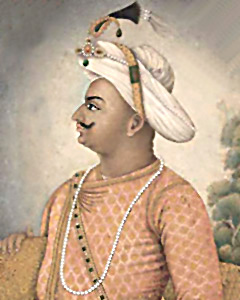
The Maratha power once again expanded to the north under the tutelage of Mohadji Sindhia, nephew to Dattaji Sindhia. Shah Alam`s chief protector Mahadji Sindia managed to crush all opposition in Delhi from Muslim chiefs namely Ismail Baig and the Rajputs. During these struggles Mahadji raised a force of European trained infantry under a remarkable European mercenary. The success of his forces created envy to the Maratha chieftains. Tukoji Holkar sought to prevent the attempts of Mohadji`s infantry based army. The war between Holkar and Mohadji bettered the relation between Poona and British. As a result of the alliance against Hyder and Tipu, the British were able to besiege Seringapatam in 1792 and imposed a crippling treaty on Tipu. The traditional rivalry between the Marathas and the Nizam of Hyderabad reappeared with the elimination of Tipu. Though the British attempted to intermediate, both sides opted for war. Sawai Madhav Rao by taking personal command of the Maratha army on 15th December 1794 issued a call to all the sardars to join him.
During this period, The Confederacy and the Nizam made alliance with the British against Tipu Sultan. The disagreement that caused the battle of Kharda started when the Maratha Peshwa demanded from the Nizam chauth, the one fourth tribute paid by a king to his overlord. The force of the Nizam and the Maratha confronted each other near the village of Kharda and the battle started on 11th March 1795. The refusal of the Nizam ushered his defeat and his surrender of his territory led him to pay an indemnity of thirty million rupees.
The battle of Kharda led to the reassertion of the superiority of the Marathas was established and this was the last great combined military attempt of the Maratha Confederacy.